Shaping India’s steel transition: Reflections from ResponsibleSteel’s Policy Convening in Delhi
Shaping India’s steel transition: Reflections from ResponsibleSteel’s Policy Convening in Delhi
Shaping India’s steel transition: Reflections from ResponsibleSteel’s Policy Convening in Delhi
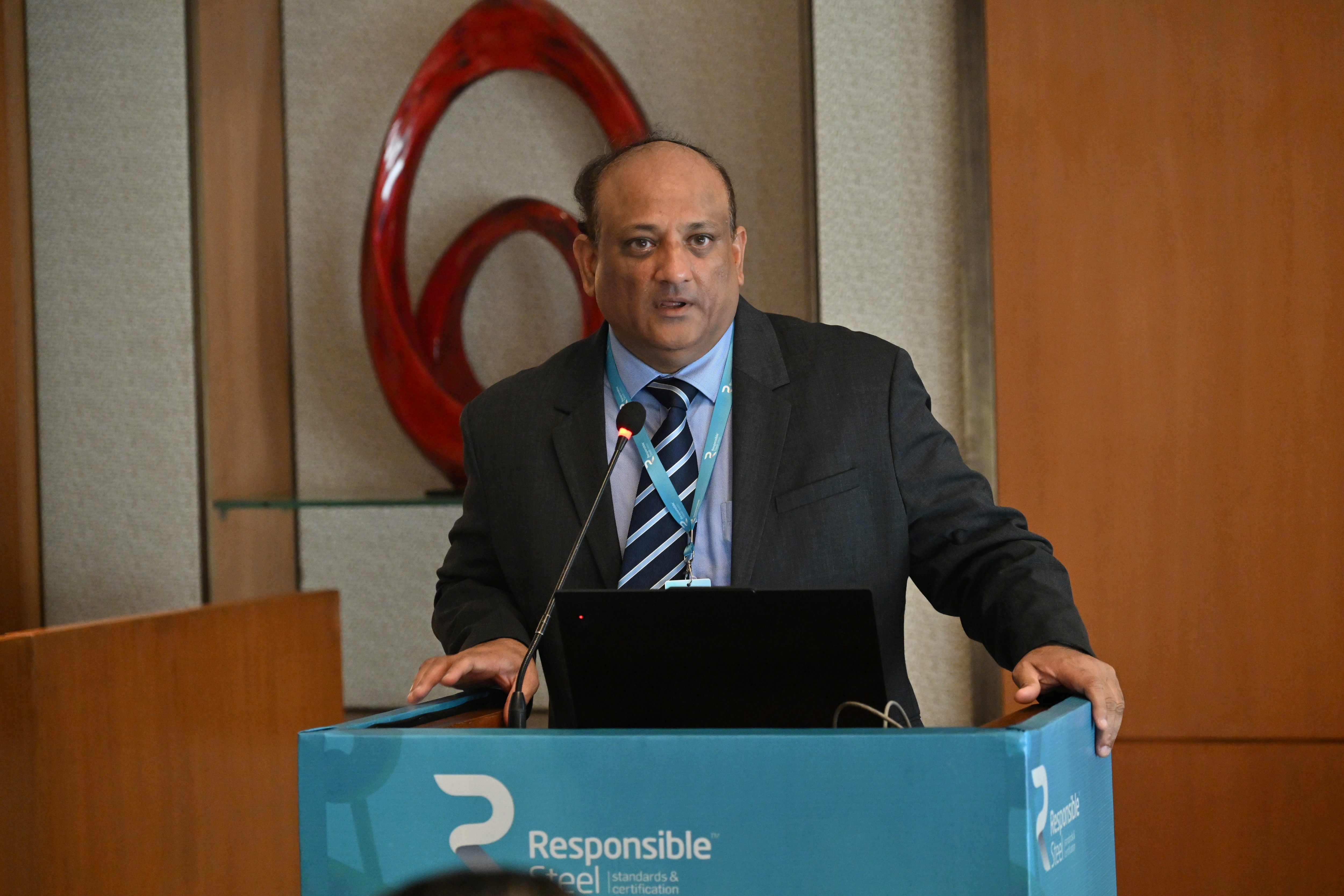
As India’s steel industry navigates the twin imperatives of growth and sustainability, ResponsibleSteel hosted a policy convening in Delhi earlier this year to explore pathways for steel decarbonisation in India.
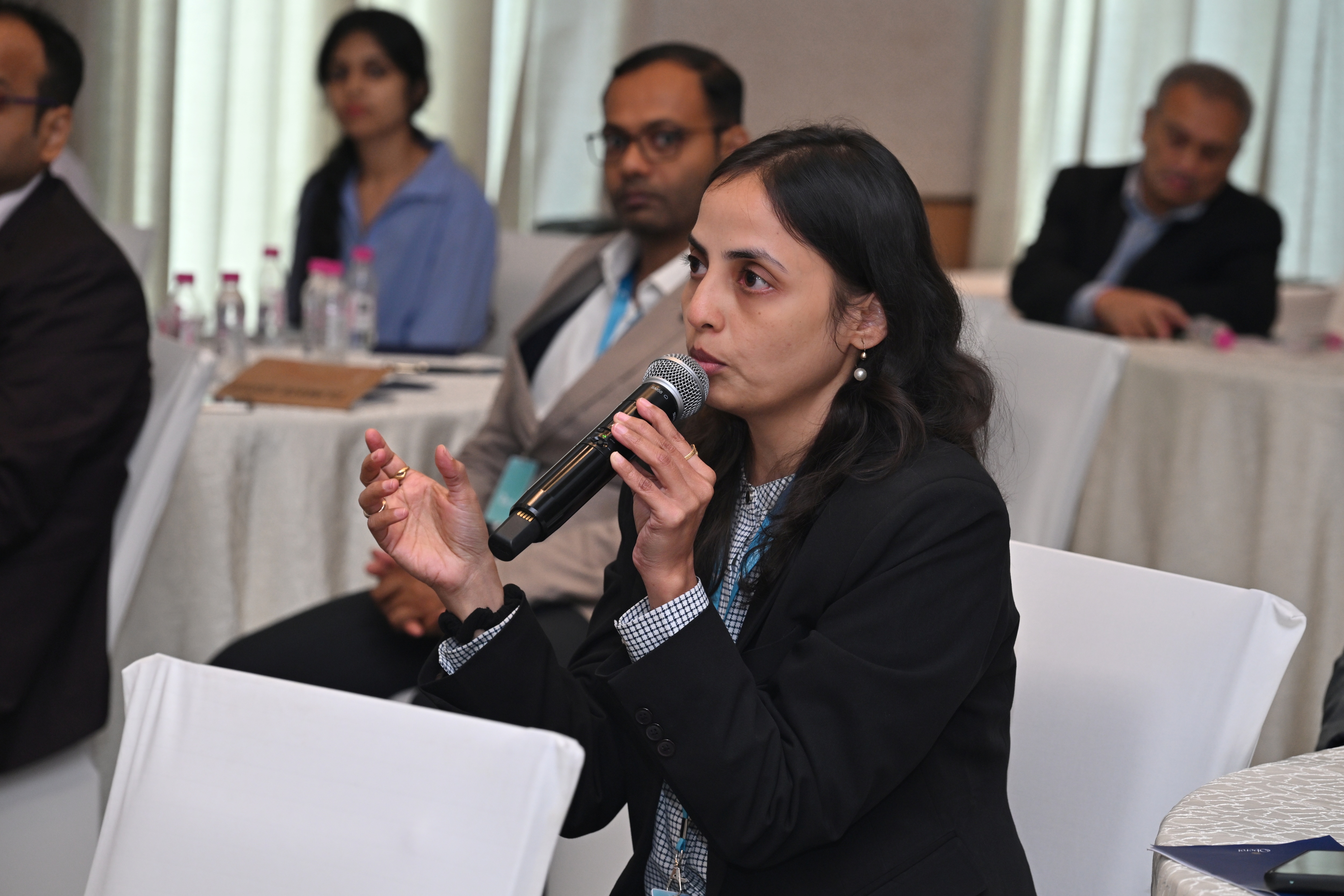
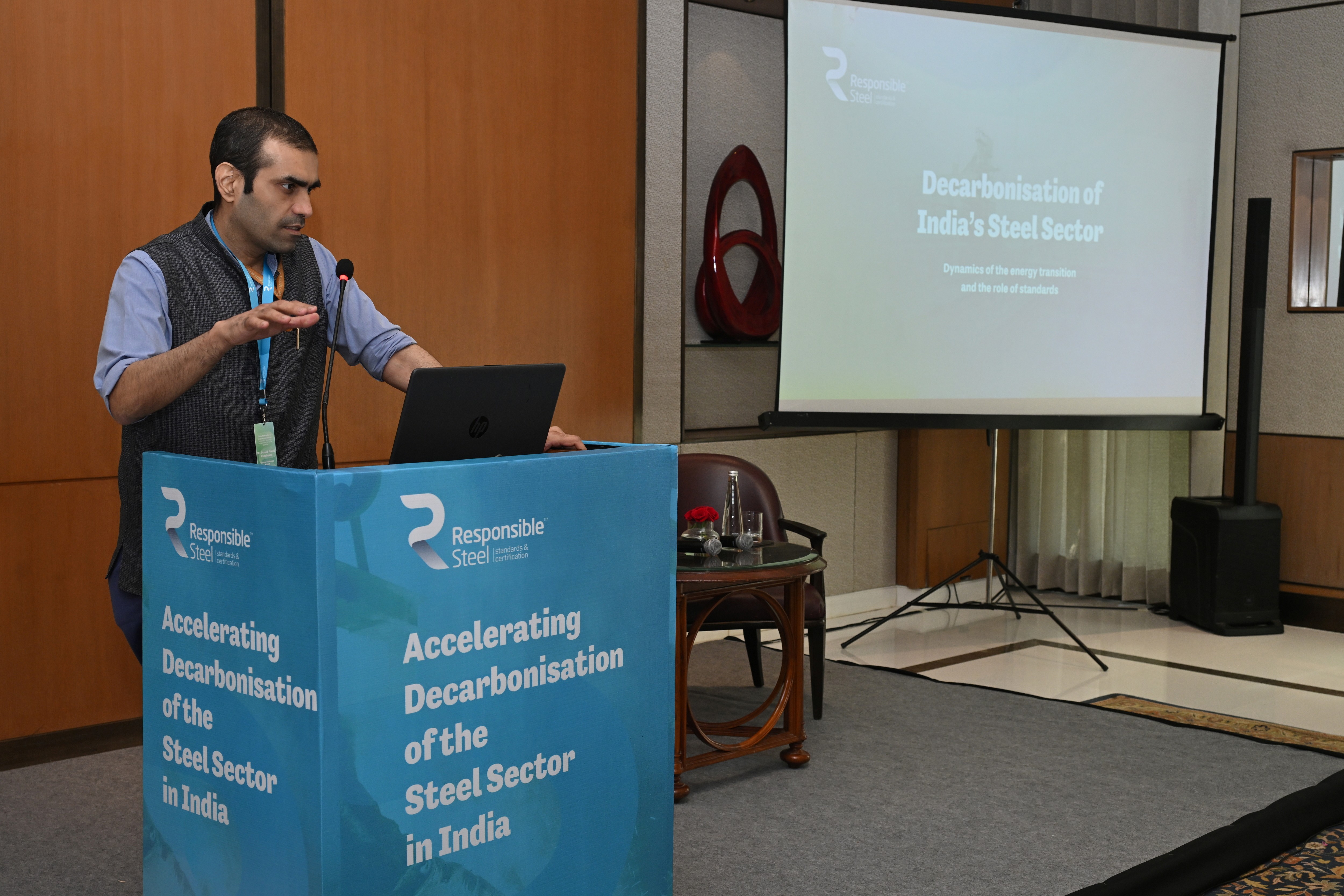
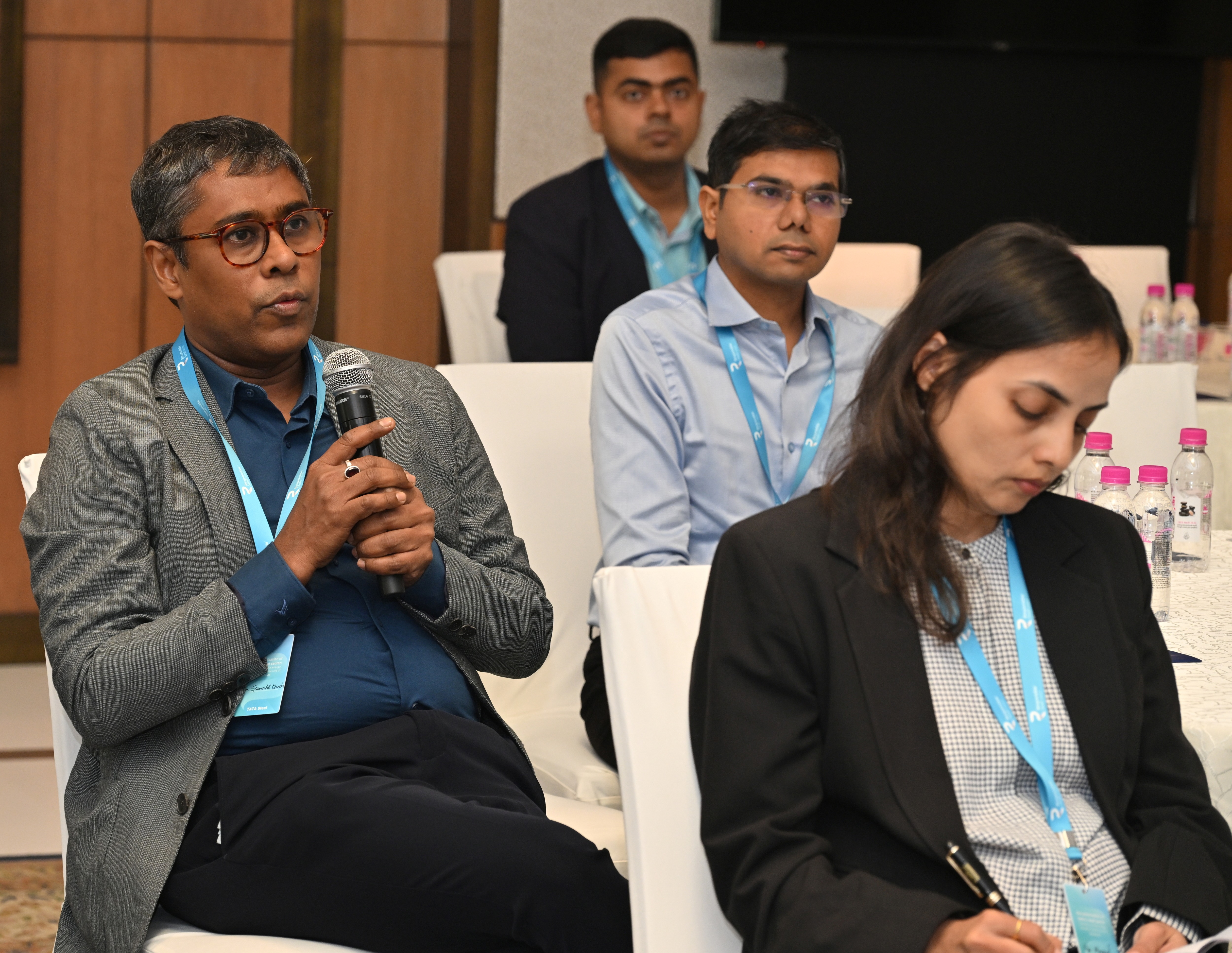
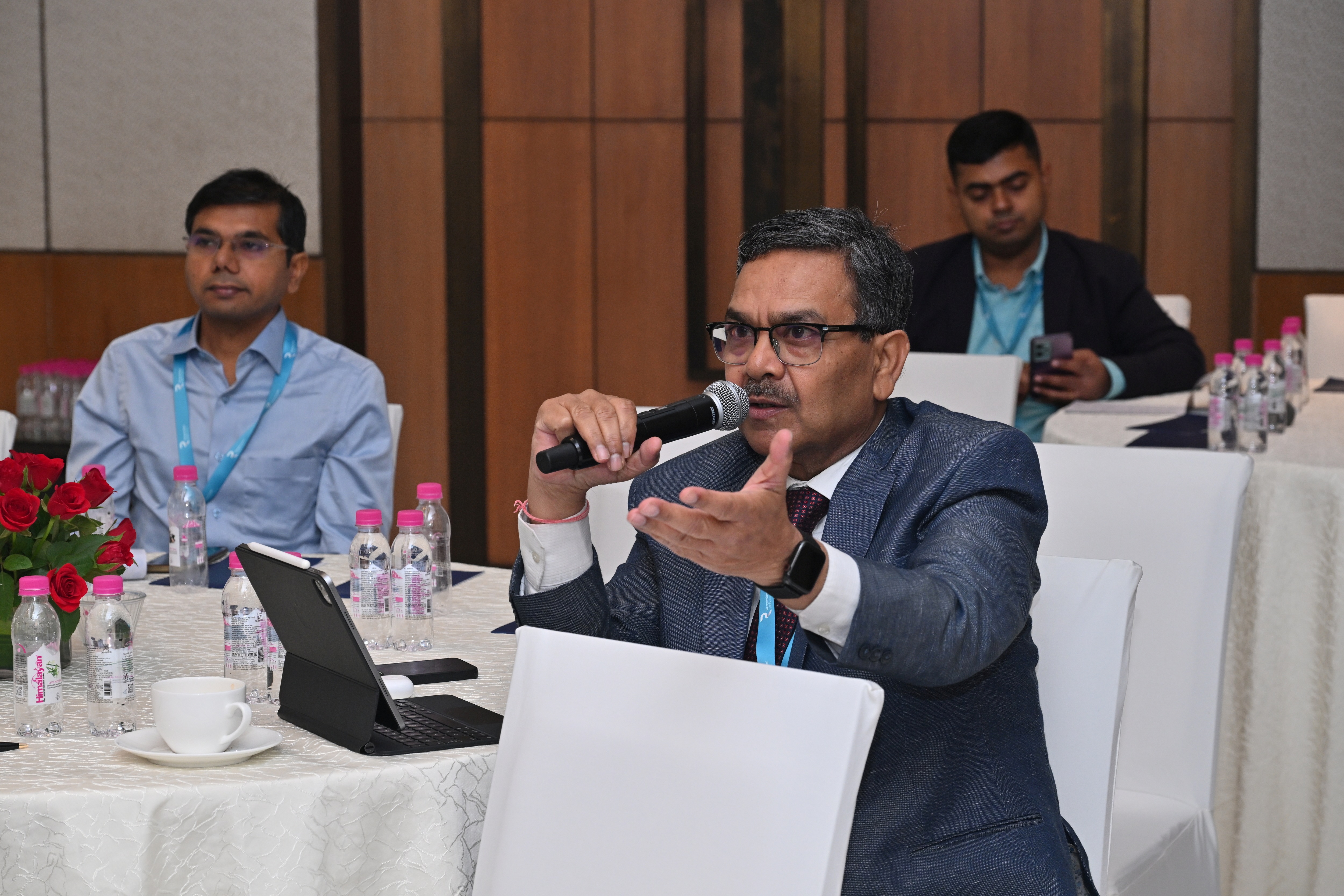
Held under the theme “Decarbonisation of India’s steel sector: Dynamics of the energy transition and the role of standards,” the event brought together leaders from government, industry, and civil society to discuss how credible standards, collaboration, and innovation can accelerate India’s transition to low-emission steel. Participants included Tata Steel, JSW Steel, Tata Motors, the Indian Steel Association, WWF, Climate Group, and the Council on Energy, Environment and Water, as well as representatives from the Hydrogen Mission India, the Ministry of Cooperation and the Ministry of New and Renewable Energy.
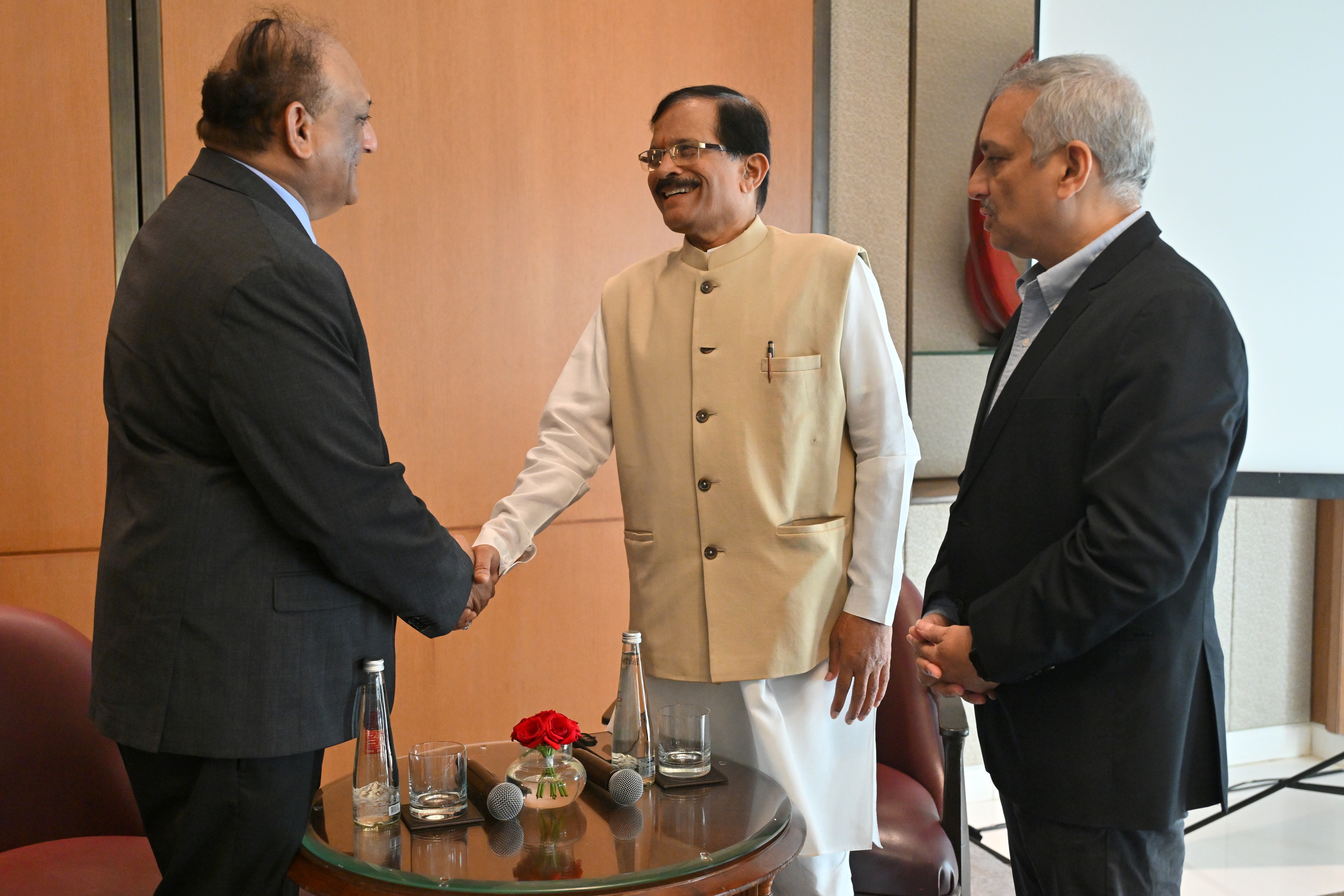
The convening was opened by the Hon’ble Minister of State for New and Renewable Energy (MNRE), Shri Shripad Yesso Naik, whose keynote address framed the energy transition as both an environmental necessity and a moral responsibility. Reaffirming India’s commitment to achieving net-zero emissions by 2070, he described the transition as “a gift we must leave behind—a legacy of ethical industry.”
He encouraged India’s industry to lead through innovation, highlighting green hydrogen as the cornerstone of the transformation and urging investment in carbon capture, smart furnaces, and Direct Reduced Iron (DRI).
Industry perspectives: Progress and challenges
Senior industry leaders shared insights on their progress, highlighting several areas of development:
- Hydrogen-based pilots are underway with positive results, marking a shift in the future of steel production in India.
- There is increasing integration of renewable energy into steel operations, particularly solar and wind, enabling greater energy autonomy.
- A growing focus on circularity and scrap-based production is emerging to reduce lifecycle emissions.
At the same time, industry participants acknowledged significant barriers to the transition, above all, the high cost of green hydrogen, limited access to clean energy, land availability and grid challenges, and gaps in hydrogen infrastructure.
Policy, incentives, and the role of standards
Discussions also touched upon a clear, globally aligned national framework to support policy, finance, and trade. Shivakumar K., ResponsibleSteel’s Director of Development and Innovation, emphasised the role standards can play as strategic tools that build trust, guide policy and investment, and support industry transformation. By adopting, integrating, or aligning with international standards, national policy frameworks can demonstrate leadership and maintain competitiveness in the global market.
Clear priorities emerged in the discussions, including the need to:
- Ensure interoperability between India’s taxonomy and international standards and policy mechanisms to support trade and global compliance.
- Establish robust certification frameworks to build investor confidence.
- Embed standards within policy narratives linking industry decarbonisation with employment, equity, and regional development.
The convening also discussed policy incentives to accelerate the transition, with representatives from MNRE highlighting ongoing initiatives such as the National Green Hydrogen Mission, which plans to allocate ₹19,744 crore (around $2.2 million) to produce five million tonnes of green hydrogen by 2030.
However, participants stressed that more targeted support is needed, such as tax credits to encourage early adoption of low-carbon technologies.
Toward a responsible, low-emission future
The Delhi convening reaffirmed the growing momentum behind India’s steel transition. It also underscored the essential role of international standards in shaping national policy frameworks and unlocking sustainable finance.
ResponsibleSteel’s engagement with industry stakeholders in India will continue to build on the momentum created in Delhi, laying the groundwork for a responsible, near-zero industry, built on cross-border collaboration.
Learn more about the ResponsibleSteel International Production Standard.