
Certification as a catalyst: ResponsibleSteel leads EU dialogue on industrial transformation
Certification as a catalyst: ResponsibleSteel leads EU dialogue on industrial transformation
Certification as a catalyst: ResponsibleSteel leads EU dialogue on industrial transformation

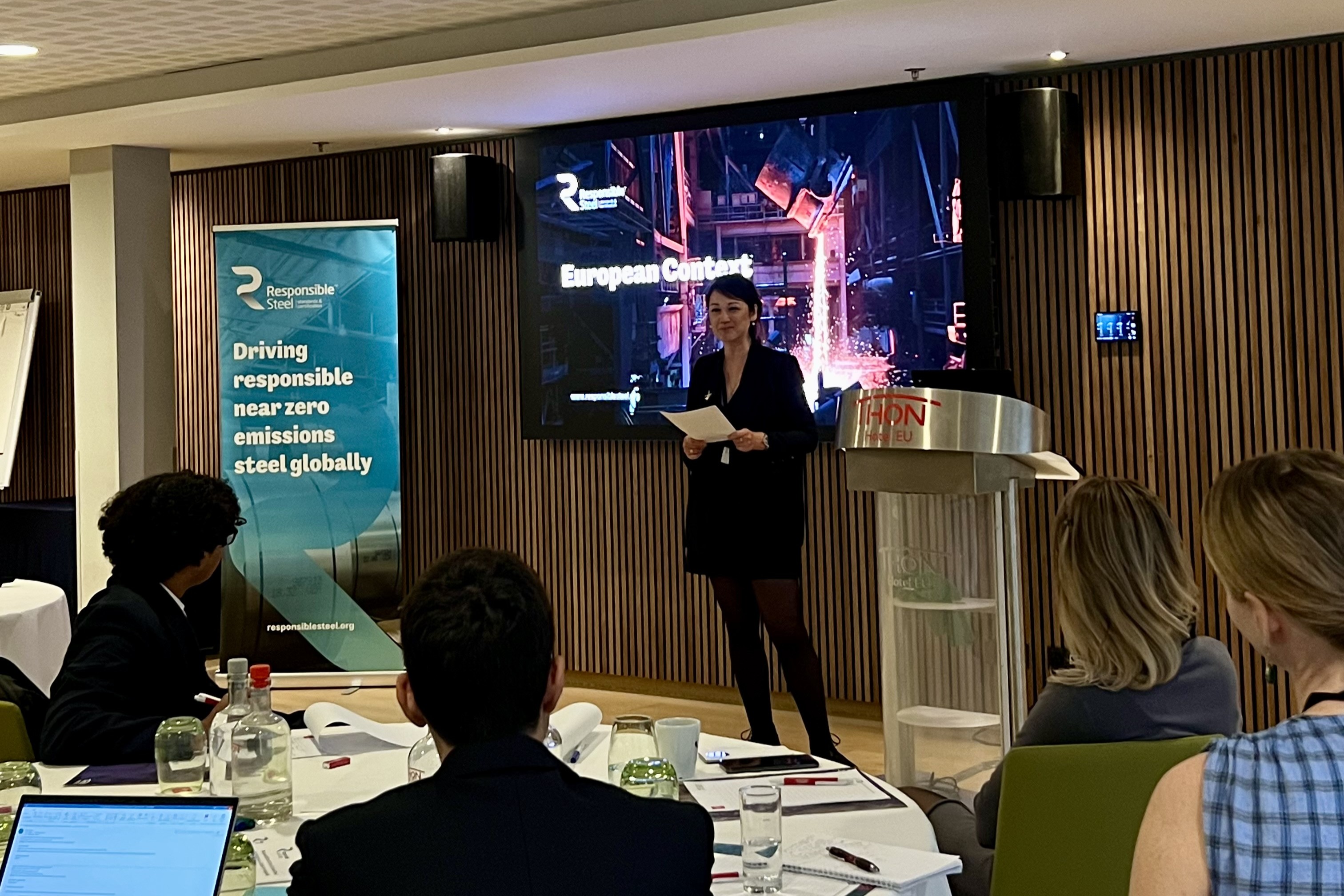
Earlier this year, ResponsibleSteel brought together senior representatives from European government institutions, industry, standards bodies, civil society, and finance for a high-level policy roundtable in Brussels to discuss certification as a catalyst for industrial decarbonisation.
Europe is entering a decisive phase of industrial and climate policymaking. With the EU Emissions Trading System (ETS), Carbon Border Adjustment Mechanism (CBAM), and a forthcoming low-carbon steel label, the stakes are high.
The challenge is clear: how can independent, voluntary certification accelerate the transformation of Europe’s steel industry? And just as importantly, how do we ensure these standards work seamlessly with government policies and regulations, aligning climate ambition, safeguarding competitiveness, and building trust across the value chain?
Three key takeaways
Three priorities stood out during the Brussels discussions:
1. Achieving coherence and interoperability
Aligning the EU Emissions Trading System (ETS), Carbon Border Adjustment Mechanism (CBAM), and product labels is critical to avoid policy fragmentation. This ensures that climate performance and market access work hand in hand, rather than pulling in different directions.
2. Building trust through robust assurance and traceability
Strong assurance systems are essential to give businesses and consumers confidence in sustainability data. This helps prevent greenwashing and ensures that claims about low-carbon steel are credible and transparent.
3. Embedding integrity beyond carbon
Europe’s industrial transformation must go further than emissions. It should integrate environmental and social responsibility—from labour rights and biodiversity protection to circularity and resource efficiency—creating a truly sustainable steel sector.
A call for coherence and clarity
The outcome of the discussions was clear. As one participant observed, "Europe doesn't need more bureaucracy—it needs coherence, trust, and credible evidence." This means having a trusted data backbone linking policy instruments rather than multiplying accounting systems. Global certification and assurance frameworks like ResponsibleSteel can provide that backbone, reducing complexity and ensuring comparability across borders.
Recent EU policy developments, such as the expected steel trade defence measure, are prime examples of how trade and climate instruments must evolve coherently. Europe’s policy architecture must be designed to reward verified low-emission steel, ensuring that trade and climate policy pull in the same direction. Certification can serve as the "connective tissue" of industrial policy, translating ambition into verifiable data and helping policymakers and businesses meet the integrity test of Europe's Green Deal.
Going beyond carbon
Another key point made was that Europe must progressively move beyond carbon-only metrics towards integrating environmental and social integrity more broadly. Climate metrics alone aren’t enough. ResponsibleSteel remains the only globally recognised standard that integrates emissions, labour, biodiversity, and governance into one assurance model. A holistic approach ensures Europe’s industrial transition is not just green, but fair.
Certification: Turning intent into impact
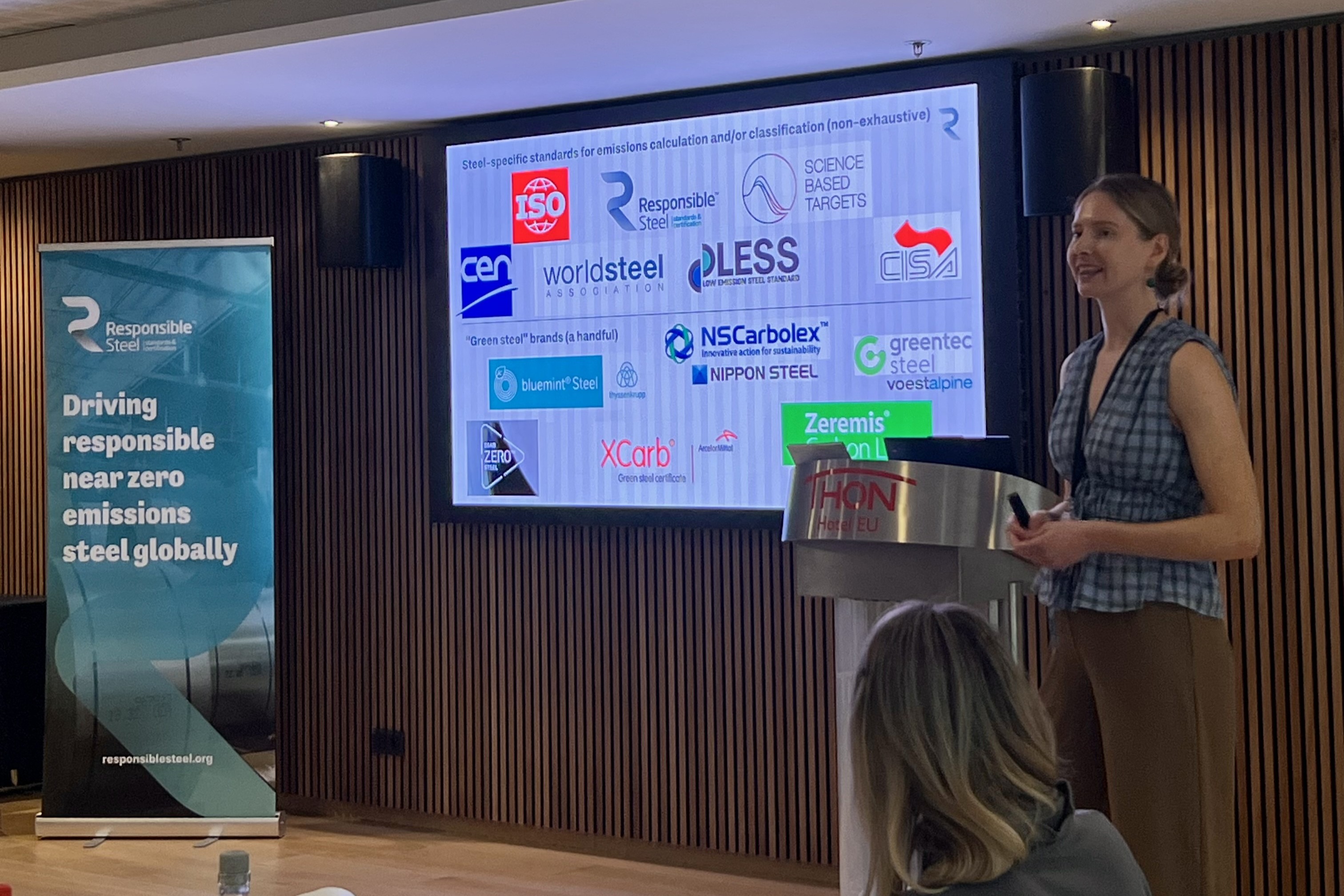
"Certification is no longer a technical afterthought—it's what turns climate intent into credible, measurable impact," said ResponsibleSteel CEO Annie Heaton. "The roundtable confirmed that credible, interoperable standards are now essential for Europe’s industrial transition. ResponsibleSteel's agreement with the Brussels-based Low Emission Steel Standard (LESS), announced at COP30, was a major milestone on the road to greater alignment.”
With new trade-defence measures on the horizon, ResponsibleSteel will continue working with policymakers, industry, and civil society to make certification a cornerstone of Europe’s climate-industrial architecture.
Because only when integrity and ambition move together—through coherence, credibility, and verified performance—can Europe’s industrial transition truly succeed.

