
Watch: Strengthening global interoperability with the China Iron and Steel Association
Watch: Strengthening global interoperability with the China Iron and Steel Association
Watch: Strengthening global interoperability with the China Iron and Steel Association
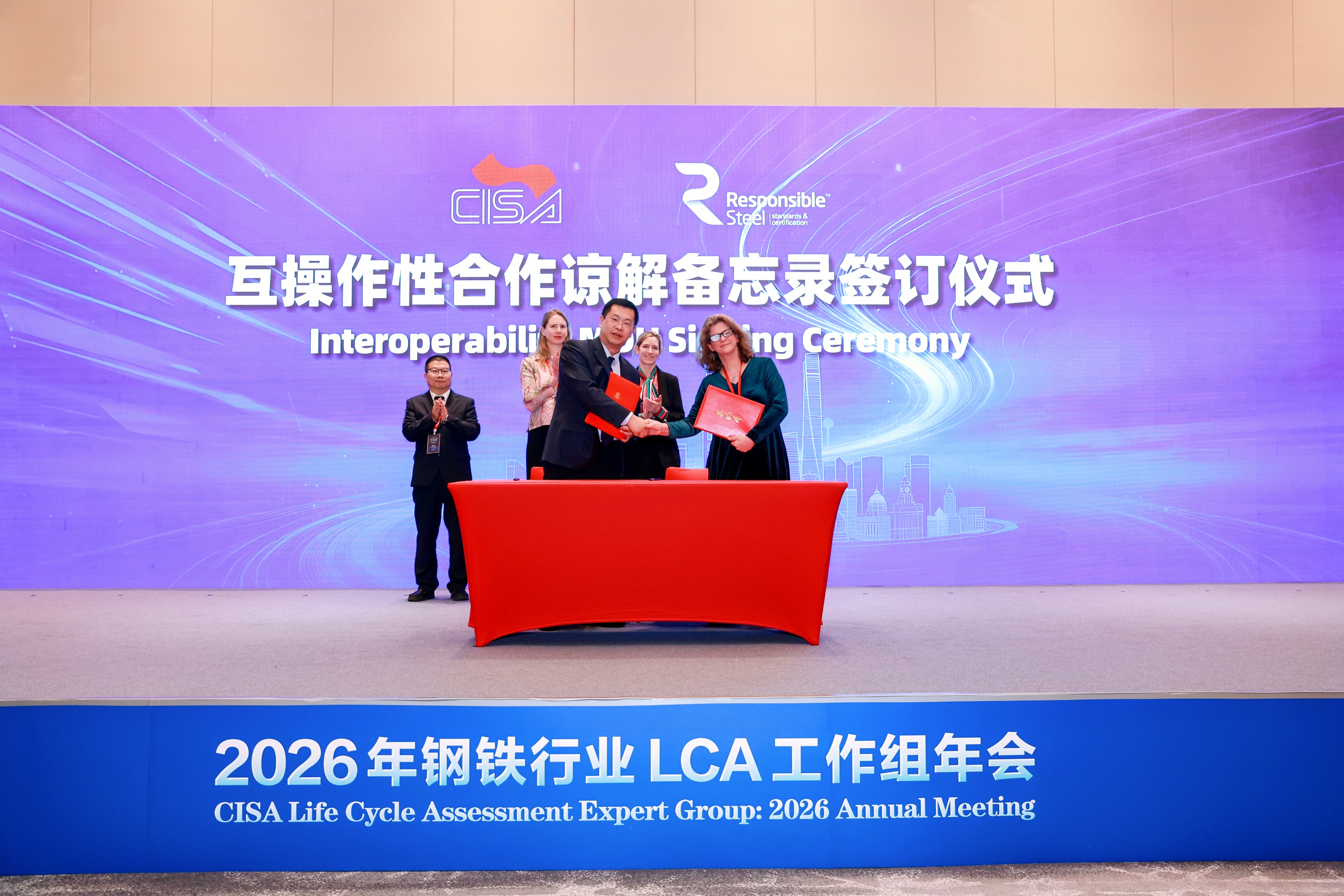
Earlier this year, ResponsibleSteel was in China to mark an important milestone following the announcement at COP30 of our agreements with the China Iron and Steel Association (CISA) and the Brussels‑based Low Emission Steel Standard (LESS). The visit culminated at CISA’s annual LCA conference, where we presented the project to the Chinese steel value chain and celebrated our shared ambition to advance steel decarbonisation through global collaboration.
In this video, we speak with voices from across the steel value chain, including ResponsibleSteel’s CEO, Annie Heaton, and Director of Programmes, Amy Jackson; CISA’s Vice Secretary General, Feng Chao; VAMA’s Chief Technology Officer, Li Xiang; and Hang Lung Properties’ Deputy Director - Sustainability, John Haffner. They reflect on why interoperability between global standards matters, and how collaboration between ResponsibleSteel and CISA can help unlock trusted, comparable data for low‑ and near‑zero‑emission steel.
Together, these partnerships are laying the foundations for a more transparent global market, one that supports informed procurement, targeted investment, and real emissions reductions across the steel value chain.
What do ResponsibleSteel's interoperability projects look like in practice?
In short, interoperability means measuring emissions using rules that are as aligned as possible, and recognising the differences, to enable comparison on a like-for-like basis. Imagine the benefit this would bring for anyone wanting to distinguish what good looks like, for example, procurement teams, investors, and policymakers.
But making interoperability work in practice requires a lot more if we want a reliable, credible and sustainable system that generates high-quality, comparable data.
We've outlined the key components of this in our Framework for Credible Interoperability, which will inform both our work with LESS and CISA:
- Aligned GHG accounting rules
- A reliable calculation tool
- A robust assurance mechanism
- Credible claims protocols
- Good governance, oversight and resourcing
- Appropriate data management
- Strong operations management systems
This is how markets are built: first with innovation, then with the necessary rules and systems that enable good information to flow – so that steel buyers can understand, investors can evaluate, and steelmakers can compete, based on emissions performance that everyone can trust.

