
What’s next on just transition? In conversation with ResponsibleSteel’s Director of Programmes, Amy Jackson
What’s next on just transition? In conversation with ResponsibleSteel’s Director of Programmes, Amy Jackson
What’s next on just transition? In conversation with ResponsibleSteel’s Director of Programmes, Amy Jackson
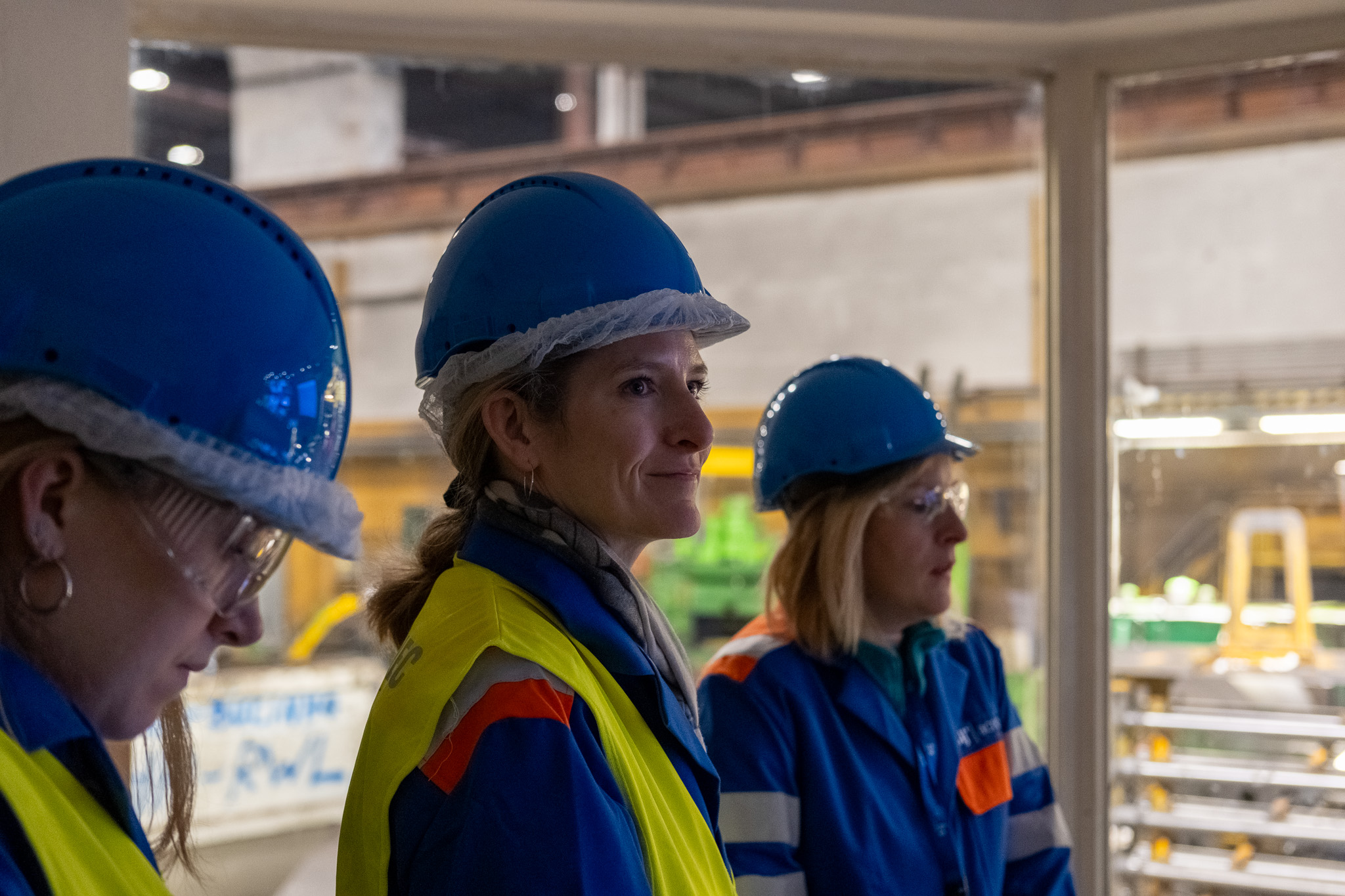
As policymakers, businesses, and investors set their sights on rapid industry decarbonisation, less attention has so far been paid to the workers and communities most impacted by the transition.
Last month, ResponsibleSteel released a first-of-its-kind report with the Initiative for Responsible Mining Assurance (IRMA) outlining key principles to support a just transition for the steel and mining sectors. The report follows a year-long project funded by the ISEAL Innovations Fund with support from the Swiss State Secretariat for Economic Affairs.
ResponsibleSteel’s Director of Programmes, Amy Jackson, outlines why it’s vital that industry decarbonisation is not only fast but fair, and how this latest report could influence the ongoing revision of the ResponsibleSteel International Production Standard.
Why does a just transition matter?
Mining and steel are responsible for a significant share of global energy-related emissions, up to 10% from mining and likewise around 10% from steel. So, there’s no question: decarbonising these sectors is absolutely essential to reaching global climate goals. But what’s often overlooked is the human impact of this transition. We know the shift will be profound, but we’re only beginning to understand what it will look like in practice.
If we don’t take deliberate action, the workers and communities most affected by these transitions risk being left behind. Globally, steel employs around six million people, mining around 20 million, and millions more rely on these industries indirectly.
A just transition ensures that the benefits of industrial transformation are shared. This includes opportunities for safer jobs, new skills, economic diversification, and improved access to clean energy infrastructure and other low-emission goods and services. It also means embracing more equitable benefit‑sharing approaches, including co‑ownership and equity models, so that affected communities can participate meaningfully in the value created by the transition.
What prompted ResponsibleSteel and IRMA to look more closely at just transition issues in steel and mining?
New technologies are opening the door to a cleaner future, but they can also be very disruptive, especially in heavy industries like steel and mining.
Steel production is already beginning to change in some geographies, as blast furnaces close, companies shift toward EAF and DRI technologies, and electric and hydrogen-based routes emerge. These transformations will also require significantly expanded renewable energy capacity and major changes to transport and logistics systems to support new supply chains. Mining is facing changes of a similar scale with the decline of coal and the increasing demand for critical minerals. Together, these developments will reshape the mining and steel supply chains, with major implications for employment patterns and local economies.
There’s growing recognition that heavy industries need to better address human rights, Indigenous rights, and social equity, and to genuinely integrate local knowledge into transition planning and due diligence. Stakeholders are also calling for more inclusive approaches to ensure transitions are fair and collaborative rather than imposed.
This is why ResponsibleSteel and the Initiative for Responsible Mining Assurance (IRMA) partnered on this project - to take a closer look at the social implications of industrial transitions. We wanted to understand the role voluntary sustainability standards can play in helping companies navigate these shifts in a way that is both responsible and inclusive.
What is the Just Transition Framework?
The Just Transition Framework builds on internationally recognised principles from the International Labour Organisation (ILO) and the UN Working Group on Business and Human Rights, as well as extensive inputs from the published literature on this topic and from stakeholders.
We drew on three key dimensions of justice commonly used in academic theory - procedural, distributive, and restorative justice - and began by mapping 16 existing just transition frameworks from international bodies, industry, advocacy groups, and Indigenous peoples.
This provided the basis for a draft framework, which we then tested and refined through extensive stakeholder engagement. We spoke with workers, unions, supply chain actors, companies, governments, civil society, communities, and Indigenous groups, and brought stakeholders together for workshops in Johannesburg and Brussels.
The final Just Transition Framework brings together these insights into nine principles and 50 core elements, along with five recommendations for VSSs, offering a structured but adaptable foundation for embedding just transition concepts into global sustainability schemes.
Were there any other important findings or points from the framework worth highlighting?
One of the clearest findings that emerged from this work is that transitions are highly context‑specific. The social impacts and opportunities associated with them depend heavily on local conditions, from the economic role a mine or steel site plays in a region, to the availability of alternative jobs, to the presence of strong institutions and community organisations. Understanding this is a critical first step, because it means recognising that there is no one‑size‑fits‑all approach.
Another important insight is that while voluntary sustainability standards have an important role to play, they cannot drive a just transition on their own. Nor can it be directed by steelmakers or mining companies alone. A truly just transition requires collaboration with a much wider group of actors, such as local and national governments, financial institutions, workers and trade unions, communities, and Indigenous peoples. The Framework helps clarify where VSSs can contribute most effectively, but it also emphasises that delivering a fair transition is ultimately a shared responsibility, not something any single organisation or sector can dictate or deliver in isolation.
How will the framework impact ResponsibleSteel’s International Production Standard?
Following the production of the Just Transition Framework, we benchmarked it against the ResponsibleSteel International Production Standard to identify where just transition concepts are already well covered and where there may be gaps.
One of the key findings from this exercise and from our discussions with our Just Transition Working Group is that many just transition elements are already embedded in the Standard, even if they aren’t described using that specific terminology. For example, existing requirements around stakeholder engagement, site decommissioning and closure, labour rights and the development of closure plans all support just transition outcomes.
Where the Framework has added value is by providing a structure for the conversation, which enables discussions around the most important elements for inclusion in the standard, and helps to identify where we could make these expectations more explicit about their application to transitions.
What’s next?
As we move forward with the standard revision, our focus is on making more explicit where requirements will support a just transition, in the standard itself or in supporting guidance. For example, strengthening guidance around due diligence, particularly how sites should identify and address just transition‑related risks and impacts, and clarifying what a robust just transition plan should contain. This might cover identified risks, mitigation actions, and support measures such as worker training or reskilling.
The aim isn’t to introduce major new requirements. Instead, the intention is to build on what’s already there, ensuring the Standard continues to evolve in a way that supports a fair, inclusive, and responsible transition across the steel value chain.
Learn more about the latest report.
Learn more about the Standard revision process and find out how to get involved on our Standard revision webpage.

Amy has focused on advancing sustainability in business for over 20 years. She has played a pivotal role in strengthening global sustainability standards, from expanding the reach and credibility of the Marine Stewardship Council to leading key consultations at ISEAL that resulted in widely recognised best-practice frameworks, including the Credibility Principles, Chain of Custody Guidance, and Claims Good Practice Guide.
Her expertise spans multiple sectors, including ethical trade, agriculture, and sustainable cotton, where she has helped drive high-impact and rapidly growing initiatives. Most recently, she led teams at Principles for Responsible Investment (PRI), fostering stronger signatory engagement and deepening commitment to responsible investment. Amy holds a Master’s in Sustainability Leadership from the University of Cambridge, where she focused on how the responsible investment sector could better utilise sustainability standards.
At ResponsibleSteel, Amy leads efforts in standards development, assurance, chain of custody, claims, and monitoring, evaluation, and learning programs—ensuring robust, credible, and high-impact solutions for a more sustainable steel industry.
