The Materials Sourcing Progress Levels
This two‑pager explains ResponsibleSteel’s approach to responsible materials sourcing and how the Materials Sourcing Progress Levels help drive improvement and manage supply‑chain risks.
Heading

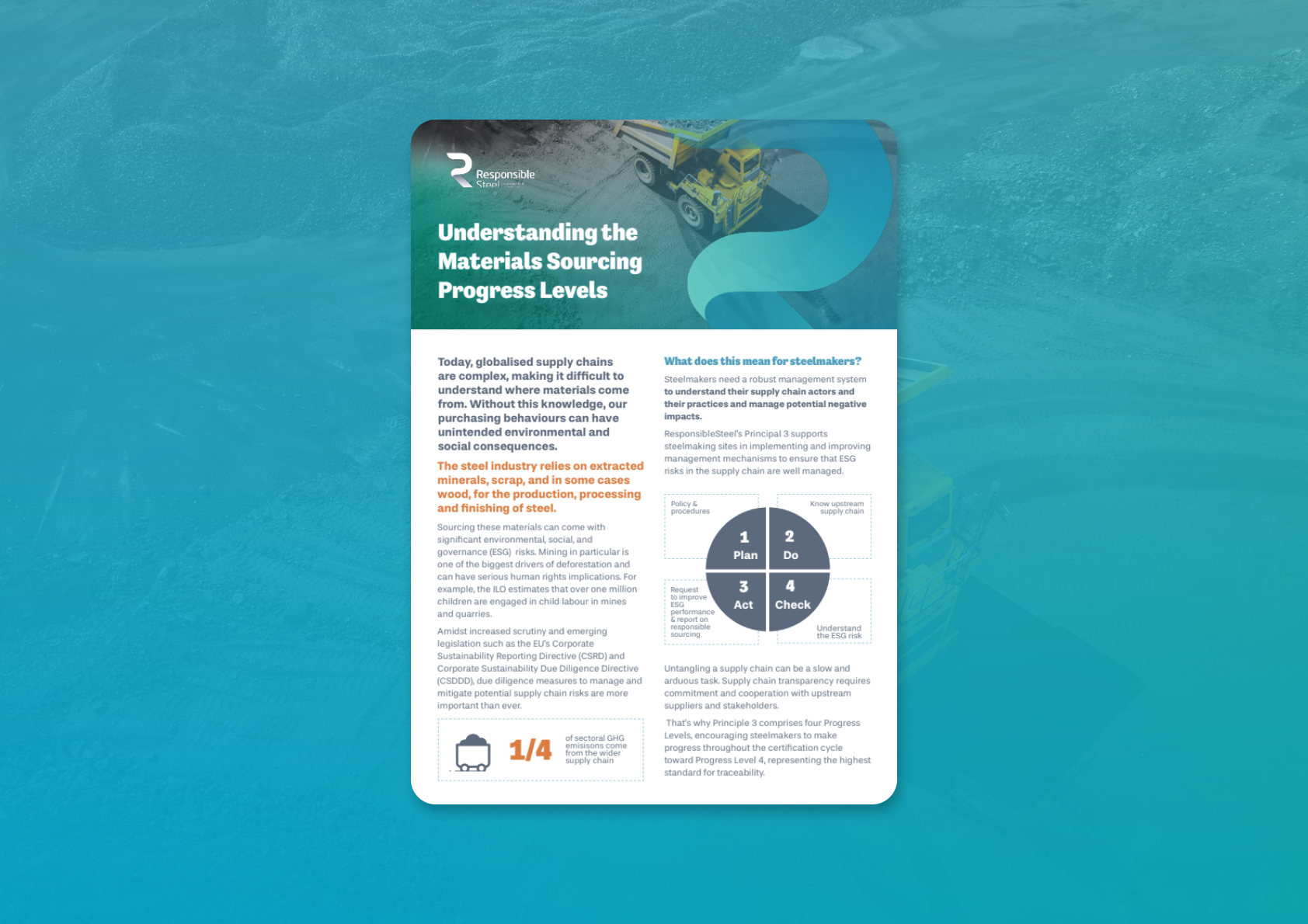
Today, globalised supply chains are complex, making it difficult to understand where materials come from. Without this knowledge, our purchasing behaviours can have unintended environmental and social consequences. The steel industry relies on extracted minerals, scrap, and in some cases wood, for the production, processing and finishing of steel.
Sourcing these materials can come with significant environmental, social, and governance (ESG) risks. Mining in particular is one of the biggest drivers of deforestation and can have serious human rights implications. For example, the ILO estimates that over one million children are engaged in child labour in mines and quarries.
Amidst increased scrutiny and emerging legislation such as the EU’s Corporate Sustainability Reporting Directive (CSRD) and Corporate Sustainability Due Diligence Directive (CSDDD), due diligence measures to manage and mitigate potential supply chain risks are more important than ever.
What does this mean for steelmakers?
Steelmakers need a robust management system to understand their supply chain actors and their practices and manage potential negative impacts. ResponsibleSteel’s Principle 3 supports steelmaking sites in implementing and improving management mechanisms to ensure that ESG risks in the supply chain are well managed.
Untangling a supply chain can be a slow and arduous task. Supply chain transparency requires commitment and cooperation with upstream suppliers and stakeholders. That’s why Principle 3 comprises four Progress Levels, encouraging steelmakers to make progress throughout the certification cycle toward Progress Level 4, representing the highest standard for traceability.
Taking the first step to become certified to Progress Level 1 will help:
- Drive improvement in supply chain practices
- Increase readiness for compliance with incoming legislation
What does this mean for material suppliers?
We need material suppliers to implement effective management systems to understand and mitigate operational impacts on the environment and society. And we need collaboration between upstream suppliers and downstream buyers to promote greater transparency. Buyers must understand where their materials come from to recognise and manage supply chain risks. Through greater collaboration and transparency, we can ensure responsible materials stand out in the value chain and support market recognition of responsible practices.
To support this, ResponsibleSteel recognises sustainability programmes that evaluate suppliers’ ESG performance via a credible, third-party audit mechanism. Recognised programmes undergo a comprehensive review process. Participating in one of these well-established, voluntary sustainability programmes gives steelmakers confidence that their suppliers are operating responsibly and reducing ESG risks in the supply chain.