

Reflections from China: ResponsibleSteel's CEO Annie Heaton discusses building interoperability across global standards
Interoperability: Building a bridge between global standards
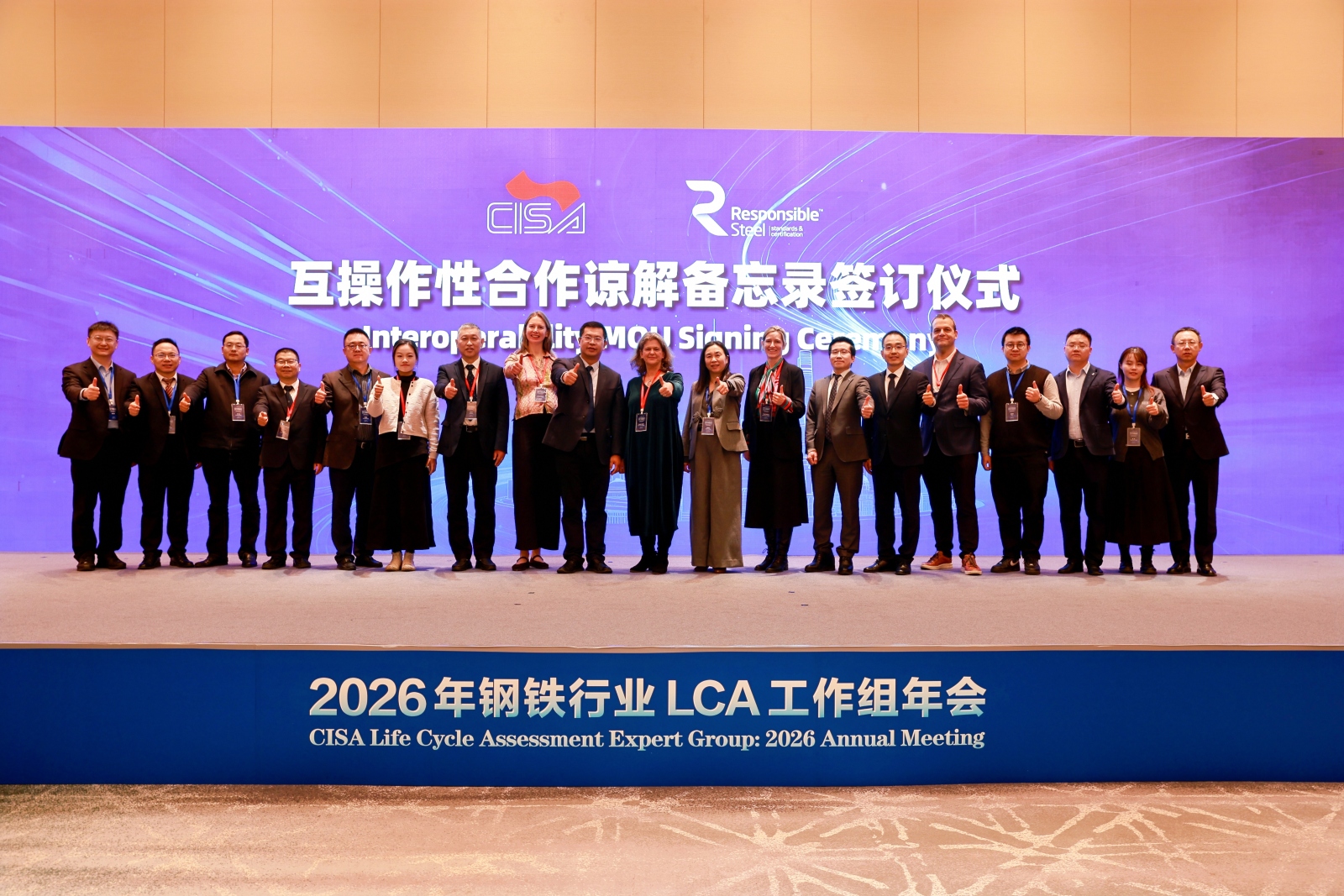
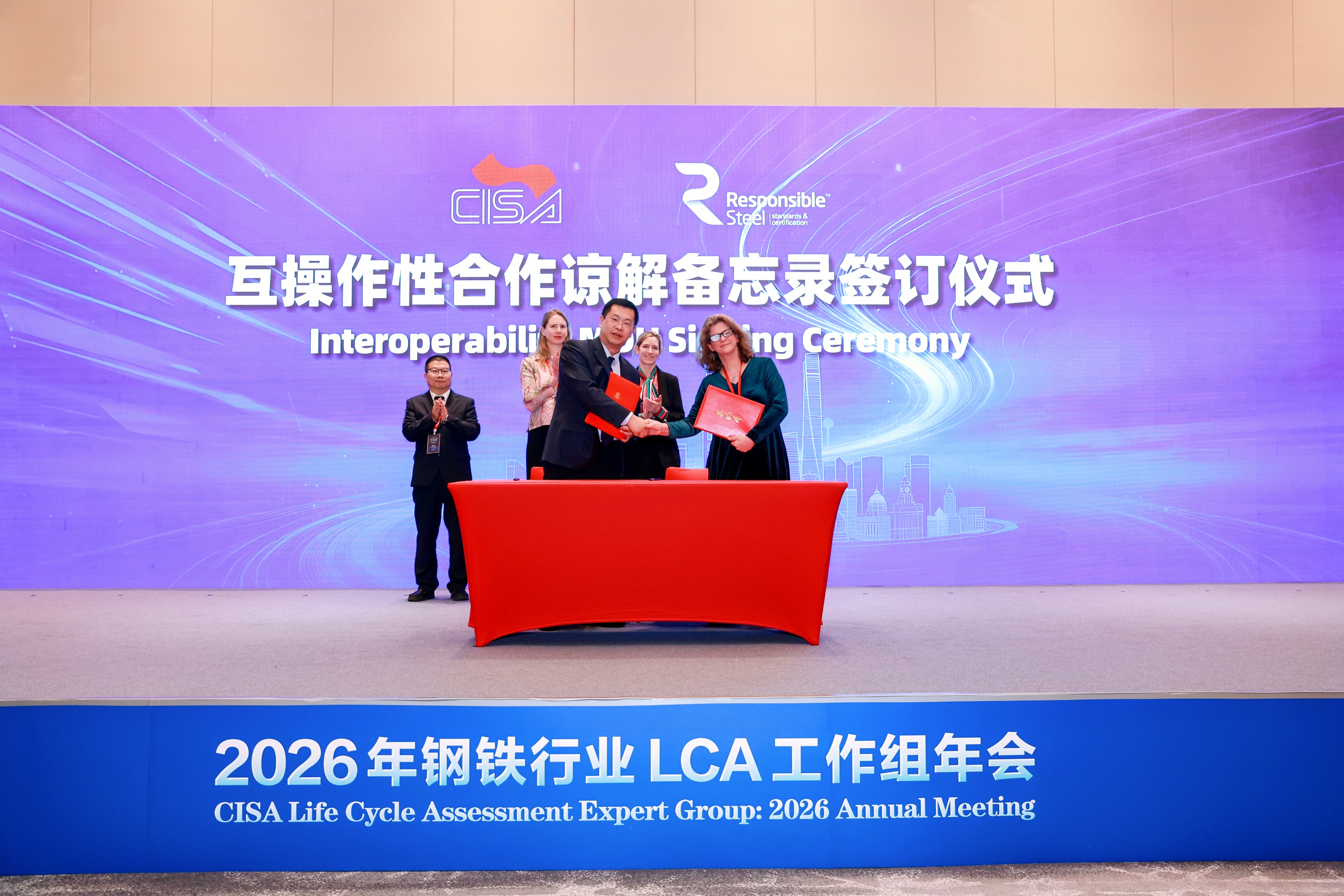
ResponsibleSteel's quest for a coherent market for decarbonised steel in 2026 got off to a constructive start this month. Following the announcement of our landmark agreements with the Chinese Iron and Steel Association (CISA) and the Low Emission Steel Standard (LESS) at COP30, ResponsibleSteel was in China in January to kick off our work on interoperability with CISA. This work in China complements our parallel project with Brussels-based LESS.
The goal? To build trusted data and claims on decarbonisation.
During our trip, our Director of Programmes, Amy Jackson, our Decarbonisation Lead, Alli Devlin, and myself had the opportunity to:
- Present to the Chinese steel value chain our C2F (China's low-carbon emission steel standard) interoperability MoU at CISA's annual LCA conference.
- Connect with our Chinese members, including SKF, World Resources Institute (WRI), Climate Group, VAMA (Valin ArcelorMittal Automotive JV), Penglai Dajin, and some of our certification bodies working in China, including Afnor and China Quality Certification Centre (CQC).
- Get to work on our C2F-ResponsibleSteel Interoperability Project, structuring the discussions around our Framework for Credible Interoperability.
- Visit the 15mtpa Zhanjiang steel plant, where a new DRI-EAF line was launched in Dec 2025. This has involved the production to date of iron reduced with hydrogen in a 1mtpa DRI plant. Whilst this is currently produced from refined coke oven gas, the project is a hugely significant demonstration of the potential to produce hydrogen-based DRI at an industrial scale.
.jpg)
What do ResponsibleSteel's interoperability projects look like in practice?
In short, interoperability means measuring emissions using rules that are as aligned as possible, and recognising the differences, to enable comparison on a like-for-like basis. Imagine the benefit this would bring for anyone wanting to distinguish what good looks like, for example, procurement teams, investors, and policymakers.
But making interoperability work in practice requires a lot more if we want a reliable, credible and sustainable system that generates high-quality, comparable data.
We've outlined the key components of this in our Framework for Credible Interoperability, which will inform both our work with LESS and CISA:
- Aligned GHG accounting rules
- A reliable calculation tool
- A robust assurance mechanism
- Credible claims protocols
- Good governance, oversight and resourcing
- Appropriate data management
- Strong operations management systems
This is how markets are built: first with innovation, then with the necessary rules and systems that enable good information to flow – so that steel buyers can understand, investors can evaluate, and steelmakers can compete, based on emissions performance that everyone can trust.
.jpg)

ResponsibleSteel recognises the Copper Mark as an input material programme for Progress Levels 1 to 3 of the International Production Standard
The steel sector relies heavily on mined and processed minerals as an input to production processes. To help ensure that steel companies can increasingly source minerals from responsible suppliers, ResponsibleSteel recognises input material programmes that are well placed to credibly verify the ESG performance of suppliers.
The Copper Mark is the leading assurance framework for the responsible production of Copper, Molybdenum, Nickel, and Zinc, with the latter three being important contributors to the steel value chain.
The Copper Mark submitted a self-assessment of their Risk Readiness Assessment (RRA 3.0) in December 2023 for recognition against the ResponsibleSteel International Production Standard. Following a public consultation and additional improvements, the Copper Mark is now a recognised programme for Progress Levels 1, 2 and 3 of Principle 3’s responsible sourcing requirements. It is the fourth programme to achieve recognition by ResponsibleSteel.
Annie Heaton, CEO of ResponsibleSteel commented, “A product’s sustainability goes far beyond the boundary of the site where it is produced. It’s imperative not only that steelmakers are operating responsibly but that they are also able to source input materials responsibly. That means seeking credible verification that the metals and ores they are buying come from mines subject to the same principles as they demonstrate with ResponsibleSteel. Recognising the Copper Mark as the fourth input programme under Principle 3 of our Production Standard will go a long way in supporting steelmakers looking to source zinc, molybdenum and nickel from suppliers complying with rigorous ESG standards, and we’re delighted to welcome them into the ResponsibleSteel ecosystem.”
“We welcome this recognition as it will help buyers of zinc, molybdenum and nickel materials on the journey towards Certified Steel. It marks another step in making the standards and assurance landscape collaborative and supporting continuous improvement across the supply chain”, said Michèle Brülhart, Executive Director at the Copper Mark.
Find out more about the Copper Mark here or learn more about ResponsibleSteel’s recognition process here.

October 2024 Newsletter
It's been another busy month for ResponsibleSteel! The consultation on the Production Standard is still open - and we really encourage anyone who has any feedback on this important document to take part. Our latest opinion piece with Reuters explored the crucial role of credible certification in the steel industry’s journey to responsible net zero. Dr Alli Devlin, our Senior Decarbonisation Advisor, represented us at the ICDA ESG Technical Summit in Brussels, where she shared some valuable insights on decarbonisation.
We are also happy to welcome four new members to ResponsibleSteel representing a diverse set of interests. Looking ahead, we are calling on members to join a working group on our approach to science-based target setting, and will also be working on a membership survey and interviews in the coming weeks.
In this month's newsletter, you will find key updates including:
- Our newest members
- Upcoming trainings
- Opportunities to join the team and get involved in our work
- And more!
Click here to view ResponsibleSteel's October 2024 newsletter.
Updates to the 2025 membership fee structure
ResponsibleSteel recently updated our membership fee structure to allow for a fairer reflection of company size and ensure our administrative costs are covered.
These changes were approved by the ResponsibleSteel Board of Directors in September 2024 and will take effect on January 1st, 2025
Key changes to the 2025 membership fees:
1. Revised fees for smaller members: To cover the administrative costs of collecting our membership fees, we have made revisions to the lower tier fees.
2. Introduction of new revenue tier: The lower end of the current fee structure has a steep jump-up in fees. As a result, we will introduce an additional revenue tier (from $1m to $10m).
3. ‘Non-profit’ category changes to ‘Civil Society’: The ‘Non-profit’ classification will be renamed as ‘Civil Society’ to better reflect our membership categories. Civil society membership will continue to be free of charge.
4. Trade Associations: From 2025, trade associations will be charged fees as per other Associate members, regardless of non-profit status, in keeping with other membership associations in our industry.
Members will see these changes reflected in their 2025 membership invoices that will be issued towards the end of the year. We believe these updates will ensure continued inclusivity while maintaining the financial sustainability of our programme.
View a full breakdown of ResponsibleSteel's 2025 membership fees here.
Public consultation: Review and Revision of the International Production Standard
We are pleased to announce that we are conducting a public consultation for the review and revision of the ResponsibleSteel International Production Standard v2.1. The consultation period is open for 60 days, from 1 October to 8 December 2024.
To ensure that the standard remains effective and relevant to the industry, periodic reviews and revisions are essential. This process is guided by the ResponsibleSteel Standard Development Procedure v3.0 (topic 12.1), which requires a review and revision every 5 years, in alignment with the ISEAL code.
As part of this formal consultation, we engage relevant stakeholders, including ResponsibleSteel Members, approved certification bodies, and ResponsibleSteel certificate holders to assess whether the standard requires revision, and we report the findings to the Board. Additionally, it is mandated that any approved urgent revisions be included in this regular review and revision process.
The standard consists of 13 principles, covering a wide range of sustainability topics, including ESG, GHG, and community-related topics. To guide the review and revision process, we have gathered and reviewed all relevant information and developed a public consultation document proposing the scope of the revisions to the standards.
Please find the public consultation document here.
The public consultation is open to all stakeholders, and we encourage all relevant stakeholders to participate and provide their valuable input!
Accompanying materials
September 2024 Newsletter
This has been an extraordinary month for ResponsibleSteel. Last week we were proud to announce the achievement of the first Certified Steel by U. S. Steel's Big River Steel at Climate Week NYC. This marks a major milestone for the steel industry. With the first Certified Steel on the market, we are now working with our members and stakeholders to support other steelmaking sites to follow suit and take the next step in certification, while also encouraging steel buyers to promote uptake of Certified Steel.
In this month's newsletter, you will find key updates including:
- The first Certified Steel
- Our newest members
- Upcoming events and trainings
- New opportunities to join the board and team
- And more!
Click here to view ResponsibleSteel's September 2024 newsletter.
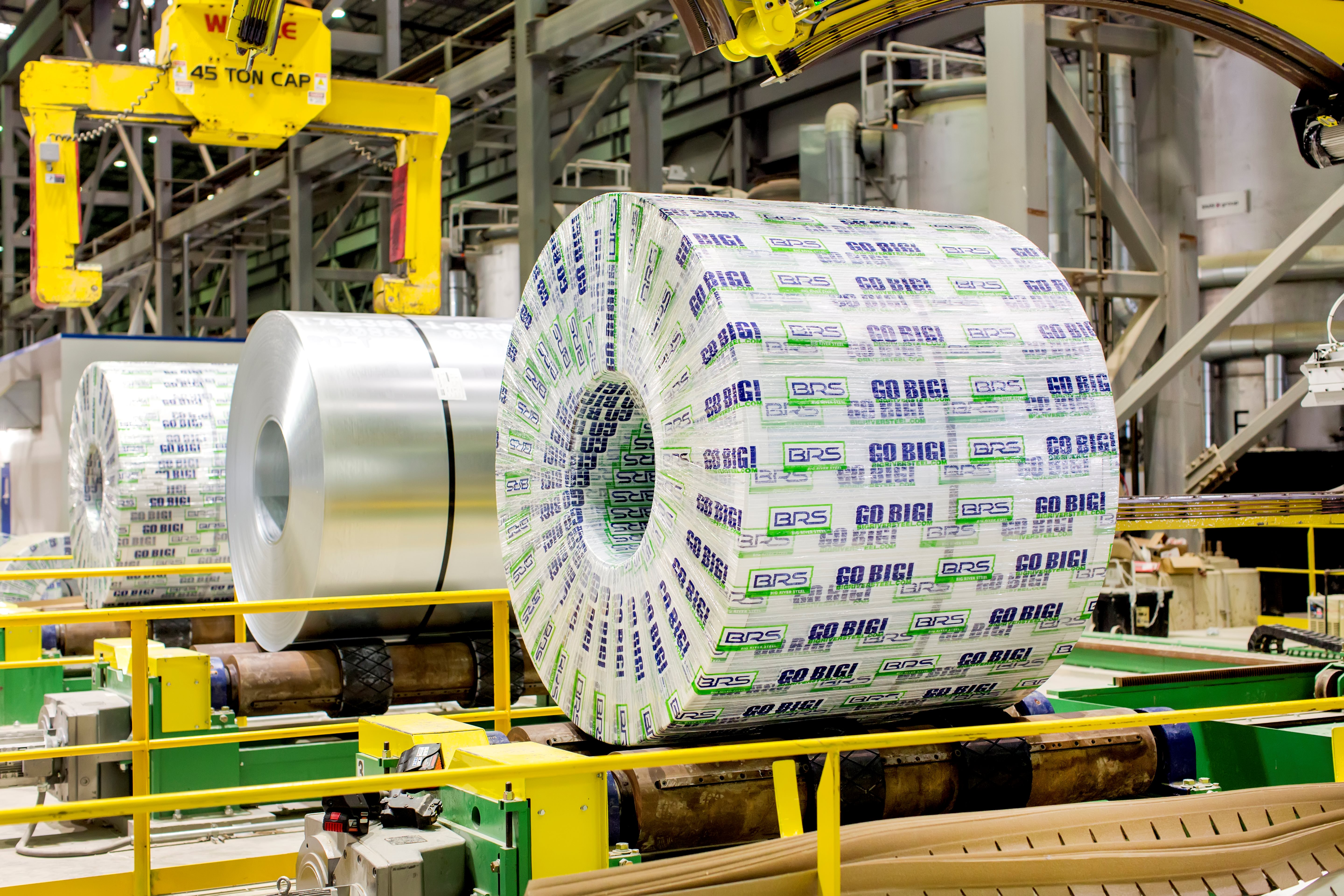
U. S. Steel earns world’s first ever certification for ResponsibleSteel Certified Steel at Big River Steel
The United States Steel Corporation's Big River Steel, located in Osceola, Arkansas, passed a rigorous set of standards in environmental, social, and governance categories that raise the bar for sustainability across the steel supply chain.
U. S. Steel today announced it is the first steel company in the world to qualify to sell its products as ResponsibleSteel Certified Steel at its Big River facility in Osceola, Arkansas. Big River received the first ResponsibleSteel Site Certification in North America in 2022 and is once again at the forefront of innovation by achieving certification for sustainably sourced and manufactured steel.
ResponsibleSteel is the industry’s leading global multi-stakeholder standards body, enabling certification at the site level - and now for the first time steel certification. By meeting the standard for Certified Steel, U. S. Steel’s Big River facility demonstrates its continued commitment to advancing industry sustainability while delivering profitable solutions for stakeholders and benefits for the planet.
“This is an extraordinary accomplishment,” said U. S. Steel President and CEO David B. Burritt. “The rigorous requirements needed for ResponsibleSteel Certified Steel represent a new gold standard for responsible steel manufacturing on a global scale. This certification gives customers and stakeholders confidence that Big River is on the path to near zero and demonstrates that we are using responsible practices across our supply chain. Being the first steel company in the world to achieve ResponsibleSteel Certified Steel demonstrates our strong resolve to build a more sustainable steel industry in the United States and across the world.”
The ResponsibleSteel International Production Standard incorporates environmental, social and governance requirements across its thirteen Principles, which include over 500 criteria for the responsible sourcing and production of steel. Certified Steel requires both Site Certification and additional conformance with two key components: progress on the responsible sourcing of input materials and site-level decarbonisation. ResponsibleSteel Certified Steel provides steel buyers with a consistent assessment of the site’s material sourcing and decarbonisation progress.
By offering Certified Steel, U. S. Steel is demonstrating leadership in enabling steel producers, and suppliers to assess their sustainability progress through a comprehensive, credible global benchmark. The Production Standard is constructed not only to encourage decarbonisation progress at the site but also to drive responsible sourcing and a rigorous supply chain ESG analysis. It fosters tracking and transparency across the steel supply chain from input materials to the product, ensuring that ESG initiatives are integrated at every stage. With four Progress Levels outlined, companies are guided in improving responsible sourcing and decarbonisation until full supply chain transparency and near zero are achieved. U. S. Steel has achieved certification at Progress Level 1 continuing a steadfast commitment to an integrated approach to sustainability.
“ResponsibleSteel employs a comprehensive approach to its certification standards, and that is evident in the work we do here at Big River Steel,” noted Dan Brown, Senior Vice President of Advanced Technology Steelmaking for U. S. Steel and Chief Operating Officer of Big River Steel Works. “Our transparency around decarbonisation and collaborative approach with our suppliers and community all play a role in what it means to have truly ‘sustainable’ steel products for our customers.”
U. S. Steel’s Big River achieved Certified Steel by demonstrating how sustainability permeates throughout the company’s operations. For example, it is more sustainable to obtain the input materials closest to the facility with a known supply chain source. Iron ore pellets are mined and produced at U. S. Steel’s Minnesota Ore Operations, which serve as raw materials for pig iron production at U. S. Steel’s Gary Works in northwest Indiana, which then becomes a key input in the steelmaking process at U. S. Steel’s Big River.
“ResponsibleSteel congratulates U. S. Steel on this significant accomplishment – the first-of-a-kind across the global industry. This certification demonstrates the company’s strong ongoing commitment to transparency, credibility, and responsibility, as they make progress in their decarbonisation plans. Today this news sends a clear message to the market: progress towards responsible ‘green steel’ is being achieved and can be most credibly benchmarked. For those buyers looking to cut through the confusion of environmental claims, look no further,” remarks Annie Heaton, ResponsibleSteel’s CEO. “We look forward to U. S. Steel’s ongoing progress and leadership in the market for credible sustainable steel products.”
Achieving Certified Steel will ensure customers have responsibly sourced and produced steel right here in the USA. Together with ResponsibleSteel, U. S. Steel is creating a more sustainable industry and future for generations to come.
Additional Information
Measured against the global benchmarking system provided by ResponsibleSteel’s International Production Standard, Big River Steel has achieved Decarbonisation Progress Level 1 and Input Materials Progress Level 1, based on the following independently verified information:
· Embodied GHG emissions of crude steel(requirement 10.4): 1.34t CO2e per tonne crude steel
· % scrap content: 57.3%
· Production volume: 2.4mt
---
For more information, please contact:
Savannah Hayes
Communications Manager
shayes@responsiblesteel.org
+44 7588 785909
Click here to view the certificate and public audit summary.
Visit the Climate Group website to watch ResponsibleSteel and U. S. Steel announce the first Certified Steel at Climate Week NYC 2024.
August 2024 Newsletter
As we move toward September, we’re gearing up for an exciting period at ResponsibleSteel. We’re happy to announce our participation in the upcoming India Net-Zero Steel event hosted by SteelZero and later in the month we have a major announcement planned for Climate Week NYC. We hope to see you there. If you’ll be in Mumbai or New York to attend these events and would like to organise a meeting, please get in touch!
In this month's newsletter, you will find key updates including:
- Our newest member
- Upcoming events and webinars
- And more from the team and our partners!
Click here to view ResponsibleSteel's August 2024 newsletter.
The Roundtable for the Responsible Recycling of Metals: Improving ESG management and performance in metals recycling
By Dave Knight, Convenor, the Roundtable for the Responsible Recycling of Metals
Recycling delivers key socio-economic and environmental benefits but unknown to most are the risks involved when it is not done responsibly.
The Roundtable for the Responsible Recycling of Metals (RRRM), a multi-stakeholder, multi-metal initiative, was set up to support the development of responsible scrap sourcing standards, systems, and tools. For the last 18 months, RRRM overseen by a Steering Group of which ResponsibleSteel is a member, has collaborated with stakeholders across the metals sector to understand and make recommendations to improve ESG management and performance. This process involved running working groups, conducting extensive research, and mapping existing voluntary standards, legislation and industry guidance on metals recycling.
In May, RRRM launched its findings, demonstrating that current approaches are insufficient to ensure recycled metals do not harm people or the environment. The roundtable also published its recommendations and ResponsibleSteel plans to incorporate these into the review of the ResponsibleSteel International Production Standard in 2025.
Steel recycling
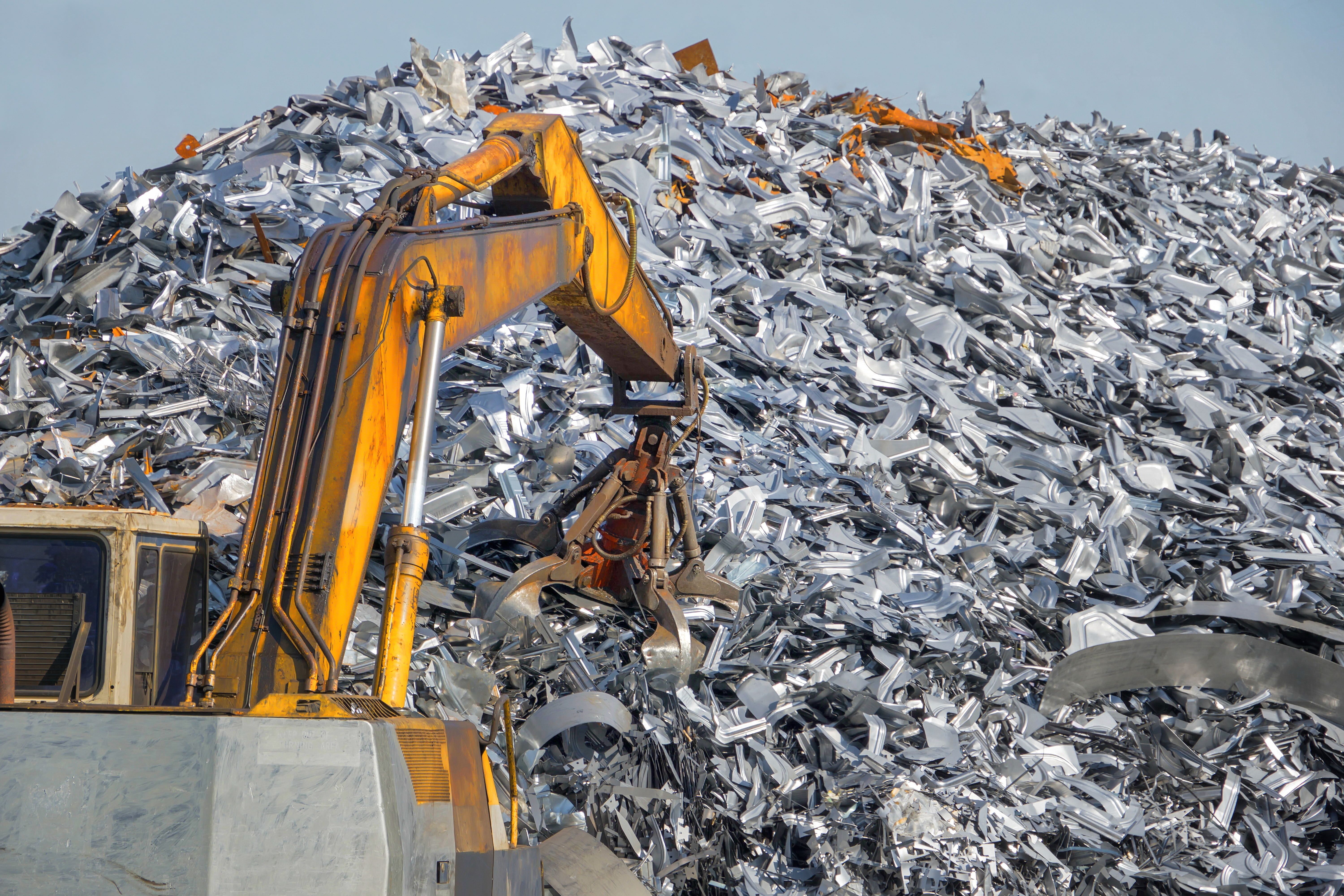
Steel has one of the highest recycling rates in the metals industry. Approximately 650 million tonnes of steel scrap feed about 30% of global steel production.
Carbon emissions from secondary steel production using scrap are less than a third of those from primary steel production, which is why companies are increasingly investing in secondary production as part of their decarbonisation strategies. But there are limits to scrap availability. We need to ensure that the scrap available is being responsibly sourced and isn't being displaced to meet the decarbonisation needs of one producer to the detriment of others.
Findings and recommendations
Widely used OECD ‘Due Diligence’ guidance relies on traceability and risk assessment. But traceability in diverse and distributed value chains can be extremely challenging due to the number of actors in the collection and pre-processing sectors. Reaching informal and subsistence collectors and recyclers, where some of the highest risks exist, is particularly hard and traders can be reluctant to disclose sources to maintain commercial interests.
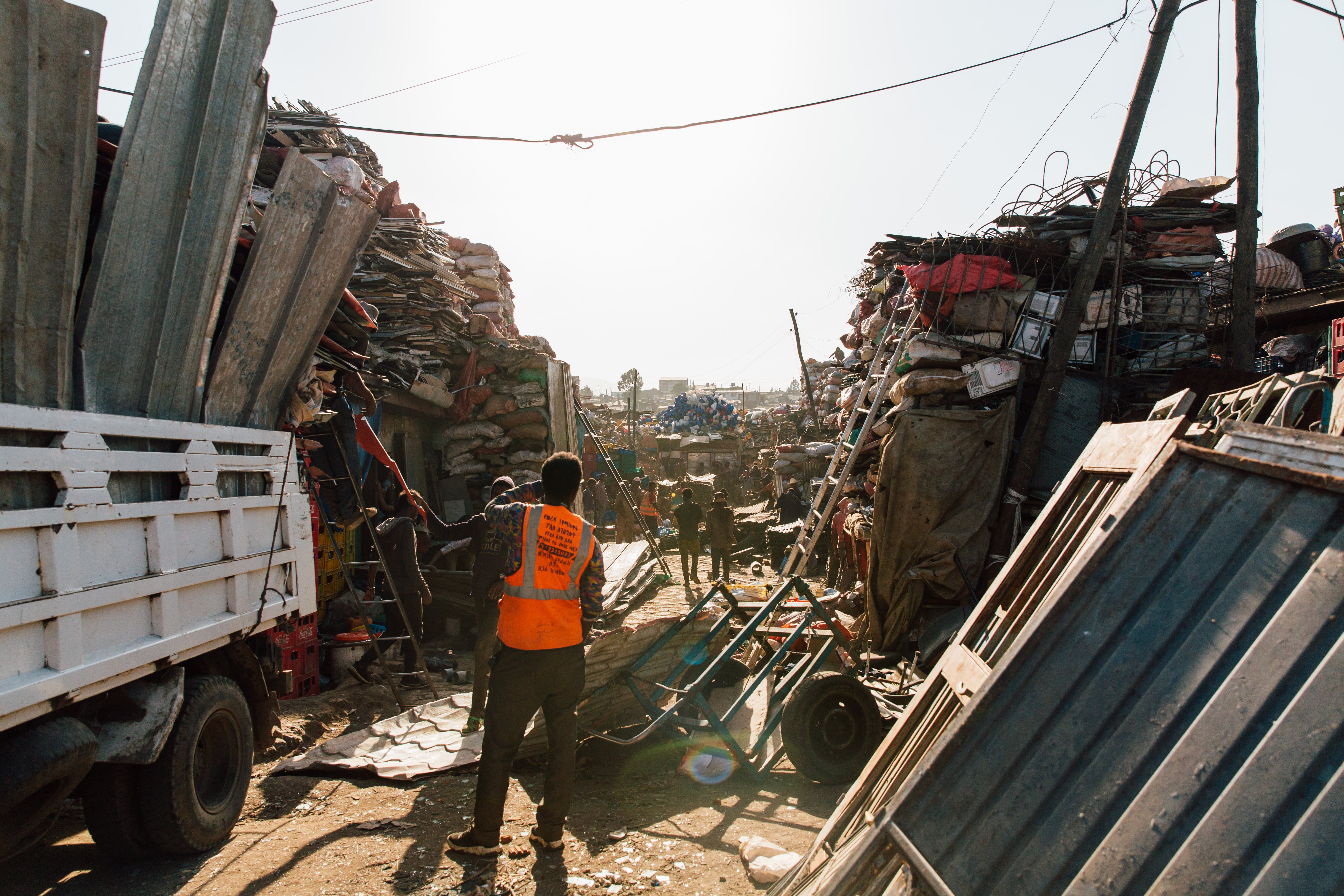
For example, there are hundreds of thousands of people, mainly women and vulnerable groups, working at a subsistence level in the hinterlands of ship recycling facilities, notably in India, Bangladesh and Pakistan. Knowledge of these groups is poor and often overlooked in the downstream value chain. For more distributed post-consumer sources, like white goods or steel within electronics, the International Labour Organisation estimates that approximately 20 million informal workers work as waste collectors and sorters, often in poor conditions. Guidance on labour and human rights needs to be improved and post- and pre-consumer recycled content should be further broken down to help inform scrap sourcing risk profiles.
Improving assurance
The inclusion of recycled metal value chains in assurance processes is the starting point and metal producers should expect increasing focus on the ESG management and performance of these inputs. Legislation and voluntary approaches should be enhanced to include requirements relating to ‘untraceable’ parts of supply chains, recognising the high numbers of smaller-scale formal, informal, and subsistence recyclers. Worker and community engagement and grievance mechanisms, app-based accessible reporting, site sampling in third-party audits, commissioned research and independent surveying of high-risk locations can also be considered.
Policy and market opportunities
Extending producer responsibility legislation across nations would better reach high-risk parts of diverse supply chains. Market platforms and exchanges can strengthen ESG disclosure requirements and differentiate products which demonstrate higher ESG performance.
Furthermore, not all recycling of metals is economic and losses of materials lead to higher ESG risks. For example, the shipbreaking and steel working group found that shipowners get better prices for end-of-life (EOL) vessels broken in poorer conditions. The last beneficial shipowners have a key role to play in recognising this and metal producers should understand the risks associated with these inputs.
Metal Producers and recyclers
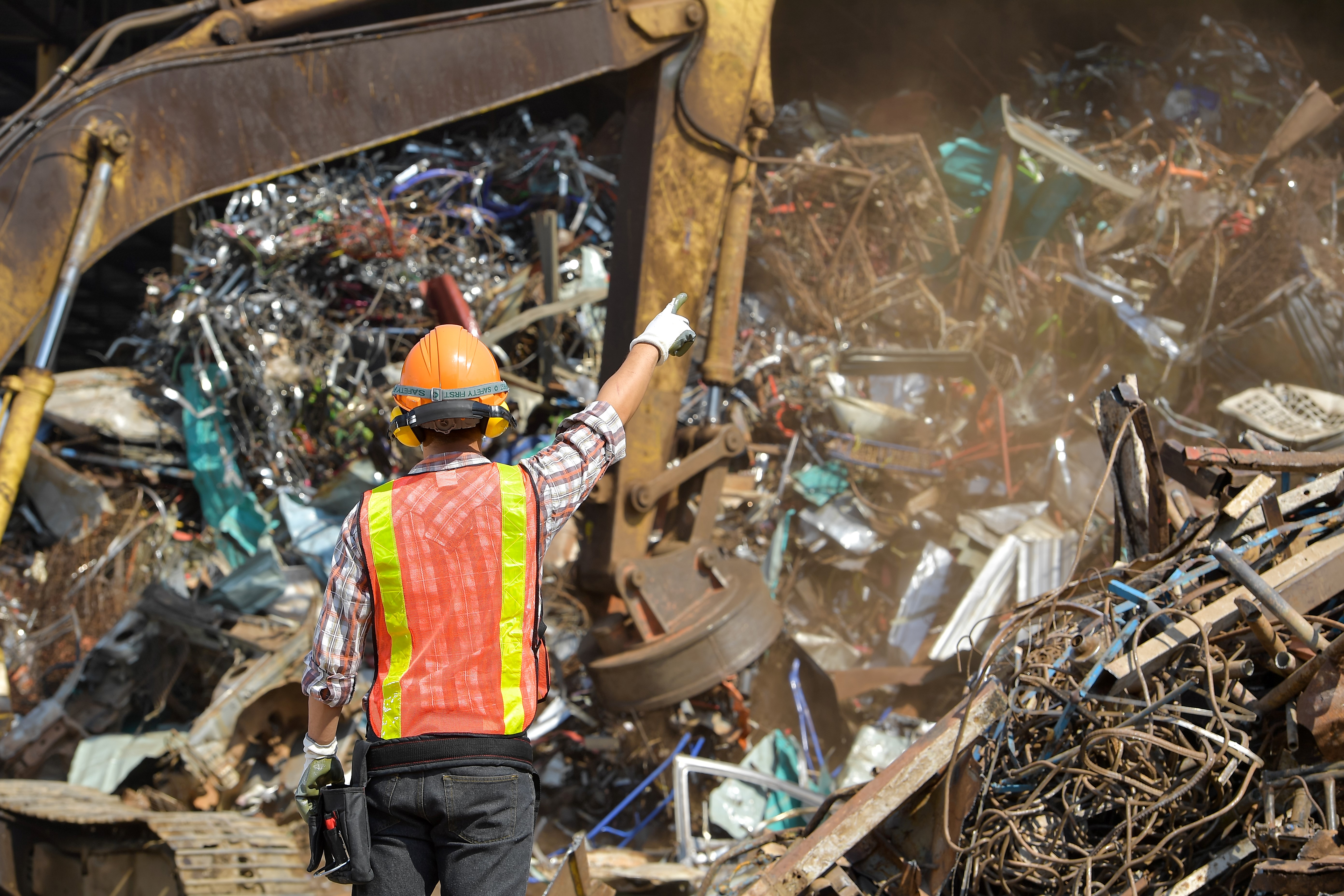
Recyclers should work to improve collection, segregation and sorting practices and the development and transfer of recycling technologies to higher-risk locations. This would help reduce contamination and exposure to hazardous materials as well as help maintain the alloy or grade quality maximising profitability. Producers and recyclers should also collaborate with brands and manufacturers to optimise efficiency and reduce ESG risks across the value chain considering new business models such as metals leasing and service delivery.
Labour, human rights and biodiversity risks are less well covered by industry requirements, guidance and common practice. Third-party audits will place more emphasis on recyclates, on analysing sources from an ESG perspective and will expect metal producers to be able to clearly communicate the boundaries of traceability.
Brands and manufacturers
As responsible sourcing becomes more sophisticated, brands and manufacturers should invest in improved performance at higher-risk locations that represent the ‘untraceable’ part of their supply chains. ‘Book and claim’ systems enable appropriate responsible sourcing claims to be made and can support action in areas which are currently overlooked. Brands and manufacturers should also publish data to better educate consumers, build opportunities for products with higher ESG performance, and improve the transparency of secondary scrap supply chains.
Further information and next steps
ResponsibleSteel recently ran a webinar on the outcomes of the Roundtable, the slides of which can be accessed here. A summary report, a 1-page route map, a risk profile, and three background reports with detailed findings and recommendations are all available on RRRM's website.
Parties interested in collaborating to take forward some of these recommendations should contact Dave Knight.
Images: Shutterstock
A responsible steel industry requires rigorous certification
Note: This opinion piece was originally published in Business Green.
As the world warms, the search is hotting up for a 'green transition' - shifting the building blocks of the economy onto a sustainable footing. There are many uncertainties around how - and how fast - we can make this happen, but one thing is certain: steel will be at its heart. Whether it is wind turbines or electric cars, buses, trains or bicycles, steel has to be part of the solution.
At present, though, it is also part of the problem. Because much of current steel production is highly polluting, dependent on massive blast furnaces which produce the metal by smelting iron ore with heat generated from burning coal. The sector accounts for around a quarter of all industrial emissions globally; if steel were a country, it would be the fourth biggest emitter on the planet.
Change has to happen - and fast. The International Energy Agency (IEA) has warned the sector as a whole has to cut emissions by 90 per cent by 2050 to keep it in line with global climate goals as set out in the Paris Agreement. Now, a new report from ResponsibleSteel has detailed the speed and scale of the shifts required in the coming years. According to its analysis, every steel plant in the world needs to be emitting less than today's average emissions intensity by 2030. In other words, today's average emitters will become the industry's worst offenders by 2030 - if they do not take steps now to improve.
In this year of elections, it is clear that governments on both sides of the Atlantic are keen to support their domestic steel industries, but also demonstrate they are making progress on the climate front. Meanwhile, major procurers looking to decarbonise their supply chain want action, too. So the search is on for steel which doesn't cause unacceptable environmental impacts.
There is one beguilingly simple answer: make new steel from scrap. This can result in emissions savings of around two-thirds compared to so-called virgin steel. It is also around half the price. Small wonder then that steel producers with access to scrap - or with the purchasing power to gain it - are racing to meet demand.
But as a long-term solution, this leaves much to be desired. For one thing, there simply isn't enough recyclable steel around to meet demand. And the race for scrap risks leaving longer-term solutions, such as systems that use 'green' hydrogen, starved of the investment they need to go to scale.
Any meaningful strategy to decarbonise the sector must combine using all the scrap that is available, with some serious drivers that ensure innovation in primary steel production from iron ore. And that will only come about when the market demands it, and is prepared to pay for it.
But there is another element to the search for sustainable steel: the social and community one. A focus on decarbonisation pure and simple risks leaving people behind - failing to take account of the need for a 'just transition' to a greener future. Threatened closures of relatively high-emitting plants, for example, can destabilise local communities and create huge headaches for governments, as we have seen recently in the UK.
Increasingly, these dilemmas are being recognised by both business and governments, and the search is on for all-round sustainable steel - sustainable environmentally and socially.
But how is that best defined? There's no shortage of 'green steel' labels and initiatives - over 80 at the last count. But their focus - and rigour - vary hugely. Some are global; some regional. Some cover specific steel products; others just company-wide impacts. Most are principally focused on carbon emissions, and don't take into account wider ESG issues such as labour rights, community impacts or biodiversity.
This lack of alignment creates confusion - just at a time when there's increasing impatience with green claims that are not robust. In Europe, the EU's Green Claims Directive is poised to subject businesses found to be making misleading claims to hefty fines and a ban on tendering for public procurement.
Against this background, there's a case for a certification scheme which covers the full spectrum of sustainability impacts - and does so with a rigour that can ensure its credibility. That's where ResponsibleSteel comes in. The result of wide consultations within the industry as well as civil society, its aim is to provide a common language of assessment that steel's customers, communities, investors, and workforce can all get behind.
It uses independent auditors to certify steel production sites, specific steel products, and company-wide impacts, too. It doesn't just assess progress on cutting carbon emissions, but also issues around the local environment and communities, and the way the workforce and supply chain are treated. As a broad-based certification initiative, ResponsibleSteel does seem to be gaining traction: it's been endorsed by the IEA, UNIDO's Industrial Deep Decarbonisation Initiative, as well as the German government and the Chinese Iron and Steel Association.
This is encouraging. But there is no time to lose. The whole sector needs to demonstrate it is shifting - at speed and scale - to steelmaking which protects both communities and the climate, while providing the essential building blocks of a greener future. Transforming the industry will require bold and universal action. No one can sit on the sidelines. Delay is not an option.
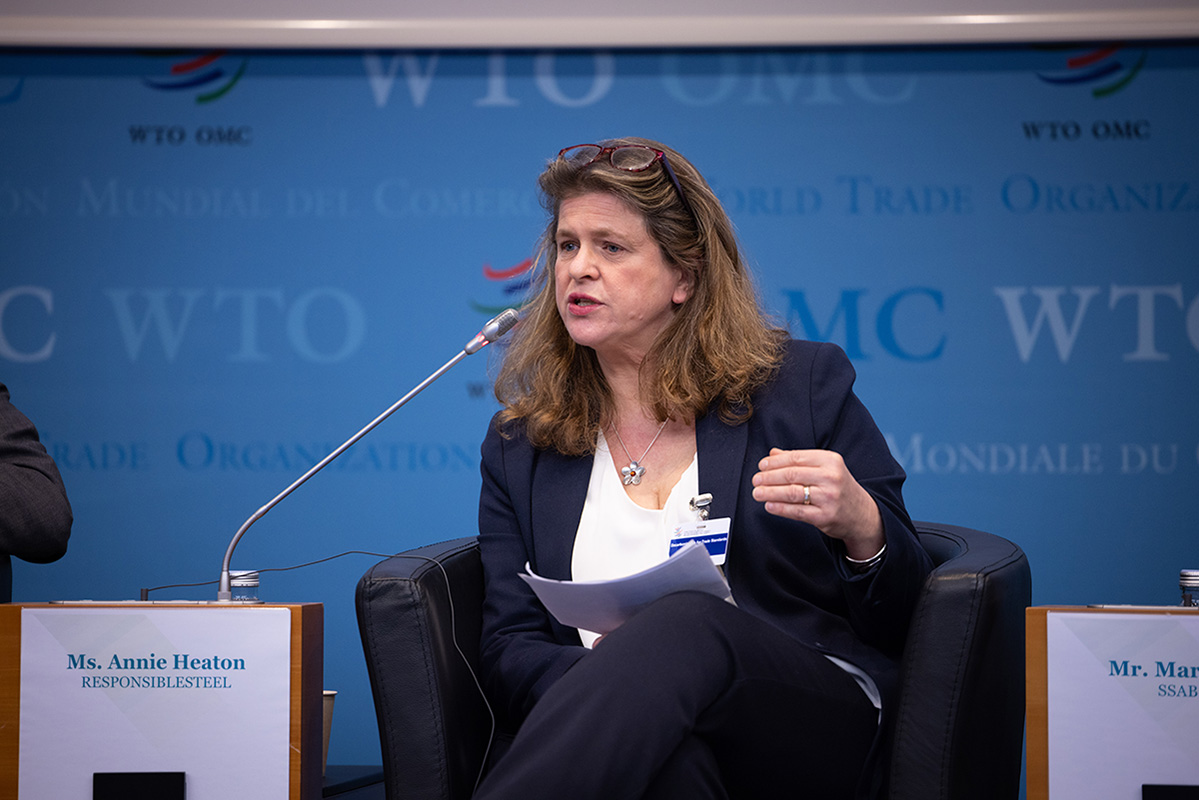
By Annie Heaton, CEO, ResponsibleSteel
Join us at the India Net Zero Steel Forum
We're excited to be convening a session on standards and certification at the upcoming India Net Zero Steel Forum! The Forum, hosted by Climate Group, will be held on September 2nd in Mumbai.
The steel industry contributes almost 12% to India's total emissions. This forum will bring together steelmakers, buyers, civil society, and government to discuss India's roadmap to a low-emission, sustainable industry.
The day will feature opportunities to network and hear from experts on India's low-emission steel initiatives and how to leverage demand to boost adoption of low-emission steel. Speakers will include representatives from JSW Group, Mahindra Group, Kalyani Steel, Tata Steel, ArcelorMittal Nippon Steel India, TERI, and the Council on Energy, Environment and Water, among others.
Our CEO, Annie Heaton, will be leading a session exploring how standards and certification can:
- Support policy initiatives and the transition to near-zero production
- Drive ambition and transparency in steel manufacturing
- Bring about transformative changes in the upstream supply chain
- Induce trust and compliance in developed and emerging markets
The session will also discuss risks to Indian steelmakers from cross-border emission market mechanisms.
To join us, register your interest here.

Democratic Congressman Ro Khanna introduces the Modern Steel Act using ResponsibleSteel's Progress Level 4 as a benchmark for near-zero steel
On August 9th, Democratic Congressman Ro Khanna introduced a new bill to strengthen the US's domestic steel industry and build new iron and steel sites - the Modern Steel Act.
As our Director of Development and Innovation, Sivakumar Kuppuswamy, commented, “We are delighted by the introduction of the Modern Steel Act 2024, which aims to drive innovation, and the development of near-net-zero steel production. This transformative bill not only promotes innovative practices in near/net-zero steel production but also fosters a collaborative approach to boost job creation and community development. We're encouraged to see the ResponsibleSteel standard referenced as a benchmark for measuring and defining near-zero steel, which will drive meaningful transparency and progress in the sustainability efforts of the steel industry and its stakeholders."
The Modern Steel Act would build new iron and steel sites in deindustrialised towns, bringing a new generation of steelmaking to the US, creating jobs, and increasing US industrial competitiveness.
To achieve these goals, the Modern Steel Act plans to:
- Partner with the steel industry and workers to build new, modern facilities producing near-zero emissions iron and/or steel, using cutting edge technologies like hydrogen direct reduction
- Give priority to existing and legacy steel, iron, coke and coal communities
- Enable production of near-zero emissions iron and steel
- Upgrade existing integrated mills and mini-mills to employ lower-emissions technologies
- Balance supply, strengthen supply chain resilience, and protect health
- Explore demand generation opportunities
- Uphold strong labor standards and train workers to make the steel of the future
- Prioritise projects using domestic content, including all iron, steel, manufactured products, and construction materials from US manufacturers
Learn more about the Modern Steel Act here.
Image credit: Shutterstock

July 2024 Newsletter
Earlier in July we were pleased to announce the release of our 1.5°C pathway report, alongside welcoming new members and celebrating new certifications. Looking ahead to August, we invite you to join our Principle 10 webinar to learn more about our approach to climate change and GHGs. Additionally, ResponsibleSteel will be on the ground at New York Climate Week in September - if you’re attending and would like to meet with us, please get in contact!
In this month's newsletter, you will find key updates including:
- Our latest report
- New members and certifications
- Upcoming webinars
- And more from the team!
Click here to view ResponsibleSteel's July 2024 newsletter.
