

Reflections from China: ResponsibleSteel's CEO Annie Heaton discusses building interoperability across global standards
Interoperability: Building a bridge between global standards
ResponsibleSteel's quest for a coherent market for decarbonised steel in 2026 got off to a constructive start this month. Following the announcement of our landmark agreements with the Chinese Iron and Steel Association (CISA) and the Low Emission Steel Standard (LESS) at COP30, ResponsibleSteel was in China in January to kick off our work on interoperability with CISA. This work in China complements our parallel project with Brussels-based LESS.
The goal? To build trusted data and claims on decarbonisation.
During our trip, our Director of Programmes, Amy Jackson, our Decarbonisation Lead, Alli Devlin, and myself had the opportunity to:
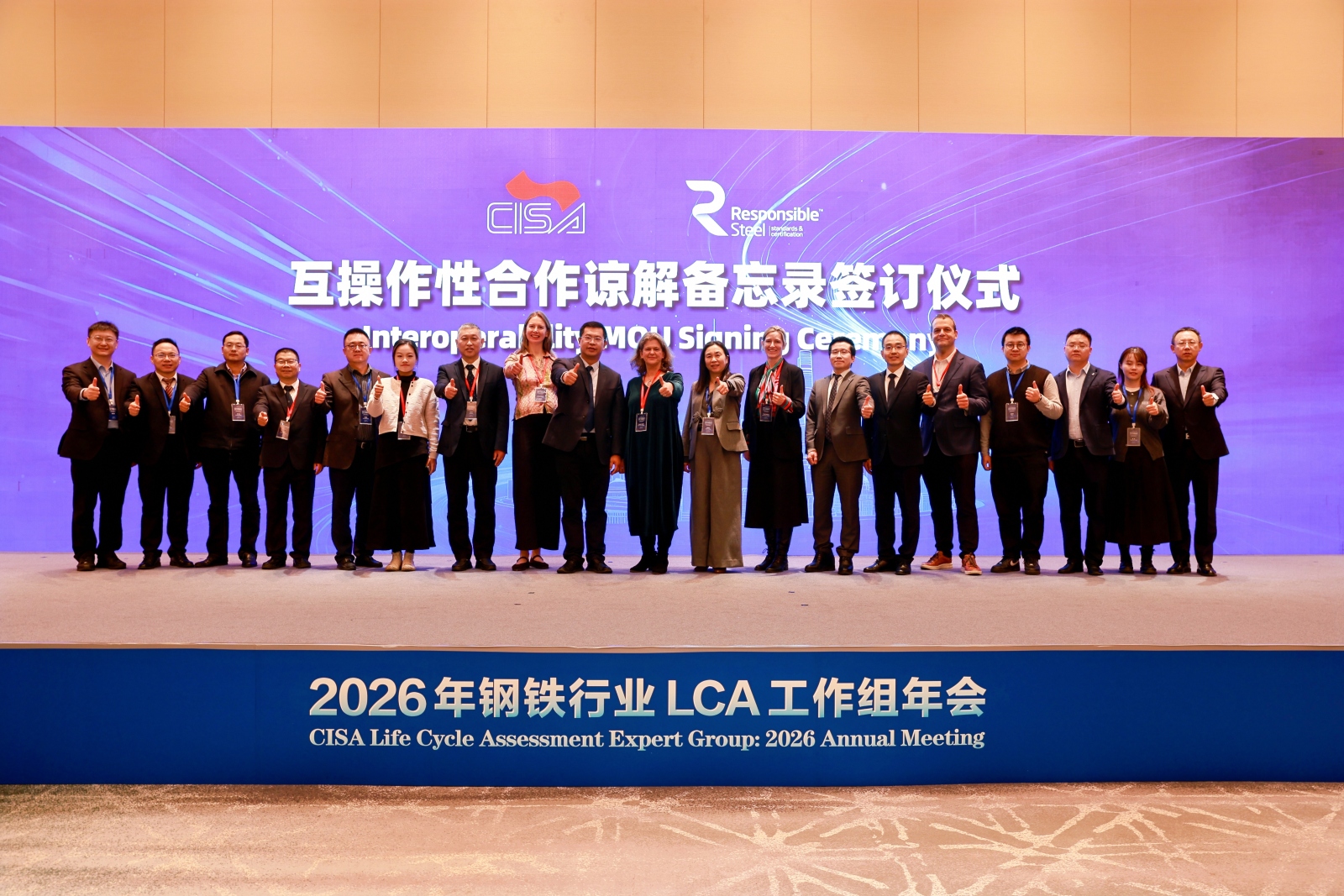
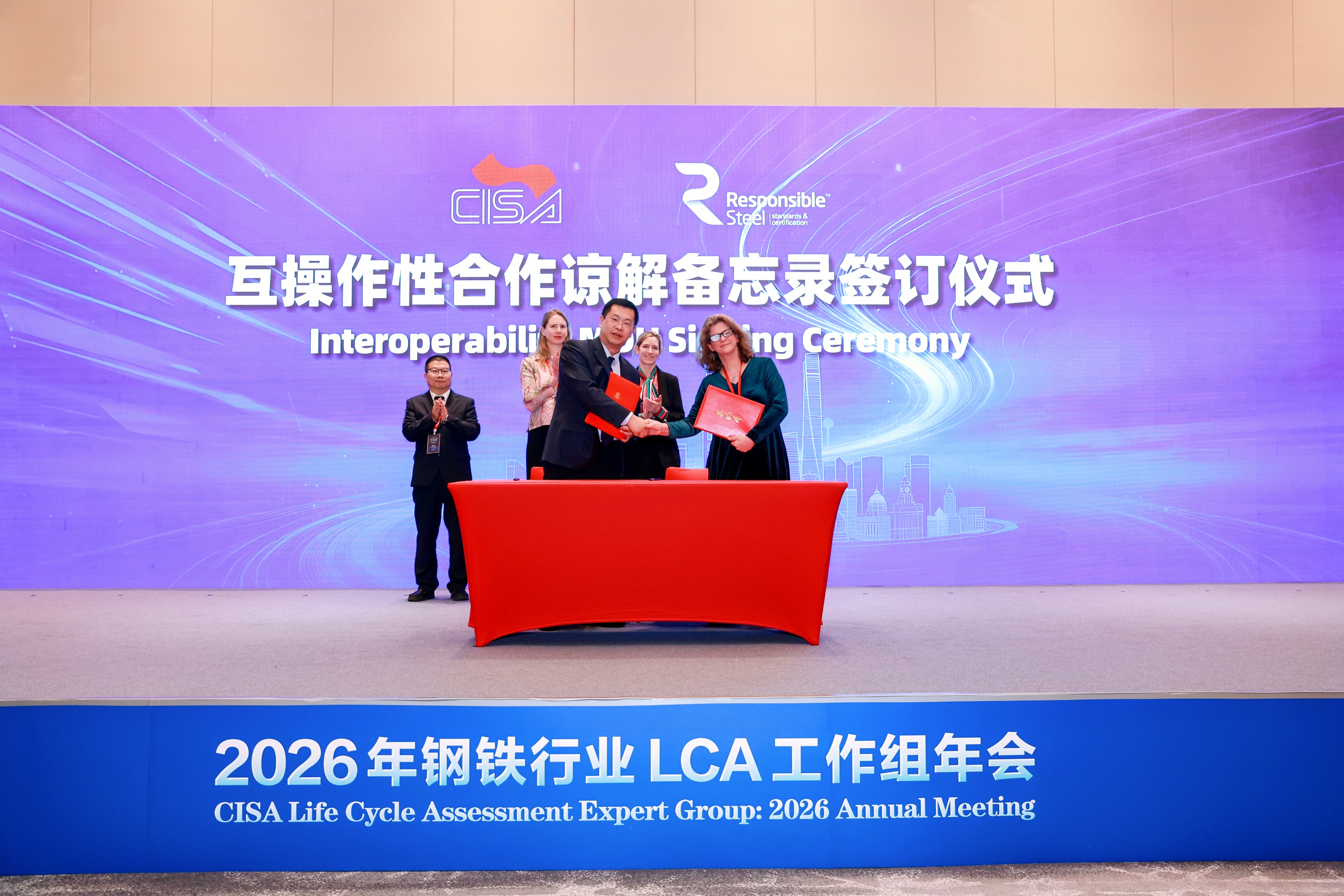
- Present to the Chinese steel value chain our C2F (China's low-carbon emission steel standard) interoperability MoU at CISA's annual LCA conference.
- Connect with our Chinese members, including SKF, World Resources Institute (WRI), Climate Group, VAMA (Valin ArcelorMittal Automotive JV), Penglai Dajin, and some of our certification bodies working in China, including Afnor and China Quality Certification Centre (CQC).
- Get to work on our C2F-ResponsibleSteel Interoperability Project, structuring the discussions around our Framework for Credible Interoperability.
- Visit the 15mtpa Zhanjiang steel plant, where a new DRI-EAF line was launched in Dec 2025. This has involved the production to date of iron reduced with hydrogen in a 1mtpa DRI plant. Whilst this is currently produced from refined coke oven gas, the project is a hugely significant demonstration of the potential to produce hydrogen-based DRI at an industrial scale.
.jpg)
What do ResponsibleSteel's interoperability projects look like in practice?
In short, interoperability means measuring emissions using rules that are as aligned as possible, and recognising the differences, to enable comparison on a like-for-like basis. Imagine the benefit this would bring for anyone wanting to distinguish what good looks like, for example, procurement teams, investors, and policymakers.
But making interoperability work in practice requires a lot more if we want a reliable, credible and sustainable system that generates high-quality, comparable data.
We've outlined the key components of this in our Framework for Credible Interoperability, which will inform both our work with LESS and CISA:
- Aligned GHG accounting rules
- A reliable calculation tool
- A robust assurance mechanism
- Credible claims protocols
- Good governance, oversight and resourcing
- Appropriate data management
- Strong operations management systems
This is how markets are built: first with innovation, then with the necessary rules and systems that enable good information to flow – so that steel buyers can understand, investors can evaluate, and steelmakers can compete, based on emissions performance that everyone can trust.


January 2024 Newsletter
Please view the January 2024 newsletter by clicking the link below:


Industeel Achieves ResponsibleSteel Certification
Following a 12-month audit process conducted by AFNOR, Industeel has achieved certification against the ResponsibleSteel International Standard. Part of ArcelorMittal, the cluster of sites manufactures stainless, carbon and low alloy specialty steel heavy plates.
Industeel operates three EAFs with production capacity spread across Industeel Belgium, Industeel Creusot and Industeel Loire. The sites, all three covered by ResponsibleSteel certification, employ over 2000 workers and over 500 contractors and supply customers in over 40 countries.
Commenting on the certification, Alex Nick, CEO of Industeel, said: “ResponsibleSteel is critical to our goal of striving for leadership in environmental excellence. We have one of the smallest carbon footprints in the industry and strive to adopt best practices in terms of ethics, governance, community engagement and corporate citizenship. This certification reinforces our commitment to sustainability since it is part of our mission to offer the market steel solutions produced in a responsible manner.”
Following several technical visits and extensive discussions with external stakeholders including officials, neighbours, associations, subcontractors, employees and unions, the cluster of sites implemented the necessary adjustments before earning certification. Industeel has committed to reducing CO2 emissions by 35% by 2030 against a 2018 baseline.
Annie Heaton, CEO of ResponsibleSteel, commented, “We’re delighted that ArcelorMittal’s Industeel business division, comprising Industeel Belgium, Industeel Creusot and Industeel Loire, has achieved site certification against the ResponsibleSteel International Standard. This achievement underlines ArcelorMittal’s continued dedication to show leadership in sustainable steel production in every region in which they operate. The certification of these sites fills another gap in the value chain, paving the way for a responsible supply chain from the furnace to the end customer.”
Read the public audit summary here.

December 2023 CEO Letter
Please view the December 2023 CEO Letter by clicking the link below:

Closer cooperation on international standards hailed at COP28 as foundational to the steel transition
Much of the coverage of COP28 focused on whether the negotiations would agree on a form of phase out of fossil fuels but for those on the ground, also attracting attention were measures to drive the decarbonisation of heavy industry, some of the most challenging aspects of the net zero transition ahead. Across all the industry discussions at COP28, from steel to cement to aluminium, the foundational role of harmonised international standards has been a key feature.
Our CEO, Annie Heaton, and Development and Innovation Director, Shivakumar Kuppuswamy, were both on the ground in Dubai last week for some pivotal announcements that demonstrate how progress at COP is driven not only through negotiations on the agreement but between state and non-state actors in the months leading up to the COP.
The Steel Standards Principles were the first to be launched. To prevent the fragmentation of global trade and to enable effective markets in low emissions steel, we need common definitions of decarbonisation progress based on common measurement standards. The Principles mark a major milestone on this road. At the official launch as part of the World Climate Action Summit on December 1st, Annie spoke alongside World Trade Organization Director-General Ngozi Okonjo-Iweala on the need for harmonised or at least interoperable standards to create a level playing field among the diverse players within the steel industry, to underpin new markets not only for near zero steel but also for the progress steelmakers achieve on the road to near zero. By the time of Industry Day on December 5th over 40 standard-setting bodies, international organisations, steel producers and industry associations, from the US to the Gulf, from India to China. At a celebration event hosted by WTO, Shiv spoke alongside representatives of other organisations pivotal to this initiative, including Worldsteel, UNIDO, the IEA, and the Breakthrough Agenda.

Also featuring on Industry Day was the official launch of the Climate Club, an intergovernmental forum designed to tackle industry decarbonisation with a focus on developing and emerging economies. Launched by ministers from the Chilean and German governments, Annie spoke as part of a distinguished panel of representatives from Climate Club members, ministers from Germany, Chile, Indonesia and Norway. The Climate Club aims to foster the necessary global collaboration between governments on the technology, financial and standards instruments and includes a Matchmaking Platform for priority needs. Already, 35 nations and the EU have signed on to support the Club.
While ambition levels may not differ between developed and developing countries among private sector players, Annie pointed out both the greatest opportunity for developing economies – the new map of resources needed for green ironmaking – and the greatest challenge, which lies in the prohibitive cost of the transition. Changing the economics of steelmaking can come in the form of carbon pricing mechanisms, lead markets, tax incentives or funding support, together with a strong and aligned demand signal. While the lion’s share of the funding will come from the private sector, two actions from the public sector can pave the way by reducing the risks: multilateral lending, and green public procurement. To underpin both of these, we need globally aligned definitions.
Financial investors echoed this need. Establishing a minimum standard and then raising the bar over time was a workable approach to steel decarbonisation highlighted at an event on Engaging the Korean Capital Market for Net Zero Alignment organised by SFOC.
India’s growth and transition in particular featured in multiple events at the COP. Hydrogen demonstration projects are already underway in India, but steelmakers are acutely aware of the very real challenges that exist – the rapid growth of steel demand, the new infrastructure required for new technologies, the constraints on land, and the slow commercialisation of the market for green steel. Speaking alongside steel industry and civil society representatives at an event hosted by The Energy and Resources Institute (TERI), Mission Possible Partnership and Climate Catalyst, Shiv reiterated that India’s steel industry is poised at a critical moment needing policy, technology, and finance to drive near-zero steel production, and all these need to be founded on a common language to measure, report and verify progress.
The signs of rising demand for responsible products demonstrating decarbonisation progress are emerging. The Climate Group’s Steel Zero initiative said that 10 million tonnes of steel demand was poised among its members to drive the transition, many vocal about their readiness to pay a green premium. Meanwhile, the First Movers Coalition’s Near Zero 2030 Challenge is underway to help matchmake demand and supply side signals for transformative change. And on public procurement, Industrial Deep Decarbonisation Initiative members Canada, Germany, the United Kingdom and the United States announced their green procurement pledge, whilst the governments of Austria, Japan, and the United Arab Emirates have made a Statement of Intent to work towards key aspects of the Pledge.
A host of other new initiatives featured at the Steel Breakthrough roundtable on Industry Day: a ‘hydrogen hub’ agreed between the UK and Brazil, and a technical and financial cooperation between Sweden and India under LeadIT. Real headway has been made since COP27. But the Global Stocktake has highlighted the need for far more. We need to pick up the pace. Today there are just 5 near-zero projects committing to final investment decisions. The COP28 commitment to triple renewable energy by 2030 will make more projects possible. But there are many more pieces of the jigsaw to be matured.
The promise of more momentum across the heavy industry sectors came in the form of the Industry Transition Accelerator (ITA). Launched by COP28 President Dr Al Jaber, the ITA aims to speed up progress across sectors by identifying common instruments to drive policy, finance and technology to trigger new investments. Amid these very real signs of promise on driving transformative change to deliver near-zero steel, ResponsibleSteel reminds stakeholders of two observations we have made: firstly, that while 1.5C pathways require a significant take up of near-zero steel by 2030, the entire industry needs to make considerable progress by 2030, whether they operate with blast furnace or electric arc furnace assets. The step-by-step change that steelmakers can make today through investments in existing technology is also vital. The market must drive this by requiring steelmakers to achieve minimum levels of progress against internationally consistent and credible bands of performance, as well as by rewarding near-zero steel.

Secondly, because scrap is neither universally available nor sufficient in supply to cater for global steel demand, definitions of what is ‘green’ are precarious. It is vital we measure for purpose. Product carbon footprints that measure emissions alone will not drive the global decarbonisation of the industry. Annie highlighted this at an evening with CDP CEO Sherry Madera hosted by BCG. Unless we take a scrap-variable approach to defining progress to net zero, we will not drive real net reductions in global emissions. As the Climate Group puts it, “While we recognise that for some at COP there may be a temptation to push for a recycling-led approach, the reality is that we simply can’t afford to ignore the link between development, steel demand, and decarbonisation.” That means we need both product footprints and scrap variable levels of Progress.
Driving the transition away from unabated fossil fuels will require unprecedented effort from all sides: corporate leadership, government buy-in and public and private financing. We need stronger efforts to align demand signals, bold policy to change the economics of steelmaking and key interventions to mobilise the investments we need. And we need greater collaboration between countries to drive this globally, at scale, streamlined for maximum impact. At COP28, there were many signs that these elements are starting to materialise. Whether they will be enough, soon enough, is something we can all influence.

Public consultation launched on Principle 10 of the ResponsibleSteel International Standard, relating to Climate Change and Greenhouse Gas Emissions
ResponsibleSteel is committed to driving progress towards net zero. Today we have launched a public consultation on provisional interpretations of the ResponsibleSteel International Standard V2.0 and proposed revisions to Principle 10 relating to Climate Change and Greenhouse Gas Emissions.
ResponsibleSteel’s Progress Levels developed in consultation with our members and stakeholders, have been designed to reward advancement on the path to net zero, driving progress on a global scale. The suggested changes to Principle 10 represent an update to the threshold for Decarbonisation Progress Level 1 and also have implications for Levels 2 and 3.
Our approach to developing Progress Level 1 remains unchanged. It aims to:
- Represent a distribution of existing steel sites where approximately 50% sit ‘below’ the threshold, and
- Provide a slightly shallower gradient in order to incentivize the use of scrap globally to a greater extent, since today not all end-of-life scrap created is recovered.
Progress Level 4 is designed to align with the near-zero threshold of the International Energy Agency (2021) with Levels 2 and 3 providing regular points of progress on the journey from Level 1 to Level 4.
As part of the 12-month test phase, ResponsibleSteel conducted a detailed 9-month review of these Progress Levels using data provided by a working group of steelmakers and with the oversight of a multistakeholder Technical Advisory Group of independent experts in order to better meet our goals.
We are now seeking views from any organisation that considers itself a stakeholder in the way decarbonisation progress towards net zero steel is defined at site level, whether or not they are members of ResponsibleSteel.
Once complete, the secretariat will review feedback and seek approval from the ResponsibleSteel Board to make an Urgent Revision to Principle 10 of the Standard. Feedback to provisional interpretations shall also be reviewed and approved by the ResponsibleSteel Standards, Assurance and Claims Committee. We aim to publish our final revisions in Q1 2024.
Please note that we will also be reviewing the test phase results on Principle 3: Responsible Sourcing of Input Materials in 2024. ResponsibleSteel shall convene a series of member multistakeholder workshops commencing in December 2023 to further investigate the challenges and produce recommendations on whether revisions should be made to Principle 3 of the Standard. Please get in touch with us if you would like to participate.
Submissions for feedback on provisional interpretations and revisions to Principle 10 will be open until Monday, January 22nd 23:59 GMT. For more information and to submit feedback, please visit our Standard Development page.

Steel Standards Principles Launch at COP28
Today, ResponsibleSteel’s CEO, Annie Heaton spoke at a Business and Philanthropy Climate Forum roundtable on the first day of the COP28 UN Climate Change Conference in Dubai to launch the Steel Standards Principles.
The event, Sustainable Steel: Pioneering Low-Carbon Solutions, was hosted by WTO Director-General Ngozi Okonjo-Iweala who welcomed the endorsement by standard setting bodies, international organisations, steel producers and industry associations of a set of principles aimed at aligning how greenhouse gas emissions are measured in the steel sector.
The Steel Standards Principles recognise that the iron and steel sector accounts for approximately 8% of annual global greenhouse gas emissions and that these emissions will need to be reduced by at least 90% for the sector to play a credible role in achieving climate targets.
The Principles call for establishing common methodologies for measuring greenhouse gas emissions within the iron and steel sector in order to accelerate the near-zero transition.
Improving the transparency, interoperability, and mutual recognition of such methodologies can promote investment in, and adoption of, innovative near-zero emission technologies and products while easing trade frictions that arise from divergent and incompatible measurement standards.
At the roundtable, the Director-General expressed the WTO’s support, stating, “Fragmented and uncoordinated trade policies make it harder for the steel industry to decarbonize. They add uncertainty for producers, hamper cross-border movement of green technologies and inputs, and slow investments in clean technology.”
Furthermore, the Steel Standards Principles recognise that collaborative and constructive dialogue is needed across developed and developing countries as well as among governments, producers, industry associations and policymakers to refine the existing emissions standards landscape for steel.
Annie Heaton commented, “The diversity of standards for measuring steel carbon emissions makes assessing how one ton of steel compares to another extremely challenging. It obstructs the clarity we urgently need to drive clear market signals for decarbonization. The Steel Standards Principles establish the key foundations of a common framework that is needed for all climate-related steel standards, for example, transparent governance, multistakeholder participation, and effectiveness in driving the decarbonization of the industry globally. ResponsibleSteel has its foundations in such principles and we are delighted so many organizations have chosen to endorse the Principles that have been discussed further today.”
36 key steel producers, industry associations, standard setting bodies, international organizations and initiatives have endorsed the Steel Standards Principles which will be launched formally at COP28 on December 5th – Industry Day.
To view the full set of Principles, click here.
For more information please contact:
Savannah Hayes
Communications Manager
shayes@responsiblesteel.org

November 2023 Newsletter
Please view the November 2023 newsletter by clicking the link below:

Driving tangible progress in the steel industry: ResponsibleSteel introduces new certification marks to drive responsible decarbonisation each step of the way
The steel industry won’t transform overnight. But we need to make sure we are taking the right steps now to drive real change for the future. ResponsibleSteel’s Progress Levels are designed to represent and reward tangible advancement on both Decarbonisation and responsible Materials Sourcing. Today we launch the new certification marks that steelmakers – and their customers – will be able to use on their products to enable this.
The steel industry is implementing the ResponsibleSteel International Standard across over 100 sites globally. ResponsibleSteel ‘core certification’ has rewarded pioneers that have met the Standard’s core environmental, social and governance requirements. It’s now time for steelmaking sites to work towards the next level, to demonstrate levels of progress both towards net zero and on their supply chains. Without evidence of this, global efforts to measure embodied carbon will drive neither the deep decarbonisation we need nor decarbonisation that is socially and environmentally responsible.
The ResponsibleSteel International Standard V2.0 launched in September 2022, introduced four Progress Levels in addition to the Standard’s core requirements, for both the greenhouse gas (GHG) emissions intensity of crude steel production and the responsible sourcing of input materials. These Progress Levels give steel sites the opportunity to not only demonstrate performance in these areas, but to make claims about their steel products, and to market them as ‘ResponsibleSteel certified steel’.
- Core certification: awarded to sites implementing the core set of criteria across 13 principles.
- Progress Level 1: the first level required to enable steelmaking sites to make claims about certified steel products from the site, in tandem with a published product carbon footprint.
- Progress Levels 2 and 3: Intermediate levels of progress, towards…
- Progress Level 4: the highest level for the responsible sourcing of input materials, and ‘Near zero’ GHG emissions intensity of crude steel.
It’s time to start moving the market, gradually but at scale. For the industry to keep an equitable, inhabitable 1.5C future in sight, by 2030 ResponsibleSteel has concluded every steelmaking site in the world will need to have achieved Progress Level 1 on decarbonisation and materials sourcing and significant progress made toward Progress Levels 2 and 3.
Now, steelmaking sites that have achieved Progress Level 1 for both Decarbonisation and Materials Sourcing, in addition to meeting the core ESG requirements of the ResponsibleSteel International Standard, will be able to use new certified site mark with progress levels for certified steel with additional elements indicating progress in these two areas. This is the first time a ResponsibleSteel logo will be able to be applied to steel products and our newly published Claims and Logo Use Guidelines are designed to help steelmakers and steel buyers understand how the marks can be used and what claims can be associated with them.
It’s more clear than ever that the steel industry needs to make significant, early, but incremental decarbonisation efforts. We cannot rely on the deep decarbonisation efforts of a select number of sites alone. And we must work to reduce upstream scope 3 emissions from the extraction, preparation and transportation of iron ore, natural gas, coal, coke, and ferroalloys, among others.
If you would like to learn more, please contact:
Ali Lucas, Corporate Affairs Director
alucas@responsiblesteel.org
Savannah Hayes, Communications Manager
shayes@responsiblesteel.org
October 2023 Newsletter
Please view the October 2023 newsletter by clicking the link below:
Introducing ResponsibleSteel’s Decarbonisation Progress Audit Tool
To support steelmaking sites in preparing for external audits against Principle 10 of the ResponsibleSteel International Standard V2.0, ResponsibleSteel has now issued a ‘Decarbonisation Progress Audit Tool’.
Designed specifically to support the determination of a steelmaking site’s Progress Level according to criteria 10.6 of the Standard, the tool consists of a series of templates in which the necessary data can be input to calculate the site’s Embodied Crude Steel GHG Emissions Intensity and % scrap in relation to criteria 10.4. As a result of these two calculations, made correctly, a site will be able to see which Progress level they would meet before seeking an external audit.
As well as being used by steel sites self-evaluating their emissions in preparation for an independent ResponsibleSteel Progress audit, the tool can also be used at the pre-production stage by project developers wanting to self-assess their emissions projections ahead of external validation. The Decarbonisation Progress Audit Tool is available to:
- ResponsibleSteel members
- Steelmakers engaging in the First Movers Coalition Near-Zero Steel 2030 Challenge
Steelmakers using the tool will be able to get a clear idea of where they stand on the road to near-zero steel using ResponsibleSteel’s Progress Levels. However, they won’t be able to claim that their sites have achieved ResponsibleSteel Progress Level certification until they have been through an audit against the ResponsibleSteel International Standard and awarded such a certificate by a ResponsibleSteel-approved Certification Body. Any such claims will have to be in line with ResponsibleSteel Claims Guidance.
If you have any questions about the Decarbonisation Progress Audit Tool and how to use it, please contact assurance@responsiblesteel.org. If you would like to receive the tool, please register your interest here.
BlueScope’s Western Port Site Achieves ResponsibleSteel Certification
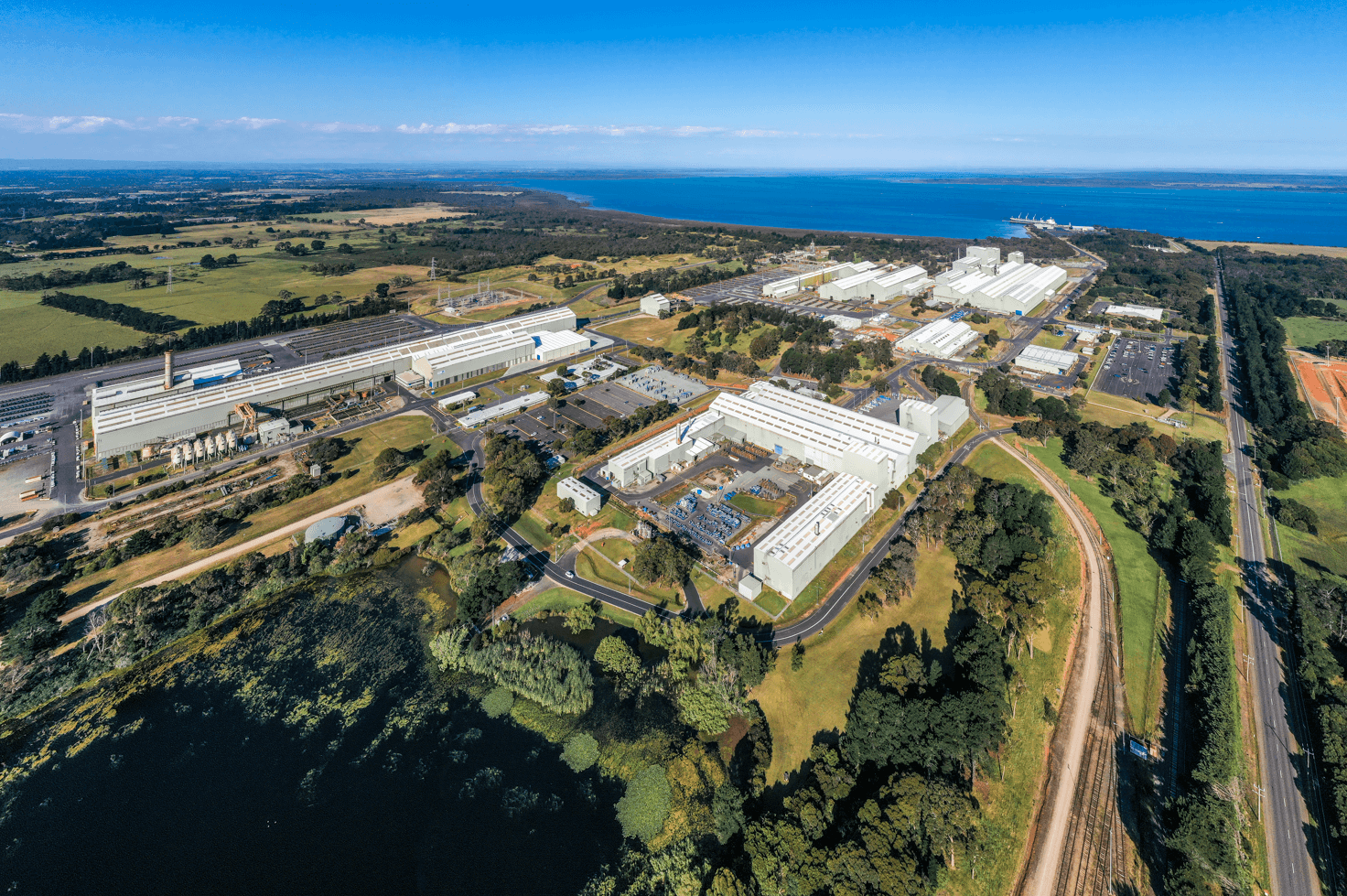
BlueScope has achieved its second ResponsibleSteel certification for its Western Port site in Victoria, Australia. BlueScope’s first certification was obtained by the company’s Port Kembla Steelworks in February 2022.
Western Port is part of a fully integrated steel supply chain with hot rolled coil sourced from BlueScope’s Port Kembla Steelworks. The Western Port site has an annual steel processing capacity of 1 million tonnes, supplying high-quality metal-coated and painted products to both domestic and export markets. The site employs over 800 people who are supported by approximately 100 contractors, suppliers, and supply chain partners.
Commenting on the site certification, BlueScope’s Chief Executive, Australian Steel Products, Tania Archibald, said, “BlueScope is proud to achieve ResponsibleSteel site certification for Western Port. The certification reflects the outstanding efforts of our Western Port team, the quality of our operations, and provides our customers, shareholders, and communities with the confidence that BlueScope’s Western Port Works meets the very high environmental, social and governance performance standards required by ResponsibleSteel site certification. Through the audit process across all 12 sustainability principles, our approach to engaging with our communities, as well as our safety, supply chain, and human resource systems, were highlighted as areas of particularly high performance.”
BlueScope is a global steelmaker, making and supplying steel across 16 countries, employing 16,500 people. The company specialises in metal coating and painting for building and construction.
Annie Heaton, CEO of ResponsibleSteel, said, “This certification is a real testament to the hard work and dedication demonstrated by the site’s leadership and all of the site’s workers. The site has committed to a 30% reduction in emissions intensity by 2030 and has worked diligently to minimise its impact on the surrounding environment. The Western Port site has proven particularly strong in engaging and supporting local communities through Community Liaison Committee meetings and local projects. As one of the founding members of ResponsibleSteel, BlueScope has consistently championed our Standard as the most rigorous standard for steel. This second site certification for BlueScope represents real progress in the company’s sustainability journey and is a vital step towards the sourcing of responsibly produced steel products by the construction industry in Australia.”
The audit was conducted by BSI and involved an extensive review of documentation and news relating to the site, interviews with workers and local stakeholders, and an onsite visit.
BlueScope’s Chief Executive Climate Change & Sustainability, Gretta Stephens emphasised the importance of a multi-stakeholder approach to drive transparency and performance across the steel industry: “ResponsibleSteel site certification is an important step in supporting our stakeholder’s expectations for clear and transparent information about the sustainability performance of our operations. BlueScope’s commitment to sustainability across our global operations will continue to guide our ResponsibleSteel journey, as we strengthen our communities for the future.”
Read the public audit summary here.
September 2023 Newsletter
Please view the September 2023 newsletter by clicking the link below:
