

Strengthening climate transition planning: Revising the ResponsibleSteel Production Standard
Last year marked a decade since the signing of the Paris Agreement and six years since the launch of the ResponsibleSteel Production Standard. In that time, expectations on climate action have shifted dramatically. Global emissions continue to rise, and the 1.5°C warming threshold is now projected to be breached by 2034. To remain on a 1.5°C pathway, the Intergovernmental Panel on Climate Change (IPCC) indicates that global CO₂ emissions must fall by 45% by 2030 and reach net zero by 2050. Yet progress in the steel sector is lagging. According to the Mission Possible Partnership’s Global Project Tracker, only 9% of the required operational or committed near-zero steelmaking capacity was in place by the end of 2024.
Against a backdrop of rising global emissions and growing awareness of the consequences of inaction, ResponsibleSteel is undertaking a timely and necessary revision of its climate-related requirements, specifically criteria 10.1 (corporate commitment to the Paris Agreement), 10.2 (corporate climate-related financial disclosure), 10.5 (site-level emissions targets and planning), and 10.7.1 (GHG disclosure and reporting).
A collaborative revision process
From October to January, ResponsibleSteel convened five Working Group (WG) and Technical Advisory Group (TAG) meetings, bringing together 23 representatives from 15 member organisations across certification bodies, civil society, steelmakers, and the wider steel value chain.
As a participant from SteelWatch noted during the process, “Having a diverse group of members involved in the revision process of the standard helps to achieve a balance between what steelmakers deem feasible and where the standard needs to set the bar to trigger ambitious action. ResponsibleSteel has done well navigating and drawing on different perspectives, turning them into concrete proposals that can be submitted for the next steps of the revision process.”
Three guiding principles framed these discussions:
- Ambition: ensuring alignment with global climate goals and science-based pathways
- Feasibility: recognising real-world constraints, particularly in the near term
- Simplicity: avoiding unnecessary complexity while improving clarity and accountability
A key theme that emerged was the foundational importance of credible transition plans that move beyond aspiration and, at the same time, are grounded in realistic assumptions about technology readiness, capital investment cycles, and enabling conditions. As noted by SteelWatch, “Aligning corporate- and site-level requirements is essential in ensuring that top-level corporate ambition and targets translate into actual investment decisions today, and subsequent material transformation and emissions reductions on the ground.”
Moving beyond outdated decarbonisation roadmaps
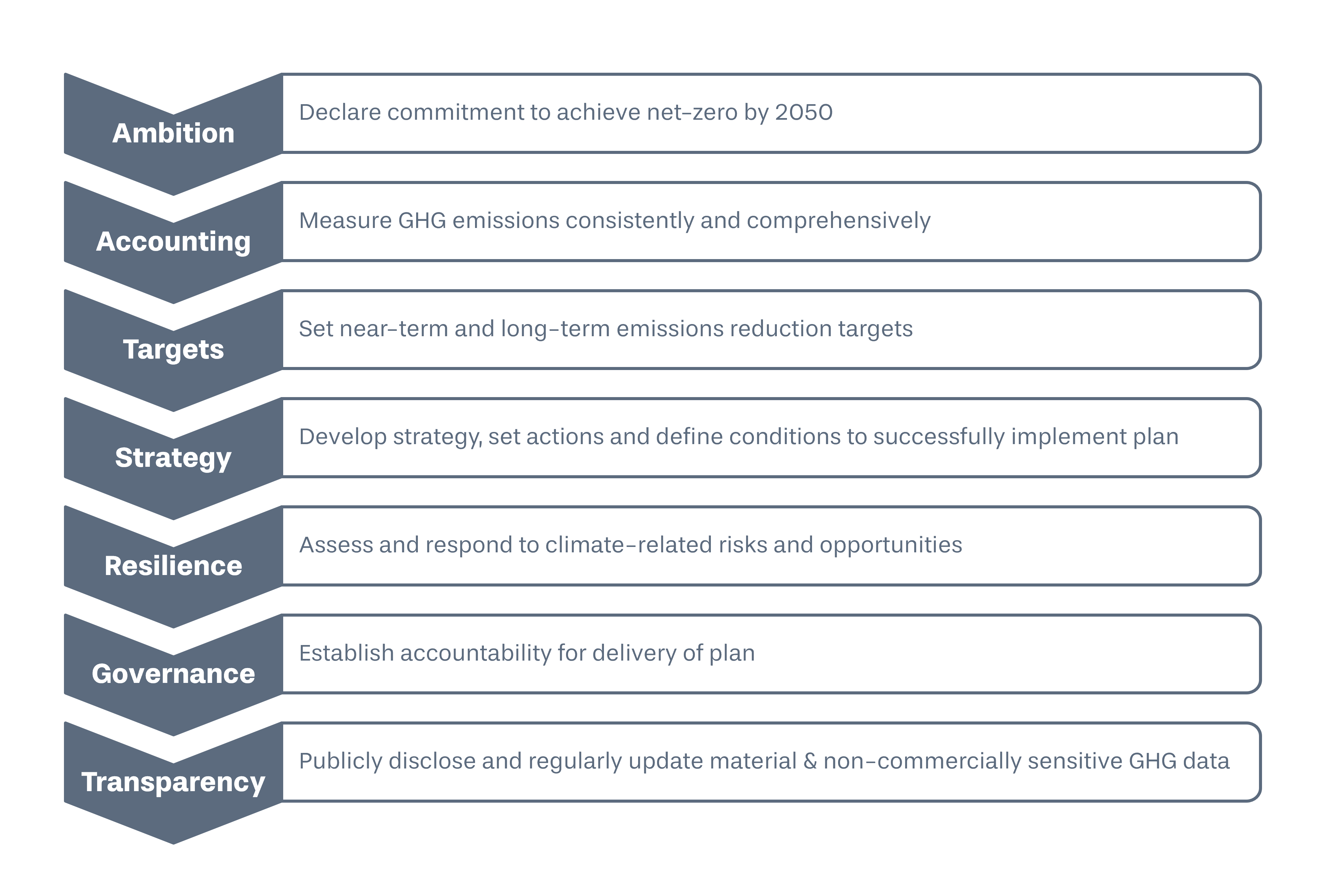
Under the current Production Standard, certified sites must demonstrate that they have a decarbonisation roadmap aligned with an existing model. However, the WG and TAG agreed that many of these models have not been updated in recent years and no longer reflect technological, economic, or policy realities. As a result, they risk undermining rather than strengthening transition planning. The revised approach moves away from a prescriptive reliance on external models and instead proposes to introduce an explicit requirement for a climate transition plan at the corporate and site level.
A participant from EMSTEEL, a ResponsibleSteel member and certified site, commented, “Revising the ResponsibleSteel Standard is an important step in strengthening the steel sector’s collective transition journey. The process provides members with a valuable opportunity to contribute practical insights, share operational experience, and help shape a standard that is both ambitious and implementable. ResponsibleSteel has done an excellent job in creating an inclusive and transparent revision process, encouraging constructive dialogue among members and ensuring diverse industry perspectives are reflected in the development of a stronger and more credible framework.”

What’s proposed to change in the Production Standard?
The proposed revisions strengthen and connect key elements of Principle 10, with a clearer and more coherent architecture across corporate and site levels.
Key improvements include:
- Quantitative, time-bound emissions reduction targets, covering Scope 1 and 2 emissions and material Scope 3 emissions
- Stronger links between corporate- and site-level planning, ensuring that corporate ambition translates into real investment decisions and on-the-ground transformation
- Improved intensity-based disclosures to support comparability, directly aligned with ResponsibleSteel’s broader harmonisation work
- Alignment with leading frameworks, such as IFRS S2 (International Financial Reporting Standards), while retaining flexibility for different regional and operating contexts
- Clearer guardrails for credibility, moving beyond temperature labels alone
There was strong agreement across the WG that clearer wording and guidance are essential to support consistent interpretation and implementation by sites and auditors alike.
Connecting the dots between the Production Standard’s criteria
One of the most important outcomes of the revision process so far has been a clearer set of connections between criteria that, while related, have not previously been well integrated.
In the current Production Standard:
- Corporate transition planning (10.1) is weakly connected to climate-related financial disclosures (10.2)
- Site-level transition planning (10.5) is not sufficiently aligned with corporate-level strategies
- Public GHG emissions disclosure requirements (10.7.1) are limited, focusing mainly on a site’s medium-term reduction target
The proposed changes aim to address these gaps by:
- Requiring climate transition plans to include climate-related financial risks and opportunities, including dependencies that may impose structural barriers, planned changes to business models and strategy;
- Aligning corporate- and site-level planning approaches to reduce carbon leakage risks and ensure consistency across operating boundaries; and
- Strengthening public disclosure requirements to better support accountability, comparability, and progress tracking over time.
Flexibility, credibility, and the reality of steelmaking
The WG and TAG discussions also surfaced a shared understanding of the structural barriers currently slowing decarbonisation in the steel industry. These include:
- Limited technology maturity at scale
- Supply chain and infrastructure constraints
- Energy availability and cost
- Inconsistent or insufficient policy support
- Weak demand signals for low-emission steel
- Trade and competitiveness pressures
Given the long investment timelines and asset lifetimes involved, feasibility in the near term is particularly critical. As such, there was strong support for a flexible, disclosure-driven approach that pairs quantitative targets with qualitative indicators of progress, allowing ResponsibleSteel to uphold high ambition and transparency while recognising that steelmakers cannot address systemic barriers alone.
As ResponsibleSteel’s Decarbonisation Analyst, Melav Salih observed, “A robust climate transition plan must embed decarbonisation within broader strategic and financial planning. It needs to recognise that steelmakers’ transition pathways are shaped by long-lived assets, billion-dollar investment decisions, and dependencies on an ecosystem of change that includes energy systems, infrastructure, policy, and markets.”
Looking ahead
As the Paris Agreement enters its second decade, and as legal, financial, and societal expectations on climate accountability intensify, ResponsibleSteel’s role as a credible, independent standard for the steel industry has never been more important.
By strengthening climate transition planning across corporate strategy, site-level action, financial disclosure, and public reporting, revisions to the Production Standard aim to support steelmakers in navigating this transition transparently and at pace.
Together with parallel work on harmonisation and disclosure alignment, the revisions to climate transition planning requirements represent a critical step toward turning climate commitments into credible, comparable, and feasible transition pathways for the global steel industry.
Learn more about the revision of ResponsibleSteel’s International Production Standard here.

Reflections from China: ResponsibleSteel's CEO Annie Heaton discusses building interoperability across global standards
Interoperability: Building a bridge between global standards
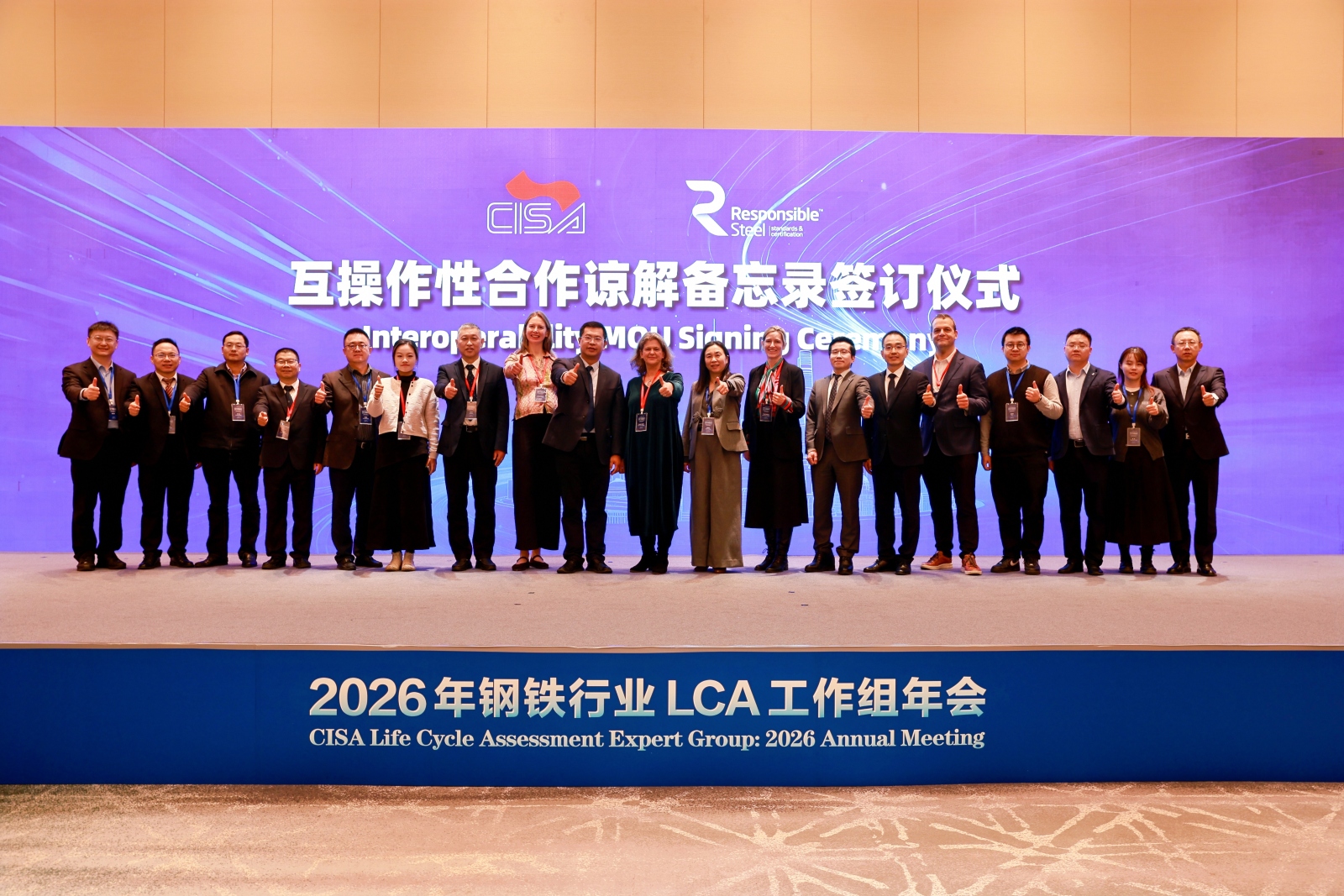
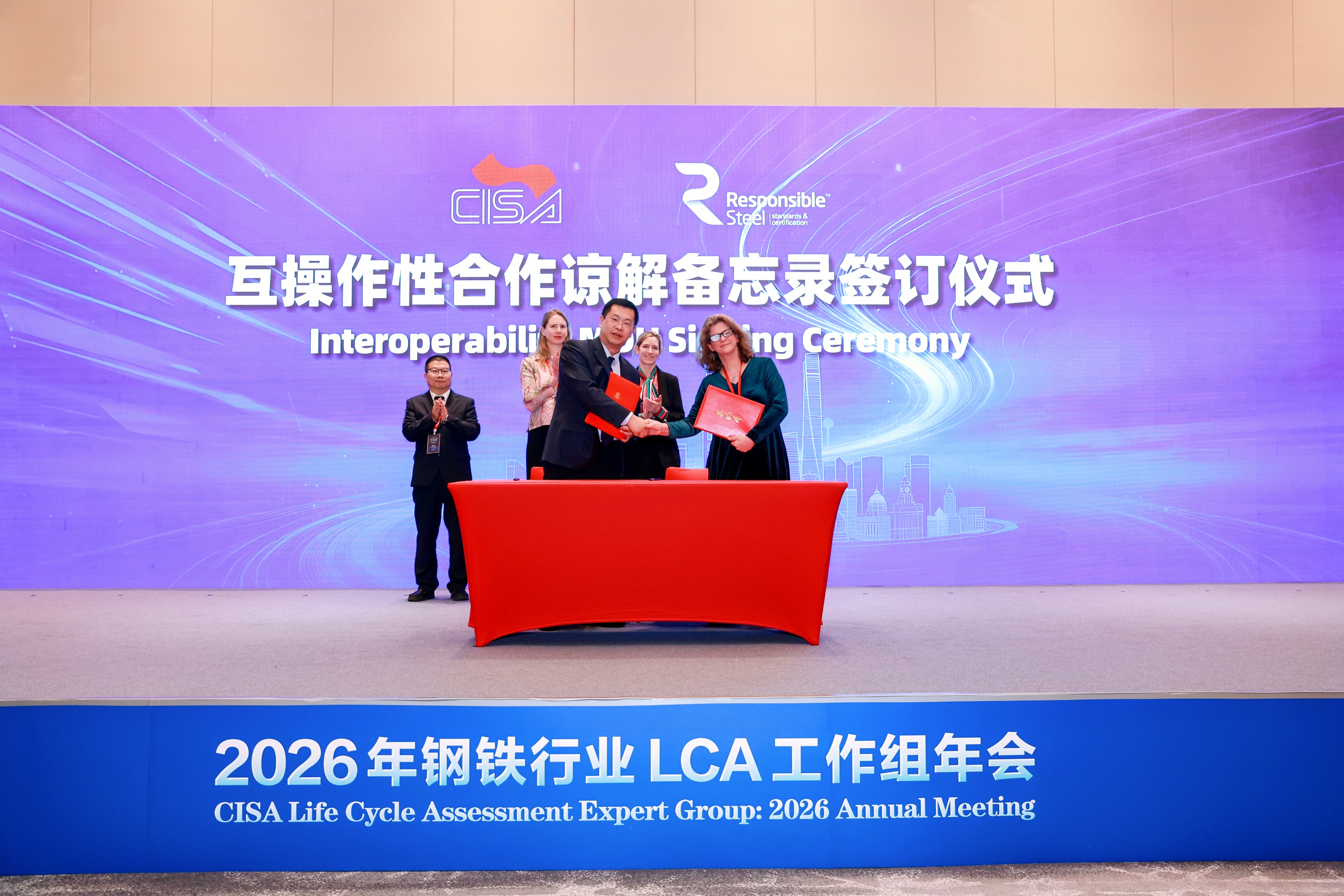
ResponsibleSteel's quest for a coherent market for decarbonised steel in 2026 got off to a constructive start this month. Following the announcement of our landmark agreements with the Chinese Iron and Steel Association (CISA) and the Low Emission Steel Standard (LESS) at COP30, ResponsibleSteel was in China in January to kick off our work on interoperability with CISA. This work in China complements our parallel project with Brussels-based LESS.
The goal? To build trusted data and claims on decarbonisation.
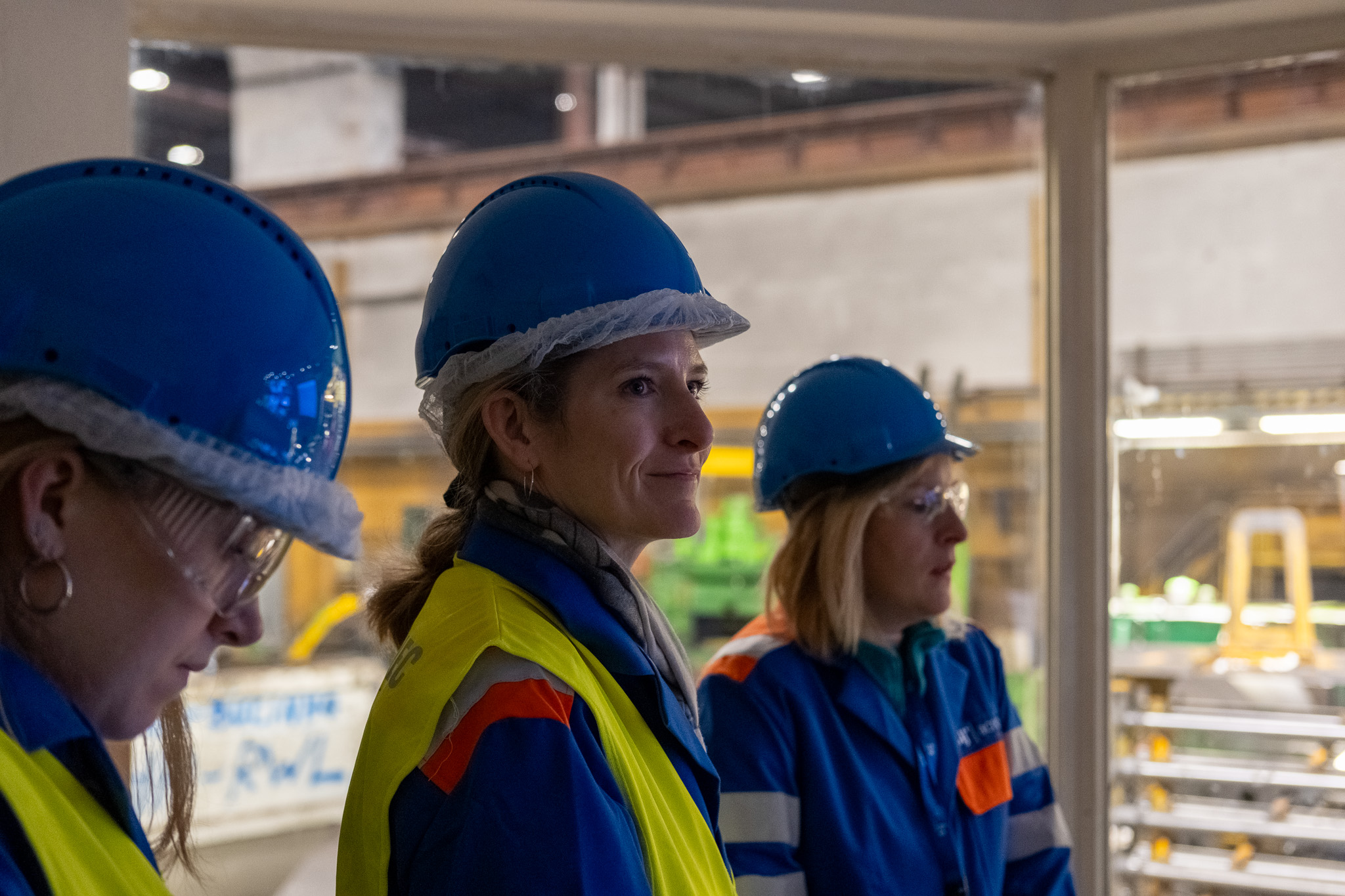
During our trip, our Director of Programmes, Amy Jackson, our Decarbonisation Lead, Alli Devlin, and myself had the opportunity to:
- Present to the Chinese steel value chain our C2F (China's low-carbon emission steel standard) interoperability MoU at CISA's annual LCA conference.
- Connect with our Chinese members, including SKF, World Resources Institute (WRI), Climate Group, VAMA (Valin ArcelorMittal Automotive JV), Penglai Dajin, and some of our certification bodies working in China, including Afnor and China Quality Certification Centre (CQC).
- Get to work on our C2F-ResponsibleSteel Interoperability Project, structuring the discussions around our Framework for Credible Interoperability.
- Visit the 15mtpa Zhanjiang steel plant, where a new DRI-EAF line was launched in Dec 2025. This has involved the production to date of iron reduced with hydrogen in a 1mtpa DRI plant. Whilst this is currently produced from refined coke oven gas, the project is a hugely significant demonstration of the potential to produce hydrogen-based DRI at an industrial scale.
.jpg)
What do ResponsibleSteel's interoperability projects look like in practice?
In short, interoperability means measuring emissions using rules that are as aligned as possible, and recognising the differences, to enable comparison on a like-for-like basis. Imagine the benefit this would bring for anyone wanting to distinguish what good looks like, for example, procurement teams, investors, and policymakers.
But making interoperability work in practice requires a lot more if we want a reliable, credible and sustainable system that generates high-quality, comparable data.
We've outlined the key components of this in our Framework for Credible Interoperability, which will inform both our work with LESS and CISA:
- Aligned GHG accounting rules
- A reliable calculation tool
- A robust assurance mechanism
- Credible claims protocols
- Good governance, oversight and resourcing
- Appropriate data management
- Strong operations management systems
This is how markets are built: first with innovation, then with the necessary rules and systems that enable good information to flow – so that steel buyers can understand, investors can evaluate, and steelmakers can compete, based on emissions performance that everyone can trust.


ArcelorMittal Warszawa Obtains ResponsibleSteel Certification
We’re proud to announce that ArcelorMittal Warszawa has recently earned ResponsibleSteel Certification. The site, after a successful audit carried out by auditors from DNV (Det Norske Veritas) Poland, received the certificate at the end of January confirming that the site had fulfilled the criteria required to earn certification against the ResponsibleSteel Standard.
ResponsibleSteel CEO Annie Heaton stated, “It’s inspiring to see ArcelorMittal’s continued dedication to achieving site certification for all sites across Europe, reflecting the company’s unswerving commitment to working with ResponsibleSteel to build a sustainable, net-zero industry. ArcelorMittal Warszawa is the 8th electric arc furnace steel site to be certified against the ResponsibleSteel International Standard and has demonstrated a keen sense of responsibility towards the environment as well as to the site’s workers and nearby populations. The site consults regularly with local stakeholders and organises community site visits. The site has also invested significantly in reducing pollution, particularly noise pollution, and has committed to a 35% reduction in CO2 emissions by 2030. We look forward to supporting them as they work to fulfil this goal.”
ArcelorMittal Warszawa is a state-of-the-art mini mill, located in Poland. It started operations in 1957, becoming a reputed producer of carbon and special steel long products. ArcelorMittal Warszawa’s production cycle is based on Electric Arc Furnace (EAF) scrap recycling. The company is producing increasing volumes of products branded XCarb™ – (an umbrella brand that groups together all of the reduced, low, and zero carbon steel making activity of ArcelorMittal). Products manufactured by ArcelorMittal Warszawa are used in the automotive, machinery engineering, bearing and construction industries.
Commenting on the certification, Artur Gierwatowski, CEO of ArcelorMittal Warszawa stated, “This certificate is a great recognition for us at ArcelorMittal Warszawa but also a commitment to our stakeholders. Our customers, our employees and members of local communities expect us to produce high quality steel respecting the highest social and environmental standards. The ResponsibleSteel certificate recognizes that we are succeeding in doing it. This makes us very proud, and constitutes a commitment to further ArcelorMittal Warszawa’s sustainable development in coming years.”
The certification audits against the ResponsibleSteel Standard were performed between May and September 2022. They were designed to verify that the steel site’s activities meet a set of rigorously defined requirements, which auditors validate not only on the basis of documentation but also via a number of interviews with internal and external stakeholders. They take into account a broad range of social and environmental criteria including business integrity, relations with employees and communities, human rights and labour rights, climate change and greenhouse gas emissions, water management, waste and noise emissions, and biodiversity.
View the certificate here.


January 2023 Newsletter
Please view the January 2023 newsletter by clicking the link below:

JSW Steel Joins ResponsibleSteel
JSW Steel, one of India’s leading steel manufacturers, has today joined ResponsibleSteel, the only global multi-stakeholder standard and certification initiative for responsibly sourced and produced steel.
JSW Steel is the flagship business of the diversified, US$ 22 billion JSW Group, which is expanding across markets with innovation, digitalization, and sustainability as its key anchors. With efficient integrated operations and a clear vision for the future, JSW is executing its strategic growth plan in line with the growing steel demand.
Annie Heaton, ResponsibleSteel’s CEO, commented, “We are delighted that JSW has joined ResponsibleSteel as a member and very much welcome the commitment to sustainability standards this represents. It is another great example of leadership in the steel industry, and particularly important to see this in India given its role in driving decarbonisation both at home and globally. By joining us, JSW is committing to achieving certification against the ResponsibleSteel International Standard, which in the world of decarbonisation and ESG has no equal. Certification of a steelmaking site requires hard work across the board to integrate not only decarbonisation plans into the site’s strategy but all material environmental and social improvements, which means investment and technological know-how plus a strong commitment from the company’s management and its employees. We look forward to working with JSW as they move forward on their journey of decarbonisation and sustainable development.”
Over the last three decades, JSW Steel has grown from a single manufacturing unit to become India’s leading integrated steel company with a capacity of 28.5 MTPA in India and the USA (including capacities under joint control). Its next phase of growth in India will take its total capacity to 38.5 MTPA by FY25. The Company’s manufacturing unit in Vijayanagar, Karnataka is the largest single-location steel-producing facility in India with a capacity of 12 MTPA. JSW Steel has always been at the forefront of research and innovation. It has a strategic collaboration with global leader JFE Steel of Japan, enabling JSW to access new and state-of-the-art technologies to produce and offer high-value special steel products to its customers. These products are extensively used across industries and applications including construction, infrastructure, automobile, electrical applications, and appliances.
Seshagiri Rao, JMD & Group CFO stated, “The move to join ResponsibleSteel is to collaborate and work with other businesses in creating values, tools, and policies, to accelerate the growth of the steel industry in a sustainable manner and enhance sustainability within our supply chain, so that customers are confident that the steel they use has been sourced and produced responsibly at every stage.”
He continued, “At JSW we understand our responsibility towards making our planet better and are happy to join ResponsibleSteel to demonstrate our commitment through participating in the international certification programme.”
JSW Steel has set ambitious sustainability targets including reducing its specific CO2 emissions by 42% by FY2030 from 2005, aligning its target with the Sustainable Development Scenario (SDS) of the International Energy Agency (IEA) and India’s Nationally Determined Contributions.
Read the full press release here.

ResponsibleSteel joins ISEAL as a Community Member
We are delighted to announce that ResponsibleSteel has recently been approved as an ISEAL Community Member, joining a growing group of members committed to supporting and improving sustainable practices.
ISEAL supports ambitious sustainability systems and works to help members improve these systems to achieve maximum impact. ResponsibleSteel joins several ISEAL Community Members from the mining, metals and minerals sector and looks forward to having the opportunity to share knowledge and experience in order to develop and support sustainable growth in the steel industry.
Annie Heaton, ResponsibleSteel’s CEO commented, “As the only global multistakeholder standard for steel, our aim is to be a driving force in the socially and environmentally responsible production of net-zero carbon steel. We strive to ensure that our ResponsibleSteel International Standard is the most trusted standard for responsibly sourced and produced steel and a leading authority on ESG issues in the industry.”
She continued, “Obtaining ISEAL Community Membership is a critical step on this journey and will help us improve our systems and our credibility as a global standard. We plan to work towards becoming ISEAL Code Compliant over the next few years. We look forward to working with other members of the community and sharing knowledge and experience in order to ensure our work has the greatest impact possible.”
As the only global multi-stakeholder standard and certification initiative for responsibly sourced and produced steel, we are committed to continuously improving our Standard, maximising steel’s contribution to a sustainable world. The ResponsibleSteel International Standard covers a range of sustainability issues: climate change, pollution, and human rights concerns by taking into account both direct and upstream greenhouse gas emissions, air and water pollution, pollution from mining coal and iron ore, labour standards, and more.
ISEAL’s Executive Director, Karin Kreider, commented, “I am very excited to have ResponsibleSteel join ISEAL as a Community Member. Their standards address climate change, pollution, and human rights in various stages of the steel supply chain — the world’s most widely used material. I look forward to a fresh perspective from a new member in the mining and minerals sector and working together in the coming months and years.”
ISEAL members are sustainability systems and accreditation bodies dedicated to delivering benefits for people and the planet. They are committed to continually improving their systems and impacts through learning and innovation; collaborating with stakeholders and peers; and are transparent and truthful about how their systems work and how they measure their impacts.
We are proud to become an ISEAL Community Member and look forward to joining a growing number of sustainability initiatives that are working to drive positive change for both people and the planet.

ResponsibleSteel and global banks agree MoU for the rapid decarbonization of steel
As world leaders prepare to gather in Davos next week for the World Economic Forum, ResponsibleSteel is delighted to announce it has agreed an MoU with the Sustainable STEEL Principles Association (“SSPA”). This is a huge and positive step toward harmonization and greater collaboration between the two organisations and paves the way for the facilitation of the faster decarbonisation of steel.
Annie Heaton, CEO of ResponsibleSteel said, “With the clock ticking on climate change, we need pragmatic solutions to tackle climate change especially, in relation to heavy industry. These solutions need to be based on technological breakthroughs, innovation and creative problem solving. They also need to be global. None of this will be possible without a radical step change in how we finance these breakthroughs so industries like steel can decarbonize rapidly and be a force for good. The MoU between the SSPA and ResponsibleSteel signifies a continued determination by banks, the steel industry and wider stakeholders to achieve real progress towards net zero by 2050, and all the complexities which that entails.”
Steel decarbonization has come under the spotlight recently at global leaders’ meetings, for example COP26 and COP 27, which is right given the significant contribution of the industry to global greenhouse gas emissions. Amidst the proliferation of initiatives now focusing on steel decarbonization, this MoU signals a clear recognition that more work must be done to avoid a divergence of standards and work towards alignment, where possible.
Both the SSPA and ResponsibleSteel have pragmatic and expert pathways towards rapid sustainability. The SSP provide a framework for banks to assess the decarbonization of the steel companies within their portfolios, as well as the climate alignment of their steel lending portfolio. ResponsibleSteel provides an international standard for steel sites to be certified against.
Erik van Doezum, Global Steel Lead at ING and Chair of the SSP said, “The decarbonization of the steel sector globally requires significant investments to be made, and financing will be needed to facilitate these. Banks therefore will have to identify high quality decarbonization business plans, allowing them to guide their assets into investments compatible with a 1.5C future. Building consistent and transparent data via reporting requirements for the steel sector will be paramount to facilitating financing for the decarbonization of the sector. This will enable all parties – steelmakers, lenders and other stakeholders – to use and understand common measures of progress. That is why we believe that this MoU between Responsible Steel and the SSPA is important – it signifies the importance of collaboration towards those ends.”
Much analysis and scrutiny has gone into understanding the dynamics of the steel sector in the development of both the new ResponsibleSteel GHG requirements and those of the Sustainable STEEL Principles. The SSPA and ResponsibleSteel have now signaled a continuing desire to cooperate in the interest of complementarity between standards.
In addition to this MoU announced today, ResponsibleSteel is setting up a Finance Working Group (FWG) with key voices from the steel industry, global finance, investment and civil society. Its goal will be to facilitate dialogue including benchmarking carbon requirements within the ResponsibleSteel Standard and certification programme in order to facilitate capital flows to meet decarbonization requirements. The initial round of discussion will start this month and the FWG hopes to report on its recommendations by December 2023.

ArcelorMittal Monlevade becomes certified against the ResponsibleSteel Standard
The ArcelorMittal site, located in João Monlevade in the state of Minas Gerais, has recently been certified against the ResponsibleSteel Standard following a year-long process involving a rigorous audit conducted by DNV (Det Norske Veritas).
Founded in 1937, the Monlevade plant produces long carbon steels with special characteristics for the manufacture of auto parts such as steel cords for tyres, bars for shock absorbers, helical springs, fasteners, steel wool, cables, and welds. Its steel is present in three out of four tires used in Brazil.
ResponsibleSteel CEO Annie Heaton commented, “this is an exciting accomplishment which has been a long time in the works. It’s a reflection of the dedication and hard work ArcelorMittal Monlevade has put in to ensure they are meeting the highest standards of responsible steel production. In addition to achieving carbon neutrality by 2050, they have set an interim commitment of reducing scope 1 and 2 emissions by 10% by 2030. They have also taken great care to meet the needs of workers and the local community and to implement practices which protect the surrounding natural environment.”
DNV Brasil’s auditors visited all the facilities of the Monlevade site and interviewed stakeholders and the site’s leadership to assess the operations and processes according to the principles of the ResponsibleSteel Standard. They interacted with employees, contractors, representatives of the City Council and social projects, and community leaders, among others.
“The ResponsibleSteel certification is one of the most complex to be achieved. It assesses governance standards, from decarbonization of processes to respect for human rights, local communities and employees, from the safety of employees and processes to the responsible use of natural resources,” explained Fabiano Cristeli, head of operations at ArcelorMittal Monlevade.
He continued, “the Biodiversity Master Plan, the high rate of water recirculation, which is 98.77%, as well as the suppliers’ training on conduct and anti-corruption policies outstood. Other actions were well rated in the report, including the fight against child labour, the preparation of teams of volunteers, and the support for social projects in the region, such as the Chords project, which consists of teaching classical music to children and youngsters.” The company’s goals of having 25% of women in leadership positions by 2030 and of being carbon neutral by 2050 also drew the auditors’ attention.
The Monlevade site will also be receiving investments of BRL 2.5 billion by 2024 to facilitate its expansion. The expansion is expected to increase production capacity from 1.2 million tons to 2.2 million tons of steel per year and create 650 jobs onsite, plus generate further jobs during the expansion process. The investment will enable the implementation of another sinter plant and a new blast furnace, in addition to other improvements. Following the expansion, the Monlevade plant will be one of the largest long carbon producers in the country.
The audit report was reviewed by an independent Assurance Panel and the certificate is valid for three years. It is the second one obtained by an ArcelorMittal operation in Brazil following the certification of the Tubarão site in March 2022. ArcelorMittal’s goal is to certify all plants in Brazil by December 2023.
Read the full press release here or watch the video announcement by ArcelorMittal South America Long CEO Jefferson de Paula here.

December 2022 Letter
Please view the December 2022 letter from our CEO, Annie Heaton, by clicking the link below:

Forum III Highlights
2022 has been a year of great progress for ResponsibleSteel and the steel industry more broadly. We have made huge strides in the last twelve months. And after three years, we were finally able to come together in person at Forum III in Memphis.
We had nearly 200 delegates from over 70 organisations around the world with speakers from leading steel companies, downstream consumers, financial institutions, and civil society. We were thrilled by the enthusiasm demonstrated and we are very grateful to everyone who participated.
We’ve put together a short video celebrating Forum III and sharing a few highlights from participants. Enjoy!
The ‘Sliding Scale’: Setting Equitable Thresholds to Drive Global Steel Decarbonisation
This September the ResponsibleSteel International Standard Version 2.0 was launched following almost three years of development by ResponsibleSteel and its multi-stakeholder membership. It included exacting new criteria on both the responsible sourcing of input materials and on climate change and greenhouse gas (GHG) emissions. Recent years have seen numerous approaches suggested for how best to define the GHG emissions of steel production. This briefing paper situates the use of a ‘sliding scale’ to evaluate a steel production site’s progress on GHG emissions as a key measure to decarbonize the global steel industry. The ‘sliding scale’ is one component of the ResponsibleSteel International Standard.
Steel is one of the world’s most widely used materials. From buildings to bridges, from cargo ships to cutlery, electric vehicles to wind turbines – steel is at the foundation of contemporary societies and in the infrastructure needed to transition to more sustainable ones. Steel has pertinent impacts on both people and planet across environmental, social, and governance issues.
One such issue that is increasingly in the global spotlight is the steel sector’s contribution to climate change. Steel production is estimated to directly emit between 7% and 9% of global anthropogenic carbon dioxide emissions. Diverse actors and stakeholders are taking action to catalyze change and reduce the GHG emissions of the steel sector – civil society, governments, multilateral bodies, steelmakers, steel buyers, financiers, think tanks, academics, and many more.
While the proliferation of actors engaging in this issue is welcome and essential to achieving optimal outcomes, the challenge of steel decarbonisation is best served by the non-proliferation of standards. Common, consistent, and globally comparable definitions are needed.
Decarbonising steel and the ‘sliding scale’
Reducing the steel sector’s global greenhouse gas emissions to net zero will need the world to use less steel, use steel more efficiently, switch to alternative less emissions-intensive materials where possible, maximise the reuse and recycling of steel and, critically, decarbonize steel production itself.
Steel is made with iron-bearing input material through the reduction of iron ore and the recycling of scrap metal. Steelmaking sites use differing shares of these two input materials and consequently different sources of energy input. Iron ore based production – which makes up around 70% of today’s steelmaking – is far more emissions intensive than scrap based production, since stripping oxygen from iron ore is extremely energy intensive and today relies on fossil fuels. Innovative production methods, including those that use cleaner fuels such as hydrogen, are poised to reduce this emissions intensity, but the scale and cost of the transition has historically been prohibitive. In scrap based production, electricity is used and emissions are lower, meaning emissions can be reduced through the procurement of renewable electricity.
Significant demand side measures will be needed to reduce the consumption and therefore production of steel, but 1.5C scenarios still demonstrate the need for significant decarbonisation of steel production. For instance, the International Energy Agency’s (IEA) Sustainable Development Scenario, which outlines a trajectory compatible with the goals of the Paris Agreement, is based on the assumption that two-fifths of the emissions reductions from steel until 2050 occur from material efficiency.
Estimates suggest that about 85% of globally available scrap steel is recycled today. This number must be increased to as close to 100% as possible and the quality of steel reuse and recycling vastly improved, but it also reflects the fact that there is limited and constrained room for growth of scrap steel, at least in the short term. It is well established that there is simply not enough scrap steel to meet demand today nor is there likely to be in 2050. For example, the IEA’s Sustainable Development Scenario, despite its assumption of significant material efficiency, projects total demand increasing from today to around 2 billion tonnes annually in 2050. In this scenario, scrap makes up 46% of iron bearing material, leaving the remainder to be met through iron ore. Additionally, some grades of steel currently require iron ore based production methods. This is not to say that both quantity and quality of scrap steel recovery, processing and use should not be systematically addressed and ameliorated. Rather, that new iron ore based steel will be needed to meet socio-economic needs and to transition to a low carbon future.
The scarcity of scrap combined with its lower emissions profile and the ability of steel plants to incrementally increase scrap input together mean that emissions intensity alone is an insufficient measure to drive the decarbonisation of the steel industry. Incremental increases in scrap usage can significantly lower the emissions profile of steel production at a given steelmaking site, but it is important to be mindful of only serving to shift around the finite supply of scrap from one producer to another.
For the steel customer aiming to contribute to decarbonizing the industry, how can they help to drive industry wide decarbonization? Of course the first principles of design and material efficiency are central, as is driving and enacting genuine high-quality circularity within their operations and supply chain. Selecting steel products according to their emissions intensity alone would drive demand towards steel with higher scrap shares. This could simply cause the finite volumes of scrap to be reallocated, without decarbonizing the industry as a whole.
Setting variable thresholds for embodied GHG emissions that take account of the share of scrap input resolves this issue, and provides effective benchmarks for steelmakers whatever level of scrap they use, and so drives the structural, physical decarbonisation of the steel industry. The ResponsibleSteel Standard V2.0 defines quantitative performance levels for the GHG emissions intensity of crude steel production. It gives four levels ranging from the basic threshold to the near zero threshold. Approaches taking account of the variable amounts of scrap used in production have been dubbed the ‘sliding scale’.
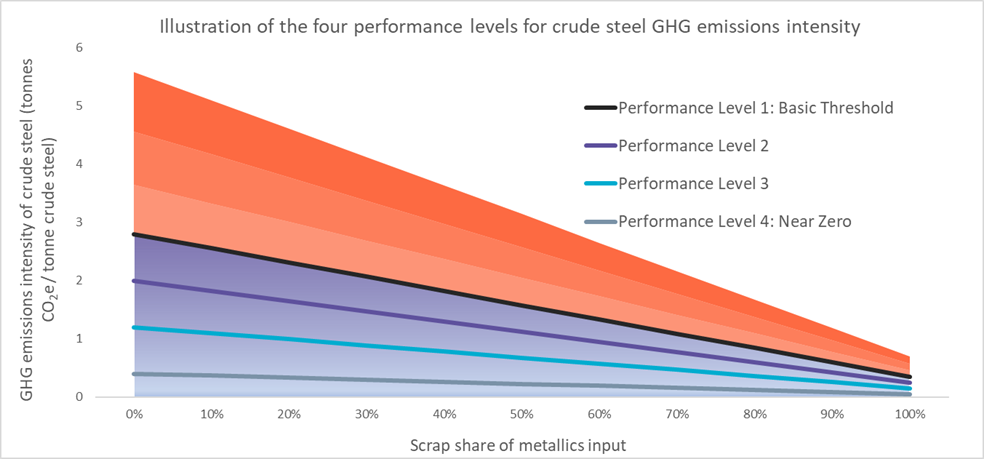
Illustration based on ResponsibleSteel International Standard Version 2.0
Underpinning the ResponsibleSteel scrap-variable GHG thresholds are the accounting rules within its International Standard V2.0 which ensure the consistent and transparent measuring of GHG emissions at the site level. These rules, together with the thresholds, provide a tool for decision makers that reflect a number of principles ResponsibleSteel believes are essential to the establishment of an international standard to drive global steel decarbonization:
Comparable. Specifying the emissions from mine to crude steel production, the standard uses a boundary common to every steelmaker, to ensure comparability of steel production from one producer to another, anywhere in the world and no matter their level of integration. Consistent accounting rules enable ‘apples for apples’ consideration of the GHG emissions embodied in steel.
Stable but adaptable. The ResponsibleSteel International Standard V2.0 also includes a five-yearly review of the specified thresholds, enabling them to be revised with the objective “to achieve the fastest global transition to a near zero steel sector”. This ensures a level of predictability and stability to the thresholds, whilst also leaving flexibility to tighten the requirements and the level of ambition as our understanding of the 1.5°C challenge evolves. The ‘sliding scale’ itself does not prescribe how much steel should meet what level by when. Rather it provides simple graduated measures of progress towards near zero that can be used as an effective tool by customers and governments to achieve their ambitions. Various scenarios provide indications of what is needed, the Mission Possible Partnership’s Carbon Cost scenario for example, identifies the need for 170 million tonnes of annual near zero iron ore based production to be online by 2030 if the industry is to stay on track for a 1.5°C future.
Technology agnostic. The ‘sliding scale’ approach is technology agnostic – it assesses performance by the progress a site makes on GHG emissions. It rewards sites making decarbonization investments across technology measures and means that, regardless of the availability of scrap metal or production technology route, producers can be incentivised to reduce emissions through ever higher levels of recognition.
Equitable. Furthermore, the sliding scale ensures that the standard is globally comparable and non-discriminatory. Steel is produced – and needed – across the world and yet the availability of scrap is geographically uneven. Countries with longer histories of large scale steel production and so greater existing stocks of steel – in cars, buildings, ships – have greater opportunities to recycle steel and therefore produce steel from scrap. In practice, this means that countries that today have growing steel demand – which historically has been closely linked to social and economic development – face the greatest obstacles to meeting demand with steel from scrap. While scrap is an internationally traded commodity, it is increasingly seen as a strategic resource and can be subject to export restrictions.
For further information on the rationale for a ‘sliding scale’ approach, see the article ‘Achieving Net Zero in the Steel Sector’ in Chatham House’s Sustainability Accelerator, and the IEA’s (2022) recent report to the G7.
A vital piece of the puzzle
Sustainable development focused. The ‘sliding scale’ is not a silver bullet. ResponsibleSteel’s strategic mission is to drive the production of net zero steel globally that is both environmentally and socially responsible. The ResponsibleSteel International Standard Version 2.0 requires steelmaking sites to operate responsibly across 13 principles that incorporate the full spectrum of environmental, social, and governance issues relevant to the steel sector. The Standard was developed by ResponsibleSteel and its multi-stakeholder membership aiming to follow ISEAL Codes of Good Practice. Certification against the Standard is backed by a robust assurance programme. To date, steelmaking sites across five continents representing over 100 million tonnes of production capacity and over 157,000 workers have been site certified.
Complementary. An effective ‘sliding scale’ complements rather than replaces other measures and performance requirements on decarbonisation and greenhouse gas emissions. The ResponsibleSteel International Standard V2.0 takes a multifaceted approach to climate change and greenhouse gas emissions. Alongside variable performance thresholds and among other requirements, it mandates both science-based targets at the corporate level (with strategies and plans at the site level) and, at higher levels of certification, it requires product carbon footprints for steel sold from a site. Net zero targets drive and reward forward planning, and science-based targets ensure the early investments required to deliver GHG emissions reductions within 5-10 years. Data on product carbon footprints can be used by customers to measure emissions in their supply chain and reduce emissions on a company, project and product level, while the ‘sliding scale’ ensures those products are contributing to global climate goals. It can also complement minimum scrap thresholds for products and measures to maximise material efficiency, the reuse, and the recycling of steel.
Scrap-variable thresholds have been included in ResponsibleSteel’s climate change and GHG emissions approach to ensure that the Standard is comparable, enabling apples for apples consideration of steel production globally, stable but adaptive, technology agnostic, equitable, sustainable development focused, and complementary to other measures and performance requirements. These principles, among many others, are vital to setting effective and common definitions. The ‘sliding scale’ enables policy makers, steel buyers, and financiers to match ambition with real, physical decarbonisation of the steel industry – globally. It should be used as a key measure of GHG emissions performance for steelmaking.

November 2022 Newsletter
Please view our November 2022 newsletter by clicking the link below:

Shaping the future of responsible steel
We are at a critical juncture in the steel industry. We have the opportunity to create real, long-lasting change for both people and the planet.
ResponsibleSteel is working to drive the creation of a net zero industry with sustainability at its core. We are a community with members from across the steel value chain and civil society. And we are proud to have around 13% of the global steel industry in membership and certified sites on 5 continents covering the production of over 100 million tonnes of steel.
It’s time to build momentum and work together to shape the future of the industry.

ResponsibleSteel Applauds Site Certification of POSCO and Tata Steel Sites
ResponsibleSteel today applauded the certification of the world’s largest steel sites achieving ResponsibleSteel certification. The sites are Pohang and Gwangyang Steelworks in South Korea operated by POSCO together with the Jamshedpur site in India operated by TATA Steel.
This is a monumental step forward for ResponsibleSteel and the global steel industry on the road to sustainable development and decarbonisation. ResponsibleSteel now has around 13% of the world’s steel industry by volume in its membership, with certified sites on 5 continents covering the production of over 100 million tonnes of steel.
Annie Heaton, CEO of ResponsibleSteel speaking at Forum III: Shaping the future of responsible steel in Memphis said, “This is a historic moment for both ResponsibleSteel and the global steel industry on the road to sustainability. With Asia home to 72% of the world’s steel production, the achievement of site certification by these three substantial steel plants takes ResponsibleSteel into a new phase, one of global roll out.”
The ResponsibleSteel Standard is designed to drive forward positive actions for people, planet and the steel industry. The sheer scale of the POSCO and Tata sites certified today means that the production of 103.5 million tonnes of steel and the working lives of 157.4 thousand people are managed by sites that are now independently audited every 18 months.
Heaton continued, “For the steel companies themselves, this has required enormous vision, investment and above all commitment, creating a community of like-minded people working together to find solutions to some of the most pressing issues of the day – climate change, air pollution, diversity and labour rights to name just a few. There will be further to go, but today the producers of over 100 million tonnes of steel can proudly say they have achieved ResponsibleSteel site certification and are well on their way.”
Hag-dong Kim, CEO of POSCO said, “It is a great honour that both Pohang and Gwangyang Steelworks, the world’s two largest mills, have been certified by ResponsibleSteel. Today, as we prepare for the post-pandemic era, it is more important than ever for the steel industry to fulfil its social responsibility and to practice sustainable manufacturing.
To remain viable and competitive, the steel industry must identify sustainable solutions to diverse ESG challenges, such as by achieving carbon neutrality and building a safe workplace.”
Hag-dong Kim continued, “We appreciate ResponsibleSteel’s vision to ‘maximize the steel sector’s contribution to a sustainable society’ and the mission to ‘enhance the responsible sourcing, production, use, and recycling of steel,’ which are commensurate to POSCO’s management philosophy: Corporate Citizenship.
Together with our core values of ‘coexistence’ and ‘symbiosis,’ the new philosophy has propelled us forward on our path to sustainability. I believe this is just the beginning. To build a sustainable business, we hope other sites besides Pohang and Gwangyang will drive change and innovation to seek certification too.”
T. V. Narendran, CEO & MD, Tata Steel, said, “This is a historic moment for Tata Steel and an important step in our sustainability journey. Globally, the steel industry is at a critical juncture and the larger impact of how we produce and consume steel needs to be addressed urgently. For Tata Steel, this has always been a very important part of our journey from when we first produced steel in Jamshedpur in 1912. We are honoured to receive the ResponsibleSteel Certification for three of our facilities and will work towards achieving this recognition for all our production sites. I thank the ResponsibleSteel team, the auditors, assurance panel and the team at Tata Steel for their efforts in making this possible.”
For more information/press interviews with ResponsibleSteel or its members please contact:
Ali Lucas, Director of Communications
alucas@responsiblesteel.org
+44 7786 546724
Savannah Hayes, Communications Manager
shayes@responsiblesteel.org
+44 7588 785909
Denise Meredith, Communications and Media Consultant
denisemeredith1857@gmail.com
+44 7930 531128
