

Strengthening climate transition planning: Revising the ResponsibleSteel Production Standard
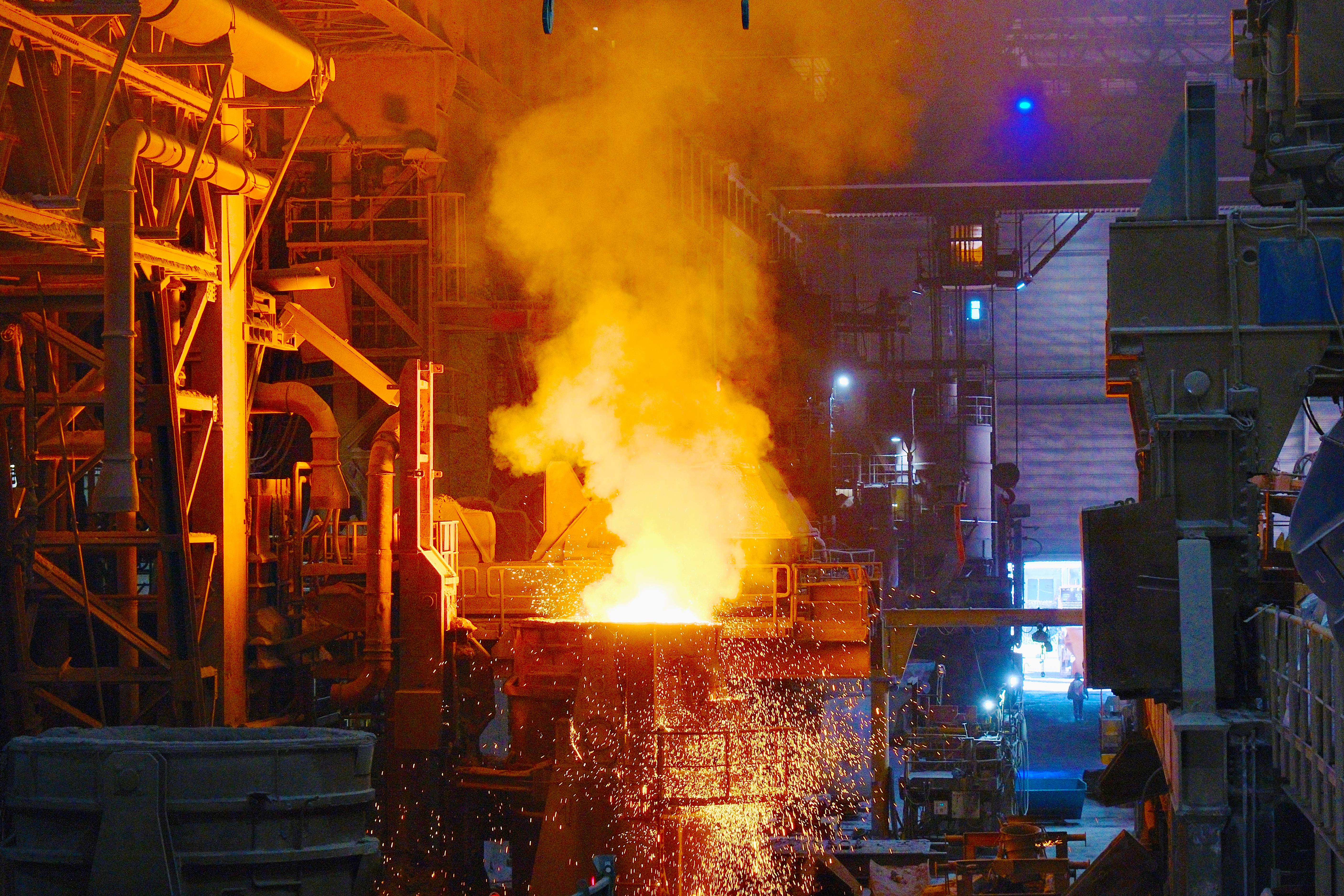
Last year marked a decade since the signing of the Paris Agreement and six years since the launch of the ResponsibleSteel Production Standard. In that time, expectations on climate action have shifted dramatically. Global emissions continue to rise, and the 1.5°C warming threshold is now projected to be breached by 2034. To remain on a 1.5°C pathway, the Intergovernmental Panel on Climate Change (IPCC) indicates that global CO₂ emissions must fall by 45% by 2030 and reach net zero by 2050. Yet progress in the steel sector is lagging. According to the Mission Possible Partnership’s Global Project Tracker, only 9% of the required operational or committed near-zero steelmaking capacity was in place by the end of 2024.
Against a backdrop of rising global emissions and growing awareness of the consequences of inaction, ResponsibleSteel is undertaking a timely and necessary revision of its climate-related requirements, specifically criteria 10.1 (corporate commitment to the Paris Agreement), 10.2 (corporate climate-related financial disclosure), 10.5 (site-level emissions targets and planning), and 10.7.1 (GHG disclosure and reporting).
A collaborative revision process
From October to January, ResponsibleSteel convened five Working Group (WG) and Technical Advisory Group (TAG) meetings, bringing together 23 representatives from 15 member organisations across certification bodies, civil society, steelmakers, and the wider steel value chain.
As a participant from SteelWatch noted during the process, “Having a diverse group of members involved in the revision process of the standard helps to achieve a balance between what steelmakers deem feasible and where the standard needs to set the bar to trigger ambitious action. ResponsibleSteel has done well navigating and drawing on different perspectives, turning them into concrete proposals that can be submitted for the next steps of the revision process.”
Three guiding principles framed these discussions:
- Ambition: ensuring alignment with global climate goals and science-based pathways
- Feasibility: recognising real-world constraints, particularly in the near term
- Simplicity: avoiding unnecessary complexity while improving clarity and accountability
A key theme that emerged was the foundational importance of credible transition plans that move beyond aspiration and, at the same time, are grounded in realistic assumptions about technology readiness, capital investment cycles, and enabling conditions. As noted by SteelWatch, “Aligning corporate- and site-level requirements is essential in ensuring that top-level corporate ambition and targets translate into actual investment decisions today, and subsequent material transformation and emissions reductions on the ground.”
Moving beyond outdated decarbonisation roadmaps
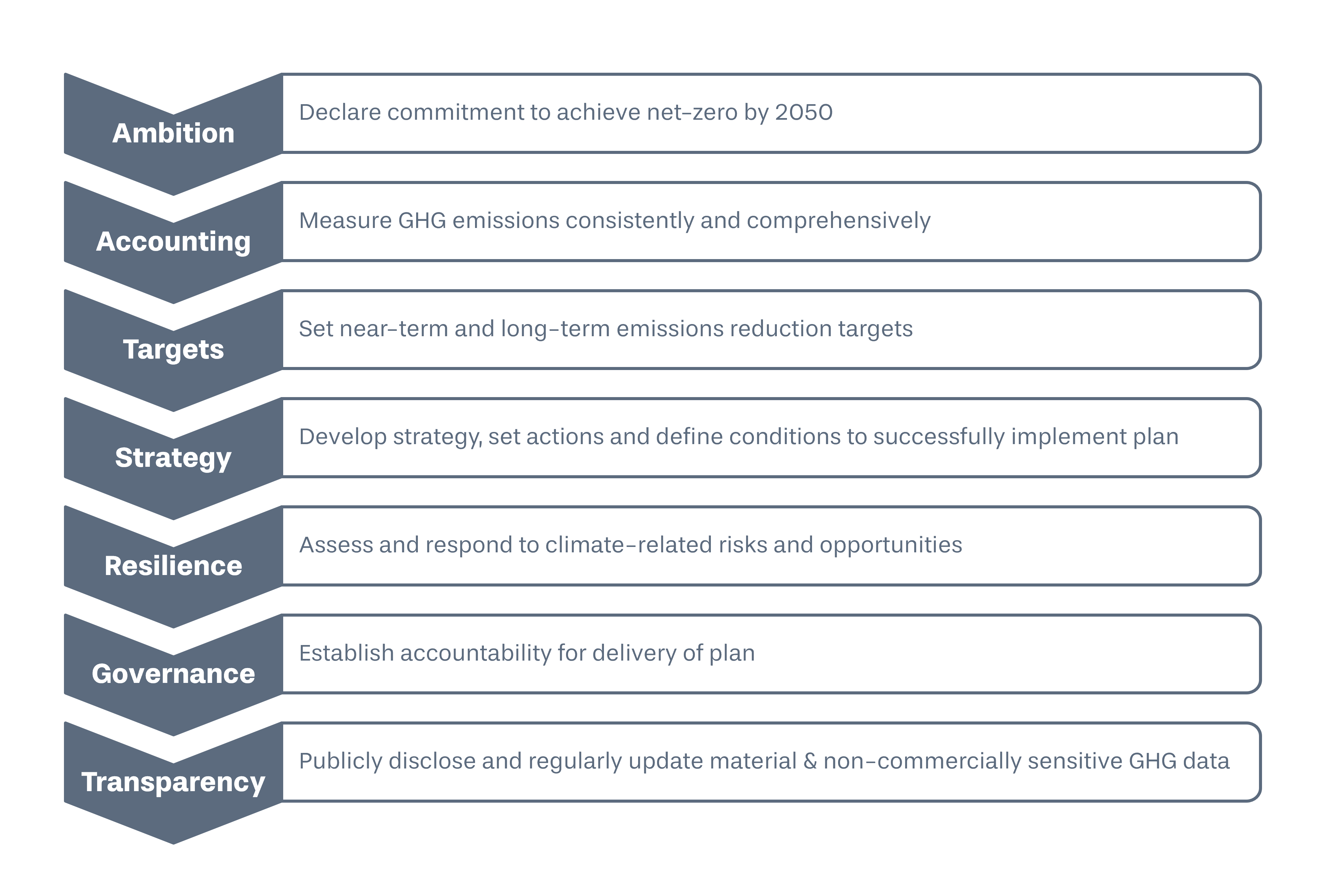
Under the current Production Standard, certified sites must demonstrate that they have a decarbonisation roadmap aligned with an existing model. However, the WG and TAG agreed that many of these models have not been updated in recent years and no longer reflect technological, economic, or policy realities. As a result, they risk undermining rather than strengthening transition planning. The revised approach moves away from a prescriptive reliance on external models and instead proposes to introduce an explicit requirement for a climate transition plan at the corporate and site level.
A participant from EMSTEEL, a ResponsibleSteel member and certified site, commented, “Revising the ResponsibleSteel Standard is an important step in strengthening the steel sector’s collective transition journey. The process provides members with a valuable opportunity to contribute practical insights, share operational experience, and help shape a standard that is both ambitious and implementable. ResponsibleSteel has done an excellent job in creating an inclusive and transparent revision process, encouraging constructive dialogue among members and ensuring diverse industry perspectives are reflected in the development of a stronger and more credible framework.”

What’s proposed to change in the Production Standard?
The proposed revisions strengthen and connect key elements of Principle 10, with a clearer and more coherent architecture across corporate and site levels.
Key improvements include:
- Quantitative, time-bound emissions reduction targets, covering Scope 1 and 2 emissions and material Scope 3 emissions
- Stronger links between corporate- and site-level planning, ensuring that corporate ambition translates into real investment decisions and on-the-ground transformation
- Improved intensity-based disclosures to support comparability, directly aligned with ResponsibleSteel’s broader harmonisation work
- Alignment with leading frameworks, such as IFRS S2 (International Financial Reporting Standards), while retaining flexibility for different regional and operating contexts
- Clearer guardrails for credibility, moving beyond temperature labels alone
There was strong agreement across the WG that clearer wording and guidance are essential to support consistent interpretation and implementation by sites and auditors alike.
Connecting the dots between the Production Standard’s criteria
One of the most important outcomes of the revision process so far has been a clearer set of connections between criteria that, while related, have not previously been well integrated.
In the current Production Standard:
- Corporate transition planning (10.1) is weakly connected to climate-related financial disclosures (10.2)
- Site-level transition planning (10.5) is not sufficiently aligned with corporate-level strategies
- Public GHG emissions disclosure requirements (10.7.1) are limited, focusing mainly on a site’s medium-term reduction target
The proposed changes aim to address these gaps by:
- Requiring climate transition plans to include climate-related financial risks and opportunities, including dependencies that may impose structural barriers, planned changes to business models and strategy;
- Aligning corporate- and site-level planning approaches to reduce carbon leakage risks and ensure consistency across operating boundaries; and
- Strengthening public disclosure requirements to better support accountability, comparability, and progress tracking over time.
Flexibility, credibility, and the reality of steelmaking
The WG and TAG discussions also surfaced a shared understanding of the structural barriers currently slowing decarbonisation in the steel industry. These include:
- Limited technology maturity at scale
- Supply chain and infrastructure constraints
- Energy availability and cost
- Inconsistent or insufficient policy support
- Weak demand signals for low-emission steel
- Trade and competitiveness pressures
Given the long investment timelines and asset lifetimes involved, feasibility in the near term is particularly critical. As such, there was strong support for a flexible, disclosure-driven approach that pairs quantitative targets with qualitative indicators of progress, allowing ResponsibleSteel to uphold high ambition and transparency while recognising that steelmakers cannot address systemic barriers alone.
As ResponsibleSteel’s Decarbonisation Analyst, Melav Salih observed, “A robust climate transition plan must embed decarbonisation within broader strategic and financial planning. It needs to recognise that steelmakers’ transition pathways are shaped by long-lived assets, billion-dollar investment decisions, and dependencies on an ecosystem of change that includes energy systems, infrastructure, policy, and markets.”
Looking ahead
As the Paris Agreement enters its second decade, and as legal, financial, and societal expectations on climate accountability intensify, ResponsibleSteel’s role as a credible, independent standard for the steel industry has never been more important.
By strengthening climate transition planning across corporate strategy, site-level action, financial disclosure, and public reporting, revisions to the Production Standard aim to support steelmakers in navigating this transition transparently and at pace.
Together with parallel work on harmonisation and disclosure alignment, the revisions to climate transition planning requirements represent a critical step toward turning climate commitments into credible, comparable, and feasible transition pathways for the global steel industry.
Learn more about the revision of ResponsibleSteel’s International Production Standard here.
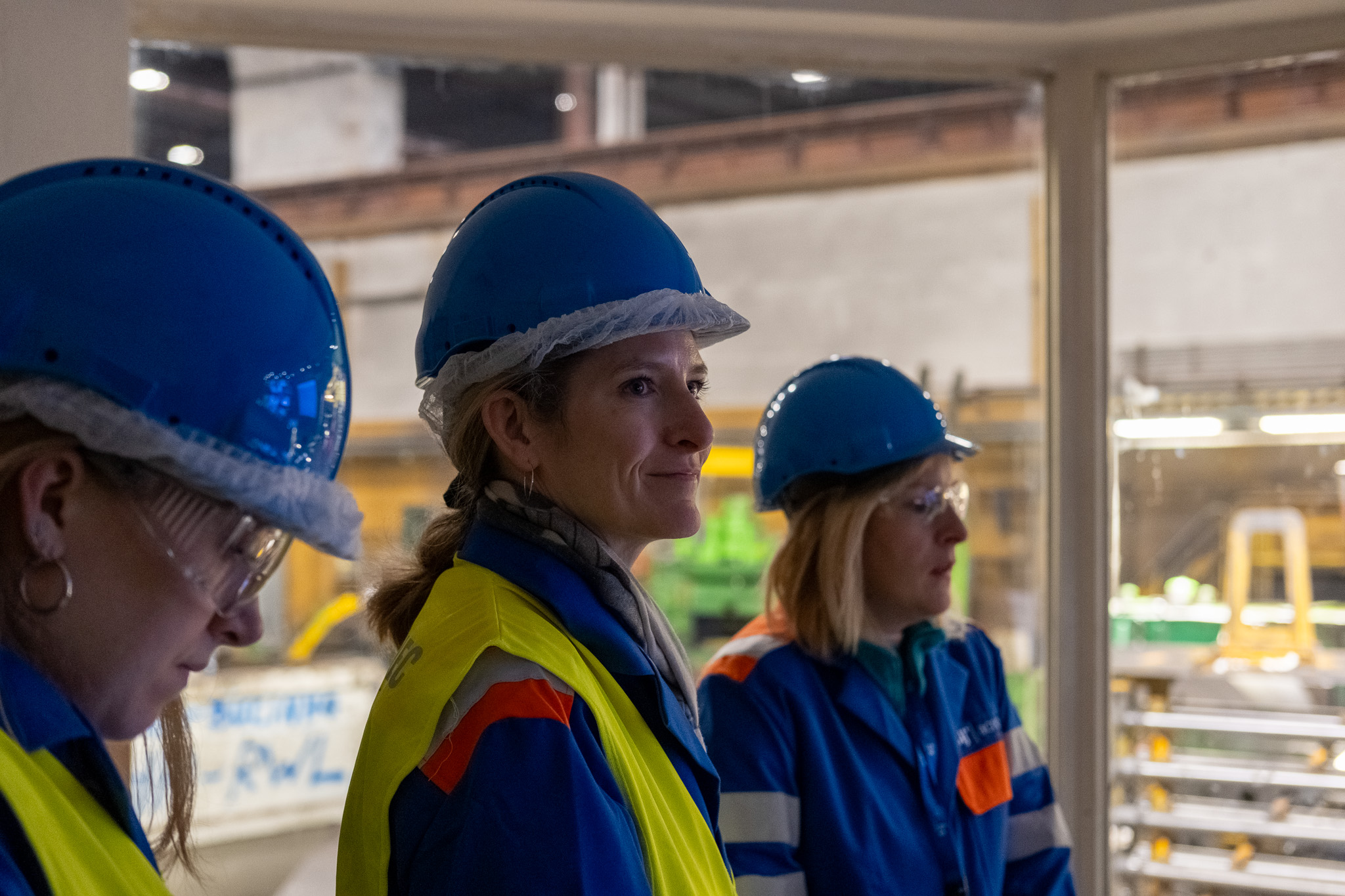

Reflections from China: ResponsibleSteel's CEO Annie Heaton discusses building interoperability across global standards
Interoperability: Building a bridge between global standards
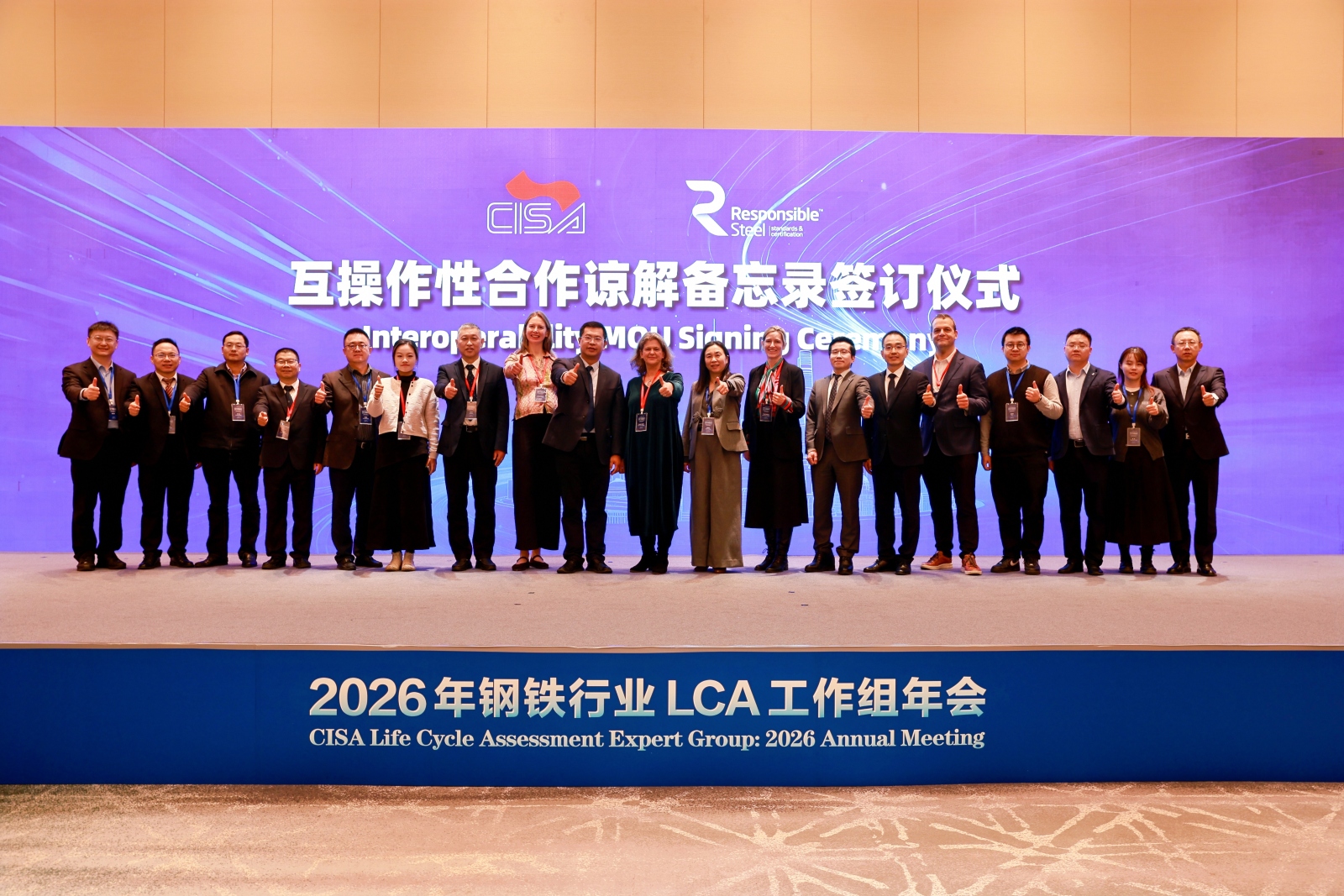
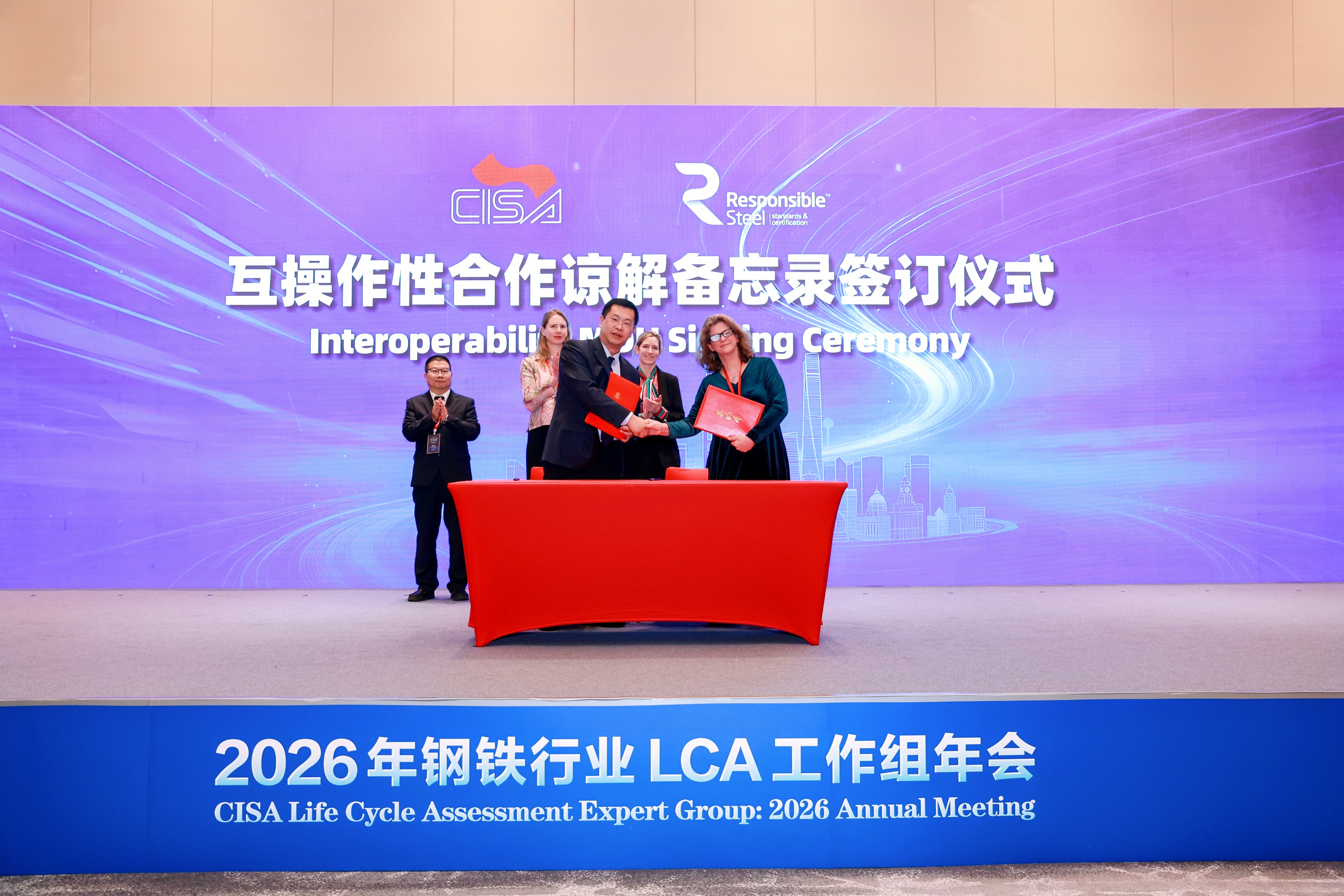
ResponsibleSteel's quest for a coherent market for decarbonised steel in 2026 got off to a constructive start this month. Following the announcement of our landmark agreements with the Chinese Iron and Steel Association (CISA) and the Low Emission Steel Standard (LESS) at COP30, ResponsibleSteel was in China in January to kick off our work on interoperability with CISA. This work in China complements our parallel project with Brussels-based LESS.
The goal? To build trusted data and claims on decarbonisation.
During our trip, our Director of Programmes, Amy Jackson, our Decarbonisation Lead, Alli Devlin, and myself had the opportunity to:
- Present to the Chinese steel value chain our C2F (China's low-carbon emission steel standard) interoperability MoU at CISA's annual LCA conference.
- Connect with our Chinese members, including SKF, World Resources Institute (WRI), Climate Group, VAMA (Valin ArcelorMittal Automotive JV), Penglai Dajin, and some of our certification bodies working in China, including Afnor and China Quality Certification Centre (CQC).
- Get to work on our C2F-ResponsibleSteel Interoperability Project, structuring the discussions around our Framework for Credible Interoperability.
- Visit the 15mtpa Zhanjiang steel plant, where a new DRI-EAF line was launched in Dec 2025. This has involved the production to date of iron reduced with hydrogen in a 1mtpa DRI plant. Whilst this is currently produced from refined coke oven gas, the project is a hugely significant demonstration of the potential to produce hydrogen-based DRI at an industrial scale.
.jpg)
What do ResponsibleSteel's interoperability projects look like in practice?
In short, interoperability means measuring emissions using rules that are as aligned as possible, and recognising the differences, to enable comparison on a like-for-like basis. Imagine the benefit this would bring for anyone wanting to distinguish what good looks like, for example, procurement teams, investors, and policymakers.
But making interoperability work in practice requires a lot more if we want a reliable, credible and sustainable system that generates high-quality, comparable data.
We've outlined the key components of this in our Framework for Credible Interoperability, which will inform both our work with LESS and CISA:
- Aligned GHG accounting rules
- A reliable calculation tool
- A robust assurance mechanism
- Credible claims protocols
- Good governance, oversight and resourcing
- Appropriate data management
- Strong operations management systems
This is how markets are built: first with innovation, then with the necessary rules and systems that enable good information to flow – so that steel buyers can understand, investors can evaluate, and steelmakers can compete, based on emissions performance that everyone can trust.


Achieving Net Zero
In an article written for the Chatham House Sustainability Accelerator, ResponsibleSteel GHG Lead Matthew Wenban-Smith outlines the emissions challenge for the steel sector globally and emphasises that the world needs both more material efficiency and more greenhouse gas efficient steelmaking. The article highlights the importance of stakeholders taking account of the proportion of scrap used for incentivizing more carbon-efficient steelmaking and ultimately, achieving net zero.
Read the full article here: https://accelerator.chathamhouse.org/article/achieving-net-zero-steel


October 2021 Newsletter
Please view our October 2021 newsletter by clicking the link below:
ResponsibleSteel’s membership expands into Russia
ResponsibleSteel is delighted to welcome its first Russian steelmaker – Severstal.
Severstal is one of the largest steel making companies in Russia and is one of the world’s leading vertically integrated steel and steel related mining companies, with major operations in Russia as well as investments in other regions of the world.
Severstal joins over 100 global business and civil society organisations who are members of ResponsibleSteel and representing the whole steel supply chain from mining through steel production to buyers of steel from the automotive and construction sectors, as well as civil society organisations focused on human rights, biodiversity, climate change and other key issues. ResponsibleSteel is the only global multi-stakeholder standard and certification initiative with a mission to maximise steel’s contributions to a sustainable society.
Russia is the 5th largest steel producer in the world, responsible for 7.5% of global steel production. Today greenhouse gas emissions from the steel sector alone account for around 7% of global annual emissions, and this is projected to rise in line with increasing demand. There is less than 10 years to halve global carbon emissions to get the world on track to reach net zero by mid-century and decarbonising steelmaking needs to be a critical part of that journey.
Anne-Claire Howard, CEO ResponsibleSteel, said “We are delighted to welcome Severstal as a member of ResponsibleSteel. We work with organisations from every stage of the steel supply chain from mining, steel producers and downstream companies. Partnering with companies such as Severstal – one of the top 50 steel producers in the world – will help demonstrate the opportunity to produce steel in a responsible way and accelerate the steel industry to become net zero by 2050.”
“Joining ResponsibleSteel demonstrates Severstal’s strong commitment to help drive decarbonisation of the steel industry and sends a clear signal to other steel companies to follow in their footsteps. For us to be within a fighting chance of transitioning the steel sector to one which is net zero in less than thirty years is a massive undertaking and will require the leadership and vision of many companies in the steel sector.” She said.
Alexander Shevelev, CEO of Severstal, commented: “Joining ResponsibleSteel reflects Severstal’s commitment to collaborating with the industry and its stakeholders to set and demonstrate new best-in-class standards for responsible steel production. As the first member from Russia, Severstal is excited to promote the principles of ResponsibleSteel in our country, which is a major steel-producing region.
We look forward to contributing to the development of the ResponsibleSteel standard, which aims to recognise steel sites that are operated in a responsible manner, looking at environmental, social and governance issues. It is increasingly important that we can demonstrate to our stakeholders, including our customers, that we take a responsible and sustainable approach to every aspect of our operations. Due to its 100% recyclability and durability, steel has an important role to play in the circular economy. However, steel can only be considered a sustainable material if producers continue to reduce their impact on the environment and make a positive contribution to society.”
ResponsibleSteel – A not-for-profit organisation, ResponsibleSteel is the steel industry’s first global multi-stakeholder standard and certification initiative.
Our mission is to maximise steel’s contribution to a sustainable society. This can only be achieved through cooperation and mutual commitment by companies at all levels of the steel supply chain, representatives of civil society and other stakeholders. ResponsibleSteel provides the forum for this multi-stakeholder approach. We are committed to open dialogue with all our stakeholders and to collaboration with the best equivalent schemes wherever possible to help achieve our mission. Welcoming members from every stage of the steel supply chain, we have developed an independent certification standard and programme via a process that aims to align with the ISEAL Codes of Good Practice.
The world’s largest materials industry, steel generates a turnover of 1 trillion US dollars and is 10 times larger than the aluminium industry, 7½ times larger than the copper industry and 4 times that of the cement industry. https://www.responsiblesteel.org/
For media enquiries, contact:
Anne-Claire Howard, CEO +44 (0) 7787 411 461
Ali Lucas, Communications Director +44 (0) 7786 546 724
PAO Severstal is one of the world’s leading vertically integrated steel and steel related mining companies, with assets in Russia, Latvia and Poland. Severstal is listed on RTS and MICEX and the company’s GDRs are traded on the LSE. Severstal reported revenue of $6 870 million and EBITDA of $2 422 million in 2020. Severstal’s crude steel production in 2020 reached 11.3 million tonnes.
Severstal is looking for startups and innovative companies. You can get acquainted with the directions of interest and leave a request on the website innovations.severstal.com. www.severstal.com

Membership Commitments Consultation – Now Open
Consultation for 30 days: New ResponsibleSteel Membership Commitments By-Law and Associated Membership Application
We are holding a 30-day consultation period for proposed new Membership Commitments. Please find the proposal here and please submit comments to info@responsiblesteel.org.
All comments should be received by 11th November 2021.
Membership Commitments are of fundamental importance for members and ResponsibleSteel alike. There is a close relationship between the commitments that members make, individually and collectively, on joining ResponsibleSteel, and the value that members can subsequently derive from their membership of ResponsibleSteel.
Membership commitments are fundamental to the achievement of ResponsibleSteel’s vision and mission for the following reasons:
- The membership requirements and commitments define what it means to be a member of ResponsibleSteel.
- Members have the right to stand for election to become Directors, to vote to elect Directors, to change the Constitution and to approve ResponsibleSteel Standards: if ResponsibleSteel is to achieve its vision and mission it is essential that its members are committed to that vision and mission.
- The achievement of ResponsibleSteel’s vision and mission depends on its ability to create value for all ResponsibleSteel members.
For civil society members, value is ultimately defined through ResponsibleSteel’s social and environmental impact. For business members, value means the business value that is generated through ResponsibleSteel membership and certification. - For both business and civil society members value comes from the practicability as well as the credibility of the ResponsibleSteel Standards. This is based on the participation of both business and civil society members in the development and approval of those standards.
- Credible and practicable Standards are necessary to the achievement of the ResponsibleSteel vision and mission but are insufficient alone. Impact is only achieved through implementation. Implementation, in turn, depends on the creation of business value
Please also find here an overview of previous discussions on membership commitments.

September 2021 Newsletter
Please view our September 2021 newsletter by clicking the link below:

SKF joins ResponsibleSteel and SteelZero
21 September 2021, London – SKF – global ball bearing and seal manufacturer, has joined ResponsibleSteel – and at the same time SteelZero – demonstrating their strong commitment to drive decarbonisation of the steel industry.
SKF joins over 100 other global organisations who are members of ResponsibleSteel – the only global multi-stakeholder standard and certification initiative with a mission to maximise steel’s contributions to a sustainable society.
SteelZero is led by the Climate Group and in partnership with ResponsibleSteel. By joining SteelZero, SKF commits to using 100% net zero steel by 2050 and joins ten other businesses that have already made this pledge, including Lendlease, Mace Group and Ørsted.
Today greenhouse gas emissions from the steel sector alone account for around 7% of global annual emissions, and this is projected to rise in line with increasing demand. Given we have less than 10 years to halve global carbon emissions to get the world on track to reach net zero by mid-century, decarbonising steelmaking needs to be a critical part of that journey.
SKF offers solutions around the rotating shaft, including bearings, seals, lubrication, condition monitoring and maintenance services.
Rickard Gustafson, CEO SKF, said: “Steel is by far the biggest source of carbon emissions upstream in SKF’s supply chain. The transition from the current global steel production infrastructure to one which is carbon neutral is a massive undertaking. We are already working with our steel suppliers on this, but there are limitations on how much change we can drive unilaterally. We will be working together with other like-minded industrial users of steel to advocate for the structural changes needed and we will do this through our active membership of the SteelZero and ResponsibleSteel initiatives.”
Anne-Claire Howard, CEO of ResponsibleSteel, said: “We are delighted to welcome SKF as a member of ResponsibleSteel. We work with organisations from every stage of the steel supply chain – and partnering with companies who have the influence to drive the market demand for steel supplies to be sourced and produced responsibly will help accelerate the steel industry to become net zero by 2050.”
Mike Pierce, Director of Corporate Partnerships of the Climate Group, said: “Action is needed now to decarbonise the steel industry. SKF’s commitment demonstrates a clear drive to tackle climate change and sends a strong demand signal for net zero steel to the industry. We’re delighted that SKF has joined SteelZero. More businesses need to follow in SKF’s footsteps for us to be within a fighting chance of limiting global temperature rise to below 1.5C.”
-ENDS-
For any media enquiries, including interview requests, please contact:
Hannah Fairley, senior communications officer at Climate Group at hfairley(at)theclimategroup.org
Alison Lucas, communications director at ResponsibleSteel at alucas(at)responsiblesteel.org
Sian How, Manager Group PR at SKF at sian.how(at)skf.co
Notes to editors
About ResponsibleSteel
ResponsibleSteel’s mission is to maximise steel’s contribution to a sustainable society. A not-for-profit organisation, ResponsibleSteel is the industry’s first global multi-stakeholder standard and certification initiative. With members from every stage of the steel supply chain, ResponsibleSteel is developing an independent certification standard to ensure businesses and consumers can be confident that the steel they use has been sourced and produced responsibly at every stage.
About SteelZero
SteelZero is a global initiative bringing together forward-looking organisations to speed up the transition to a net zero steel industry. Led by international non-profit the Climate Group in partnership with ResponsibleSteel, organisations that join SteelZero make a public commitment to procure, specify or stock 100% net zero steel by 2050. By harnessing their collective purchasing power and influence, SteelZero is sending a strong demand signal to shift global markets and policies towards responsible production and sourcing of steel. #SteelZero
About Climate Group
Climate Group drives climate action. Fast. Our goal is a world of net zero carbon emissions by 2050, with greater prosperity for all. We focus on systems with the highest emissions and where our networks have the greatest opportunity to drive change. We do this by building large and influential networks and holding organisations accountable, turning their commitments into action. We share what we achieve together to show more organisations what they could do. We are an international non-profit organisation, founded in 2004, with offices in London, New Delhi, and New York. We are proud to be part of the We Mean Business Coalition. Follow us on Twitter @ClimateGroup.
About SKF
SKF’s mission is to be the undisputed leader in the bearing business. SKF offers solutions around the rotating shaft, including bearings, seals, lubrication, condition monitoring and maintenance services. SKF is represented in more than 130 countries and has around 17,000 distributor locations worldwide. Annual sales in 2018 were SEK 85,713 million and the number of employees was 44,428.
At SKF we drive improvements and create economic, environmental and social value in two main ways. By the business we make with our customers – the products, services, and business models we provide. And the way we make business, running our operations and those in our supply chain as a responsible business partner, employer, and corporate citizen.
SKF products and solutions are critical in enabling the transition towards a carbon free economy. SKF is a key enabling partner to many of the mature and emerging clean-tech sectors – from Wind power to Electric Vehicles, from Tidal power to remanufacturing. SKF engineers and technicians apply solutions like uptime contracts to help customers in more traditional process industries to understand and reduce their impact. For our own operations, we have been measuring and acting on the carbon emissions for more than 20 years – achieving sustained economic growth of the business while reducing the greenhouse gas impact in real terms. Looking upstream, we work with our partners in the supply chain to reduce the greenhouse gas emissions associated with the materials (mainly steel) that we purchase. www.skf.com
Aperam Becomes First Stainless Steel Company to Earn ResponsibleSteel Certification
23 September 2021 – ResponsibleSteel is delighted to announce, at an event hosted by Aperam, that the company’s Stainless Steel operations in Europe successfully passed third-party audit against the ResponsibleSteel Standard – the global sustainability standard for the steel sector.
ResponsibleSteel CEO, Anne-Claire Howard, said: “I am delighted that Aperam, a ResponsibleSteel™ Member since 2019, is the first stainless steelmaker to be awarded our certification for their European Stainless Steel operations. The ResponsibleSteel™ Standard, created by the steel sector’s only truly global multi-stakeholder initiative, contains a very exacting set of ESG criteria which we hope gives business and consumers confidence that the site at which the steel is being produced is operated responsibly. I would like to congratulate the teams at Aperam who supported the development of the ResponsibleSteel™ Standard and are now able to see it implemented at five sites in France and Belgium. We look forward to continuing to work together on the next phase of our journey – Certified Steel.”
The ResponsibleSteel Standard was developed over three years through wide ranging public consultation with industry and civil society. It contains 12 principles with a wide range of criteria covering issues such as: health and safety, greenhouse gas emissions, water stewardship and biodiversity, human rights and labour rights and community relations. It is the world’s first and only global definition of what constitutes leading practices in environmental, social and governance (ESG) responsibility for steel production.
The audit of Aperam’s facilities took place in June and included Aperam’s Châtelet, Genk, Gueugnon, Isbergues and Saint-Denis sites in Belgium and France.
Mr. Timoteo Di Maulo, Chief Executive Officer and Member of the Leadership Team, said: “Aperam becoming the first stainless steel player to be certified under the ResponsibleSteel™ Standard is reassurance to our stakeholders that we produce responsibly. With Aperam, our customers have selected a partner of choice, offering them responsibly produced solutions that are also 100% recyclable and low carbon – solutions that are much needed for the sustainable society we strive to live in. At Aperam, we are convinced that true business success can only come together with social and environmental sustainability and we will pursue our strategy to further embed sustainability within all our processes. Aperam is proud to be the frontrunner of its industry in the field of Corporate Responsibility and we are delighted that all our teams’ efforts on sustainability and responsibility, already evidenced by our state-of-the-art CO2 footprint, are now fully recognized with an all-encompassing third-party certification of our processes at Stainless Europe.”
About ResponsibleSteel
ResponsibleSteel is an international, non-profit multi-stakeholder membership organisation. Businesses from every part of the steel supply chain, civil society groups, associations, and other organisations with an interest in a sustainable steel industry from anywhere in the world are welcome to join. To view the ResponsibleSteel membership list visit: https://www.responsiblesteel.org/about/members-and-associates/
ResponsibleSteel’s vision is that steel’s contribution to a sustainable society is maximised. Its mission is to enhance the responsible sourcing, production, use and recycling of steel by:
- Providing a multi-stakeholder forum to built trust and achieve consensus;
- Developing standards, certification and related tools;
- Driving positive change through the recognition and use of responsible steel.
- The ResponsibleSteel Standard is designed to support the responsible production of steel, as a tool for the achievement of ResponsibleSteel’s vision.
Find current issued certificates and their public audit summaries here.
For more information about ResponsibleSteel please visit: https://www.responsiblesteel.org/
For media enquiries contact:
Anne-Claire Howard, CEO +44 (0) 7787 411 461
Ali Lucas, Communications Director +44 (0) 7786 546 724
About Aperam
Aperam is a global player in stainless, electrical and specialty steel, with customers in over 40 countries. The business is organised in three primary operating segments: Stainless & Electrical Steel, Services & Solutions and Alloys & Specialties. Aperam has a flat Stainless and Electrical steel capacity of 2.5 million tonnes in Brazil and Europe and is a leader in high value specialty products. In addition to its industrial network, spread over six production facilities in Brazil, Belgium and France, Aperam has a highly integrated distribution, processing and services network and a unique capability to produce stainless and special steels from low cost biomass (charcoal made from its own FSC-certified forestry). In 2020, Aperam had sales of EUR 3,624 million and steel shipments of 1.68 million tonnes.
For further information, please refer to our website at www.aperam.com
Contact
Corporate Communications / Laurent Beauloye: +352 27 36 27 103
Investor Relations / Thorsten Zimmermann: +352 27 36 67 304

August 2021 Newsletter
Please view our August 2021 newsletter by clicking the link below:

The Net-Zero Steel Pathway Methodology Project (NZSPMP)
The final report and recommendations for the Net Zero Steel Pathway Methodology Project (NZSPMP) were published on 26th July. The full report can be downloaded here and the full press release can be seen here.
The project was set up in response to the view of many steelmakers that while they were supportive of the value of ‘science based targets’ (SBTs) for decarbonisation in line with the achievement of the goals of the Paris Agreement, they were concerned that key aspects of the specific methodology for defining a science-based target as developed by the Science Based Targets Initiative (SBTi) needed to be refined to recognise the characteristics of the steel sector.
The project has been led by a steering group consisting of 4 steelmakers (ArcelorMittal, Tata Steel, BlueScope Steel and GFG Alliance) together with ResponsibleSteel and worldsteel. Another 11 steel companies, and the German steel association have taken part as members of the project’s technical working group. Civil society organisations were briefed on progress through the project’s stakeholder reference group. ResponsibleSteel has been responsible for the project’s management, on behalf of the steering group as a whole.
The final report makes a number of recommendations which will be considered by the SBTi as an input for the development of SBTi steel sector guidance, due to start later in 2021.
The project’s recommendations do not represent a ResponsibleSteel position. The ResponsibleSteel Secretariat did not have a mandate to agree a position on its members’ behalf, and the process was not designed with this in mind. We agree with Adair Turner, Chair of the Energy Transitions Commission, that the report is a significant step, not a final product. Work is now needed by all stakeholders to review the report’s recommendations, and to consider what it means for their own work in relation to reductions of the steel sector’s greenhouse gas (GHG) emissions.
For ResponsibleSteel the report is important for a number of reasons. Firstly, the current ResponsibleSteel Standard (v1-1) requires that the corporate owner of any ResponsibleSteel certified site must have, “defined and made public both a long-term emissions reduction pathway, and a medium-term, quantitative, science-based GHG emisions reduction target or set of targets for the corporation as a whole”. The standard requires that steelmakers make their projections in relation to the use of primary as well as recycled steel explicit, together with their assumptions about public policy. The NZSPMP’s recommendations are well aligned with this approach. The ResponsibleSteel standard already recognises SBTi validated targets as meeting some specific requirements. We hope that the report’s recommendations will help more steelmakers develop SBTi validated targets in future, and so facilitate their ResponsibleSteel certification.
Secondly, the report considers a number of the same issues that are also currently under discussion in the ongoing development of the ResponsibleSteel requirements for ‘steel certification’. The NZSPMP report is focussed on company level target setting, but the need for consistent scope boundaries, a consistent and transparent approach to upstream and downstream Scope 3 emissions, and to the allocation of emissions to co-products – these are all issues that will need to be addressed at site level through the ResponsibleSteel requirements for steel certification. Different stakeholders will have their own views on the specific recommendations for the NZSPMP report – you may agree with some and disagree with others. But whether you agree or disagree with the recommendations themselves, we hope you will agree that they are worthy of consideration and discussion.
“ResponsibleSteel welcomes the publication of this important work” says Anne-Claire Howard, CEO ResponsibleSteel. “Steel is critical to human development and the world economy – but the industry has to reduce its net GHG emissions to zero within the next 30 years. Every steel company needs to plan its own pathway to achieve this, and to do so urgently. We look forward to seeing the recommendations in this report leading to the rapid development of credible, practical, comparable net zero GHG emission company targets and pathways by steel makers. There is no time to waste.”

July 2021 Newsletter
Please view our July 2021 Newsletter by clicking the link below:
Press Release: ResponsibleSteel announces world’s first certified steelmaking sites
ResponsibleSteel has awarded the world’s first certification to four steelmaking sites in Belgium, Germany and Luxembourg owned by ArcelorMittal. The sites are the first steel plants to be audited and pass the rigorous standards laid out in ResponsibleSteel’s certification program.
ResponsibleSteel’s Standard was developed over three years through wide ranging public consultation with industry and civil society. The Standard – the first of its kind in the global steel industry – achieved multistakeholder consensus and was approved by a majority of business and civil society members including IUCN, Fauna and Flora International, IndustriALL, CDP, The Climate Group, ArcelorMittal, BlueScope, voestalpine, Aperam, AngloAmerican, BMW and Daimler.
Anne-Claire Howard, ResponsibleSteel CEO said: “I am delighted that the first steel sites assessed against the very exacting set of criteria required in the ResponsibleSteel Standard have been approved. The ResponsibleSteel Standard was created by the steel sector’s only truly global multi stakeholder initiative. The current Standard gives business and consumers confidence that the site at which the steel is being produced is operated responsibly. The next phase in our journey, Certified Steel, will further reassure business and consumers that the steel they use has been not only produced responsibly but also sourced responsibly at every stage of its journey.”
She said: “I would like to congratulate the teams at ArcelorMittal who have supported the development and now the implementation of the ResponsibleSteel Standard at these first sites in Europe. This is a ground-breaking moment for both ResponsibleSteel and the steel sector. I’m excited to work with the growing number of ResponsibleSteel members and am convinced that the pipeline of steel sites working to achieve certification will continue to grow over the coming months. This will send a clear and strong message to markets, investors, financiers and governments that the steel industry’s intent to not only decarbonize steel production, but also to ensure responsible ESG practices in steel making has well and truly begun.”
The ResponsibleSteel Standard contains 12 principles with a wide range of criteria covering issues such as: health and safety, greenhouse gas emissions, water stewardship and biodiversity, human rights and labour rights and community relations. It is the world’s first and only global definition of what constitutes leading practices in environmental, social and governance (ESG) responsibility for steel production.
Geert Van Poelvoorde, CEO ArcelorMittal Europe said: “Responsible production techniques and high ethical and business standards have become increasingly important to our customers and consumers. ResponsibleSteel certification gives our customers the reassurance that we meet expectations on setting carbon reduction targets, as well as meeting expectations on environmental and social standards at every stage of production. The certification process has involved many teams across ArcelorMittal, and I would like to congratulate them for their hard work in being the first sites to achieve ResponsibleSteel certification – this is a major achievement.”
Explaining what the business has learned from the ResponsibleSteel certification process, Mr Van Poelvoorde said:
“In particular, the ResponsibleSteel process has helped us to improve our social management approach towards our rights holders, including our local communities, our employees, and the contractors working on our sites. While social sustainability has always been an important topic for us, ResponsibleSteel has taught us to take a more management systems-based approach to areas such as human rights, diversity and labour rights. As a result, our aim is to now manage social topics with the same systematic rigour with which quality, environment and safety topics are handled.”
He added: “Given the considerable investments we have already made to achieve a 30% reduction in CO2 emissions by 2030, and carbon neutrality by 2050, as well as our broader environmental investments across our sites, I’m confident that we will achieve our goal of securing certification in each of our Flat Products sites early in 2022.”
The Chair of ResponsibleSteel and Executive Vice-President of BlueScope Steel, Gerry Tidd, congratulated ArcelorMittal and said: “ArcelorMittal proved its dedication to the task of improving its sustainability. It invested resources early to achieve this, and today’s certifications are its reward. All the members of ResponsibleSteel salute their achievement.
“Importantly, the ResponsibleSteel Standard is now real, in the marketplace, and stands as a credible marker for consumers to judge a steel company’s ESG credentials. The Standard is the result of hard debates and collaboration between the steel industry, its upstream suppliers, its downstream customers and with civil society who all worked together to solve a complex problem and develop a new Standard. ResponsibleSteel is still a young organisation but it has attracted a wide group of pioneers from across the union movement, environmental groups, the finance sector, consumers and of course the global steel industry. Today’s award is also their award.”
Deputy Chair of ResponsibleSteel and Global Director, Forests and Land at CDP, Tom Maddox, said, “Arcelor Mittal is the second largest steelmaker in the world and it has led the way, showing the steel sector it can produce steel in a more responsible way. Looking forward, the task now is to develop the Standard to go beyond Site Certification, to Steel Products Certification and the responsible sourcing of input materials and greenhouse gas emissions. Achieving this will ensure ResponsibleSteel, together with our Business and Civil Society members, continue towards our vision: to maximise steel’s contribution to a sustainable society.”
Watch the announcement event here.
About ResponsibleSteel
ResponsibleSteel is an international, non-profit multi-stakeholder membership organisation. Businesses from every part of the steel supply chain, civil society groups, associations, and other organisations with an interest in a sustainable steel industry from anywhere in the world are welcome to join. To view the ResponsibleSteel membership list visit: https://www.responsiblesteel.org/about/members-and-associates/
ResponsibleSteel’s vision is that steel’s contribution to a sustainable society is maximised. Its mission is to enhance the responsible sourcing, production, use and recycling of steel by:
- Providing a multi-stakeholder forum to built trust and achieve consensus;
- Developing standards, certification and related tools;
- Driving positive change through the recognition and use of responsible steel.
The ResponsibleSteel Standard is designed to support the responsible production of steel, as a tool for the achievement of ResponsibleSteel’s vision.
Find current issued certificates and their public audit summaries here.
For more information about ResponsibleSteel please visit: https://www.responsiblesteel.org/
For media enquiries contact::
Anne-Claire Howard, CEO +44 (0) 7787 411 461
Ali Lucas, Communications Director +44 (0) 7786 546 724

June 2021 Newsletter
Please view our June 2021 Newsletter by clicking the link below:
