
.png)


.jpeg)

%20(1).jpg)
Strengthening climate transition planning: Revising the ResponsibleSteel Production Standard
Last year marked a decade since the signing of the Paris Agreement and six years since the launch of the ResponsibleSteel Production Standard. In that time, expectations on climate action have shifted dramatically. Global emissions continue to rise, and the 1.5°C warming threshold is now projected to be breached by 2034. To remain on a 1.5°C pathway, the Intergovernmental Panel on Climate Change (IPCC) indicates that global CO₂ emissions must fall by 45% by 2030 and reach net zero by 2050. Yet progress in the steel sector is lagging. According to the Mission Possible Partnership’s Global Project Tracker, only 9% of the required operational or committed near-zero steelmaking capacity was in place by the end of 2024.
Against a backdrop of rising global emissions and growing awareness of the consequences of inaction, ResponsibleSteel is undertaking a timely and necessary revision of its climate-related requirements, specifically criteria 10.1 (corporate commitment to the Paris Agreement), 10.2 (corporate climate-related financial disclosure), 10.5 (site-level emissions targets and planning), and 10.7.1 (GHG disclosure and reporting).
A collaborative revision process
From October to January, ResponsibleSteel convened five Working Group (WG) and Technical Advisory Group (TAG) meetings, bringing together 23 representatives from 15 member organisations across certification bodies, civil society, steelmakers, and the wider steel value chain.
As a participant from SteelWatch noted during the process, “Having a diverse group of members involved in the revision process of the standard helps to achieve a balance between what steelmakers deem feasible and where the standard needs to set the bar to trigger ambitious action. ResponsibleSteel has done well navigating and drawing on different perspectives, turning them into concrete proposals that can be submitted for the next steps of the revision process.”
Three guiding principles framed these discussions:
- Ambition: ensuring alignment with global climate goals and science-based pathways
- Feasibility: recognising real-world constraints, particularly in the near term
- Simplicity: avoiding unnecessary complexity while improving clarity and accountability
A key theme that emerged was the foundational importance of credible transition plans that move beyond aspiration and, at the same time, are grounded in realistic assumptions about technology readiness, capital investment cycles, and enabling conditions. As noted by SteelWatch, “Aligning corporate- and site-level requirements is essential in ensuring that top-level corporate ambition and targets translate into actual investment decisions today, and subsequent material transformation and emissions reductions on the ground.”
Moving beyond outdated decarbonisation roadmaps
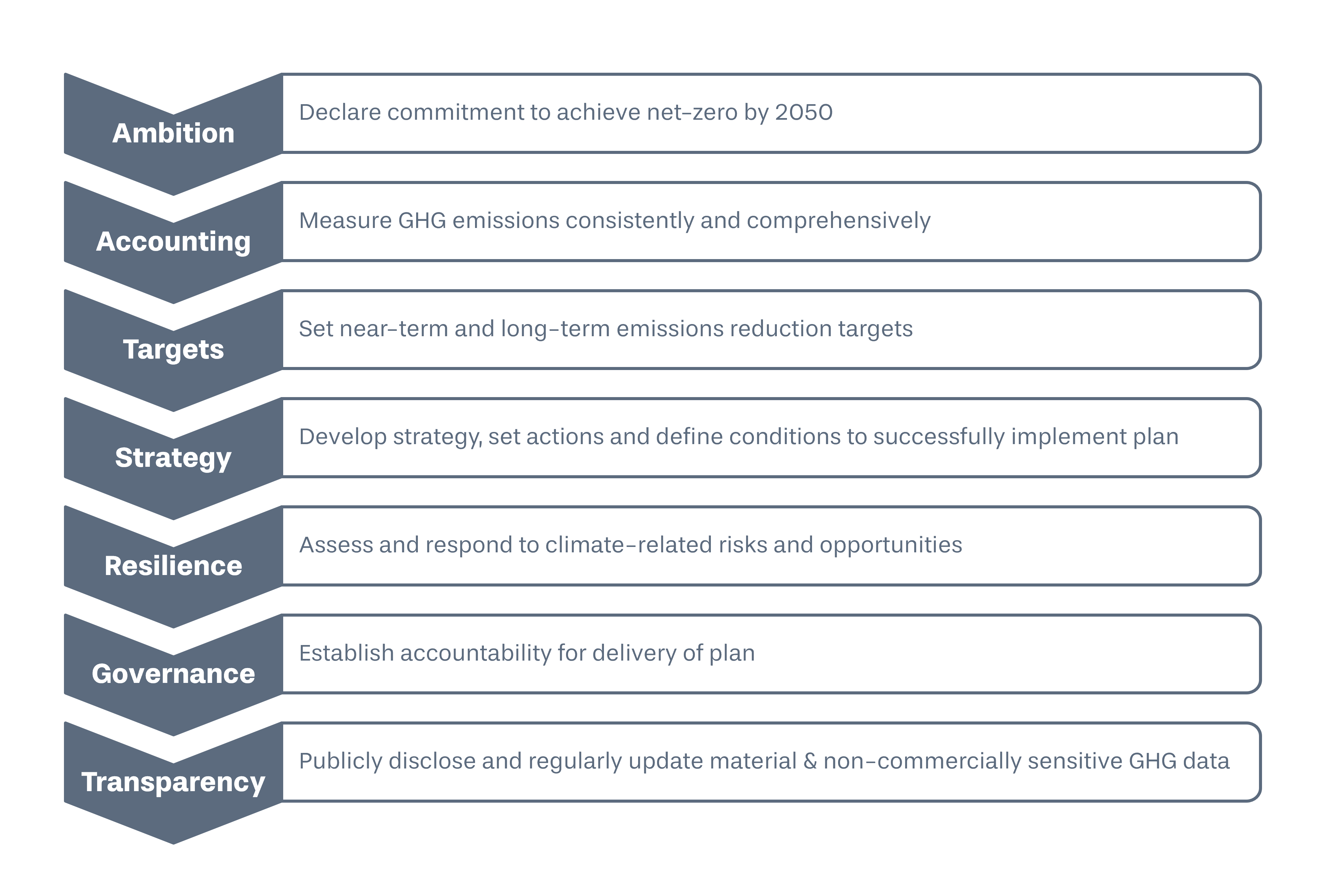
Under the current Production Standard, certified sites must demonstrate that they have a decarbonisation roadmap aligned with an existing model. However, the WG and TAG agreed that many of these models have not been updated in recent years and no longer reflect technological, economic, or policy realities. As a result, they risk undermining rather than strengthening transition planning. The revised approach moves away from a prescriptive reliance on external models and instead proposes to introduce an explicit requirement for a climate transition plan at the corporate and site level.
A participant from EMSTEEL, a ResponsibleSteel member and certified site, commented, “Revising the ResponsibleSteel Standard is an important step in strengthening the steel sector’s collective transition journey. The process provides members with a valuable opportunity to contribute practical insights, share operational experience, and help shape a standard that is both ambitious and implementable. ResponsibleSteel has done an excellent job in creating an inclusive and transparent revision process, encouraging constructive dialogue among members and ensuring diverse industry perspectives are reflected in the development of a stronger and more credible framework.”

What’s proposed to change in the Production Standard?
The proposed revisions strengthen and connect key elements of Principle 10, with a clearer and more coherent architecture across corporate and site levels.
Key improvements include:
- Quantitative, time-bound emissions reduction targets, covering Scope 1 and 2 emissions and material Scope 3 emissions
- Stronger links between corporate- and site-level planning, ensuring that corporate ambition translates into real investment decisions and on-the-ground transformation
- Improved intensity-based disclosures to support comparability, directly aligned with ResponsibleSteel’s broader harmonisation work
- Alignment with leading frameworks, such as IFRS S2 (International Financial Reporting Standards), while retaining flexibility for different regional and operating contexts
- Clearer guardrails for credibility, moving beyond temperature labels alone
There was strong agreement across the WG that clearer wording and guidance are essential to support consistent interpretation and implementation by sites and auditors alike.
Connecting the dots between the Production Standard’s criteria
One of the most important outcomes of the revision process so far has been a clearer set of connections between criteria that, while related, have not previously been well integrated.
In the current Production Standard:
- Corporate transition planning (10.1) is weakly connected to climate-related financial disclosures (10.2)
- Site-level transition planning (10.5) is not sufficiently aligned with corporate-level strategies
- Public GHG emissions disclosure requirements (10.7.1) are limited, focusing mainly on a site’s medium-term reduction target
The proposed changes aim to address these gaps by:
- Requiring climate transition plans to include climate-related financial risks and opportunities, including dependencies that may impose structural barriers, planned changes to business models and strategy;
- Aligning corporate- and site-level planning approaches to reduce carbon leakage risks and ensure consistency across operating boundaries; and
- Strengthening public disclosure requirements to better support accountability, comparability, and progress tracking over time.
Flexibility, credibility, and the reality of steelmaking
The WG and TAG discussions also surfaced a shared understanding of the structural barriers currently slowing decarbonisation in the steel industry. These include:
- Limited technology maturity at scale
- Supply chain and infrastructure constraints
- Energy availability and cost
- Inconsistent or insufficient policy support
- Weak demand signals for low-emission steel
- Trade and competitiveness pressures
Given the long investment timelines and asset lifetimes involved, feasibility in the near term is particularly critical. As such, there was strong support for a flexible, disclosure-driven approach that pairs quantitative targets with qualitative indicators of progress, allowing ResponsibleSteel to uphold high ambition and transparency while recognising that steelmakers cannot address systemic barriers alone.
As ResponsibleSteel’s Decarbonisation Analyst, Melav Salih observed, “A robust climate transition plan must embed decarbonisation within broader strategic and financial planning. It needs to recognise that steelmakers’ transition pathways are shaped by long-lived assets, billion-dollar investment decisions, and dependencies on an ecosystem of change that includes energy systems, infrastructure, policy, and markets.”
Looking ahead
As the Paris Agreement enters its second decade, and as legal, financial, and societal expectations on climate accountability intensify, ResponsibleSteel’s role as a credible, independent standard for the steel industry has never been more important.
By strengthening climate transition planning across corporate strategy, site-level action, financial disclosure, and public reporting, revisions to the Production Standard aim to support steelmakers in navigating this transition transparently and at pace.
Together with parallel work on harmonisation and disclosure alignment, the revisions to climate transition planning requirements represent a critical step toward turning climate commitments into credible, comparable, and feasible transition pathways for the global steel industry.
Learn more about the revision of ResponsibleSteel’s International Production Standard here.



ResponsibleSteel in 2020
2020 marks a year of growth for ResponsibleSteel
At the end of 2020 ResponsibleSteel Members came together virtually to celebrate the immense growth and progress the organisation has made in the last year.
Despite an uncertain year our membership has grown by 30%. Since June we have welcomed 13 new members: Tata Steel, Cobalt Institute, Hyundai Steel, Bilecik demir çelik, Bio Regional, ERM, Grimshaw Global, Hatch UK, People Planet Profit UG, Russian Green Building Council, SRI Quality Systems, The Australian Supply Chain Sustainability School and The Energy and Resources Institute (TERI).
Excitingly, membership continues to strengthen globally – with new members from Asia, Australia, the Americas, and Europe.
Since June, ResponsibleSteel’s small team has been committed to delivering our core business of Standards, Assurance and Oversight for our Certification Programme. In 2020 we held our first audits against the ResponsibleSteel Standard and we have approved four certification bodies. Alongside this we have approved 20 auditors and held training for a similar number.
During our Members Meeting, we were delighted to be joined by Mr T.V. Narendran, Managing Director of Tata Steel. In a keynote speech, Mr Narendran gave an excellent and passionate overview of how steel industry and Tata Steel are engaging in the sustainable steel debate.
Mr Narendran commented, “I think it’s increasingly important for this industry to keep engaging with stakeholders, not only in the value chain but also outside of the value chain.”
He went on to say, “We, as an industry, need to reach out to many stakeholders. Which is where a multi-stakeholder platform like ResponsibleSteel plays a role and I expect for this reason we will be able to have a more objective discussion. Tata Steel felt like ResponsibleSteel is a good platform for us to be part of as we are constantly looking to improve the way we work and to be more responsible.”
Watch Mr Narendran’s speech here
After his remarks Gerry Tidd, Responsible Steel’s co-chair for business unofficially awarded Mr Narendran quote of the day: “If complexity excites you, this is the industry to be in.”
An even bigger year on the horizon
In 2021, ResponsibleSteel will build on these great foundations as we scale up operations. In March we will welcome our first CEO Anne-Claire Howard to help us drive the organisation forward into our next stage of growth.
Alongside this we will scale up our proactive membership drive focusing on steelmakers, producers and civil society. We will be deliberate about raising our profile via external communications and stakeholder engagement.
New projects
Internally, our team are focused on the delivery of new projects to expand our offering. One of the most exciting projects on the horizon is SteelZero; launched in early December in partnership with The Climate Group, SteelZero is a global initiative to bring together leading organisations to speed up the transition to a net zero steel industry.
Companies who join SteelZero make a public commitment to transition to 100% Net Zero Steel by 2050 at the latest. Collectively members show a demand signal to steel makers and producers in the move towards producing responsible zero carbon steel.
Watch the SteelZero video here
Next year we will be working with the Climate Group to grow the membership of SteelZero and build working groups from multiple sectors to demonstrate the wide market demand. We would love as many RsponsibleSteel members to join us as possible.
The Secretariat team and the Board at ResponsibleSteel thank our members for their commitment, engagement and support during a challenging year. We are now gearing up for another exciting year of growth and collaboration and look forward to working with members new and old.
From everyone here at ResponsibleSteel, have a great holiday period and we look forward to seeing you all next year!


DNV GL becomes an approved ResponsibleSteel certification body
We are delighted to announce that our fourth audit firm DNV GL has recently joined AFNOR Certification, ERM CVS and GUTcert as an approved certification body.
“We are delighted to be recognised as a key partner in the journey towards a more responsible steel industry by becoming approved by ResponsibleSteel™ to certify steel makers globally. As a purpose driven organisation, deeply committed to SDG 13 climate action, we are proud to contribute to reducing the climate impacts of one of the world’s most fundamental industries,” says Paul McNellis, Head of Assessment and Advisory in DNV GL-Business Assurance.
While Alison Lucas, Executive Director of ResponsibleSteel says “DNV GL was one of the first organisations to join ResponsibleSteel™ as an associate member and has provided much needed technical support to ResponsibleSteel™ during our early set-up phase. We are very pleased that they remain committed to our Vision and Mission and have now become approved as a ResponsibleSteel™ certification body”.
With our first audits due to be completed within the next 6 months and an uptick in membership in 2020, there will be a need for organisations such as DNV GL to help ResponsibleSteel meet its goals. To find out more about their ResponsibleSteel business offerings please click here.
Only auditors that are affiliated with a certification body who is an Associate Member of ResponsibleSteel and has been approved by ResponsibleSteel may carry out audits against the ResponsibleSteel Standard.
If you would like to know more about how your organisation can join our four current certification bodies please get in contact with us.

Hyundai Steel joins ResponsibleSteel
Steel producer Hyundai Steel has joined ResponsibleSteel as its newest Business Member, based in South Korea Hyundai Steel is a major player in the steel industry.
“ResponsibleSteel is delighted to welcome Hyundai Steel into membership. Having such a major international business join us from the steel making sector is a huge step forward towards us strengthening our depth and global reach within our membership. We very much look forward to working with Hyundai Steel as they work towards their aim to become a ‘sustainable steel company’ said Ali Lucas, Executive Director – ResponsibleSteel.
“Hyundai Steel is the first Korean company to join ResponsibleSteel and actively respond to ESG issues by establishing a network with global advanced companies,” a company spokesman said.
Hyundai Steel is expected to establish a leading position in terms of strengthening its own ESG management while securing confidence in the ESG field from the market and society through joining. The spokesman added, “As ESG plays an important role in the business environment, it is time to internalize ESG’s requirements through a mid- to long-term sustainable management strategy.”

ResponsibleSteel™ welcomes Green Building Council Russia (GBC Russia) as an Associate Member
Green Building Council Russia (GBC Russia) was formed at the end of 2008, followed by a founding event which resulted in the official registration of the Council as an independent non-government and non-profit partnership. It’s first members joined at the end of 2009.
The founding members of the organization set out with the following goals in mind:
- To promote the awareness for Green building within the community of professionals in the industry, as well as in adjacent economic sectors and among the public.
- To act as a catalyst in the transformation of the Russian construction sector towards sustainable development and circularity.
- Development of the Russian Green Building standard.
GBC Russia has since been accepted as a first stage member of the World Green Building Council. In 2020 GBC Russia is aiming to intensify its collaboration with the World GBC and become a worthy addition to the network of professionals for the benefit of the shared common cause – to transform the building and construction sector.
The Council has successfully brought together companies, organisations and individuals from Russia’s vast construction-related industries on the basis of a voluntary association of its members. Since its foundation, GBC Russia has received over 500 applications for membership both domestic and international. It is an established and well-recognized brand in the field of green building and sustainable development in Russia and abroad.
Members of the GBC Russia include companies from all parts of the construction supply chain, including architects, building services engineers, facility managers, civil engineers, university professors and academia, green investors, developers, contractors, sustainability consultants and auditors, construction materials manufacturers, product and service providers, suppliers, legal professionals, green community influencers, industrial journalists, non-profit institutions and government bodies.
“At GBC Russia, we feel that joining efforts with organizations that share the same values and whose goals are in alignment with ours is the key to bringing much needed change. The decision to join ResponsibleSteel supports our founding principles and will, no doubt, benefit both our organizations, as Russia is a country with several of the largest metal manufacturers in the world and has a vast market for steel and metal alloys. We are happy to become a part of the initiative! We salute our partners and look forward to doing great things together in years to come!” said Andrey Mokhov – the Chair of the Board.
“We are really delighted to warmly welcome Green Building Council Russia as an Associate member.” said Ali Lucas, Executive Director ResponsibleSteel. “We recognize the huge reputation that the World Green Building Council has globally, and having the Russian office as a member will be hugely beneficial in helping us, and our existing members learn more about the steel industry, and how that relates to the construction sector in that part of the world. We look forward to working together in the coming months.”

Hatch UK joins ResponsibleSteel™ as an Associate Member
Hatch UK is passionately committed to the pursuit of a better world through positive change. As a global multidisciplinary management, engineering, and development consultancy firm for the metals, energy, and infrastructure sectors, our corporate roots extend more than a hundred years. Our exceptional, diverse teams combine vast engineering and business knowledge, working in partnership with our clients to develop market strategies, manage and optimise production, develop innovative technologies, and design and deliver complex capital projects.
“Steel is an essential part of our modern world and an important part of our business and heritage,” said Joe Lombard, Global Managing Director, Metals. “At Hatch, we are focused on the development of innovative solutions to support the responsible sourcing and production of steel, and to maximise steel’s contribution to a sustainable economy. By joining ResponsibleSteel™, we are reinforcing our commitment to collaborating with our clients and partners in the steel industry to work towards a greener, more sustainable future.”
Our Statement on Climate Change summarises our unwavering commitment to designing and building practical solutions that reduce the presence of greenhouse gases in our atmosphere, and to adapt our built environments to minimise climate change-related impacts.
“We are delighted to welcome Hatch as an Associate Member to ResponsibleSteel” said Ali Lucas, Executive Director, ResponsibleSteel. “We are excited to learn more from Hatch about the solutions they are working on which will help achieve the responsible sourcing and production of steel and to share this with our other members.”

Net zero steel – what does it mean and how do we get there?
Steel is the world’s most widely used material. With a turnover of 1 trillion US dollars, the sector currently represents 7% of global CO2 emissions – and this is forecast to grow in line with increasing demand. However, we can reduce these emissions. Steel production can be decarbonised. It is possible to reach Net Zero Steel by 2050.
Join us on 1st December as we launch SteelZero, a new global initiative bringing together leading businesses to drive transformation in the steel sector. This exciting new initiative is a collaboration between The Climate Group and ResponsibleSteel and aims to create market demand for low carbon steel through engagement with downstream steel users (automotive, construction and white goods) and speed up the transition to Net Zero Steel. We believe that decarbonising steel production should be manageable, cost effective and actionable across the supply chain. We want to support businesses to drive the market demand for Net Zero Steel.
Companies that join SteelZero make a public commitment to transition to 100% Net Zero Steel by 2050. On joining, they gain access to networks and knowledge sharing that will help them to achieve this goal. Members of SteelZero will be invited to be part of SteelZero Leaders, a social platform hosted by the Climate Group that brings together the leading thinkers in the decarbonisation of steel to showcase and share best practice.
Please contact Jim Norris, Project Lead on jnorris@theclimategroup.org for more information on how you can get involved.

ResponsibleSteel Seeks Two New Independent Board Members
ResponsibleSteel is seeking qualified candidates for two vacant Board positions. The ResponsibleSteel board consists of up to nine members: three representatives from the Business Member category, three from the Civil Society category, and three ‘Independent’ board members.
The Independent board members must not have a current or recent material association (for example as an employee or paid role) with an organisation that is eligible to join ResponsibleSteel as a Business or Civil Society Member.
Applicants should be able to demonstrate their commitment to ResponsibleSteel’s vision and mission, and bring relevant skills and experience to the board, such as:
- Board or senior management level experience in an area such as conformity assessment, standard setting, social/ environmental impact assessment or grant-making;
- Board or senior management level experience of not-for-profit organisation management;
- Relevant governmental, research or academic experience;
- Legal or other business qualifications or experience that may contribute to the development of ResponsibleSteel.
We are seeking an Australian Resident to fill at least one of the positions, but would also like to increase the regional representation of the board and welcome applications from all regions of the world.
If you are interested in the position, please send a letter of introduction and a short cv to Andrew Marjoribanks andmar92@bigpond.com by 11th December 2020.

Register for ResponsibleSteel’s webinar ‘Creating synergies between ESG verification programmes’
Invitation to an M3 Partnership webinar on 02 November 2020
ResponsibleSteel, IRMA (Initiative for Responsible Mining), RJC (Responsible Jewellery Council) and TSM (Towards Sustainable Mining) have come together as the “M3 Partnership” to create tools and mechanisms for joint auditing, collective outreach to stakeholders and benchmarking of other ESG verification programmes with the aim of strengthening our collective impact to create more responsible supply chains.
The 4 partner organisations are pleased to invite you to this M3 Partnership webinar to present and discuss the initial outputs of the project:
Webinar “Creating synergies between ESG verification programmes”
Date: 02 November 2020
Time: 15:00-16:30 GMT / 11:00-12:30 EDT
Platform: Zoom
The Mining, Minerals and Metals (M3) Partnership is grateful for the grant from the ISEAL Innovations Fund, which is supported by the Swiss State Secretariat for Economic Affairs SECO.

The Australian Supply Chain Sustainability School joins ResponsibleSteel™
The Australian Supply Chain Sustainability School is a not-for-profit initiative launched in 2015. The School helps to build a clever, collaborative and competitive built environment through increasing knowledge and competency of social, environmental and economic sustainability. The School is an industry-wide collaboration, led by our Partners and Members whose Vision for the School is to be “A world-class collaboration to enable a sustainable built environment”.
The School aims to:
- Offer a common language and consistent approach amongst the Partners of the School for developing the sustainability competencies of their supply chains to benefit the sector as a whole and minimise burdens and risks across supply chains;
- Deliver measurable improvements in the sustainability competencies of construction and infrastructure supply chains;
- Develop the School as a key delivery vehicle for improving the career pathways and up-skilling the sustainability competencies of the sector’s supply chain;
- Provide appropriate materials, means and motivation for supply chains across the sector to develop the competencies necessary to meet the opportunities and challenges that the sustainability agenda and changing markets present;
- Provide appropriate means for innovation, technology and emerging best practices in sustainability to be shared across the supply chain;
- Promote this approach across Australian construction and infrastructure sector stakeholders to include those involved in the development and operation of buildings, homes, communities and infrastructure, and to freely share this approach with the industry as a whole;
- Engage knowledge-based institutions such as universities, industry associations and research groups to support research and deliver research-supported content;
- Achieve this purpose to the advantage of the industry and the supply chain, and where possible supporting the work of existing industry and not-for-profit organisations, not for a single contractor, group of contractors, projects or clients.
Hayley Jarick, CEO at the Australian Supply Chain Sustainability School said, “It’s an exciting time to formalise the School’s collaboration with ResponsibleSteel. The steel industry has tremendous potential to minimise its negative impacts, and the recently released ResponsibleSteel standard provides a framework to showcase successes to date as well as focus and inspire industry innovation. The School and ResponsibleSteel are aligned in our drive to maximise industry contributions to a sustainable society through cooperation and mutual commitment by companies at all levels of the supply chain, and the School is committed to working with industry to transform the future. The potential of our two organisations combining our efforts is truly massive!”
Ali Lucas, Executive Director, ResponsibleSteel said, “We are delighted to welcome the Australian Supply Chain Sustainability School as an Associate member of ResponsibleSteel. So much is happening throughout the whole steel sector and supply chain at the moment – and the next few months will provide many opportunities for us to collaborate and partner with organisations such as The School. The deep knowledge, experience and insight that The School have within the Steel supply chain will be of enormous value to many of ResponsibleSteel’s members and stakeholders.”

Tata Steel joins ResponsibleSteel: Tata Steel operations globally have today become a member of ResponsibleSteel
Tata Steel makes further commitment to responsible steelmaking around the globe
Tata Steel today [24 September] announced it has joined forces with global steel-making standards organisation ResponsibleSteelTM, giving customers and consumers even more confidence the company is committed to reducing greenhouse gas emissions as well as creating jobs and protecting communities.
All of Tata Steel’s operations in 26 countries have signed up to ResponsibleSteel the industry’s first globally-present standards and certification scheme for sustainability. Tata Steel is one of the largest steelmakers in the world to become a member.
The move is a further demonstration to the company’s customers of its commitment to acting responsibly in all of its activities, from looking after its workforce to managing the environmental impact of its steelmaking operations, from respecting and supporting its local communities to greening its supply chain. Through this early membership, Tata Steel will be supporting the further development of the ResponsibleSteel standards used to guide the sector’s future actions.
Tata Steel Limited CEO and MD, Mr T V Narendran, said: “We are pleased to become a member of ResponsibleSteel, the steel sector’s first and only globally present, multi-stakeholder standard and certification initiative for sustainability. We have always emphasized our commitment to sustainable business practices and responsible supply chains. We view sustainability as integral to our business and our policies demonstrate our commitment towards sustainable development and guide us in formulating and implementing our long-term sustainability strategy.”
“The membership of ResponsibleSteel will provide an ideal platform to build on these credentials of Tata Steel and enable a responsible ecosystem for the steel industry.”
ResponsibleSteel is a not-for-profit organisation with members from every stage of the steel supply chain. It has developed an independent certification standard and programme which aims to align with a globally recognised framework used by credible sustainability standards known as the ISEAL Codes of Good Practice.
Steel is the world’s most widely used material and those who use it in the transport, automotive, infrastructure, packaging, construction, energy and white goods sectors have a growing expectation that the materials they work with are responsibly sourced and produced.
Tata Steel Europe CEO, Henrik Adam, said: “As part of the Tata Steel family, this membership gives our customers even greater confidence that they are buying their products from a company which is committed to responsible business practices.
“That is important because it is increasingly what consumers are quite rightly expecting of them.
“ResponsibleSteel also provides us with a framework through which we will achieve our mission to build the leading European steel business that is sustainable in every sense.”
The ResponsibleSteel certification framework is of direct benefit to producers already maintaining high standards and expected to bring benefits industry-wide, by encouraging those who could operate more responsibly to raise their game.
Ali Lucas, Executive Director, ResponsibleSteel, said: “We are absolutely delighted to welcome Tata Steel as a business member of ResponsibleSteel. As one of the world’s leading steel producers, Tata Steel brings huge depth, breadth and influence to help us achieve our mission and goals.”
She added: “Working within the world’s largest materials industry – responsible for more than 7% of global greenhouse gas emissions – ResponsibleSteel represents members from every stage of the steel supply chain. Businesses from multinational mining organisations, global steel producers, processers and end users, as well as civil society, are working with us to find solutions to producing steel in a responsible way. As the world’s only multi-stakeholder standard and certification initiative for the steel sector, we work by building collaborative relationships that create real impact for both the planet and society. We know that the clock is ticking in both finding and implementing solutions to the global environmental crisis. Working with Tata Steel will help us significantly accelerate our vision towards a world where only responsible low CO2 steel is produced.”
-ends-
For further information: Damien Brook on +44 (0)7818 588545 or damien.brook@tatasteeleurope.com
About Tata Steel’s European operations
Tata Steel is one of Europe’s leading steel producers, with steelmaking in the Netherlands and the UK, and manufacturing plants across Europe. The company supplies high-quality steel products to the most demanding markets, including construction and infrastructure, automotive, packaging and engineering. Tata Steel works with customers to develop new steel products which give them a competitive edge. The Tata Steel group is among the top global steel companies with an annual crude steel capacity of 34 million tonnes. It is one of the world’s most geographically-diversified steel producers, with operations and a commercial presence across the world. The group’s turnover (excluding its South East Asia operations) in the year ending 31 March 2020 was US $19.7 billion.

ResponsibleSteel™ welcomes Turkish steel company BDC into Membership
BDC is a steel mill located in the midwest of Turkey with a production set up of induction furnaces, ladle furnace, CCM and rolling mill to produce rebar for building industries. Actual production per annum is 350,000 Tons.
Muammer BILGIC, Managing Director says “We are excited to enter a new challenging period in the history of this very young steel company” he went on to say “BDC is honoured to be a member of the ResponsibleSteel family and hopes to make a contribution to the industry’s sustainability future from our own country.”
BDC is dedicated to recycling, and committed to designing a complete steel production chain that has minimum impact on the environment and a positive impact on society. This minimum impact is not a fixed set of red lines to BDC, effects are not limited by any regulation, public acknowledgement, or common rules. As a scrap steel recycler, all parameters of interrelations of BDC’s activities chain are always subject to internal scrutiny and re-evaluation to refine our knowledge, to better understand what we can do to establish ongoing progress in our development.
Being a member of ResponsibleSteel will force us to prove our ethical and environmental commitments. Zero waste is not a marketing trick, it is a fundamental target for BDC. Responsibility educates, we are ready to be taught by our responsibilities and fulfil its requirements. We are in the era in which we should say ‘new words’ to protect our World.”
We are delighted to welcome BDC into ResponsibleSteel as a Business Member. BDC are our first member based in Turkey. We very much hope that BDC’s decision to join ResponsibleSteel will pave the way for other businesses working in the Turkish steel sector to engage with us” said Ali Lucas, Executive Director – ResponsibleSteel.
“We are very much looking forward to learning from BDC through our various membership workstreams and projects, and hope that they will also benefit from engagement with our organisation as well as our other members.”

Global architecture firm Grimshaw joins ResponsibleSteel™
Grimshaw was founded by Sir Nicholas Grimshaw in 1980. The practice operates worldwide, across all major sectors, with offices in Los Angeles, New York, London, Paris, Dubai, Melbourne and Sydney, employing over 500 staff.
Grimshaw’s mission has always been to deliver lasting, meaningful design that brings value and joy to clients and users. With each project Grimshaw delivers, there is an innate respect of the fragility of the planet and its depleting resources. Building on this history, the practice’s future global objectives are to design net zero carbon ready buildings and infrastructure by 2025 and to deliver socially and environmentally regenerative buildings by 2030.
Dr. Paul Toyne, Practice Leader for Sustainability at Grimshaw said: “To address the climate emergency, we need participation from all parts of the construction supply chain. Steel contributes to global greenhouse gas pollution, so we are proud to join ResponsibleSteel in their efforts to support the steel sector to reduce emissions and ensure sustainability and responsibility in every stage of steel’s value chain.”
“It is very exciting to welcome our first member from the Architecture/Design sector to ResponsibleSteel.” said Ali Lucas, Executive Director, ResponsibleSteel. “Working with, and learning from an organisation like Grimshaw, with their wealth and depth of experience globally in designing socially and environmentally sustainable buildings, will bring a new level of insight into our programme and project planning and discussions. I am sure that other ResponsibleSteel members will also benefit greatly from having Grimshaw participate and share their expertise.”
