
.png)


.jpeg)

%20(1).jpg)
Strengthening climate transition planning: Revising the ResponsibleSteel Production Standard
Last year marked a decade since the signing of the Paris Agreement and six years since the launch of the ResponsibleSteel Production Standard. In that time, expectations on climate action have shifted dramatically. Global emissions continue to rise, and the 1.5°C warming threshold is now projected to be breached by 2034. To remain on a 1.5°C pathway, the Intergovernmental Panel on Climate Change (IPCC) indicates that global CO₂ emissions must fall by 45% by 2030 and reach net zero by 2050. Yet progress in the steel sector is lagging. According to the Mission Possible Partnership’s Global Project Tracker, only 9% of the required operational or committed near-zero steelmaking capacity was in place by the end of 2024.
Against a backdrop of rising global emissions and growing awareness of the consequences of inaction, ResponsibleSteel is undertaking a timely and necessary revision of its climate-related requirements, specifically criteria 10.1 (corporate commitment to the Paris Agreement), 10.2 (corporate climate-related financial disclosure), 10.5 (site-level emissions targets and planning), and 10.7.1 (GHG disclosure and reporting).
A collaborative revision process
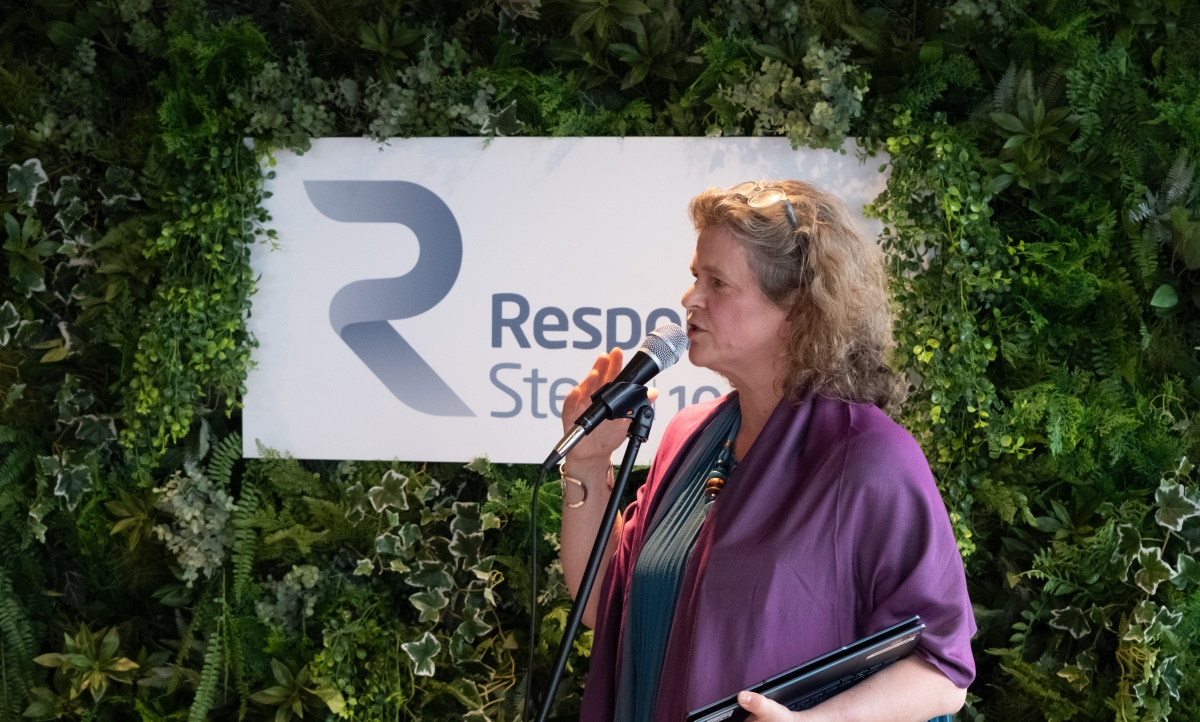
From October to January, ResponsibleSteel convened five Working Group (WG) and Technical Advisory Group (TAG) meetings, bringing together 23 representatives from 15 member organisations across certification bodies, civil society, steelmakers, and the wider steel value chain.
As a participant from SteelWatch noted during the process, “Having a diverse group of members involved in the revision process of the standard helps to achieve a balance between what steelmakers deem feasible and where the standard needs to set the bar to trigger ambitious action. ResponsibleSteel has done well navigating and drawing on different perspectives, turning them into concrete proposals that can be submitted for the next steps of the revision process.”
Three guiding principles framed these discussions:
- Ambition: ensuring alignment with global climate goals and science-based pathways
- Feasibility: recognising real-world constraints, particularly in the near term
- Simplicity: avoiding unnecessary complexity while improving clarity and accountability
A key theme that emerged was the foundational importance of credible transition plans that move beyond aspiration and, at the same time, are grounded in realistic assumptions about technology readiness, capital investment cycles, and enabling conditions. As noted by SteelWatch, “Aligning corporate- and site-level requirements is essential in ensuring that top-level corporate ambition and targets translate into actual investment decisions today, and subsequent material transformation and emissions reductions on the ground.”
Moving beyond outdated decarbonisation roadmaps
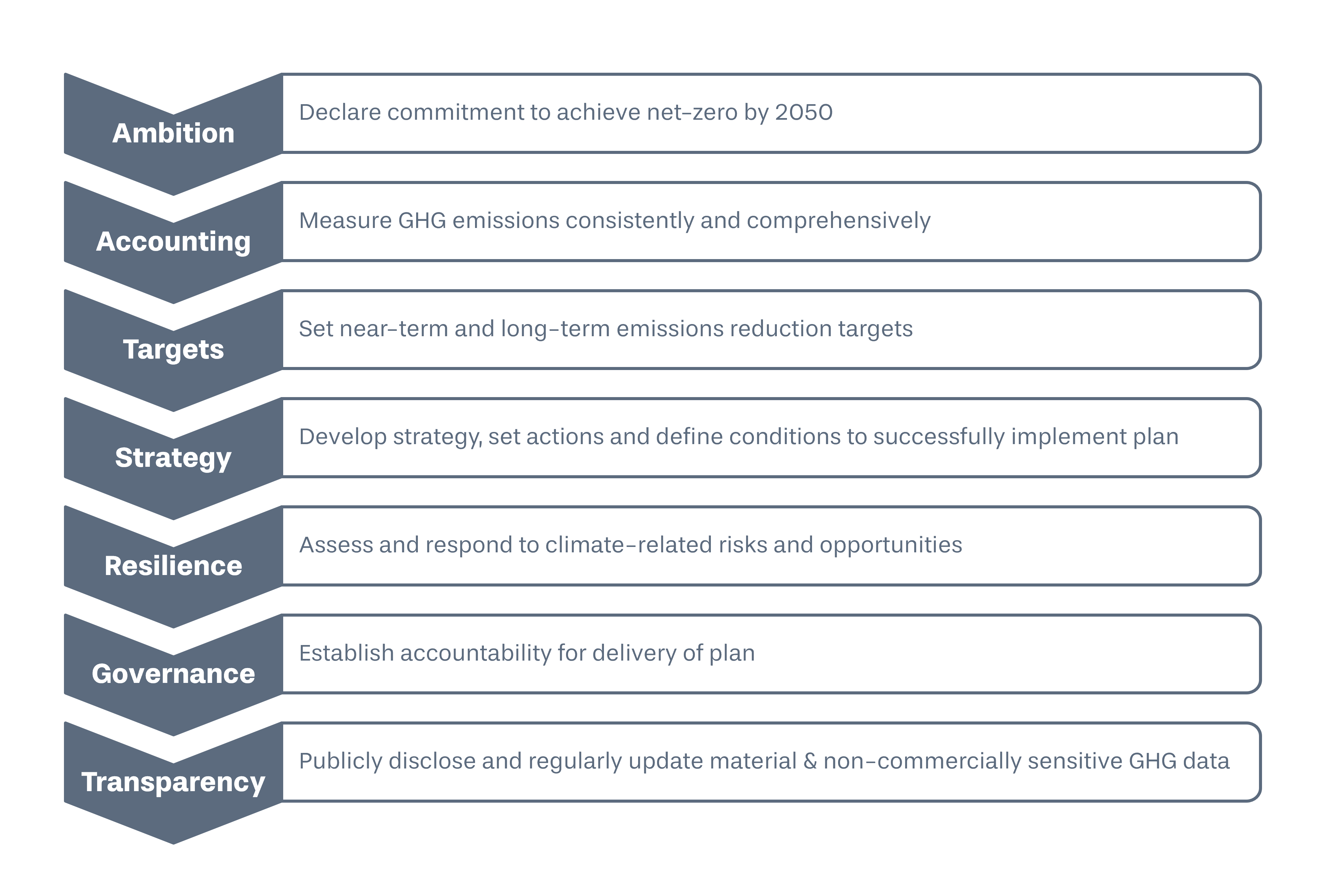
Under the current Production Standard, certified sites must demonstrate that they have a decarbonisation roadmap aligned with an existing model. However, the WG and TAG agreed that many of these models have not been updated in recent years and no longer reflect technological, economic, or policy realities. As a result, they risk undermining rather than strengthening transition planning. The revised approach moves away from a prescriptive reliance on external models and instead proposes to introduce an explicit requirement for a climate transition plan at the corporate and site level.
A participant from EMSTEEL, a ResponsibleSteel member and certified site, commented, “Revising the ResponsibleSteel Standard is an important step in strengthening the steel sector’s collective transition journey. The process provides members with a valuable opportunity to contribute practical insights, share operational experience, and help shape a standard that is both ambitious and implementable. ResponsibleSteel has done an excellent job in creating an inclusive and transparent revision process, encouraging constructive dialogue among members and ensuring diverse industry perspectives are reflected in the development of a stronger and more credible framework.”

What’s proposed to change in the Production Standard?
The proposed revisions strengthen and connect key elements of Principle 10, with a clearer and more coherent architecture across corporate and site levels.
Key improvements include:
- Quantitative, time-bound emissions reduction targets, covering Scope 1 and 2 emissions and material Scope 3 emissions
- Stronger links between corporate- and site-level planning, ensuring that corporate ambition translates into real investment decisions and on-the-ground transformation
- Improved intensity-based disclosures to support comparability, directly aligned with ResponsibleSteel’s broader harmonisation work
- Alignment with leading frameworks, such as IFRS S2 (International Financial Reporting Standards), while retaining flexibility for different regional and operating contexts
- Clearer guardrails for credibility, moving beyond temperature labels alone
There was strong agreement across the WG that clearer wording and guidance are essential to support consistent interpretation and implementation by sites and auditors alike.
Connecting the dots between the Production Standard’s criteria
One of the most important outcomes of the revision process so far has been a clearer set of connections between criteria that, while related, have not previously been well integrated.
In the current Production Standard:
- Corporate transition planning (10.1) is weakly connected to climate-related financial disclosures (10.2)
- Site-level transition planning (10.5) is not sufficiently aligned with corporate-level strategies
- Public GHG emissions disclosure requirements (10.7.1) are limited, focusing mainly on a site’s medium-term reduction target
The proposed changes aim to address these gaps by:
- Requiring climate transition plans to include climate-related financial risks and opportunities, including dependencies that may impose structural barriers, planned changes to business models and strategy;
- Aligning corporate- and site-level planning approaches to reduce carbon leakage risks and ensure consistency across operating boundaries; and
- Strengthening public disclosure requirements to better support accountability, comparability, and progress tracking over time.
Flexibility, credibility, and the reality of steelmaking
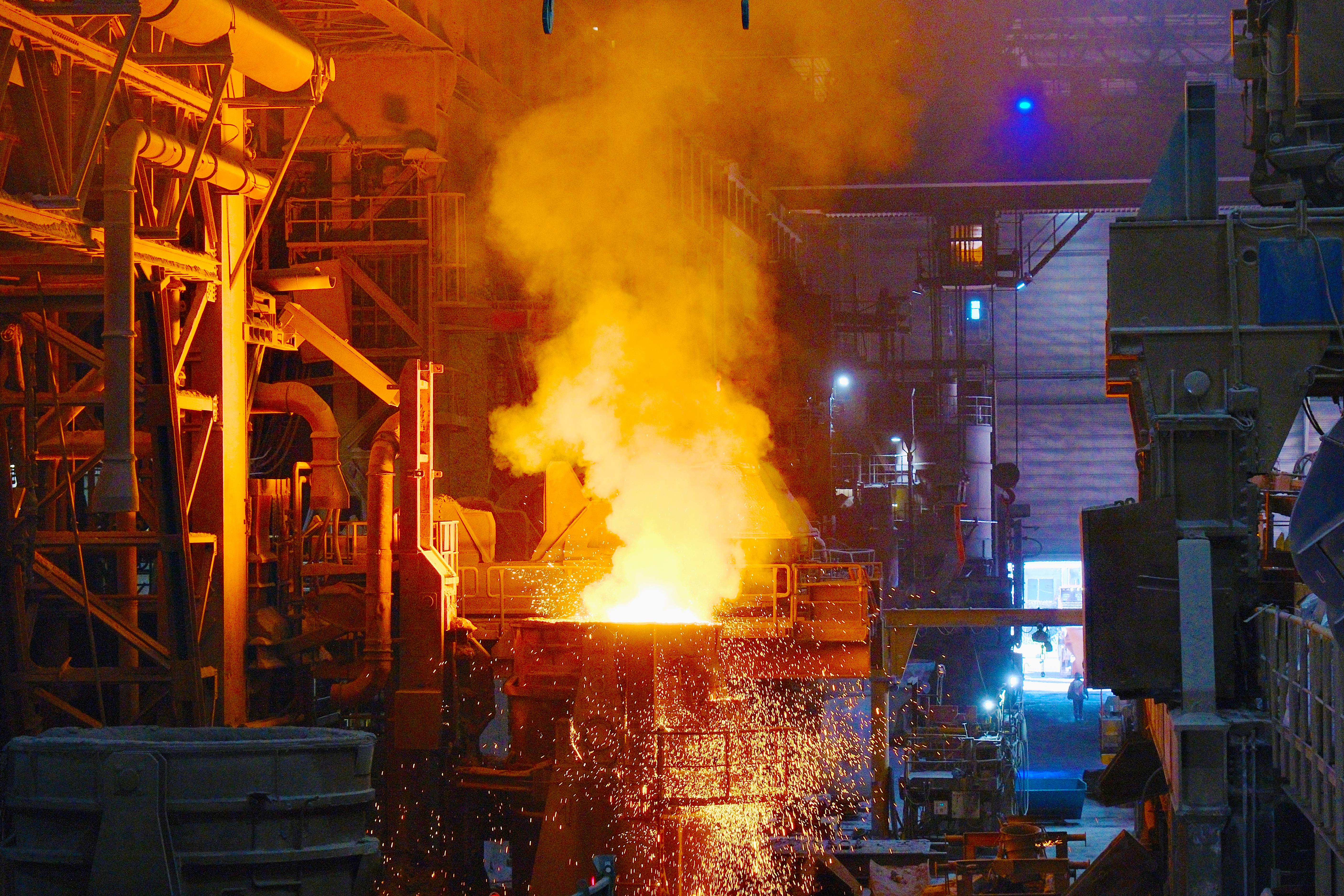
The WG and TAG discussions also surfaced a shared understanding of the structural barriers currently slowing decarbonisation in the steel industry. These include:
- Limited technology maturity at scale
- Supply chain and infrastructure constraints
- Energy availability and cost
- Inconsistent or insufficient policy support
- Weak demand signals for low-emission steel
- Trade and competitiveness pressures
Given the long investment timelines and asset lifetimes involved, feasibility in the near term is particularly critical. As such, there was strong support for a flexible, disclosure-driven approach that pairs quantitative targets with qualitative indicators of progress, allowing ResponsibleSteel to uphold high ambition and transparency while recognising that steelmakers cannot address systemic barriers alone.
As ResponsibleSteel’s Decarbonisation Analyst, Melav Salih observed, “A robust climate transition plan must embed decarbonisation within broader strategic and financial planning. It needs to recognise that steelmakers’ transition pathways are shaped by long-lived assets, billion-dollar investment decisions, and dependencies on an ecosystem of change that includes energy systems, infrastructure, policy, and markets.”
Looking ahead
As the Paris Agreement enters its second decade, and as legal, financial, and societal expectations on climate accountability intensify, ResponsibleSteel’s role as a credible, independent standard for the steel industry has never been more important.
By strengthening climate transition planning across corporate strategy, site-level action, financial disclosure, and public reporting, revisions to the Production Standard aim to support steelmakers in navigating this transition transparently and at pace.
Together with parallel work on harmonisation and disclosure alignment, the revisions to climate transition planning requirements represent a critical step toward turning climate commitments into credible, comparable, and feasible transition pathways for the global steel industry.
Learn more about the revision of ResponsibleSteel’s International Production Standard here.



New forestry initiative Emergent is holding its first New York Climate Week event
We wanted to take this opportunity to do something different and invite you to Emergent’s New York Climate Week webinar: Every Tool We’ve Got, on Friday, September 25th from 2-3PM EST. Emergent is linked to a couple of our Civil Society members and sustainable forestry is a passion for all of ResponsibleSteel’s secretariat.
Emergent is a non-profit organization with the sole mission of accelerating the speed and scale of tropical forest conservation to combat the climate crisis. With an international team of world-class climate experts and a board with deep private and public sector experience, Emergent is supported by a coalition including the Environmental Defense Fund (EDF), the Rockefeller Foundation, and the Norwegian government’s International Climate and Forest Initiative (NICFI).
Addressing the current climate and deforestation emergencies require systemic and transformative solutions. Emergent was created to catalyze this type of action by supporting countries that successfully reduce deforestation, delivering climate impacts and other vital benefits for the people and animals that call the forest home.
The private sector has the potential and opportunity to mobilize its power to halt and reverse deforestation. But it’s not happening fast enough. The world loses 7 million hectares of tropical forest annually — the equivalent of 40 football fields a minute, every minute. And once it’s gone, it’s gone.
If interested please sign up as soon as possible, as the deadline is looming.


GHG and Steel: mapping the landscape of initiatives
Steel’s contribution to – and potential role in reducing – the world’s emissions of greenhouse gases is shooting up the global agenda. ResponsibleSteel welcomes this recognition and growing sense of urgency. But it brings challenges. One of those is the proliferation of initiatives, projects, programmes and calls for action that affect the steel sector.
The context and overall goal for all of these is the same, but the very number of initiatives makes it hard to engage effectively. Steel’s ubiquity as material means that is affected by a multitude of different efforts – whether they are focussed on leveraging finance and investment, materials for low carbon buildings and infrastructure, steel for automotive manufacturing, or new policy initiatives focussed on public procurement, the ‘Green Deal’ or post Covid-19 support for industry. And steel also has a role as the major customer for mined materials, including iron ore and coking coal.
ResponsibleSteel and its steelmaker and civil society members are at the heart of many of these initiatives. The first ResponsibleSteel standard was published in November 2019, and steelmaking sites are currently undergoing assessment. The Climate Group’s ‘SteelZero’ project, in collaboration with ResponsibleSteel, aims to build momentum and help align demand for ‘low GHG emission’ steel. We are active supporters of the We Mean Business Coalition and we and many of our members are involved with and support the work of ETC. But how do all these initiatives fit together?
On 29th September ResponsibleSteel will be hosting two member webinars – one at 09.00 BST, and then repeated at 17.00 BST – to present and discuss the results of a mapping exercise we are carrying out to better understand the landscape of GHG initiatives that affect the sector and ResponsibleSteel’s role and relationships with those initiatives. This will be the first of our series of ResponsibleSteel Member webinars. We will be sending out invitations this week – Members and Associates, please mark your schedules if you would like to attend.

Stakeholder Q&A on draft ‘GHG Emission Requirements for the Certification of Steel Products’
ResponsibleSteel is hosting two Q&A sessions for stakeholders interested in the draft ‘GHG Emission Requirements for the Certification of Steel Products’, to take place on Wednesday 30th September, and Wednesday 7th October, with both sessions repeated at 09.00 and 17.00 BST.
At the beginning of the month we launched a 60-day public consultation on draft requirements to allow ResponsibleSteel certification of steel products: You can find the draft requirements, background information, options and consultation questions here.
The Q&A sessions will give stakeholders the opportunity to seek clarification on the intent or meaning of the draft requirements, in advance of any written feedback.
The sessions will include a short presentation followed by questions from participants. The sessions on 30 September will focus on Criterion 8.6, and the sessions on 7 October will cover the remaining criteria.
Participation is by invitation. ResponsibleSteel Members, Associates and Working Group members will receive their invitation in the coming days. If you are not a Member, Associate or currently participating in a working group but would like to attend please contact George Deslandes (gdeslandes@responsiblesteel.org) as soon as possible.

Audit of ArcelorMittal Bremen and Bottrop sites announced
ArcelorMittal, the world’s largest steel producer, seeks ResponsibleSteel certification of two of its sites in Germany, namely its steel mill in Bremen and its coking plant in Bottrop.
Certification body GUTcert will assess both sites against the ResponsibleSteel Standard version 1-0 and invites stakeholders to announce if they are interested in providing input to the audit. Stakeholder engagement is an important feature in ResponsibleSteel audits as it supports the collection and review of information from rich and varied sources, strengthening the credibility of audit results.
The ArcelorMittal Bremen and Bottrop audit will take place between 07 and 10 September. Stakeholders can find further information here.

ERM Joins ResponsibleSteel™
ResponsibleSteel is proud to announce that ERM has joined as an Associate Member.
ERM is one of the world’s leading sustainability services consultancies with more than 5000 practitioners in over 40 countries and territories that help address many of the sustainability challenges their clients face. This ranges from managing issues in facing the transition to a low carbon economy, to the operational issues such as health and safety in mining and manufacturing.
ERM’s relationship with the metals, mining and manufacturing sectors cuts across all types and size of business and has created an informed and client driven approach. ERM has helped clients on many schemes related to the Responsible Steel Standard providing technical, sustainability and social experts to ensure our outputs reflect the goals of our clients in driving improvements in systems implementation and performance through the value chain.
“ERM’s broad and deep experience in working globally with businesses along the steel supply chain will be a great asset in helping ResponsibleSteel and our members develop relevant and groundbreaking solutions towards achieving low carbon steel in the future” said Ali Lucas, Executive Director or ResponsibleSteel, “we are delighted to welcome ERM as an Associate member and benefiting from their insight and experience.”
Dirk Nuyens, global account director steel & mining from ERM commenting on this said : “The steel & mining sectors are currently facing a game changing transition towards a low-carbon economy, the Responsible Steel standard & certification initiative has an important role to play within this context. ERM is looking forward working with Responsible Steel to help drive steel producing companies, their upstream base material suppliers and their customers towards more responsibly sourced and produced steel.”

Responsible Sourcing Consultation Closes Soon
ResponsibleSteel has developed further requirements for the responsible sourcing of input materials used for steel making and steel processing. Meeting these requirements in addition to the already approved ResponsibleSteel Standard will allow steel sites to not only make claims about the way their site is operated, but also about their sourcing of input materials and the steel products they sell. The new requirements will be important to push demand for credible third-party verification of suppliers such as mine sites.
We are keen to receive your feedback on our proposals!
Consultation is open until 02 October and you can find the draft requirements, background information, options and consultation questions here.
Please provide your feedback by 02 October 2020 via the form provided on https://forms.gle/RbS1rT2F7i3sA11K7.
Make use of this opportunity to help shape the steel sector of the future and create responsible supply chains!

Consultation on Standard Interpretations – Now Open
In November 2019, the ResponsibleSteel Standard was launched, covering 12 Principles on environmental, social and governance (ESG) issues associated with the steel sector. Over the last few months, we have received enquiries from stakeholders, asking us to interpret some of the criteria and requirements in the Standard. Interpretation might be necessary because a criterion or requirement can be read in different ways, or because a certain situation was not considered when drafting the Standard.
The ResponsibleSteel team has drafted interpretations that we are now publishing for stakeholder feedback. Because our interpretations will become binding for all steel companies and auditors applying our Standard, it is important that we agree with stakeholders on what our requirements mean.
The consultation is open until 02 October 2020 and you can find further information here.

Reminder: ResponsibleSteel auditor training session still has spaces available
Being trained and approved as an auditor is a prerequisite for conducting certification audits against the ResponsibleSteel Standard. The next online auditor training, being the last one in 2020, will take place from 29 September to 01 October 2020 with sessions each day from 14:00 CET to 19:00 CET. The participation fee is 300 USD per auditor.
Auditors wanting to participate in the online training, must:
- Review the auditor approval and qualification requirements in the ResponsibleSteel Assurance Manual to ensure they meet our requirements (chapter 1.5 and Annex 3)
- Complete the auditor application form in the Assurance Manual (Annex 2)
- Send the completed application form, a full and up to date CV and all mentioned documentation to assurance@responsiblesteel.org by 15 September
- Prior to the training, study the ResponsibleSteel Standard and Assurance Manual, which can be accessed via https://www.responsiblesteel.org/certification/.
Only auditors that are affiliated with a certification body who is an Associate Member of ResponsibleSteel and has been approved by ResponsibleSteel may carry out audits against the ResponsibleSteel Standard.
The first certification bodies to become approved were AFNOR Certification and GUTcert.
They have recently been joined by ERM CVS, the independent certification, verification and assurance business of ERM Group. ERM CVS provides clients with a full suite of certification & assurance services, assuring & verifying corporate sustainability reports, GHG inventories and footprints, as well as certifying EHS management systems and programs. ERM CVS has been an Associate Member of ResponsibleSteel since March 2020, in a move that now sees them add the ResponsibleSteel Standard (RSS) to a growing suite of Metals & Mining services, including the Initiative for Responsible Mining Assurance (IRMA) and the Aluminium Stewardship Initiative (ASI).

Out for Consultation: Draft Requirements for Responsible Sourcing
The existing ResponsibleSteel Standard with its 12 Principles covering environmental, social (ESG) and governance issues allows certified steel sites to claim that their site is operated in a responsible manner. While the approved Standard asks for a high-level commitment to responsible sourcing and for evidence that this commitment is being implemented, it does not provide incentives to steel companies and their suppliers to work towards high levels of ESG performance in supply chains.
ResponsibleSteel is in the process of defining further requirements for the responsible sourcing of input materials used for steel making and steel processing. Meeting these requirements in addition to the already approved Standard will allow steel sites to not only make claims about the way their site is operated, but also about their sourcing of input materials and the steel products they sell.
Following plenty of discussion with our Members and our Board, we have now published a draft version of the responsible sourcing requirements and are keen to hear your views on them. These requirements will be important to push demand for credible third-party verification of suppliers such as mine sites.
You can find the draft requirements, background information, options and consultation questions here on our website.
Please provide your feedback by 02 October 2020 via this google documents form.
Make use of this opportunity to help shape the steel sector of the future and create responsible supply chains!

ResponsibleSteel™ is Kicking off the Benchmarking of Mine Level Verification Programmes
Mining is a key supplier of materials to the steel sector and part of ResponsibleSteel’s mission is to ensure that certified steel sites source mined materials in a responsible manner. We aim to achieve this by recognising mine sites that demonstrate high levels of environmental, social and governance performance according to credible verification programmes. Building on joint work by ResponsibleSteel together with our associate members the Initiative for Responsible Mining Assurance (IRMA) and Mining Association of Canada’s Towards Sustainable Mining programme (TSM), we are now launching the development of a methodology to benchmark mine site verification programmes. Recognition by ResponsibleSteel will help raise the market profile and drive demand for credible mine site verification programmes.
The ResponsibleSteel certification programme is being developed to cover the entire steel supply chain from mine site or scrap collector through to the steel end user (e.g. the car, construction or white goods manufacturing company). The ResponsibleSteel Standard (version 1-0) can be applied directly at sites where raw materials are processed, and at steel making and steel processing sites. Upstream supply chain activities, such as mining or the collection of scrap, will be covered wherever possible through the recognition of existing programmes that set a similarly ambitious standard and run an equally robust assurance programme to ResponsibleSteel’s.
ResponsibleSteel has been working with IRMA and TSM to determine how ResponsibleSteel could use the outputs of their respective mine level verification programmes as the basis for such recognition. IRMA, TSM and ResponsibleSteel are also working with the Responsible Jewellery Council (RJC), with the support of the ISEAL Innovations Fund which is resourced through the Swiss State Secretariat for Economic Affairs (SECO), on the application of a ‘joint audit protocol’ to facilitate recognition across different programmes.
These efforts are now extended and ResponsibleSteel will soon present draft recognition criteria and a proposed assessment methodology to its members and stakeholders for feedback. Recognition of credible verification programmes is expected to include an assessment of:
- the standard(s) against which sites supplying material are assessed, for example mine site standards, or processing site standards, including consideration of the extent to which the standard addresses and aligns with the issues covered by the ResponsibleSteel principles and criteria;
- the system for determining whether the requirements of the standard have been met (verification), including consideration of the systems for resolving complaints or disputes in relation to such assessments;
- the extent to which the system and its outputs are transparent and accessible to stakeholders, and claims are clear and credible;
- the potential for multiple stakeholders to participate in the programme’s governance;
- commitment to ResponsibleSteel’s mission and vision, for example through ResponsibleSteel associate membership.
IRMA, TSM, International Tin Association (ITA) and Bettercoal have written to indicate that as soon as the criteria and process for ResponsibleSteel recognition have been finalised they will apply for formal assessment. The assessment methodology will be objective and transparent, and recognition is not guaranteed.
ResponsibleSteel welcomes expressions of interest from any additional programmes interested in applying for assessment.

ResponsibleSteel™ Welcomes ‘The Energy and Resources Institute’ (TERI) into Membership
ResponsibleSteel would like to welcome The Energy and Resources Institute (TERI) into membership.
TERI is an independent, not-for-profit research organization working in the fields of energy, environment, and sustainable development. TERI has pioneered conversations and activities in these areas for over four decades, having a transformative impact on industries and communities. TERI’s headquarters are located in Delhi, with most of their work focused in India, although their work also covers the broader South Asia, South East Asia, Middle East, and African regions. For more information, please visit: https://www.teriin.org/
Dr Ajay Mathur, Director General of TERI has said “TERI has been working on improving the energy efficiency and reducing carbon emissions of the steel sector in India for many years already. It is clear that greater international collaboration on technology innovation, policy development and, importantly, standard setting are required to accelerate further decarbonisation of this sector. To this end, TERI welcomes an opportunity to work with ResponsibleSteel to drive further action.”
“We are absolutely delighted to welcome TERI as an Associate member of ResponsibleSteel” said Ali Lucas, Executive Director, ResponsibleSteel. “Having TERI’s formidable and comprehensive knowledge of the energy sector, and their deep experience of working with a wide range of organisations across South and South East Asia will be incredibly helpful as we work to expand our work across these regions.”

Cobalt Institute (CI) joins ResponsibleSteel™
The Cobalt Institute (CI) is a non-profit Association composed of producers, users, recyclers, and traders of cobalt.
They promote the sustainable and responsible production and use of cobalt in all its forms. The CI acts as a knowledge centre for governments, agencies, academia, the media and civil society on all matters concerning cobalt. It represents the voice of the cobalt industry on all cobalt related issues and challenges including health, safety and environment, sustainability and responsible sourcing.
President of the CI, Dr Adam McCarthy said: ‘We are delighted to become part of the work of Responsible Steel, cobalt is found as an impurity in many forms of steel and we are committed to helping to ensure the sustainability of our value chain. The CI looks forward to contributing to this important work.
“Having the Colbalt Institute as an Associate Member of ResponsibleSteel is a really welcome addition” said Ali Lucas, Executive Director – ResponsibleSteel. “We know that the deep and broad knowledge and insight that the Institute has across the Cobalt sector, and the voices it represents will add real value to our work and discussions over the coming months and years.”
