News

Reflections from China: ResponsibleSteel's CEO Annie Heaton discusses building interoperability across global standards

Interoperability: Building a bridge between global standards

ResponsibleSteel's quest for a coherent market for decarbonised steel in 2026 got off to a constructive start this month. Following the announcement of our landmark agreements with the Chinese Iron and Steel Association (CISA) and the Low Emission Steel Standard (LESS) at COP30, ResponsibleSteel was in China in January to kick off our work on interoperability with CISA. This work in China complements our parallel project with Brussels-based LESS.

The goal? To build trusted data and claims on decarbonisation.

During our trip, our Director of Programmes, Amy Jackson, our Decarbonisation Lead, Alli Devlin, and myself had the opportunity to:

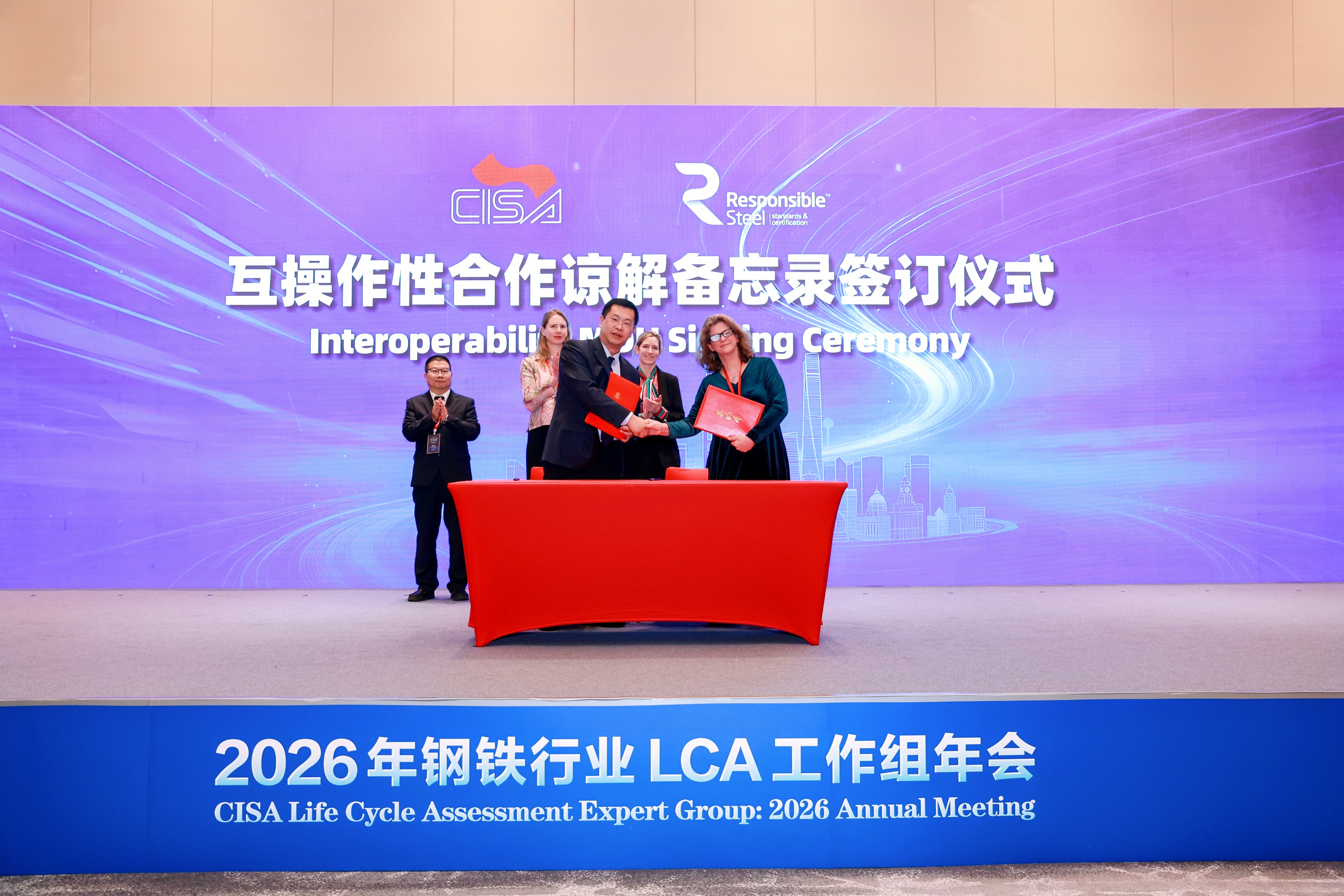
  • Present to the Chinese steel value chain our C2F (China's low-carbon emission steel standard) interoperability MoU at CISA's annual LCA conference.
  • Connect with our Chinese members, including SKF, World Resources Institute (WRI), Climate Group, VAMA (Valin ArcelorMittal Automotive JV), Penglai Dajin, and some of our certification bodies working in China, including Afnor and China Quality Certification Centre (CQC).
  • Get to work on our C2F-ResponsibleSteel Interoperability Project, structuring the discussions around our Framework for Credible Interoperability.
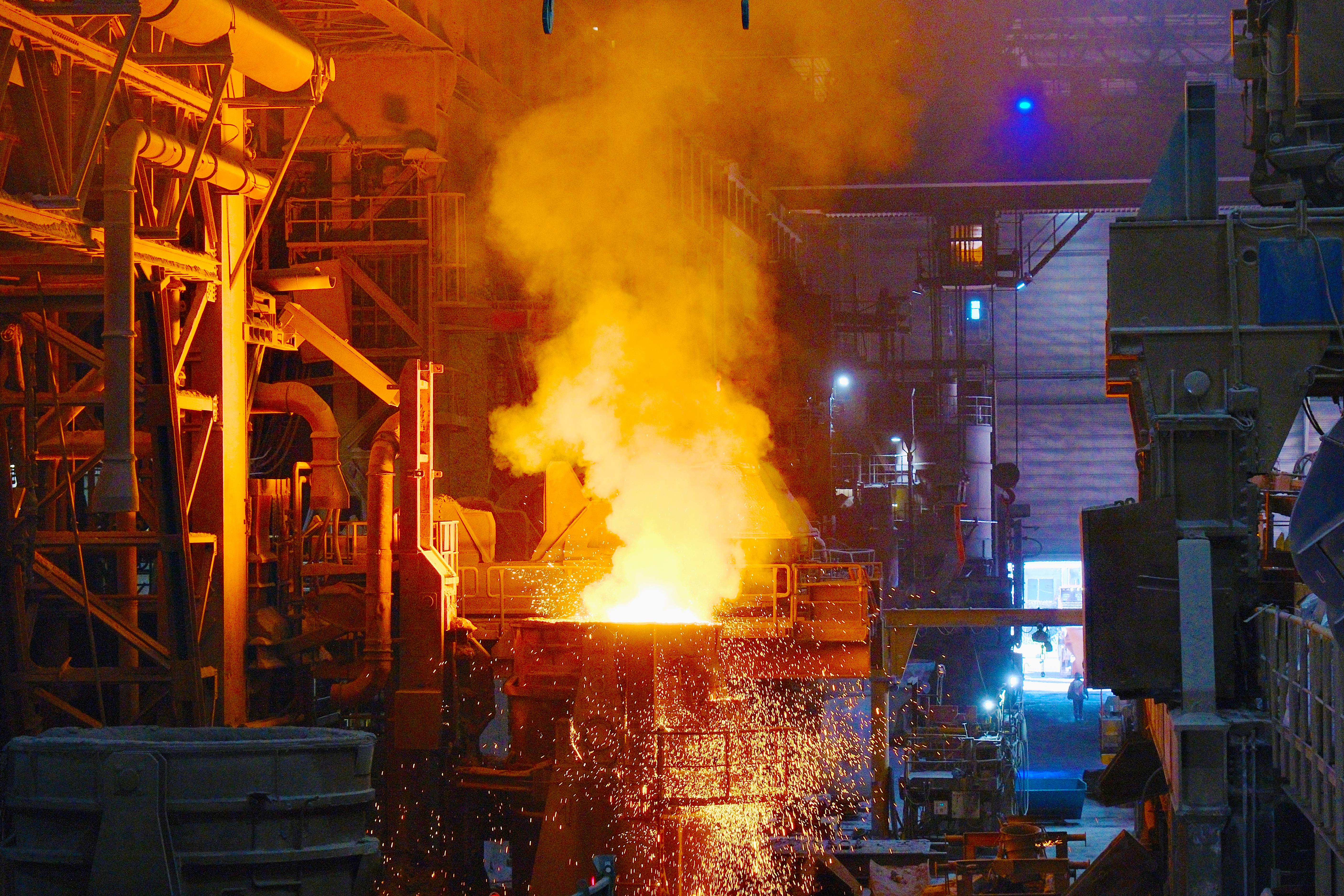
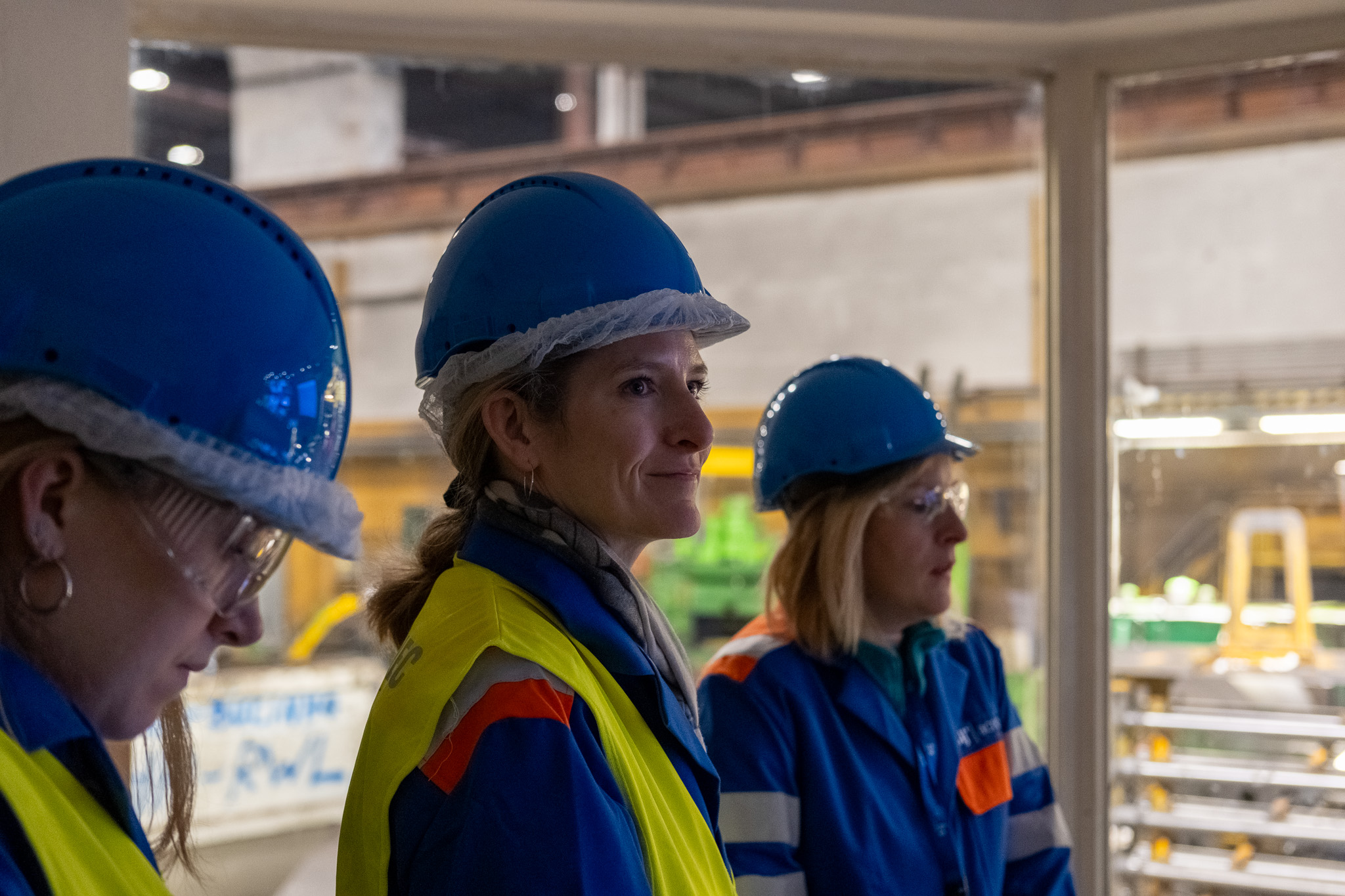
  • Visit the 15mtpa Zhanjiang steel plant, where a new DRI-EAF line was launched in Dec 2025. This has involved the production to date of iron reduced with hydrogen in a 1mtpa DRI plant. Whilst this is currently produced from refined coke oven gas, the project is a hugely significant demonstration of the potential to produce hydrogen-based DRI at an industrial scale.
ResponsibleSteel's Decarbonisation Lead, Alli Devlin

What do ResponsibleSteel's interoperability projects look like in practice?

In short, interoperability means measuring emissions using rules that are as aligned as possible, and recognising the differences, to enable comparison on a like-for-like basis. Imagine the benefit this would bring for anyone wanting to distinguish what good looks like, for example, procurement teams, investors, and policymakers.

But making interoperability work in practice requires a lot more if we want a reliable, credible and sustainable system that generates high-quality, comparable data.

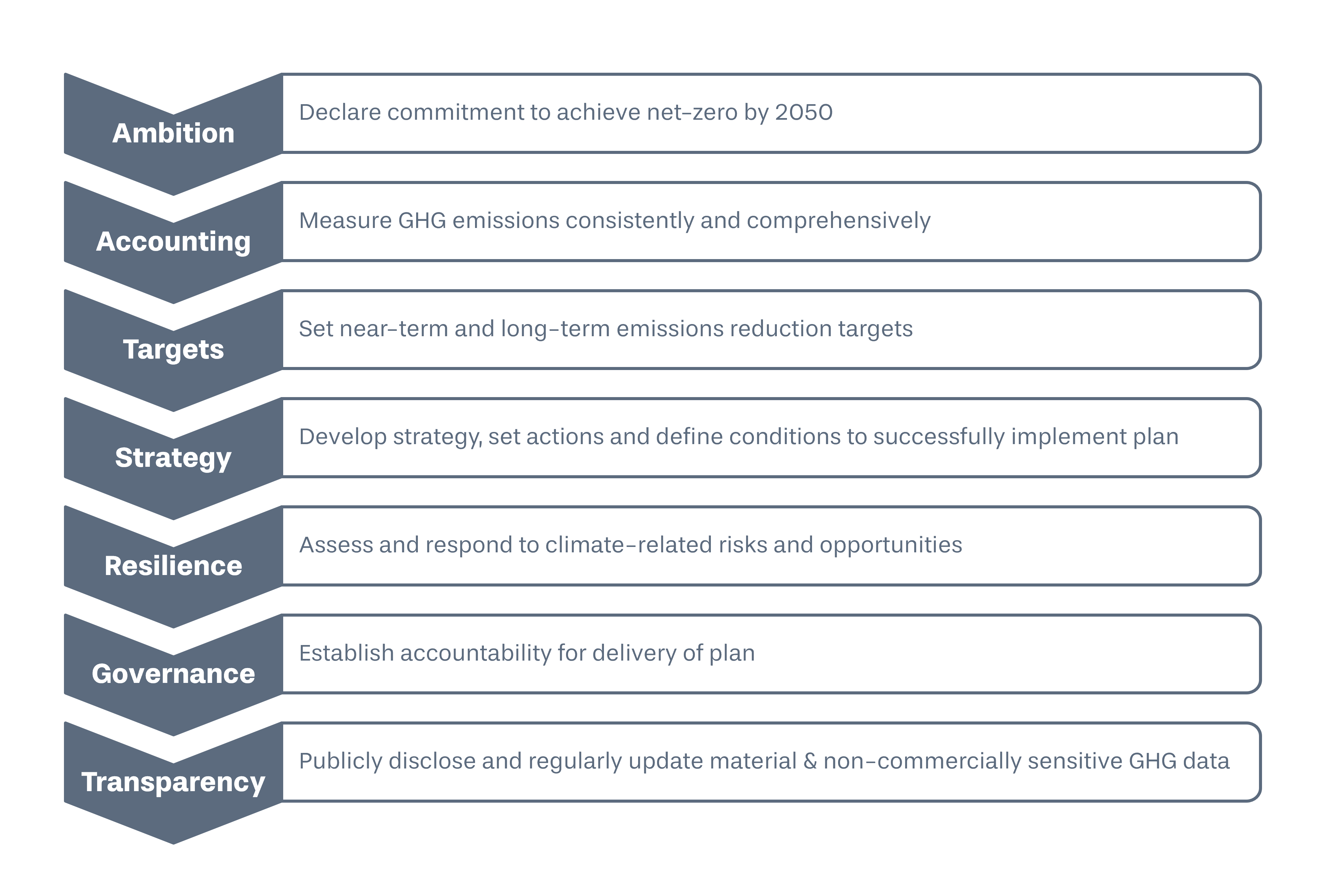
We've outlined the key components of this in our Framework for Credible Interoperability, which will inform both our work with LESS and CISA:

  • Aligned GHG accounting rules
  • A reliable calculation tool
  • A robust assurance mechanism
  • Credible claims protocols
  • Good governance, oversight and resourcing
  • Appropriate data management
  • Strong operations management systems

This is how markets are built: first with innovation, then with the necessary rules and systems that enable good information to flow – so that steel buyers can understand, investors can evaluate, and steelmakers can compete, based on emissions performance that everyone can trust.

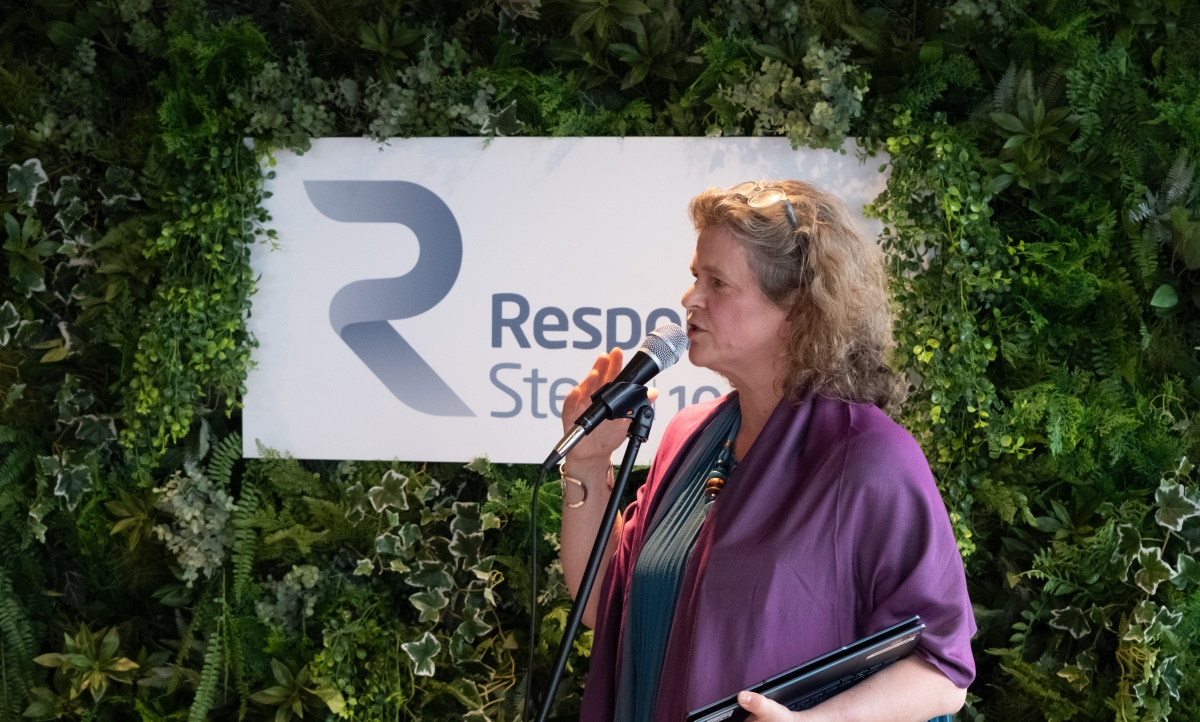
ResponsibleSteel's CEO, Annie Heaton, and CISA's Deputy Secretary-General, Feng Chao
Read more

Evolving for Impact: Why We’re Revising the ResponsibleSteel International Production Standard

The ResponsibleSteel International Production Standard is the global benchmark for sustainable steelmaking, but a benchmark only matters if it keeps pace with change. Steelmakers face evolving challenges, including increasingly ambitious climate targets, shifting regulations, and rising expectations on social and environmental responsibility.

That’s why ResponsibleSteel is committed to continuous improvement, ensuring our Production Standard remains relevant and effective in driving progress towards the responsible production of near-zero steel.

What is the ResponsibleSteel International Production Standard?

The ResponsibleSteel International Production Standard consists of 13 Principles containing over 500 requirements for the responsible sourcing and production of steel, including some of the most challenging areas of sustainability for steelmakers, such as decarbonisation. However, responsible steelmaking goes beyond climate change mitigation. That’s why the Production Standard also lays out requirements on labour, human rights, water, biodiversity, and more.

How was the Production Standard developed?

The Production Standard was developed through a process that uses the ISEAL Code of Good Practice for standard-setting as a reference. The first Standard was developed over two years with input from over 70 organisations and 180 individuals. Since then, the Standard has continued to evolve with the needs of the industry. Read more about the evolution of ResponsibleSteel and the development of the Standard here.

Collaboration and transparency sit at the heart of our Standard. Our extensive multi-stakeholder development process involving the steel industry, upstream and downstream stakeholders, and civil society is what makes the ResponsibleSteel International Production Standard the most trusted standard for steel globally.

Why are we revising the Production Standard?

Since the launch of the first Standard in 2019, ResponsibleSteel has established itself as a leader on steel sustainability. As the global industry landscape continues to evolve, driven by shifting regulations, emerging ESG reporting requirements, technological innovation, and growing expectations to address social and climate issues, the Production Standard must also evolve.

As part of our commitment to continuous improvement, ResponsibleSteel reviews the Production Standard to assess whether revision is needed at least once every five years. This way, we ensure the Production Standard remains effective in supporting ResponsibleSteel’s mission to drive the responsible production of near-zero steel.

What is the standard revision process?

The revision process is outlined as part of ResponsibleSteel’s Standards Development Procedures. The process consists of five overarching stages:

  1. The ResponsibleSteel Secretariat reviews the Standard and holds a public consultation to determine topics for revision. Based on these inputs, the Secretariat makes a recommendation to the ResponsibleSteel Board of Directors, which decides whether or not to revise the Standard.
  2. Terms of Reference are developed, then approved by the Board of Directors, defining the scope of the revision and outlining the revision process.
  3. Topic-based Working Groups provide input on revision areas, and Technical Advisory  Groups are convened to review and oversee Working Group outcomes.
  4. A draft of the revised Standard undergoes public consultation to get stakeholder feedback. If there is substantially new content, or extensive changes or feedback, there is a second round of public consultation. Once the revised Standard is finalised, it is reviewed and approved by the Board of Directors before being voted on by ResponsibleSteel’s membership.
  5. The revised Standard is published, and a transition period is determined (usually lasting 6 to 12 months) before the new Standard comes into effect for existing certificate holders, however, it could be used earlier for new sites or if preferred by existing certified sites.

Currently, the revision process is in stage three.

What is being revised in the Production Standard?

The revision process focuses on ensuring the Production Standard reflects the latest sustainability priorities and realities of steel production. So far, discussions have commenced on aspects of Principle 10: Climate Change and GHG Emissions, Principle 6: Labour Rights, ensuring a just transition, and increasing alignment with emerging regulations and other standards (e.g. CRSD, ISSB).

Additionally, the revision will include the incorporation of urgent revisions, interpretations and clarifications previously issued, and necessary amendments identified during the review process (e.g. typos).

Who can get involved?

Driving the socially and environmentally responsible production of near-zero steel is a challenge that no single organisation can achieve on its own. Over 180 voices contributed to the development of the first ResponsibleSteel Standard, and this spirit of multi-stakeholder collaboration continues to be the backbone of our standards development process.

ResponsibleSteel members have a unique opportunity to contribute to the revision of the Production Standard and are invited to join our Working Groups to discuss topics for revision. Please get in touch with us to learn more.

Members and wider stakeholders are also encouraged to contribute feedback during public consultations in 2026. Keep an eye on our website, LinkedIn, and our monthly newsletter to find out about upcoming public consultations.

Learn more about the revision process and get involved here.

Read more

A landmark year for ResponsibleSteel: Reflections from our CEO

Dear Members, Partners and Friends,

Just under a decade ago, ResponsibleSteel began with a bold vision: to unite the steel industry around a shared commitment to sustainability. As we stand on the threshold of our tenth year, that vision matters more than ever.

You, our members, have championed ResponsibleSteel and its evolution over the years, and driven real progress across the steel industry. I thank you for your continued commitment, even amid complex global challenges.

Mounting pressure to stay competitive while delivering on climate commitments underscores why credible, coherent standards and collaboration across the steel value chain must remain a priority. They are essential to ensure that policy, finance and demand side dynamics shape the future of the industry in a fair and effective way.

Leading the way: Thought leadership and interoperability

This year, ResponsibleSteel took a decisive step forward in shaping the future of low-emission steel. Our leading work on interoperability moved from concept to reality, sending powerful signals to governments, markets, civil society, and investors that global alignment on steel decarbonisation is not only possible, but already underway.

ResponsibleSteel CEO Annie Heaton in attendance at COP30

At COP30, we announced landmark agreements with the China Iron and Steel Association (CISA) and the Low Emission Steel Standard (LESS), to develop conversion tools for stakeholders to claim equivalency of their decarbonisation progress under the different schemes. Together, membership of the three organisations represents around 60% of the world’s steel production.

These agreements show that pragmatic, plurilateral solutions can deliver real progress, even when global consensus is challenging.  By enabling comparability across standards, these agreements provide a foundation for trade, procurement and investment in cleaner steel. It has clearly bolstered stakeholders’ resolve to build further solutions for the transition to low-emission steel.

In a further significant announcement in December, ResponsibleSteel worked with CARES, CISA, GSCC, LESS, RMI and Worldsteel to jointly commit to the Steel Standards Principles (SSPs) Transparency Criteria for GHG reporting. These criteria outline the key measurement rules behind any carbon intensity disclosure, and their disclosure will enable stakeholders to understand the data they are given and drive standards initiatives closer to achieving clarity, transparency and interoperability. These milestones towards comparable, transparent emissions reporting build on the technical groundwork we have laid, including the publication of our Fundamentals for GHG Emissions Accounting and Classification and verified greenhouse gas (GHG) emissions data from ResponsibleSteel Certified Sites.

They represent important steps towards transparent and consistent emissions accounting and data disclosure across the steel industry and mark a real turning point in how standards can support action at scale.

Policy: Engaging government and policymakers to support the transition

Policy is undeniably one of the most powerful levers for driving sustainability, which is why policy engagement has been another cornerstone of our work in 2025.

We began by publishing The Steel Decarbonisation Scale, a joint policy briefing with LESS, urging European policymakers to adopt a realistic approach to steel decarbonisation - recognising scrap supply limits and incentivising genuine emissions reductions across all production routes.

ResponsibleSteel Director of Development and Innovation speaking at our policy convening in Delhi

We convened stakeholders in Brussels and Delhi to explore how standards can inform policy mechanisms such as lead market labels, carbon pricing schemes, including cross-border mechanisms, green procurement frameworks and national decarbonisation pathways. I want to thank all our contributors; your insights will shape our global policy paper, which will be published in early 2026.  

Progress on our programmes: Standards, certification and member impact

Despite setbacks to wider industry progress, ResponsibleSteel has strengthened its role as the leading global standard for responsible steelmaking. Our Standard Revision process is well underway, ensuring the ResponsibleSteel International Production Standard remains effective, relevant and fit for purpose. Alongside this, our Just Transition project continues to explore how standards can support a fair and inclusive shift to low-emission practices across steel and mining.

Certification remains at the heart of our mission, allowing steelmakers to demonstrate measurable progress across key social and environmental issues. In 2025, major certification milestones included thyssenkrupp Steel’s Duisburg site, the largest in Europe, and EMSTEEL, the first site in the MENA region, bringing the total to 90 Core Site Certifications covering 142.436 Mtpa capacity.

Certifications and recertifications this year spanned eight countries and five regions: Europe, South America, Oceania, Asia and the Middle East.  Over 80% of sites due for renewal chose to recertify, with additional recertifications already underway for next year. These certifications prove that, even in a complex global environment, organisations continue to step up in order to build a more responsible steel value chain.

Another compelling example of the practical progress certified steelmakers are making is our case study with SIJ Group, whose SIJ Acroni and SIJ Metal Ravne sites achieved ResponsibleSteel Core Site Certification in 2024. SIJ outlines why they undertook certification and how it has enhanced their credibility within the market and laid the foundation for continuous improvement across their operations.

Finance and demand: Driving investment and the right market signals

The key to the success of any certification scheme is the value it delivers to the certificate holder. Our Certified Steel Campaign helped demonstrate the credibility of ResponsibleSteel certification to investors and customer networks, showing how it can support procurement and investment decisions, mitigate supply chain risk, and strengthen their market position. By engaging finance, automotive, construction, infrastructure, and beyond, we worked to drive stronger market signals for Certified Steel and showcase the progress certified steelmakers are making towards responsible, near-zero steel.

We have convened lenders and investors both in New York in May and via our online Finance Working Group, bringing together finance sector representatives with steelmakers and civil society to explore how certification can inform investment decisions and be seen as an indicator of risk readiness.

With steel company testimonies, these sessions highlighted the benefits of ResponsibleSteel certification and prompted discussion of how credible standards can mobilise capital toward low-emission steel.

Moving forward: Accelerating the responsible steel transition

The urgency of our mission cannot be overstated. Scientists now expect the world to reach 1.5°C warming by 2030, not 2050. There is growing recognition that credible, transparent, comparable standards must sit at the heart of policy, finance and demand mechanisms if we are to deliver real progress on climate and social issues affecting workers and their communities.

ResponsibleSteel will continue to lead this work, but success depends on all of you, steelmakers, buyers, material suppliers, civil society, investors, and policymakers, working together to urge and support steelmakers to use the ResponsibleSteel system as their reference.

In the upcoming year, we will revise our strategy and focus on our Value Activation Plan, including revisions to our Claims guidance to enable greater market access for those actively driving responsible, low-emission practices. Our goal is to ensure that you, our members and supporters, clearly see the value of your continued commitment to ResponsibleSteel and the tangible impacts we are having across the sector.  

Thank you once again for your contribution and dedication throughout this year.

With best wishes for the year ahead,

Annie Heaton

CEO, ResponsibleSteel

Read more

Shaping India’s steel transition: Reflections from ResponsibleSteel’s Policy Convening in Delhi

As India’s steel industry navigates the twin imperatives of growth and sustainability, ResponsibleSteel hosted a policy convening in Delhi earlier this year to explore pathways for steel decarbonisation in India.

Held under the theme “Decarbonisation of India’s steel sector: Dynamics of the energy transition and the role of standards,” the event brought together leaders from government, industry, and civil society to discuss how credible standards, collaboration, and innovation can accelerate India’s transition to low-emission steel. Participants included Tata Steel, JSW Steel, Tata Motors, the Indian Steel Association, WWF, Climate Group, and the Council on Energy, Environment and Water, as well as representatives from the Hydrogen Mission India, the Ministry of Cooperation and the Ministry of New and Renewable Energy.

The convening was opened by the Hon’ble Minister of State for New and Renewable Energy (MNRE), Shri Shripad Yesso Naik, whose keynote address framed the energy transition as both an environmental necessity and a moral responsibility. Reaffirming India’s commitment to achieving net-zero emissions by 2070, he described the transition as “a gift we must leave behind—a legacy of ethical industry.”

He encouraged India’s industry to lead through innovation, highlighting green hydrogen as the cornerstone of the transformation and urging investment in carbon capture, smart furnaces, and Direct Reduced Iron (DRI).

ResponsibleSteel's Director of Development and Innovation, Shivakumar K., meeting the Hon’ble Minister of State for New and Renewable Energy (MNRE), Shri Shripad Yesso Naik

Industry perspectives: Progress and challenges

Senior industry leaders shared insights on their progress, highlighting several areas of development:

  • Hydrogen-based pilots are underway with positive results, marking a shift in the future of steel production in India.
  • There is increasing integration of renewable energy into steel operations, particularly solar and wind, enabling greater energy autonomy.
  • A growing focus on circularity and scrap-based production is emerging to reduce lifecycle emissions.

At the same time, industry participants acknowledged significant barriers to the transition, above all, the high cost of green hydrogen, limited access to clean energy, land availability and grid challenges, and gaps in hydrogen infrastructure.

Policy, incentives, and the role of standards

Discussions also touched upon a clear, globally aligned national framework to support policy, finance, and trade. Shivakumar K., ResponsibleSteel’s Director of Development and Innovation, emphasised the role standards can play as strategic tools that build trust, guide policy and investment, and support industry transformation. By adopting, integrating, or aligning with international standards, national policy frameworks can demonstrate leadership and maintain competitiveness in the global market.

Clear priorities emerged in the discussions, including the need to:

  • Ensure interoperability between India’s taxonomy and international standards and policy mechanisms to support trade and global compliance.
  • Establish robust certification frameworks to build investor confidence.
  • Embed standards within policy narratives linking industry decarbonisation with employment, equity, and regional development.

The convening also discussed policy incentives to accelerate the transition, with representatives from MNRE highlighting ongoing initiatives such as the National Green Hydrogen Mission, which plans to allocate ₹19,744 crore (around $2.2 million) to produce five million tonnes of green hydrogen by 2030.

However, participants stressed that more targeted support is needed, such as tax credits to encourage early adoption of low-carbon technologies.

Toward a responsible, low-emission future

The Delhi convening reaffirmed the growing momentum behind India’s steel transition. It also underscored the essential role of international standards in shaping national policy frameworks and unlocking sustainable finance.

ResponsibleSteel’s engagement with industry stakeholders in India will continue to build on the momentum created in Delhi, laying the groundwork for a responsible, near-zero industry, built on cross-border collaboration.

Learn more about the ResponsibleSteel International Production Standard.

Read more

Certification as a catalyst: ResponsibleSteel leads EU dialogue on industrial transformation

Earlier this year, ResponsibleSteel brought together senior representatives from European government institutions, industry, standards bodies, civil society, and finance for a high-level policy roundtable in Brussels to discuss certification as a catalyst for industrial decarbonisation.

Europe is entering a decisive phase of industrial and climate policymaking. With the EU Emissions Trading System (ETS), Carbon Border Adjustment Mechanism (CBAM), and a forthcoming low-carbon steel label, the stakes are high.

The challenge is clear: how can independent, voluntary certification accelerate the transformation of Europe’s steel industry? And just as importantly, how do we ensure these standards work seamlessly with government policies and regulations, aligning climate ambition, safeguarding competitiveness, and building trust across the value chain?

Three key takeaways

Three priorities stood out during the Brussels discussions:

1. Achieving coherence and interoperability

Aligning the EU Emissions Trading System (ETS), Carbon Border Adjustment Mechanism (CBAM), and product labels is critical to avoid policy fragmentation. This ensures that climate performance and market access work hand in hand, rather than pulling in different directions.

2. Building trust through robust assurance and traceability

Strong assurance systems are essential to give businesses and consumers confidence in sustainability data. This helps prevent greenwashing and ensures that claims about low-carbon steel are credible and transparent.

3. Embedding integrity beyond carbon

Europe’s industrial transformation must go further than emissions. It should integrate environmental and social responsibility—from labour rights and biodiversity protection to circularity and resource efficiency—creating a truly sustainable steel sector.

A call for coherence and clarity

The outcome of the discussions was clear. As one participant observed, "Europe doesn't need more bureaucracy—it needs coherence, trust, and credible evidence." This means having a trusted data backbone linking policy instruments rather than multiplying accounting systems. Global certification and assurance frameworks like ResponsibleSteel can provide that backbone, reducing complexity and ensuring comparability across borders.

Recent EU policy developments, such as the expected steel trade defence measure, are prime examples of how trade and climate instruments must evolve coherently. Europe’s policy architecture must be designed to reward verified low-emission steel, ensuring that trade and climate policy pull in the same direction. Certification can serve as the "connective tissue" of industrial policy, translating ambition into verifiable data and helping policymakers and businesses meet the integrity test of Europe's Green Deal.

Going beyond carbon

Another key point made was that Europe must progressively move beyond carbon-only metrics towards integrating environmental and social integrity more broadly. Climate metrics alone aren’t enough. ResponsibleSteel remains the only globally recognised standard that integrates emissions, labour, biodiversity, and governance into one assurance model. A holistic approach ensures Europe’s industrial transition is not just green, but fair.

Certification: Turning intent into impact

"Certification is no longer a technical afterthought—it's what turns climate intent into credible, measurable impact," said ResponsibleSteel CEO Annie Heaton. "The roundtable confirmed that credible, interoperable standards are now essential for Europe’s industrial transition. ResponsibleSteel's agreement with the Brussels-based Low Emission Steel Standard (LESS), announced at COP30, was a major milestone on the road to greater alignment.”

With new trade-defence measures on the horizon, ResponsibleSteel will continue working with policymakers, industry, and civil society to make certification a cornerstone of Europe’s climate-industrial architecture.

Because only when integrity and ambition move together—through coherence, credibility, and verified performance—can Europe’s industrial transition truly succeed.

Read more

Public Statement: The EU Label for Steel Should Build on the Sliding Scale Approach

As announced in the Clean Industrial Deal, the European Commission is expected to put forward an EU label for steel on 10 December as part of the Industrial Accelerator Act. This label aims to incentivise and reward investments in the decarbonisation of steel production. To succeed, the EU must establish a clear, credible, and uniform framework that incentivises genuine and additional greenhouse gas (GHG) emission reductions across all production routes while preserving industrial competitiveness. The concept of the ‘Sliding Scale’, also known as ‘Steel Decarbonisation Scale‘, initially proposed by the International Energy Agency (IEA) and adopted by ResponsibleSteel, LESS, and CISA, offers a robust, technology-neutral, and globally inclusive approach which aligns with the WTO TBT Principles. This paper argues for the adoption of the Sliding Scale as the basis for the European Label for Steel, ensuring a fair and effective transition of the steel industry to near-zero emissions steel.

The Sliding Scale: A Fair and Effective Framework for Europe

The Sliding Scale evaluates steel production based on both GHG intensity and the share of scrap used. This dual approach ensures that decarbonisation progress is recognised and rewarded, independently of the production route or scrap input.

By contrast, a purely footprint-based approach fails to guide the industry toward near-zero emissions. Footprint-based specifications are designed to reduce emissions at the product level, but this won’t lead to global GHG reduction if achieved by higher recycled content alone as doing so would simply shift scrap and emissions from one product, project or region to another (see report “The role of scrap in steel decarbonisation” by the Institution of Structural Engineers and the ”Civil Society Response to GSCC Steel Standard” signed by 12 NGOs which outline this in a compelling way). In other words, a footprint-based approach would merely outsource the decarbonisation of primary production to third countries and make the EU steel industry more vulnerable and less resilient.

Why the Sliding Scale Works

The Sliding Scale encourages all producers, primary (ore-based) and secondary (scrap-based), to decarbonise. For secondary producers using the Electric Arc Furnace (EAF) route, it incentivises measures such as increasing the use of green electricity and decarbonising hot-forming processes. These improvements are less capital-intensive than decarbonising ore-based primary steelmaking, allowing EAF producers to achieve better performance classes faster. This is clearly demonstrated by the first certificates awarded under LESS, where secondary steel routes achieved substantially better classifications than primary steel routes, and by the first steel certification by ResponsibleSteel, which was awarded to an EAF facility with 57% scrap inputs.

The EU label should include upstream scope 3 emissions (raw materials) from the start, thereby ensuring that "near-zero steel" is truly decarbonised across the entire value chain. This prevents carbon leakage and ensures that decarbonisation efforts are not undermined by shifting emissions from one part of the value chain to the other.

The Need for Decarbonised Primary Steel in Europe

Europe cannot rely on scrap-based production alone. The availability of high-quality scrap is limited, and this will become even more of an issue as demand rises. When EAF operators cannot source enough high-quality scrap due to qualitative constraints (e.g. the level of trace elements present), they require primary iron inputs (e.g. direct reduced iron). Consequently, the distinction between primary and secondary steel production will be increasingly blurred going forward. The Sliding Scale approach takes this into account by attributing suitable emission thresholds depending on the scrap content.

If Europe fails to decarbonise its primary steel production, it risks increasing its dependency on imports, which are often from regions with higher average emissions, while undermining its own climate commitments.

A European Label for Steel

In order to increase demand for low-emission steel, Europe needs a Steel Label that provides buyers with clear, comparable and actionable information. The Sliding Scale offers the ideal foundation for such a label:

  • It incentivises all producers – primary and secondary – to decarbonise.*
  • It preserves Europe's industrial competitiveness by ensuring that primary and secondary steel production decarbonise and remain viable in Europe.
  • It supports the EU’s and global climate goals by driving real emissions reductions, not just scrap redistribution.
  • It provides transparency on both emissions intensity and scrap share, enabling informed purchasing decisions.

International Perspective

The Sliding Scale approach was developed by IEA when proposing low-carbon steel and cement definitions for policies to support decarbonisation.  These principles have since been endorsed and further refined by G7 members and the Climate Club, who affirmed the need for globally harmonised, yet flexible, emissions standards to accelerate industrial decarbonisation.

Building on this foundation, the Sliding Scale was adopted by ResponsibleSteel, the Low Emissions Steel Standard (LESS), and the China Iron and Steel Association (CISA), which together represent around 60% of global steel production. These are all part of the Steel Standard Principles-Initiative, which aims to align steel standards and create transparency in the market. ResponsibleSteel is actively working on interoperability and potential equivalency mechanisms with LESS and CISA to enable efficient low emissions steel markets. This enables public and private buyers to make informed, sustainable procurement decisions based on reliable and comparable data.

Demand-Side Measures and Policy Alignment

A Steel Label is only effective if paired with strong demand-side policies. Europe must actively foster lead markets that position low-emission steel as the standard choice for both public and private procurement. This requires aligning climate and industrial policies to drive demand in key sectors, such as construction, infrastructure, defence, and automotive, where steel plays a critical role. By embedding the Sliding Scale into sector-specific regulations, incentives, and public procurement criteria, Europe can create a stable, predictable market for clean steel, ensuring that its industry remains resilient and future-proof in a decarbonised global economy.

Conclusion: A Strategic Path Forward

The Sliding Scale provides a technology-neutral framework for incentivising genuine GHG emission reductions in steel production. LESS and ResponsibleSteel serve as prime examples of its successful implementation - transparent, operational standards that classifies steel based on emissions intensity and scrap share. Both systems account for upstream scope 3 emissions and are working together to ensure interoperability. By incorporating the Sliding Scale approach into the Industrial Accelerator Act and future steel policies, Europe can establish a coherent, equitable, and efficient framework for transitioning to a climate-neutral steel industry. This will accelerate decarbonisation while safeguarding jobs, strengthening industrial resilience, and upholding climate integrity.

*Includes primary producers (<25% scrap), secondary producers (>70% scrap), and producers which aren't currently classified as either (25-70% scrap).

Download the statement here.

Signatories: ArcelorMittal, BGH, Deutsche Edelstahlwerke, Dillinger, GMH Gruppe, Hüttenwerke Krupp Mannesmann (HKM), Ilsenburger Grobblech, Mannstaedt, Peiner Träger, Saarstahl, Salzgitter Flachstahl, Salzgitter Mannesmann Grobblech, Stegra, Swiss Steel Group, Tata Steel, thyssenkrupp, voestalpine, Volvo Cars, SteelZero, FutureCamp Climate, Hydrogen Europe, the Low Emission Steel Standard (LESS), SteelWatch, T&E (Transport & Environment), ResponsibleSteel
Read more

Landmark agreements link majority of world’s steel production under global and regional standards for low-emission steel

Amid industry calls for greater consistency and clarity across carbon standards at COP30 in Belém, Brazil, ResponsibleSteel announces partnerships with two standards – Europe’s Low Emission Steel Standard (LESS) and China’s Low-carbon Emission Steel Standard (C2F Steel) – to advance global comparability and trade in low-emission and near-zero steel, covering some 60%* of the world’s steel production.

  • ResponsibleSteel’s landmark agreements with Chinese and European steel standards bodies extend a common approach to GHG measurement and classification to cover over half of global steel production.
  • These partnerships connect major producers, consumers, and innovators across the global steel value chain under interoperable definitions of low-emission steel, accelerating the sector’s path towards deep decarbonisation.
  • By aligning some of the world’s largest steel industries, the agreements pave the way for greater investment, green procurement, technology exchange, and international collaboration in sustainable steelmaking.

The two agreements are agreed between ResponsibleSteel and the China Iron and Steel Association (CISA), and between ResponsibleSteel and the Brussels-based Low Emission Steel Standard organisation (LESS aisbl). Together, membership of the three organisations represents around 60% of the world’s steel production.

With steel one of the most significant industrial contributors to climate change, accounting for around 7-9% of global greenhouse gas (GHG) emissions, the agreements strengthen efforts to facilitate trade and investment in decarbonised steel while ensuring consistency and credibility in sustainability standards worldwide.

Achieving meaningful progress in decarbonisation requires collaboration across borders and standards. Crucially, today’s agreements send a strong signal to governments globally of the far-reaching consensus around the ‘scrap-variable’ approach to low-emission steel classification, which acknowledges that the availability of recyclable steel will be limited for a considerable time to come and is designed to drive decarbonisation across all technologies.

Such an approach, already recognised by the G7 and incorporated into international standards, is a practical, science-based solution that supports the global transition to low-emission steel without compromising integrity. It:

  • Prevents fruitless competition for a limited scrap supply.
  • Incentivises decarbonisation across all steel production routes.
  • Promotes technology-neutral solutions in line with international trade rules and helps to reduce creating unnecessary barriers to trade.

ResponsibleSteel’s GHG accounting methodology and classification system are part of its broad ESG spectrum ‘International Production Standard’, developed over several years in a transparent multistakeholder process through input from over 70 business and civil society organisations and 180 individuals – including steelmakers with blast furnace (BF) and electric arc furnace (EAF) operations.

Today, around 90 sites have achieved ResponsibleSteel certification around the world, and the organisation remains the only multistakeholder standard for broad-spectrum steel sustainability.

"ResponsibleSteel is building a global framework to enable comparability to underpin a global market in low-emission steel. A majority of the world’s steel production capacity now has the potential to use mechanisms for equivalency to define their low-emission and near-zero emission steel. These agreements pave the way to the first real examples of interoperability between standards – a breakthrough development which will provide clarity for steel producers, buyers, investors and policymakers."
- Annie Heaton, CEO, ResponsibleSteel

At the heart of the agreements is ResponsibleSteel’s ‘Framework for Credible Interoperability,’ which sets out principles to enable carbon metrics to be translated between standards to support credible GHG claims. Using this framework, ResponsibleSteel will work with the two organisations to develop conversion tools to enable stakeholders to claim equivalency of their decarbonisation progress under different schemes.

"Collaboration is essential for harmonising greenhouse-gas-emission standards and accelerating the decarbonisation of the steel industry. This agreement represents a landmark step toward that goal. ClSA's decision to cooperate with ResponsibleSteel is attributed to our mutual adherence to steel-standard principles, the proven results both organisations have achieved in this field, and our shared commitment to credible, science-based solutions. We are looking forward to working closely with ResponsibleSteel to advance the objectives of this agreement."
- Jiang Wei, Chair, China Iron and Steel Association (CISA)
"LESS is proud to partner with ResponsibleSteel on this groundbreaking initiative. Our shared commitment to credible, science-based solutions will bring much-needed clarity to the comparison of GHG emissions and transparency about decarbonisation progress in steel production. This agreement is a critical step toward building global markets for low-emission steel and accelerating the industry’s transition to net zero."
- Carmen Ostwald, Secretary General, LESS aisbl

This work also exemplifies the Steel Standards Principles (SSPs), launched at COP28 to foster alignment among greenhouse gas standards. Since then, ResponsibleSteel has worked closely with over 60 SSP signatories, playing a leading role in advancing interoperability.

"As two dominant steel-producing regions, China and Europe have a vital role to play in driving steel industry decarbonisation. ResponsibleSteel is proud to play its part as the global, multistakeholder broker using its trusted standard to help them achieve genuine decarbonisation of their steel industries."
- Gerry Tidd, Chair, ResponsibleSteel Board of Directors

A globally interoperable system is essential to enable markets for low-emission steel to thrive. Both agreements pave the way to the creation of credible interoperability mechanisms between the greenhouse gas metrics of ResponsibleSteel – the world’s leading full-spectrum sustainability standard for steel – and each regional standard.

For more information, contact:

Savannah Hayes, Communications Manager, communications@responsiblesteel.org, +44 7588 785909

*Estimate based on 2024 World Steel Association total crude steel production against production of ResponsibleSteel member sites with certification, an estimated average capacity utilisation rate among non-certified ResponsibleSteel member sites and LESS members, and an assumption that CISA’s members make up 90% of Chinese steel production.

Supporting quotes

“ArcelorMittal strongly supports the collaborative effort between ResponsibleSteel, CISA, and LESS to advance interoperability among emerging standards. Establishing a unified framework for international reference standards is essential to accelerate the decarbonisation of the steel industry and ensure transparency and credibility across global markets. We believe this initiative will foster trust, drive innovation, and enable the industry to meet its climate commitments with consistency and rigor." - Philippe Aubron, Head of Global Automotive, ArcelorMittal

"The signing of this memorandum of cooperation marks an important milestone for China's steel industry in actively practicing green development principles and deeply integrating into global low-carbon emission governance. We will seize this opportunity to jointly promote the international mutual recognition of low-carbon emission steel standards, build a green supply chain system, and contribute Chinese wisdom and strength to the low-carbon transformation of the global steel industry." - Wang Qiangmin, Chief Carbon Neutrality Representative, China Baowu Steel Group

“This partnership is a game-changer for our industry. By aligning our standards, we are not only strengthening LESS and ResponsibleSteel but also shaping a global consensus on what defines low-emission steel. ArcelorMittal is proud to support this initiative, which will accelerate our collective journey toward a sustainable steel industry." - Frederik Van de Velde, CEO, ArcelorMittal Belgium

"Harmonised standards are the backbone of meaningful change in steel production. This tool will empower companies to adopt sustainable practices with confidence while giving customers the transparency they need to make informed decisions. Mutual recognition between standards is key to building trust in the marketplace." - Gunnar Groebler, CEO, Salzgitter AG and Chairman of the Board of LESS

"These agreements represent a significant stride toward globally aligned and harmonized standards for low- and near-zero-emission steel, which are critical for advancing decarbonization across the sector." - Riccardo Savigliano, Chief, Energy Systems and Decarbonization Unit, United Nations Industrial Development Organisation - UNIDO

“Unified, credible, and interoperable standards are vital for making informed sourcing decisions in complex, globalized value chains like ours. These agreements will deliver much-needed clarity and consistency to the market, strengthening the foundation for real climate action in the steel sector.” - Susanne Larsson, CFO & CSO, SKF

"Carbon emissions from steel are a key challenge in the real estate sector. As the first real estate company in China to join Climate Group’s SteelZero initiative, Hang Lung Properties welcomes and applauds this announcement. Incentivizing decarbonization across all steel production routes and establishing credible, interoperable standards will speed production of low carbon steel and add clarity and momentum to demand-side initiatives in China and elsewhere.” - John Haffner, Deputy Director – Sustainability, Hang Lung Properties

"Aligning global standards for low-emission steel is essential to enable credible sourcing and sustainable trade at scale. At Schneider Electric, we've learned that decarbonizing supply chains requires harmonized, high-integrity standards that ensure transparency, traceability, and measurable impact. We're committed to building industry coalitions, fostering long-term partnerships, and driving the standardization needed to accelerate sustainable innovation." - Esther FINIDORI, Chief Sustainability Officer, Schneider Electric

"This announcement is a powerful example of what collaboration can achieve. By shaping standards under a common framework, these organisations are paving the way for greater alignment in how we measure and classify emissions in steel - a sector that is critical to global decarbonisation. Climate Group congratulates ResponsibleSteel, CISA, and LESS on this innovative approach, which promises to accelerate progress toward a shared goal: reducing carbon emissions across the steel industry worldwide." - Mike Peirce, Executive Director, Systems Change, Climate Group

"SteelZero was set up by Climate Group and ResponsibleSteel to accelerate demand for net-zero steel, and this announcement is a vital step towards that goal. Steel buyers looking to procure low-carbon materials need clarity and comparability at a time when multiple decarbonisation standards are emerging. Reducing barriers to measurement and progress is essential to help companies make informed choices about where to buy their low-emission steel. This collaboration promises to deliver that clarity." - Sameen Khan, Senior Manager, Steel, Climate Group

Read more

Update on the Standard Revision

Since the launch of the first Standard in 2019, ResponsibleSteel has established itself as a leader in steel sustainability. As the global industry landscape continues to evolve, driven by shifting regulations and reporting requirements, technological innovation, and a growing need to address social and climate issues, the Production Standard must also evolve.

In 2024, ResponsibleSteel began the standard revision process for the ResponsibleSteel International Production Standard (V2.1.1) in accordance with ResponsibleSteel’s Standards Development Procedures. So far, discussions have commenced on aspects of Principle 10: Climate Change and GHG Emissions, Principle 6: Labour Rights, and Just Transition. The revision will also incorporate urgent revisions and provisional interpretations.

The most recent working group meeting on Principle 10 was held on 21 October, followed by a Technical Advisory Group (TAG) meeting a week later. Discussions focused on corporate alignment with the Paris Agreement and corporate-level climate transition plans (10.1), corporate climate-related financial disclosure (10.2), site-level GHG emissions reduction targets and planning (10.5) and GHG emissions disclosure and reporting (10.7). A survey was also recently sent to ResponsibleSteel business members to collect data on how they currently measure and disclose climate-related information to inform the discussions.

In the coming weeks, the Secretariat will consolidate the outcomes from these meetings into a proposal for changes to the Production Standard to be reviewed by the working group and TAG.  

The Just Transition working group has been exploring the drivers for inclusion and is considering whether integration of this topic into the Production Standard (as part of Principle 4) is appropriate. The TAG for social topics has also begun reviewing the outcomes of last year's working group on annual leave (related to Principle 6).

Take a look at a few of our key resources to find out more about the revision process:

ResponsibleSteel members are invited to join working group meetings, even if they haven’t participated previously. Meeting minutes and presentations from previous discussions can be found under Resources.

We are always seeking broader engagement, particularly from those with experience/expertise surrounding social topics. By contributing to the revision process, members have a unique opportunity to contribute to a global standard that is shaping the future of the industry, not just for steelmakers, but for the entire value chain.  

If you would like to be involved or have any questions, please contact standards@responsiblesteel.org. Stay tuned for further standard development updates on our Standards Development page.

Read more

Building trust in steel: Understanding the ResponsibleSteel certification process

Steel production is one of the most emissions-intensive industries in the world. As the market shifts toward more sustainable, low-emission practices, steelmakers need a reliable way to demonstrate their performance, while steel buyers and investors need confidence in their investment and procurement decisions.

ResponsibleSteel’s independent, multi-stakeholder standard and certification programme sets the benchmark for responsible steel production worldwide. But how does it work in practice?

1. The ResponsibleSteel International Production Standard

Certification is based on the ResponsibleSteel International Production Standard, built on 13 Principles covering the full ESG spectrum from decarbonisation, water and biodiversity to labour rights, community engagement, human rights, and more.

This ensures that sustainability in steel is measured holistically, not just by emissions, giving buyers, investors, and other stakeholders a clear view of a steelmaker’s overall ESG performance.

2. Independent, third-party audits

To achieve certification, a steel site undergoes a rigorous audit by trained, independent auditors from one of ResponsibleSteel’s approved certification bodies.

Auditors assess conformity with the Principles, reviewing documentation, interviewing workers and stakeholders, and visiting the site. This ensures the process is robust, credible, and impartial, giving stakeholders full confidence in the results.

3. Major and minor non-conformities

During the process, auditors may identify opportunities for improvement, as well as non-conformities. These can be either major or minor non-conformities.

A minor non-conformity is typically a one-off or minor issue that doesn’t affect the site's capability to meet the overall objective of the relevant criterion or principle. It might be an isolated incident or something with only a limited impact on the site’s ability to operate responsibly. A site can be certified with minor non-conformities but must take steps to amend these non-conformities and demonstrate improvement during future audits.

A major non-conformity, on the other hand, is a serious issue, meaning that a site is not meeting the overall objectives of the Production Standard. This could be a single major incident or a series of smaller problems that demonstrate a systemic issue. A site with a major non-conformity cannot be certified until the issue has been properly addressed. Should a major non-conformity arise after certification, the certificate could be suspended depending on the severity of the issue.

4. Certification decisions

Audit reports are reviewed by the ResponsibleSteel team and/or an independent Assurance Panel to check whether they meet our reporting expectations and that the certification body/auditors followed the procedures outlined in the ResponsibleSteel Assurance manual.

With experience across steel, social and environmental issues, and auditing and certification, the Assurance Panel provides independent oversight. It plays a vital role in ensuring the rigour of certification decisions made by certification bodies.

Once sites are certified, their certificates are publicly listed on ResponsibleSteel’s website alongside a summary of the audit findings, providing transparency for industry stakeholders.

5. Continuous improvement

Certification is not a one-off achievement. Certificates are valid for three years, during which time sites must undergo a surveillance audit and complete the recertification process to maintain their status. Issues and complaints against the site can also be raised by stakeholders in between audits via ResponsibleSteel’s Issues Resolution Process. Depending on the severity of the problem, a special audit may be conducted by auditors.

Confidence for stakeholders

For steel buyers, investors, and other stakeholders, certification provides assurance that a steelmaker is operating at some of the highest standards in the industry across social and environmental issues. Certification helps to:

  • Mitigate environmental, social, and governance (ESG) risks
  • Support compliance with regulatory and reporting requirements
  • Improve transparency and accountability across the supply chain

Driving progress and future-proofing business

ResponsibleSteel certification is more than a label – it’s a framework to help reduce risk and accelerate change across the value chain. By asking steelmakers about certification, buyers and investors send a clear signal that drives progress towards responsible, low-emission, and near-zero steel.

Learn more about ResponsibleSteel certification here.

Are you a steelmaker? Find out how you can begin the certification journey here.

Are you a steel buyer or investor? Learn more about how Certified Steel can support you here.

Read more

The future of steel sustainability: In conversation with Philippe Aubron, Head of Global Automotive at ArcelorMittal

Philippe Aubron, ArcelorMittal’s Head of Global Automotive, joined ResponsibleSteel’s Board of Directors earlier this year. We asked him a few questions on the industry’s most promising developments, growing demand for sustainable, low-emission steel, and the value of ResponsibleSteel in supporting the shift towards sustainable practices.

1. You’ve witnessed the steel industry evolve significantly over the past three decades. What do you think are the most important changes shaping the sector today?

Over the past 30 years, the steel industry has undergone a profound transformation. Today, the most significant change is the shift toward sustainability and decarbonisation. This is driven by both regulatory pressure and customer demand, particularly in sectors like automotive. Digitalisation and advanced manufacturing technologies are also reshaping how we produce and use steel, enabling greater efficiency, traceability, and innovation. The industry is no longer just about volume and cost—it’s about value, responsibility, and long-term impact.

2. What role do you see ResponsibleSteel playing in helping the industry deliver on its sustainability commitments?

ResponsibleSteel provides a credible, independent multistakeholder standard that supports transparency and continuous improvement across a broad range of ESG criteria. It helps steelmakers demonstrate responsible practices and gives customers confidence in the sustainability of their supply chains. Importantly, ResponsibleSteel is also working to align with other standards, such as the Low Emission Steel Standard (LESS) and the Initiative for Responsible Mining Assurance, to ensure interoperability and reduce complexity for producers and customers alike. This harmonisation is essential to building trust and accelerating the transition across the industry.

3. What value does ArcelorMittal see from being part of ResponsibleSteel?

The ResponsibleSteel International Production Standard is not just about emissions—it encompasses over 500 ESG criteria, from biodiversity to human rights. As the industry evolves, ResponsibleSteel will be instrumental in setting credible benchmarks and enabling customers to make informed choices. The Production Standard has been warmly received by all ArcelorMittal sites that have undertaken the certification process, which proved valuable in helping to identify opportunities to further improve ESG practices and performance. It has served to strengthen our management systems, ensuring we continue to embed robust ESG standards across our operations.

4. Where (regionally or technologically) do you see the most promising developments in sustainable steel production emerging?

ArcelorMittal is already producing low carbon emission steel in various locations around the world, although Europe remains a frontrunner due to its regulatory ambition. However, the technological path is complex and requires strong policies to address global steel overcapacity, unfair trade, carbon leakage, clean energy cost and availability, and prioritising scrap for circularity and decarbonisation within the EU. A framework to address these issues and more was set out by the European Commission in its Steel and Metals Action Plan which was published earlier this year. However, what is lacking is speed of implementation—the framework outlined in the Steel and Metals Action Plan needs to be converted into effective legislation. We remain hopeful that this can be achieved as soon as possible.

5. As Head of Global Automotive for ArcelorMittal, how is demand for low-emission and sustainable steel evolving among automotive customers? What are going to be the industry’s biggest challenges in meeting this demand?

Automotive OEMs are increasingly integrating sustainability into procurement, driven by Scope 3 emissions targets and consumer expectations. Demand for low-carbon steel is gradually increasing, but the real challenge lies in scaling supply to meet demand at a competitive cost. While some customers are already securing volumes for upcoming vehicle launches, the majority remain hesitant to absorb the higher cost associated with the 'green premium'—despite clear signals that the shift is underway. The industry must overcome high production and energy costs, limited availability of green inputs, and the need for harmonised standards. Also, more work can be done to increase circularity—for example, scrap steel buybacks—and recycling, and therefore create closed loops.

6. What drew you to join the ResponsibleSteel Board at this moment in the industry’s transition?

This is a pivotal moment for the steel industry. The decisions we make now will shape the sector’s impact on climate, communities, and the economy for decades to come. I joined the ResponsibleSteel Board to help ensure that the transition is ambitious, credible, and inclusive. With my background in automotive and global operations, I hope to bring a practical perspective to the table and help bridge the gap between producers and end-users.

Read more

EMSTEEL Achieves ResponsibleSteel Core Site Certification – A First for the MENA Region

Emirates Steel Industries Co. PJSC (EMSTEEL) has earned Core Site Certification under the ResponsibleSteel International Production Standard, introducing ResponsibleSteel certification to the MENA region and establishing a key benchmark for the region’s steel sector.

Located in the Abu Dhabi Industrial City, EMSTEEL operates a fully integrated facility producing 4.2 million tonnes of direct reduced iron annually and over 7 million combined tonnes of steel products such as billets, beam blanks, blooms, and reinforcing bars. The audit, conducted by CARES, assessed performance against more than 300 social, environmental, and governance requirements.

Annie Heaton, CEO of ResponsibleSteel, said,“The certification of EMSTEEL marks the arrival of ResponsibleSteel certification in the MENA region and sets an important benchmark for the region’s steel industry. The site certification recognises EMSTEEL’s established governance systems, as well as transparent engagement with a wide range of stakeholders. As a region that plays a growing role in the global steel supply chain, the MENA region is poised to become an important piece of the puzzle in the industry’s transition. This certification not only shows that sustainability standards can be applied effectively across different regions but also reflects the sustained progress being made by companies like EMSTEEL. We look forward to continuing our work with EMSTEEL and other regional leaders on the journey to a more responsible steel value chain.”

EMSTEEL's decarbonisation strategy aims to cut Scope 1 and 2 emissions by 40% by 2030 from a 2019 baseline, more than double the UAE’s 19% reduction requirement, and to achieve net zero by 2050. The company’s five-pillar plan involves carbon capture, 100% clean electricity by 2030, enhanced energy efficiency, increased scrap use, and the adoption of green hydrogen having launched the region’s first hydrogen-based steel pilot project with Masdar in 2023.

Saeed Ghumran Al Remeithi, Group Chief Executive Officer, EMSTEEL, commented, “Achieving the ResponsibleSteel™ certification is a proud milestone for us and is a testament to our relentless commitment to sustainability, innovation and responsible growth. As the first company in the MENA region to meet this global benchmark, we’re proud to continue driving national advanced manufacturing goals, while setting industry benchmarks for decarbonising the steel value chain.”

With over 2,700 employees and contractors, EMSTEEL plays a key role in the UAE’s industrial landscape and supports a broad network of stakeholders. Representatives from government agencies, academic institutions, and the local community were consulted as part of the audit, reflecting the company’s ongoing commitment to stakeholder engagement and continuous improvement across the steel value chain.

Take a look at the certificates and public audit summaries here.

Read more
tag
Thank you! Your submission has been received!
Oops! Something went wrong while submitting the form.

Steel Standards Principles Launch at COP28

Today, ResponsibleSteel’s CEO, Annie Heaton spoke at a Business and Philanthropy Climate Forum roundtable on the first day of the COP28 UN Climate Change Conference in Dubai to launch the Steel Standards Principles.

The event, Sustainable Steel: Pioneering Low-Carbon Solutions, was hosted by WTO Director-General Ngozi Okonjo-Iweala who welcomed the endorsement by standard setting bodies, international organisations, steel producers and industry associations of a set of principles aimed at aligning how greenhouse gas emissions are measured in the steel sector.

The Steel Standards Principles recognise that the iron and steel sector accounts for approximately 8% of annual global greenhouse gas emissions and that these emissions will need to be reduced by at least 90% for the sector to play a credible role in achieving climate targets.

The Principles call for establishing common methodologies for measuring greenhouse gas emissions within the iron and steel sector in order to accelerate the near-zero transition.

Improving the transparency, interoperability, and mutual recognition of such methodologies can promote investment in, and adoption of, innovative near-zero emission technologies and products while easing trade frictions that arise from divergent and incompatible measurement standards.

At the roundtable, the Director-General expressed the WTO’s support, stating, “Fragmented and uncoordinated trade policies make it harder for the steel industry to decarbonize. They add uncertainty for producers, hamper cross-border movement of green technologies and inputs, and slow investments in clean technology.”

Furthermore, the Steel Standards Principles recognise that collaborative and constructive dialogue is needed across developed and developing countries as well as among governments, producers, industry associations and policymakers to refine the existing emissions standards landscape for steel.

Annie Heaton commented, “The diversity of standards for measuring steel carbon emissions makes assessing how one ton of steel compares to another extremely challenging. It obstructs the clarity we urgently need to drive clear market signals for decarbonization. The Steel Standards Principles establish the key foundations of a common framework that is needed for all climate-related steel standards, for example, transparent governance, multistakeholder participation, and effectiveness in driving the decarbonization of the industry globally. ResponsibleSteel has its foundations in such principles and we are delighted so many organizations have chosen to endorse the Principles that have been discussed further today.”

36 key steel producers, industry associations, standard setting bodies, international organizations and initiatives have endorsed the Steel Standards Principles which will be launched formally at COP28 on December 5th – Industry Day.

To view the full set of Principles, click here.

For more information please contact:

Savannah Hayes
Communications Manager
shayes@responsiblesteel.org

December 1, 2023
2023
News
Read more

November 2023 Newsletter

Please view the November 2023 newsletter by clicking the link below:

Click here.

November 30, 2023
2023
Newsletter
Read more

Driving tangible progress in the steel industry: ResponsibleSteel introduces new certification marks to drive responsible decarbonisation each step of the way

The steel industry won’t transform overnight. But we need to make sure we are taking the right steps now to drive real change for the future. ResponsibleSteel’s Progress Levels are designed to represent and reward tangible advancement on both Decarbonisation and responsible Materials Sourcing. Today we launch the new certification marks that steelmakers – and their customers – will be able to use on their products to enable this.

The steel industry is implementing the ResponsibleSteel International Standard across over 100 sites globally. ResponsibleSteel ‘core certification’ has rewarded pioneers that have met the Standard’s core environmental, social and governance requirements. It’s now time for steelmaking sites to work towards the next level, to demonstrate levels of progress both towards net zero and on their supply chains. Without evidence of this, global efforts to measure embodied carbon will drive neither the deep decarbonisation we need nor decarbonisation that is socially and environmentally responsible.

The ResponsibleSteel International Standard V2.0 launched in September 2022, introduced four Progress Levels in addition to the Standard’s core requirements, for both the greenhouse gas (GHG) emissions intensity of crude steel production and the responsible sourcing of input materials. These Progress Levels give steel sites the opportunity to not only demonstrate performance in these areas, but to make claims about their steel products, and to market them as ‘ResponsibleSteel certified steel’.

  • Core certification: awarded to sites implementing the core set of criteria across 13 principles.
  • Progress Level 1: the first level required to enable steelmaking sites to make claims about certified steel products from the site, in tandem with a published product carbon footprint.
  • Progress Levels 2 and 3: Intermediate levels of progress, towards…
  • Progress Level 4: the highest level for the responsible sourcing of input materials, and ‘Near zero’ GHG emissions intensity of crude steel.

It’s time to start moving the market, gradually but at scale. For the industry to keep an equitable, inhabitable 1.5C future in sight, by 2030 ResponsibleSteel has concluded every steelmaking site in the world will need to have achieved Progress Level 1 on decarbonisation and materials sourcing and significant progress made toward Progress Levels 2 and 3.

Now, steelmaking sites that have achieved Progress Level 1 for both Decarbonisation and Materials Sourcing, in addition to meeting the core ESG requirements of the ResponsibleSteel International Standard, will be able to use new certified site mark with progress levels for certified steel with additional elements indicating progress in these two areas. This is the first time a ResponsibleSteel logo will be able to be applied to steel products and our newly published Claims and Logo Use Guidelines are designed to help steelmakers and steel buyers understand how the marks can be used and what claims can be associated with them.

It’s more clear than ever that the steel industry needs to make significant, early, but incremental decarbonisation efforts. We cannot rely on the deep decarbonisation efforts of a select number of sites alone. And we must work to reduce upstream scope 3 emissions from the extraction, preparation and transportation of iron ore, natural gas, coal, coke, and ferroalloys, among others.

If you would like to learn more, please contact:

Ali Lucas, Corporate Affairs Director
alucas@responsiblesteel.org

Savannah Hayes, Communications Manager
shayes@responsiblesteel.org

November 23, 2023
2023
News
Read more

October 2023 Newsletter

Please view the October 2023 newsletter by clicking the link below:

Click here.

October 27, 2023
2023
Newsletter
Read more

Introducing ResponsibleSteel’s Decarbonisation Progress Audit Tool

To support steelmaking sites in preparing for external audits against Principle 10 of the ResponsibleSteel International Standard V2.0, ResponsibleSteel has now issued a ‘Decarbonisation Progress Audit Tool’.

Designed specifically to support the determination of a steelmaking site’s Progress Level according to criteria 10.6 of the Standard, the tool consists of a series of templates in which the necessary data can be input to calculate the site’s Embodied Crude Steel GHG Emissions Intensity and % scrap in relation to criteria 10.4. As a result of these two calculations, made correctly, a site will be able to see which Progress level they would meet before seeking an external audit.

As well as being used by steel sites self-evaluating their emissions in preparation for an independent ResponsibleSteel Progress audit, the tool can also be used at the pre-production stage by project developers wanting to self-assess their emissions projections ahead of external validation.  The Decarbonisation Progress Audit Tool is available to:

  • ResponsibleSteel members
  • Steelmakers engaging in the First Movers Coalition Near-Zero Steel 2030 Challenge

Steelmakers using the tool will be able to get a clear idea of where they stand on the road to near-zero steel using ResponsibleSteel’s Progress Levels. However, they won’t be able to claim that their sites have achieved ResponsibleSteel Progress Level certification until they have been through an audit against the ResponsibleSteel International Standard and awarded such a certificate by a ResponsibleSteel-approved Certification Body. Any such claims will have to be in line with ResponsibleSteel Claims Guidance.

If you have any questions about the Decarbonisation Progress Audit Tool and how to use it,  please contact assurance@responsiblesteel.org. If you would like to receive the tool, please register your interest here.

October 27, 2023
2023
News
Read more

BlueScope’s Western Port Site Achieves ResponsibleSteel Certification

BlueScope has achieved its second ResponsibleSteel certification for its Western Port site in Victoria, Australia. BlueScope’s first certification was obtained by the company’s Port Kembla Steelworks in February 2022.

Western Port is part of a fully integrated steel supply chain with hot rolled coil sourced from BlueScope’s Port Kembla Steelworks. The Western Port site has an annual steel processing capacity of 1 million tonnes, supplying high-quality metal-coated and painted products to both domestic and export markets. The site employs over 800 people who are supported by approximately 100 contractors, suppliers, and supply chain partners.

Commenting on the site certification, BlueScope’s Chief Executive, Australian Steel Products, Tania Archibald, said, “BlueScope is proud to achieve ResponsibleSteel site certification for Western Port. The certification reflects the outstanding efforts of our Western Port team, the quality of our operations, and provides our customers, shareholders, and communities with the confidence that BlueScope’s Western Port Works meets the very high environmental, social and governance performance standards required by ResponsibleSteel site certification. Through the audit process across all 12 sustainability principles, our approach to engaging with our communities, as well as our safety, supply chain, and human resource systems, were highlighted as areas of particularly high performance.”

BlueScope is a global steelmaker, making and supplying steel across 16 countries, employing 16,500 people. The company specialises in metal coating and painting for building and construction.

Annie Heaton, CEO of ResponsibleSteel, said, “This certification is a real testament to the hard work and dedication demonstrated by the site’s leadership and all of the site’s workers. The site has committed to a 30% reduction in emissions intensity by 2030 and has worked diligently to minimise its impact on the surrounding environment. The Western Port site has proven particularly strong in engaging and supporting local communities through Community Liaison Committee meetings and local projects. As one of the founding members of ResponsibleSteel, BlueScope has consistently championed our Standard as the most rigorous standard for steel. This second site certification for BlueScope represents real progress in the company’s sustainability journey and is a vital step towards the sourcing of responsibly produced steel products by the construction industry in Australia.”

The audit was conducted by BSI and involved an extensive review of documentation and news relating to the site, interviews with workers and local stakeholders, and an onsite visit.

BlueScope’s Chief Executive Climate Change & Sustainability, Gretta Stephens emphasised the importance of a multi-stakeholder approach to drive transparency and performance across the steel industry: “ResponsibleSteel site certification is an important step in supporting our stakeholder’s expectations for clear and transparent information about the sustainability performance of our operations. BlueScope’s commitment to sustainability across our global operations will continue to guide our ResponsibleSteel journey, as we strengthen our communities for the future.”

Read the public audit summary here.

October 3, 2023
2023
News
Read more

September 2023 Newsletter

Please view the September 2023 newsletter by clicking the link below:

Click here.

September 29, 2023
2023
Newsletter
Read more

The Near-Zero Steel 2030 Challenge Launches At New York Climate Week

Last week at New York Climate Week, the World Economic Forum’s First Movers Coalition (FMC) together with RMI launched the Near-Zero Steel 2030 Challenge in collaboration with ResponsibleSteel, Greenhouse, Deloitte and BCG. The Challenge will run until December 2023 and will map existing plans, accelerate emerging solutions, and connect potential suppliers of near-zero-emissions steel to companies ready to purchase it.

What is the Near-Zero Steel 2030 Challenge?

Steelmakers need to see demand for near-zero steel to create a business case for new technology. To accelerate the production of near-zero steel, the Challenge will focus on three key areas: driving near-zero emissions steel solutions; enabling emerging technology solutions such as CCUS, green hydrogen, and direct electrolysis; and sending demand signals for near-zero steel, particularly from automotive, construction, infrastructure, and consumer goods sectors.

The FMC was established at COP26 to decarbonise seven hard-to-abate sectors currently accounting for around 30% of global emissions by using the purchasing power of its members to send a clear demand signal and by driving the uptake of new technologies on a commercial scale. FMC steel members, who include Orsted, Ford and Trane  Technologies, commit to buying at least 10% near-zero steel by 2030. Alongside the Challenge, the FMC is developing a Supplier Database to map potential near-zero steel projects. In tandem, RMI has established a Sustainable Steel Buyers Platform for the procurement of near-zero steel in North America. In New York in September, RMI launched a Request For Information (RFI) which will be followed by a buyers-led Request For Proposal (RFP). The RFP will incorporate willing Near-Zero Steel Supply Challenge participants in North America in a process that will result in a collective request for up to 2 million tons of near-zero emissions steel with the goal being bilateral offtake agreements.

What is ResponsibleSteel’s role in the Challenge?

ResponsibleSteel is part of a wider ecosystem working to decarbonise the steel industry. Working collaboratively to drive alignment on carbon accounting and claims is a vital component to facilitate the credibility of near-zero steel projects. We need rules to define and measure near-zero steel to ensure everyone is pulling in the same direction as quickly and efficiently as possible. Our work with the FMC demonstrates that there is already an international definition of near-zero steel that is backed by a practical methodology. Certification against the ResponsibleSteel International Standard facilitates the financing, purchasing, labelling and trade of credibly labelled near-zero steel.

ResponsibleSteel provides the standard for how to measure near-zero steel. The Challenge will leverage our International Standard’s Decarbonisation Progress Level 4 by asking steelmaking sites to assess their projected emissions against this near-zero steel benchmark using the Standard’s Criteria 10.4 and 10.6: Climate Change and Greenhouse Gas Emissions. A toolkit will be available for steelmaking sites to undergo third-party pre-production assessment in 2024.

How can my company get involved in the Challenge?

Multistakeholder collaboration is a key aspect of the Near-Zero Steel 2030 Challenge and success will require input from across the steel value chain, government, civil society, technology suppliers, and funding bodies. Companies interested in participating in the Challenge can submit Expressions of Interest this year and from 2024, the Challenge will work to connect suppliers with emerging decarbonisation technologies and buyers with future suppliers of near-zero steel.

Learn more about the Near-Zero Steel 2030 Challenge here.

September 29, 2023
2023
News
Read more

ArcelorMittal Tailored Blanks Zaragoza Earns ResponsibleSteel Certification

The site is ArcelorMittal’s fifth in Spain to become certified against the ResponsibleSteel International Standard, following the certification of sites forming the Asturias Cluster (Avilés and Gijón, Sagunto, Etxebarri and Lesaka) in 2022.

Located in the Pradillo II industrial area in Pedrola, 30 km from the capital of Aragón, ArcelorMittal Tailored Blanks Zaragoza is right in the centre of Spain’s automotive industry. The site is part of ArcelorMittal Europe’s Flat Products segment and receives galvanised steel coils from European sites which it processes to produce laser-welded blanks for the automotive industry. This technology provides a reduction in the weight of the vehicles, resulting in lower fuel consumption, while also enhancing safety for the users. In 2022, shipments amounted to a total of 5.2 million parts, with shipment volumes expected to rise to over 6 million parts this year.

ResponsibleSteel’s CEO, Annie Heaton commented, “This is an important step as we work to build a responsible steel value chain. ArcelorMittal Zaragoza’s galvanised steel coils come largely from existing ResponsibleSteel certified sites across France, Spain and Germany. So this certification is a real milestone for ResponsibleSteel, getting us one step closer to achieving certification across the value chain and giving Zaragoza’s automotive customers greater confidence that their steel has been produced in a way that respects both people and the planet every step of the way. As ArcelorMittal continues to work to certify sites globally, I look forward to seeing these links of the value chain continue to come together under the ResponsibleSteel programme to assure a full chain of custody from steel furnace to end use.”

The site underwent an independent audit conducted by DNV against Version 1.1 of the Standard. The site’s commitment to the health and safety of its employees and the preservation of local biodiversity were identified as particular strengths during the audit.

The site manager, Tomás Ramos, commented, “As a team, it has been a great satisfaction for us to achieve ResponsibleSteel certification. We were selected as the pilot plant among all the European subsidiaries in the Tailored Blanks division and, after all the efforts deployed, we have been able to deliver on this mandate. This certification would not have been possible without the engagement and professional commitment of all members of the team.”

He continued, “It has undoubtedly been a very interesting exercise and has enabled us to bring together, in a structured way, the complex and diverse range of activities that we have been implementing with our stakeholders. For us, the certification process has been an analytical journey across the Standard’s 12 principles and all its criteria and requirements. This exercise has enabled us to review all our actions and include the latest proposals to support the existing commitment to Sustainability, good Governance and the Health and Safety of all the parties involved in this project, which, ultimately, will ensure that the good results are shared by all.”

Read the public audit summary here.

September 17, 2023
2023
News
Read more

Borçelik Gemlik Becomes First ResponsibleSteel Certified Site In Turkey

Borçelik’s Gemlik site has become the first in Turkey to become certified against the ResponsibleSteel International Standard. Borçelik, a joint venture of Borusan Holding and ArcelorMittal, is Turkey’s biggest galvanized flat steel producer.

Borçelik became a ResponsibleSteel member in 2020, joining ArcelorMittal and many other of the world’s leading steel producers. ResponsibleSteel currently has around 15% of global steelmaking capacity in membership. The Gemlik site has a production capacity of 1.5 million tonnes and employs over 1000 workers and contractors.

ResponsibleSteel’s CEO, Annie Heaton, commented, “This first ResponsibleSteel certification of a site in Turkey demonstrates Borcelik’s drive to be a leader in the Turkish steel industry, and more importantly, the company’s commitment to implementing the most rigorous criteria for sustainability. On an environmental level, the company has committed to achieving net zero by 2050 and the site already has several energy efficiency projects as well as wind and solar plants in the works to support this journey. The site has gone above and beyond to minimise environmental impacts including setting up its own water stewardship project to monitor water efficiency and prevent future scarcity while on a human level, the site has demonstrated a deep commitment to ensuring workers’ rights and safety and equality in the workplace.”

The site achieved certification following an independent audit conducted by CARES against Version 1.1. of the Standard. In addition to the site’s efforts to reduce its environmental impact, the site’s social governance was identified as a particular strength. Throughout the audit, the site repeatedly demonstrated its commitment to worker safety, growth and development.

Kerem Çakır, General Manager of Borçelik, stated that Borçelik has achieved significant progress towards the company’s sustainability goals. Çakır commented, “As one of the leading and pioneering institutions of our industry, we have been committed to sustainability and responsible business practices. We are very proud that the presence of this approach in all our business applications is confirmed with the ResponsibleSteel certification and we have achieved another first in our country with the certificate that we were awarded. As a responsible industry leader, we aim to inspire change in the steel industry and contribute to a more sustainable world in all areas.”

Serkan Ürkmez, Borçelik Sustainability Leader, added, “As Borçelik, we had undergone a very intense preparation period to comply with ResponsibleSteel standards. We worked together with our Sustainability Committee. The standard’s environmental and social expectations are really challenging. After this preliminary stage, we successfully completed a detailed and challenging 14-day audit process conducted by the leading independent audit firm UK CARES. At the end of this process, we are happy to be the first ResponsibleSteel site-certified institution in our country. We will continue to be an exemplary institution in our industry with our activities.”

Take a look at the audit summary here or read the press release here.

September 5, 2023
2023
News
Read more

Member webinar: The near-zero steel 2030 challenge

We would like to invite ResponsibleSteel members to join a special webinar we will be hosting on Monday, September 11th at 12:30 pm (BST) with the First Mover’s Coalition (FMC) to give a first look at the upcoming Near-Zero Steel 2030 Challenge.

The Challenge, led by the FMC in collaboration with Greenhouse and with the support of RMI, ResponsibleSteel, Deloitte and BCG, will officially launch at Climate Week in New York next month.

In this webinar members will have the opportunity to hear about the objectives of the Challenge, the three parts that it is composed of, and how it relates to the ResponsibleSteel International Standard.

Representatives from the FMC, Greenhouse, RMI, and ResponsibleSteel will join to give an overview of the Challenge’s process, submission opportunities, and end goals.

This webinar will be a great opportunity for ResponsibleSteel members to have a sneak peek at this exciting project and understand how they can get involved ahead of its public launch.  

There will also be a Q&A session following the speaker presentations and ample opportunity for a broad and dynamic discussion with members.

This webinar is open to all members and will be hosted by ResponsibleSteel via Microsoft Teams.

Please contact us if you are interest in joining.

August 31, 2023
2023
Events
Read more

August 2023 Newsletter

Please view the August 2023 newsletter by clicking the link below:

Click here.

August 31, 2023
2023
Newsletter
Read more
By clicking “Accept”, you agree to the storing of cookies on your device to enhance site navigation, analyze site usage, and assist in our marketing efforts. View our Privacy Policy for more information.