
.png)


.jpeg)

%20(1).jpg)
Strengthening climate transition planning: Revising the ResponsibleSteel Production Standard
Last year marked a decade since the signing of the Paris Agreement and six years since the launch of the ResponsibleSteel Production Standard. In that time, expectations on climate action have shifted dramatically. Global emissions continue to rise, and the 1.5°C warming threshold is now projected to be breached by 2034. To remain on a 1.5°C pathway, the Intergovernmental Panel on Climate Change (IPCC) indicates that global CO₂ emissions must fall by 45% by 2030 and reach net zero by 2050. Yet progress in the steel sector is lagging. According to the Mission Possible Partnership’s Global Project Tracker, only 9% of the required operational or committed near-zero steelmaking capacity was in place by the end of 2024.
Against a backdrop of rising global emissions and growing awareness of the consequences of inaction, ResponsibleSteel is undertaking a timely and necessary revision of its climate-related requirements, specifically criteria 10.1 (corporate commitment to the Paris Agreement), 10.2 (corporate climate-related financial disclosure), 10.5 (site-level emissions targets and planning), and 10.7.1 (GHG disclosure and reporting).
A collaborative revision process
From October to January, ResponsibleSteel convened five Working Group (WG) and Technical Advisory Group (TAG) meetings, bringing together 23 representatives from 15 member organisations across certification bodies, civil society, steelmakers, and the wider steel value chain.
As a participant from SteelWatch noted during the process, “Having a diverse group of members involved in the revision process of the standard helps to achieve a balance between what steelmakers deem feasible and where the standard needs to set the bar to trigger ambitious action. ResponsibleSteel has done well navigating and drawing on different perspectives, turning them into concrete proposals that can be submitted for the next steps of the revision process.”
Three guiding principles framed these discussions:
- Ambition: ensuring alignment with global climate goals and science-based pathways
- Feasibility: recognising real-world constraints, particularly in the near term
- Simplicity: avoiding unnecessary complexity while improving clarity and accountability
A key theme that emerged was the foundational importance of credible transition plans that move beyond aspiration and, at the same time, are grounded in realistic assumptions about technology readiness, capital investment cycles, and enabling conditions. As noted by SteelWatch, “Aligning corporate- and site-level requirements is essential in ensuring that top-level corporate ambition and targets translate into actual investment decisions today, and subsequent material transformation and emissions reductions on the ground.”
Moving beyond outdated decarbonisation roadmaps
Under the current Production Standard, certified sites must demonstrate that they have a decarbonisation roadmap aligned with an existing model. However, the WG and TAG agreed that many of these models have not been updated in recent years and no longer reflect technological, economic, or policy realities. As a result, they risk undermining rather than strengthening transition planning. The revised approach moves away from a prescriptive reliance on external models and instead proposes to introduce an explicit requirement for a climate transition plan at the corporate and site level.
A participant from EMSTEEL, a ResponsibleSteel member and certified site, commented, “Revising the ResponsibleSteel Standard is an important step in strengthening the steel sector’s collective transition journey. The process provides members with a valuable opportunity to contribute practical insights, share operational experience, and help shape a standard that is both ambitious and implementable. ResponsibleSteel has done an excellent job in creating an inclusive and transparent revision process, encouraging constructive dialogue among members and ensuring diverse industry perspectives are reflected in the development of a stronger and more credible framework.”

What’s proposed to change in the Production Standard?
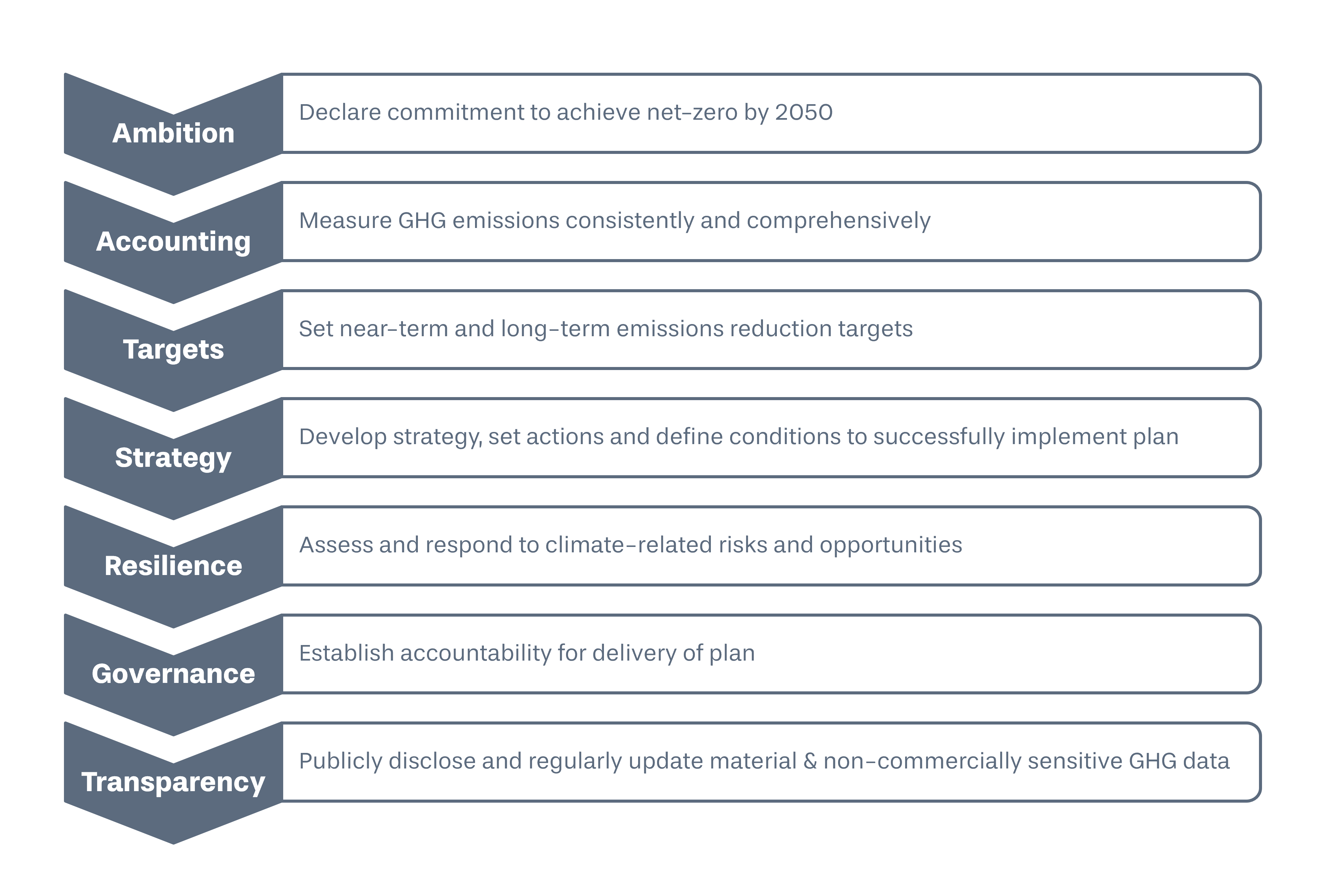
The proposed revisions strengthen and connect key elements of Principle 10, with a clearer and more coherent architecture across corporate and site levels.
Key improvements include:
- Quantitative, time-bound emissions reduction targets, covering Scope 1 and 2 emissions and material Scope 3 emissions
- Stronger links between corporate- and site-level planning, ensuring that corporate ambition translates into real investment decisions and on-the-ground transformation
- Improved intensity-based disclosures to support comparability, directly aligned with ResponsibleSteel’s broader harmonisation work
- Alignment with leading frameworks, such as IFRS S2 (International Financial Reporting Standards), while retaining flexibility for different regional and operating contexts
- Clearer guardrails for credibility, moving beyond temperature labels alone
There was strong agreement across the WG that clearer wording and guidance are essential to support consistent interpretation and implementation by sites and auditors alike.
Connecting the dots between the Production Standard’s criteria
One of the most important outcomes of the revision process so far has been a clearer set of connections between criteria that, while related, have not previously been well integrated.
In the current Production Standard:
- Corporate transition planning (10.1) is weakly connected to climate-related financial disclosures (10.2)
- Site-level transition planning (10.5) is not sufficiently aligned with corporate-level strategies
- Public GHG emissions disclosure requirements (10.7.1) are limited, focusing mainly on a site’s medium-term reduction target
The proposed changes aim to address these gaps by:
- Requiring climate transition plans to include climate-related financial risks and opportunities, including dependencies that may impose structural barriers, planned changes to business models and strategy;
- Aligning corporate- and site-level planning approaches to reduce carbon leakage risks and ensure consistency across operating boundaries; and
- Strengthening public disclosure requirements to better support accountability, comparability, and progress tracking over time.
Flexibility, credibility, and the reality of steelmaking
The WG and TAG discussions also surfaced a shared understanding of the structural barriers currently slowing decarbonisation in the steel industry. These include:
- Limited technology maturity at scale
- Supply chain and infrastructure constraints
- Energy availability and cost
- Inconsistent or insufficient policy support
- Weak demand signals for low-emission steel
- Trade and competitiveness pressures
Given the long investment timelines and asset lifetimes involved, feasibility in the near term is particularly critical. As such, there was strong support for a flexible, disclosure-driven approach that pairs quantitative targets with qualitative indicators of progress, allowing ResponsibleSteel to uphold high ambition and transparency while recognising that steelmakers cannot address systemic barriers alone.
As ResponsibleSteel’s Decarbonisation Analyst, Melav Salih observed, “A robust climate transition plan must embed decarbonisation within broader strategic and financial planning. It needs to recognise that steelmakers’ transition pathways are shaped by long-lived assets, billion-dollar investment decisions, and dependencies on an ecosystem of change that includes energy systems, infrastructure, policy, and markets.”
Looking ahead
As the Paris Agreement enters its second decade, and as legal, financial, and societal expectations on climate accountability intensify, ResponsibleSteel’s role as a credible, independent standard for the steel industry has never been more important.
By strengthening climate transition planning across corporate strategy, site-level action, financial disclosure, and public reporting, revisions to the Production Standard aim to support steelmakers in navigating this transition transparently and at pace.
Together with parallel work on harmonisation and disclosure alignment, the revisions to climate transition planning requirements represent a critical step toward turning climate commitments into credible, comparable, and feasible transition pathways for the global steel industry.
Learn more about the revision of ResponsibleSteel’s International Production Standard here.



November 2022 Newsletter
Please view our November 2022 newsletter by clicking the link below:


Shaping the future of responsible steel
We are at a critical juncture in the steel industry. We have the opportunity to create real, long-lasting change for both people and the planet.
ResponsibleSteel is working to drive the creation of a net zero industry with sustainability at its core. We are a community with members from across the steel value chain and civil society. And we are proud to have around 13% of the global steel industry in membership and certified sites on 5 continents covering the production of over 100 million tonnes of steel.
It’s time to build momentum and work together to shape the future of the industry.

ResponsibleSteel Applauds Site Certification of POSCO and Tata Steel Sites
ResponsibleSteel today applauded the certification of the world’s largest steel sites achieving ResponsibleSteel certification. The sites are Pohang and Gwangyang Steelworks in South Korea operated by POSCO together with the Jamshedpur site in India operated by TATA Steel.
This is a monumental step forward for ResponsibleSteel and the global steel industry on the road to sustainable development and decarbonisation. ResponsibleSteel now has around 13% of the world’s steel industry by volume in its membership, with certified sites on 5 continents covering the production of over 100 million tonnes of steel.
Annie Heaton, CEO of ResponsibleSteel speaking at Forum III: Shaping the future of responsible steel in Memphis said, “This is a historic moment for both ResponsibleSteel and the global steel industry on the road to sustainability. With Asia home to 72% of the world’s steel production, the achievement of site certification by these three substantial steel plants takes ResponsibleSteel into a new phase, one of global roll out.”
The ResponsibleSteel Standard is designed to drive forward positive actions for people, planet and the steel industry. The sheer scale of the POSCO and Tata sites certified today means that the production of 103.5 million tonnes of steel and the working lives of 157.4 thousand people are managed by sites that are now independently audited every 18 months.
Heaton continued, “For the steel companies themselves, this has required enormous vision, investment and above all commitment, creating a community of like-minded people working together to find solutions to some of the most pressing issues of the day – climate change, air pollution, diversity and labour rights to name just a few. There will be further to go, but today the producers of over 100 million tonnes of steel can proudly say they have achieved ResponsibleSteel site certification and are well on their way.”
Hag-dong Kim, CEO of POSCO said, “It is a great honour that both Pohang and Gwangyang Steelworks, the world’s two largest mills, have been certified by ResponsibleSteel. Today, as we prepare for the post-pandemic era, it is more important than ever for the steel industry to fulfil its social responsibility and to practice sustainable manufacturing.
To remain viable and competitive, the steel industry must identify sustainable solutions to diverse ESG challenges, such as by achieving carbon neutrality and building a safe workplace.”
Hag-dong Kim continued, “We appreciate ResponsibleSteel’s vision to ‘maximize the steel sector’s contribution to a sustainable society’ and the mission to ‘enhance the responsible sourcing, production, use, and recycling of steel,’ which are commensurate to POSCO’s management philosophy: Corporate Citizenship.
Together with our core values of ‘coexistence’ and ‘symbiosis,’ the new philosophy has propelled us forward on our path to sustainability. I believe this is just the beginning. To build a sustainable business, we hope other sites besides Pohang and Gwangyang will drive change and innovation to seek certification too.”
T. V. Narendran, CEO & MD, Tata Steel, said, “This is a historic moment for Tata Steel and an important step in our sustainability journey. Globally, the steel industry is at a critical juncture and the larger impact of how we produce and consume steel needs to be addressed urgently. For Tata Steel, this has always been a very important part of our journey from when we first produced steel in Jamshedpur in 1912. We are honoured to receive the ResponsibleSteel Certification for three of our facilities and will work towards achieving this recognition for all our production sites. I thank the ResponsibleSteel team, the auditors, assurance panel and the team at Tata Steel for their efforts in making this possible.”
For more information/press interviews with ResponsibleSteel or its members please contact:
Ali Lucas, Director of Communications
alucas@responsiblesteel.org
+44 7786 546724
Savannah Hayes, Communications Manager
shayes@responsiblesteel.org
+44 7588 785909
Denise Meredith, Communications and Media Consultant
denisemeredith1857@gmail.com
+44 7930 531128

September 2022 Newsletter
Please view our September 2022 newsletter by clicking the link below:

A Race Against Time: Key Takeaways from NYC Climate Week 2022
Last week, ResponsibleSteel’s CEO, Annie Heaton, and Policy and Impacts Director, Shivakumar Kuppuswamy, were on the ground in New York for Climate Week. Participating in discussions with industry, policy, and sustainability leaders, it was heartening to see an interconnected ecosystem emerging on steel decarbonization. And everyone was talking about the need for a single, verifiable standard.
Climate Week evidenced the growing private sector demand for responsibly produced steel and the increasing pressure for science-based targets and clear roadmaps to achieve net zero. Shiv participated in two critical roundtable debates hosted by Climate Group, dissecting corporate barriers to climate change and discussing the opportunities to accelerate the fulfilment of decarbonization targets set out by the Paris Agreement.
“It’s a race against time. We have a window of 8 to 10 years left to find the financial resources to make a difference in steel decarbonization. Who’s going to rise to the challenge?” – Shiv, Policy and Impacts Director
The need for greater investment in decarbonizing heavy industry is more urgent than ever. This was the focal point for the ‘It’s a Material World’ panel led by Sean Kidney, CEO of the Climate Bonds Initiative. As Shiv stressed, there is a pressing need for time-bound and effective mobilization of large capital to meet steel decarbonization targets and a credible and holistic standard will have a strategic role in this. Building on this, Annie spoke at the launch of the Sustainable STEEL Principles to a crowded room of bankers and fund managers. Bringing together six leading global banks, the Principles will help banks measure and report the emissions associated with their steel loan portfolios compared to net-zero emissions pathways.
ResponsibleSteel has a unique and critical role to play in all this. Our International Standard V2.0 provides clear thresholds to measure GHG performance taking into account the amount of scrap used as input. But it also addresses a range of other crucial issues across the ESG spectrum from labour rights to pressing environmental issues such as biodiversity.
And, as Annie highlighted at a meeting of clean technology innovators for mining, the latest ResponsibleSteel Standard is enabling customers to demand higher standards along the entire value chain, including the social and environmental impacts of how input materials are sourced.
Find out more about the ResponsibleSteel International Standard V2.0 here.
Catch up on Climate Week here.

ArcelorMittal Poland Obtains ResponsibleSteel Certification
ArcelorMittal Poland has become the most recent cluster of sites to receive ResponsibleSteel certification. After a successful audit carried out by ResponsibleSteel accredited auditors from DNV Poland, ArcelorMittal Poland received the certificate which confirms it had fulfilled the criteria required to earn certification against the ResponsibleSteel Standard. The certificate covers sites in Dąbrowa Górnicza, Kraków, Zdzieszowice, Świętochłowice, Sosnowiec, and Chorzów which collectively employ over 9,000 workers and contractors and produce over 3.9 million tonnes of steel annually.
The independent audits are designed to verify that a steel site’s activities meet ResponsibleSteel’s set of rigorously defined requirements, based not only on supplied documentation but also on a number of interviews with internal and external stakeholders. The auditors take into account a broad range of social and environmental criteria split across 12 ESG principles. Social aspects include business integrity, relations with employees and communities, human rights and labour rights. Environmental criteria cover climate change and greenhouse gas emissions, water management, waste and noise emissions and biodiversity. ArcelorMittal Poland currently aims to reduce its GHG emissions by 35% by 2030 in line with ArcelorMittal’s broader European target.
Commenting on the certification, Sanjay Samaddar, chairman of ArcelorMittal Poland stated: “This certificate is a great recognition for us at ArcelorMittal Poland but also a commitment to our stakeholders. Steel is the world’s most widely used material. Our customers in the automotive, construction, energy, infrastructure, packaging, transport and white goods sectors have growing expectations that the materials they work with are produced by sites that respect the highest social and environmental standards. The ResponsibleSteel certificate is proof of responsible management and gives us further motivation for development. Our activities directed towards our employees, communities and sustainable development were recognized, which makes us very proud.”
Annie Heaton, CEO of ResponsibleSteel, said: “We are very proud to announce the certification of ArcelorMittal Poland against the ResponsibleSteel Standard. It is the first cluster of sites to be certified in Eastern Europe and joins several ArcelorMittal sites certified against our Standard.”
She continued: “The audit process revealed ArcelorMittal Poland’s strong corporate governance structures, close relationships with local stakeholders, dedication to employee welfare, and commitment to responsible environmental practices, notably water management and biodiversity. It is a significant achievement which has taken considerable time and effort and we look forward to continuing to work with ArcelorMittal Poland on their journey to produce more responsible steel.”
To learn more about the certification, read the public audit summary report here.

Global Civil Society Groups Applaud Launch of New International Standard Defining Sustainably Produced and Sourced Steel
Civil society groups applaud the launch of the ResponsibleSteel International Standard V2.0 and recognise it as a critical step in the net zero transition of the steel industry. ResponsibleSteel civil society members are committed to continuing to work together to support steel buyers and producers in achieving full alignment with a 1.5-degree pathway.
Decarbonizing the global steel industry is critical to achieving the goal of the Paris Agreement to limit warming to 1.5 degrees Celsius and for this, investments in clean steelmaking need to begin in this decade. The new ResponsibleSteel Standard will provide steel buyers and steel makers with a robust and independently-verified certification for low-emission and responsibly-produced steel.
Steel is a key part of a new clean energy economy. From wind turbines to railways to electric motors and buildings, steel is a building block for a low-emissions society. ResponsibleSteel certification will help buyers choose clean steel and provide added value to steelmakers for producing a cleaner product.
ResponsibleSteel is the world’s first multi-stakeholder standard for low greenhouse gas emissions and responsibly sourced steel. It covers a range of sustainability issues: climate change, pollution and human rights concerns by taking into account both direct and upstream greenhouse gas emissions, air and water pollution, pollution from mining coal and iron ore, labor standards, and more. These new standards, created through a multi-year, fair and rigorous process, including input from a diverse array of civil society stakeholders, is a major step forward and an important starting point to transform the sector.
We commend ResponsibleSteel for its commitment to decarbonizing the global steel industry and look forward to continuing our work together toward improvement through the standard’s review process to achieve full alignment with the 1.5-degree pathway.
We encourage steel producers to adopt the standard and gain ResponsibleSteel Certification on all their sites, and for steel buyers to clearly signal purchasing ResponsibleSteel certified steel.
Strengthening the global understanding of what is considered sustainably produced steel is critical to aligning the industry and driving change at the scale and pace needed.
Sue Riddlestone OBE, Co-founder, and Chief Executive, Bioregional: “As an organisation working with clients in the building products and built environment sectors, we welcome the launch of the new ResponsibleSteel Standard. It provides a valuable means for steel manufacturers to reduce their environmental impacts and help raise standards across the industry, and for end users to act – whether they are at the start of their sustainability journey or pushing forward towards a best practice approach to steel procurement.”
Daniel Seligman, Director for Clean Energy Solutions at Ceres: “ResponsibleSteel will galvanize steelmakers, steel buyers, and investors alike to curb emissions and promote social good from an industry crucial to modern economies.”
Armond Cohen, Founder and President of Clean Air Task Force: “Decarbonizing the steel industry is critical to reaching our global climate goals, and the impact of the revised Standard 2.0 toward these efforts across the supply chain cannot be overstated. Achieving global decarbonization – including hard-to-abate industrial sectors like steel – needs to be met with both ambition and action, and the ResponsibleSteel Standard is a significant step in the right direction.”
Jen Carson, Head of Industry at Climate Group: “With the launch of ResponsibleSteel’s updated Standard (V2.0), we now have clear requirements on both greenhouse gas emissions and responsible sourcing of input materials. As the Standard forms a key part of our SteelZero commitment, these additional requirements will strengthen and clarify the collective voice of our members, boosting the demand signal for low emission and net zero steel and accelerating the net zero transition of one of the highest emitting sectors on the planet.”
Glenn Hurowitz, Founder and CEO of Mighty Earth: “We applaud the launch of this new ResponsibleSteel Standard and recognize their efforts to ensure that deforestation has no place in the steel industry’s future. By limiting charcoal, wood and biomass used in steelmaking to existing FSC-certified plantations, the standard will serve to keep forests standing, protecting precious biomes such as the Amazon, for people, nature and climate. And now is the time for steelmakers to invest in the next generation of steelmaking infrastructure, including renewable electricity-powered electric arc furnaces and green hydrogen that can produce iron without relying on coal.”
Gitika Mohta, Manager of Industry and Built Environment, Systems Transformation, We Mean Business Coalition (WMB): “WMB is a proud supporter of ResponsibleSteel and we applaud the evolution of the new standard that is pioneering, pathbreaking and desperately needed to decode whether steel is responsibly produced and sourced. The standard creates a unified market and understanding of what each company across the value chain needs to be aiming for.”
Learn more about the ResponsibleSteel International Standard Version 2.0 here.
Leading steel companies and NGOs agree to International Standard on climate for industry
Created by ResponsibleSteel members, including some of the world’s largest steel companies and most respected social justice and climate NGOs, ResponsibleSteel International Standard V2.0 will play a pivotal role in driving down GHG emissions and driving up standards in the steel supply chain, helping steel companies transition to a responsible, decarbonised future.
As the world grapples with the impact of climate change, the new ResponsibleSteel Standard, launched today, focuses more deeply than ever before on reducing GHG emissions and now enables buyers of steel for the first time to specify what green procurement means in a credible way.
After years of hard and complex work, ResponsibleSteel is extremely proud to announce its revised Standard 2.0. Leading steel companies including ArcelorMittal, Tata Steel, US Steel, thyssenkrupp, POSCO, BlueScope, and voestalpine worked with others along the steel value chain to support the standard’s development, as well as leading environmental NGOs the Climate Group, Ceres, the Clean Air Task Force, We Mean Business, and Mighty Earth. The launch of this Standard will provide leaders in the steel industry with an immediate opportunity to showcase how they are driving down emissions, whilst tackling other urgent issues such as the impact of mining, water use, labour rights, air pollution, and diversity. It’s an expert yet practical road map for radical and innovative change in the world of steel.
“The progressive steel industry, business and civil society and associate Members should be very proud today. They have worked together to produce a breakthrough standard. This means we now have a workable standard to certify steel products which meet the highest possible sustainability metrics,” commented Gerry Tidd, Chairman of the Board of Directors.
He continued, “steel customers can now be confident in specifying ResponsibleSteel certified steel products. The Standard sets a new high watermark for steelmakers, their supply chain and customers who want to address essential issues like biodiversity, GHG emissions, labour rights, water, and waste.”
The ResponsibleSteel Standard is unique in addressing not only climate change but other issues also across the whole ESG spectrum. It has taken years of expertise and cross sector buy-in to create the new revisions which are even more exacting than before and pertain specifically to GHG emissions and the responsible sourcing of input materials.
“ResponsibleSteel’s new International Standard comes at a critical time, with the unfolding energy crisis alongside the climate challenge only magnifying the need for a global scale transition to a decarbonised economy. By providing a practical tool for both steelmakers and all their stakeholders to measure and reward progress, it paves the way for society to work together on this gargantuan challenge” said ResponsibleSteel CEO Annie Heaton. “The Standard enables anyone that’s either buying or making steel to demonstrate they are not only driving down emissions, but also thinking responsibly about impacts on people and nature right across the value chain.”
She continued, “With the publication of this Standard, we invite every steel company in the world to adopt it, every customer to ask for it and every finance house to endorse it, so that together, as a community of the willing and through dynamic collaboration we can generate the necessary investments required for this vital transition.”
ResponsibleSteel believes the publication of this Standard will send a clear signal to steel customers, the market, investors, policy makers and government leaders that this is a Standard the world can trust, is wholly transparent, will push back against greenwashing and will ultimately pave the way towards a net zero steel industry with sustainability at its core.
Learn more about the development of ResponsibleSteel International Standard V2.0 here.
Endorsements:
“We are encouraged by the progress ResponsibleSteel is making in terms of both enhancing the scope and diversity of its membership base and strengthening the rigour and extent of its certification process. Its members now include an impressively broad range of companies across the steel value chain as well as civil society actors, while the revamped standard being launched today not only improves the existing site level certification standard but introduces a product standard for the first time. Having been a member since its inception, we are pleased to continue to work closely with ResponsibleSteel on the evolution of its industry certification scheme which we believe has an important role to play in driving ESG standards across our industry.” – James Streater, Head of Sustainable Development, ArcelorMittal.
“The ResponsibleSteel Standard and certification program is an important example of multi-stakeholder collaboration for sustainable change across the steel value chain. Driven by the collaborative effort of industry and civil society, it has been designed to give customers, stakeholders and consumers confidence that the steel they use has been sourced and produced responsibly. BlueScope is pleased to have contributed to the development of the ResponsibleSteel Standard and the additional requirements.” – Tim Rodsted, Head of Sustainability, BlueScope.
“Tangible action to decarbonise the steel industry is ramping up, especially with the finalisation of the ResponsibleSteel Standard V2.0. We now have clear requirements on both greenhouse gas emissions and responsible sourcing of input materials. As the Standard forms a key part of our SteelZero commitment, these additional requirements will strengthen and clarify the collective voice of our members, boosting the demand signal for low emission and net zero steel and accelerating the net zero transition of one of the highest emitting sectors on the planet.” – Jen Carson, Head of Industry, Climate Group.
“Mighty Earth is proud to be a stakeholder in what will soon become the global standard for low-emission and responsibly sourced steel. We urge automakers and other steel buyers to get behind this. Choosing ResponsibleSteel-certified materials sends a strong message to steelmakers that investing in renewable energy-powered steelmaking makes sense economically and environmentally. This standard goes beyond greenhouse emissions and also includes critical environmental safeguards, ensuring that deforestation has no place in the steel industry’s future.” – Glenn Hurowitz, Founder and CEO, Mighty Earth.
“Lendlease endorses the establishment of ResponsibleSteel’s product certification standard. As a 1.5 degree aligned company we support globally consistent standards which provide product assurance and streamlined procurement along with a clear signal about our expectations of a responsible and decarbonised supply chain.” – Cate Harris, Group Head of Sustainability, Lendlease.
“SKF joined the Responsible Steel Initiative because steel is such an important part of our value chain and because we want to play our part in collaborating for increased sustainability within the steel industry. We are very proud to have been part of the process to define the additional requirements in this new version of the RSI standard. This is an important step, which provides producers and users of steel with common ways to measure and drive improved performance in both climate and social aspects. We look forward to working to promote the adoption of this standard and to the improved sustainability performance that will surely follow that.” – Rob Jenkinson, Net Zero Program Manager, SKF.
For more information/press interviews with ResponsibleSteel or its members please contact:
Ali Lucas, Director of Communications
alucas@responsiblesteel.org
+44 7786 546724
Savannah Hayes, Communications Manager
shayes@responsiblesteel.org
+44 7588 785909

Today marks a pivotal moment in the path to sustainable, net zero steel
It’s been quite a journey. Today, after almost three years of collective commitment from the giants of the steel industry and leading NGOs, ResponsibleSteel is launching its new International Standard V2.0, with tough new additional requirements on both climate and responsible sourcing, after they were adopted with the support of 96% of our membership vote.
So what does this mean? For the first time, steelmakers will be able to gain credible recognition in the market for the progress they make – both on decarbonisation and on driving sustainability through their supply chains – because they have been independently certified against a common, agreed, international standard. Buyers of steel can specify it in what they ask of their suppliers. So too can those who finance the industry and the costly transition to come.
I am certain that the launch of ResponsibleSteel V2.0 represents a pivotal moment for the steel industry. The course is set, and it’s now time to build the momentum and drive the creation of a new, decarbonised steel industry with sustainability at its core.
To reach this moment, many thousands of hours have been spent by a coalition of the willing – experts from across the steel value chain, NGOs, academics and many others, working alongside the ResponsibleSteel team in complex discussions, exacting analysis, demanding debate, critical feedback, drafting, redrafting … and finally, a standard that sets a clear direction for the industry and its stakeholders. I want to sincerely thank everyone involved.
V2.0 will be challenging to implement – the revised standard now includes 13 Principles, 61 Criteria and over 500 individual requirements. This robustness, and our growing Assurance Programme, are what lend ResponsibleSteel credibility both in the market and in the wider ESG world. And we will strengthen these further, continually growing our membership to bring everyone involved in, continually working to ensure the Standard is fit for the entire global industry, and continually building our Assurance Programme.
Over the coming weeks, we’ll be exploring the implications of V2.0 for the industry’s future at key events in the run-up to COP27, starting next week with New York Climate Week.
Then from 31 October to 1 November, at the ResponsibleSteel Forum III in Memphis, our entire membership along with our Board will take the opportunity to look at how key actors in the steel value chain can use V2.0 to shape the dynamics of steel decarbonisation and wider sustainability, globally. There are some spaces for those who haven’t yet joined ResponsibleSteel – if you haven’t already registered to attend Forum III, you can do so here.
Finally, I want to take a moment to thank the authors who led us on this journey and were critical to making this moment happen – Marnie Bammert, who led on the responsible sourcing requirements, and Matthew Wenban-Smith who led on the greenhouse gas side. Their clarity of thought and continued commitment has been invaluable. Both Matthew and Marnie will continue to advise ResponsibleSteel as we move forward on our critical journey.
Once again, my thanks go out to all of you who have helped us achieve this momentous step forward. What we’ve created together is the beginning of a new phase for ResponsibleSteel and for the entire industry.

August 2022 Newsletter
Please view our August 2022 newsletter by clicking the link below:

July 2022 Newsletter
Please view our July 2022 newsletter by clicking the link below:
Celebrating One Year Since ResponsibleSteel’s First Site Certifications
This week, we celebrate the one-year anniversary of the first site certifications carried out to the ResponsibleSteel Standard. The ArcelorMittal sites in Belgium, Luxembourg and Germany were the first sites to be independently audited and found to meet the exacting criteria contained in the ResponsibleSteel Standard.
The certifications marked an industry-first as the sites made a commitment to implementing the standard, encompassing 12 ESG principles promoting responsible steel production. A year on, ResponsibleSteel has now issued a total of 12 certificates covering 41 different sites. Currently, we have certified sites across 9 countries in Europe, North America, South America, and Australia. To add to this, we have a further 8 audits in the pipeline.
The ResponsibleSteel audit process is twofold: the first step is a self-assessment while the second is an audit carried out by an approved ResponsibleSteel certification body involving onsite visits and interviews with a wide range of stakeholders. This thorough and rigorous process reflects ResponsibleSteel’s multi-perspective approach and our dedication to ensuring that certified sites meet the carefully defined criteria set out in our standard.
As the steel industry’s first global multi-stakeholder standard and certification initiative, the site certifications awarded to ArcelorMittal last year were only the beginning. We are incredibly proud to see the increasing application of our standard globally and we are excited to continue our work to transform ResponsibleSteel’s vision to maximise steel’s contribution to a sustainable society into a reality.
A huge thank you to our members and other stakeholders for your continued support of our mission. We look forward to continuing with you on this important journey!
To learn more about our standard and the certification process, click here.
