
.png)


.jpeg)

%20(1).jpg)
Strengthening climate transition planning: Revising the ResponsibleSteel Production Standard
Last year marked a decade since the signing of the Paris Agreement and six years since the launch of the ResponsibleSteel Production Standard. In that time, expectations on climate action have shifted dramatically. Global emissions continue to rise, and the 1.5°C warming threshold is now projected to be breached by 2034. To remain on a 1.5°C pathway, the Intergovernmental Panel on Climate Change (IPCC) indicates that global CO₂ emissions must fall by 45% by 2030 and reach net zero by 2050. Yet progress in the steel sector is lagging. According to the Mission Possible Partnership’s Global Project Tracker, only 9% of the required operational or committed near-zero steelmaking capacity was in place by the end of 2024.
Against a backdrop of rising global emissions and growing awareness of the consequences of inaction, ResponsibleSteel is undertaking a timely and necessary revision of its climate-related requirements, specifically criteria 10.1 (corporate commitment to the Paris Agreement), 10.2 (corporate climate-related financial disclosure), 10.5 (site-level emissions targets and planning), and 10.7.1 (GHG disclosure and reporting).
A collaborative revision process
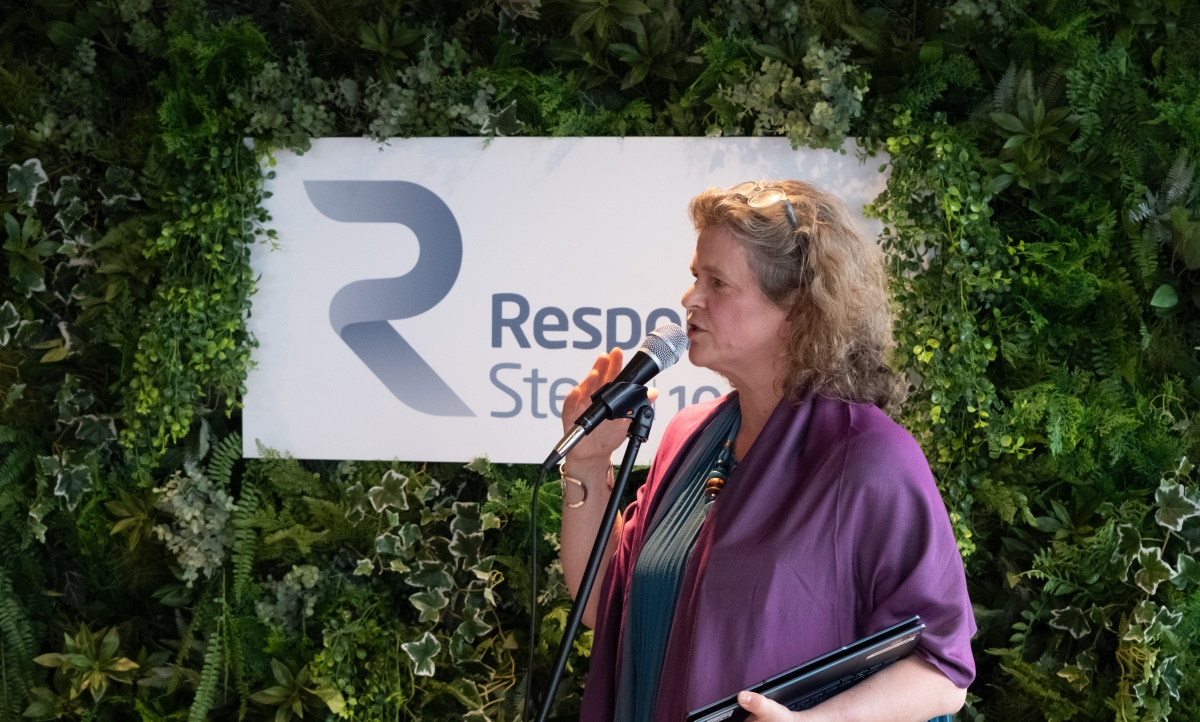
From October to January, ResponsibleSteel convened five Working Group (WG) and Technical Advisory Group (TAG) meetings, bringing together 23 representatives from 15 member organisations across certification bodies, civil society, steelmakers, and the wider steel value chain.
As a participant from SteelWatch noted during the process, “Having a diverse group of members involved in the revision process of the standard helps to achieve a balance between what steelmakers deem feasible and where the standard needs to set the bar to trigger ambitious action. ResponsibleSteel has done well navigating and drawing on different perspectives, turning them into concrete proposals that can be submitted for the next steps of the revision process.”
Three guiding principles framed these discussions:
- Ambition: ensuring alignment with global climate goals and science-based pathways
- Feasibility: recognising real-world constraints, particularly in the near term
- Simplicity: avoiding unnecessary complexity while improving clarity and accountability
A key theme that emerged was the foundational importance of credible transition plans that move beyond aspiration and, at the same time, are grounded in realistic assumptions about technology readiness, capital investment cycles, and enabling conditions. As noted by SteelWatch, “Aligning corporate- and site-level requirements is essential in ensuring that top-level corporate ambition and targets translate into actual investment decisions today, and subsequent material transformation and emissions reductions on the ground.”
Moving beyond outdated decarbonisation roadmaps
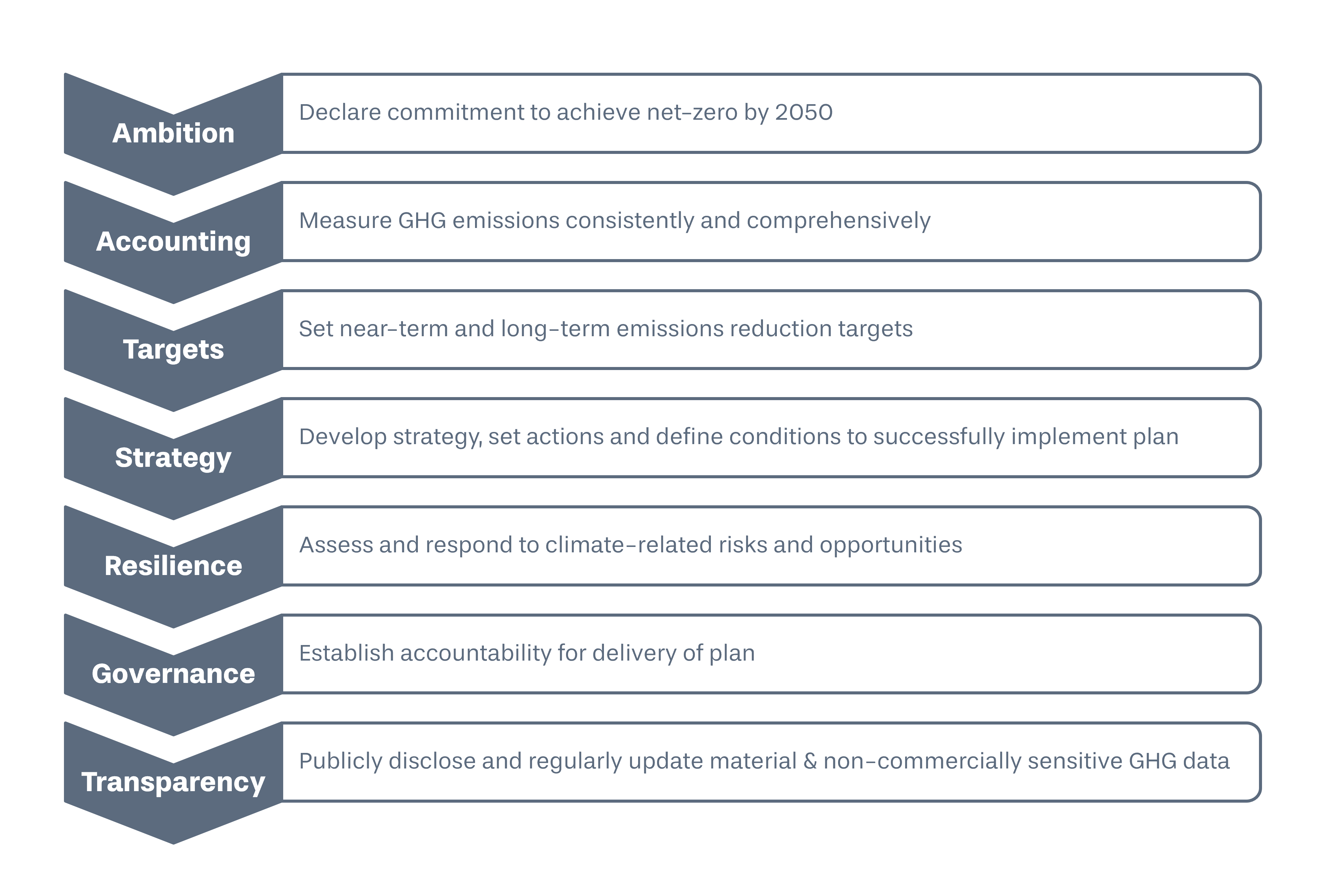
Under the current Production Standard, certified sites must demonstrate that they have a decarbonisation roadmap aligned with an existing model. However, the WG and TAG agreed that many of these models have not been updated in recent years and no longer reflect technological, economic, or policy realities. As a result, they risk undermining rather than strengthening transition planning. The revised approach moves away from a prescriptive reliance on external models and instead proposes to introduce an explicit requirement for a climate transition plan at the corporate and site level.
A participant from EMSTEEL, a ResponsibleSteel member and certified site, commented, “Revising the ResponsibleSteel Standard is an important step in strengthening the steel sector’s collective transition journey. The process provides members with a valuable opportunity to contribute practical insights, share operational experience, and help shape a standard that is both ambitious and implementable. ResponsibleSteel has done an excellent job in creating an inclusive and transparent revision process, encouraging constructive dialogue among members and ensuring diverse industry perspectives are reflected in the development of a stronger and more credible framework.”

What’s proposed to change in the Production Standard?
The proposed revisions strengthen and connect key elements of Principle 10, with a clearer and more coherent architecture across corporate and site levels.
Key improvements include:
- Quantitative, time-bound emissions reduction targets, covering Scope 1 and 2 emissions and material Scope 3 emissions
- Stronger links between corporate- and site-level planning, ensuring that corporate ambition translates into real investment decisions and on-the-ground transformation
- Improved intensity-based disclosures to support comparability, directly aligned with ResponsibleSteel’s broader harmonisation work
- Alignment with leading frameworks, such as IFRS S2 (International Financial Reporting Standards), while retaining flexibility for different regional and operating contexts
- Clearer guardrails for credibility, moving beyond temperature labels alone
There was strong agreement across the WG that clearer wording and guidance are essential to support consistent interpretation and implementation by sites and auditors alike.
Connecting the dots between the Production Standard’s criteria
One of the most important outcomes of the revision process so far has been a clearer set of connections between criteria that, while related, have not previously been well integrated.
In the current Production Standard:
- Corporate transition planning (10.1) is weakly connected to climate-related financial disclosures (10.2)
- Site-level transition planning (10.5) is not sufficiently aligned with corporate-level strategies
- Public GHG emissions disclosure requirements (10.7.1) are limited, focusing mainly on a site’s medium-term reduction target
The proposed changes aim to address these gaps by:
- Requiring climate transition plans to include climate-related financial risks and opportunities, including dependencies that may impose structural barriers, planned changes to business models and strategy;
- Aligning corporate- and site-level planning approaches to reduce carbon leakage risks and ensure consistency across operating boundaries; and
- Strengthening public disclosure requirements to better support accountability, comparability, and progress tracking over time.
Flexibility, credibility, and the reality of steelmaking
The WG and TAG discussions also surfaced a shared understanding of the structural barriers currently slowing decarbonisation in the steel industry. These include:
- Limited technology maturity at scale
- Supply chain and infrastructure constraints
- Energy availability and cost
- Inconsistent or insufficient policy support
- Weak demand signals for low-emission steel
- Trade and competitiveness pressures
Given the long investment timelines and asset lifetimes involved, feasibility in the near term is particularly critical. As such, there was strong support for a flexible, disclosure-driven approach that pairs quantitative targets with qualitative indicators of progress, allowing ResponsibleSteel to uphold high ambition and transparency while recognising that steelmakers cannot address systemic barriers alone.
As ResponsibleSteel’s Decarbonisation Analyst, Melav Salih observed, “A robust climate transition plan must embed decarbonisation within broader strategic and financial planning. It needs to recognise that steelmakers’ transition pathways are shaped by long-lived assets, billion-dollar investment decisions, and dependencies on an ecosystem of change that includes energy systems, infrastructure, policy, and markets.”
Looking ahead
As the Paris Agreement enters its second decade, and as legal, financial, and societal expectations on climate accountability intensify, ResponsibleSteel’s role as a credible, independent standard for the steel industry has never been more important.
By strengthening climate transition planning across corporate strategy, site-level action, financial disclosure, and public reporting, revisions to the Production Standard aim to support steelmakers in navigating this transition transparently and at pace.
Together with parallel work on harmonisation and disclosure alignment, the revisions to climate transition planning requirements represent a critical step toward turning climate commitments into credible, comparable, and feasible transition pathways for the global steel industry.
Learn more about the revision of ResponsibleSteel’s International Production Standard here.



ResponsibleSteel™ Site Certification Awarded to ArcelorMittal France Nord
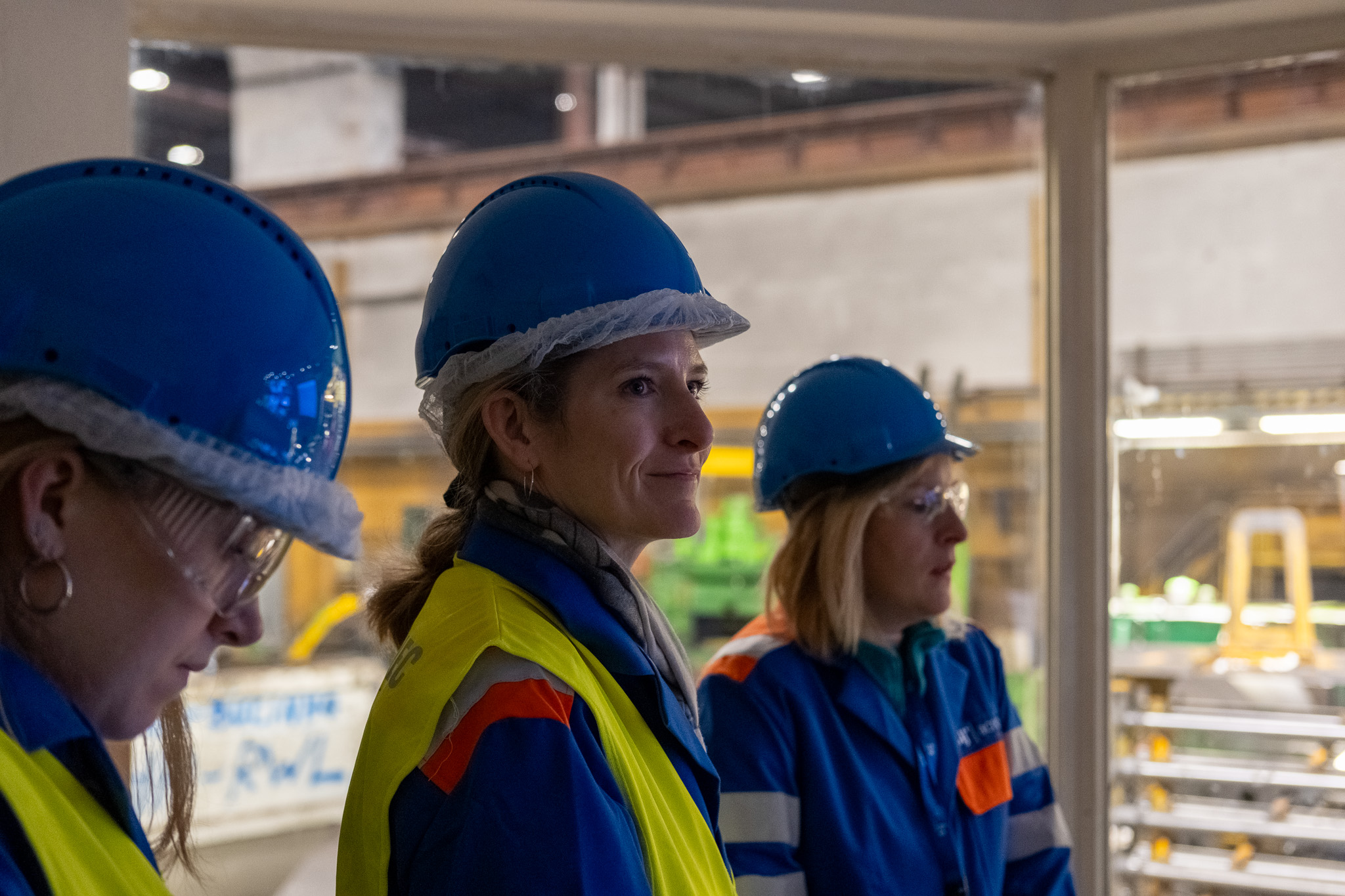
Following the certification of ArcelorMittal Méditerranée earlier this year, ArcelorMittal France Nord announces that it has obtained ResponsibleSteel™ certification. The certification marks ArcelorMittal France Nord’s commitment to implementing our Standard, which encompasses 12 environmental, social and governance principles that promote responsible steel production.
ArcelorMittal France Nord is an entity of ArcelorMittal Europe – Flat Products. The certification covers seven sites: Dunkirk, Mardyck, Desvres, Montataire, Florange, Mouzon, and Basse-Indre. The cluster employs around 7000 workers and contractors and produces flat steel products for a range of sectors such as the packaging and automotive industries.
Commenting on the certification, Matthieu Jehl, Managing Director of ArcelorMittal France Nord, stated, “our customers and stakeholders expect a quality product from us but also a more sustainable contribution to society. The ResponsibleSteel™ certification allows us to demonstrate our commitment to this goal. It is an additional asset that is part of our management system and our continuous progressive approach.”
The certification follows two stages of auditing which began in December 2021. The auditing was conducted by an independent ResponsibleSteel approved body, AFNOR. During the audit process, over 150 interviews were conducted with workers and independent stakeholders to discuss potential issues. The audit process highlighted several areas of good practice including the cluster’s structured roadmap to achieve a 35% reduction in GHG emissions by 2030.
Annie Heaton, CEO of ResponsibleSteel, stated, “We are very pleased to welcome the ArcelorMittal France Nord cluster to our expanding family of ResponsibleSteel certified sites. As more and more sites become certified, we move closer to ResponsibleSteel’s vision of maximising steel’s contribution to a sustainable society. And we look forward to continuing to support ArcelorMittal France Nord on this journey.”
To find out more about the certification, click here or take a look at our audit summary here.

Carbon Re Talks Creativity and Innovation in the Steel Industry
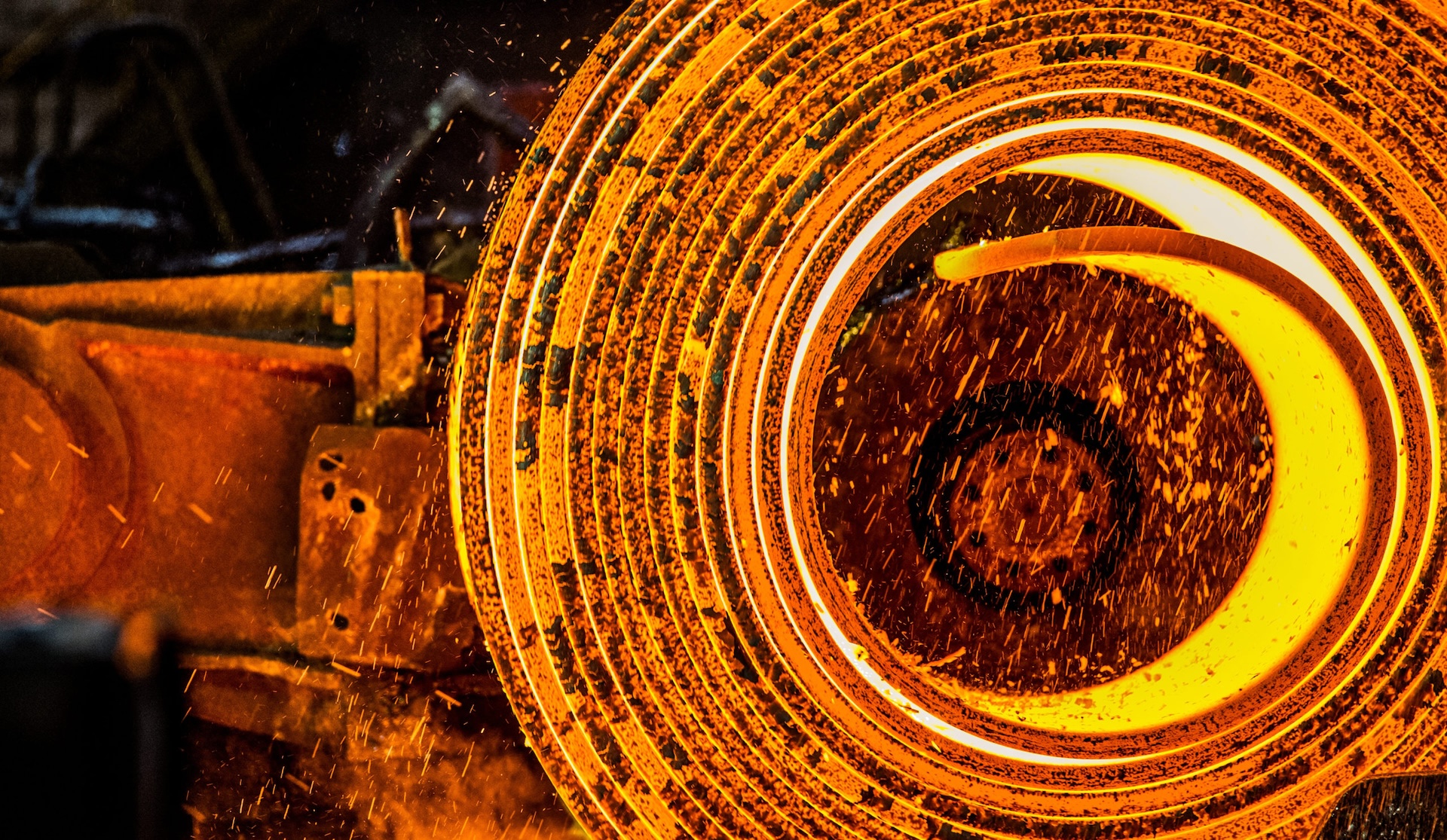
Creativity and innovation are an integral part of the steel industry. To mark World Creativity and Innovation Day, we asked Buffy Price and Sherif Elsayed-Ali, co-founders and current COO and CEO of ResponsibleSteel member Carbon Re, a few questions about what they think the next steps are for the sector in terms of utilising new technology and artificial intelligence to advance decarbonisation initiatives.
1. Many people might not immediately think of steel when discussing World Creativity and Innovation Day, but these have played a major role in the development of the industry. Why do you think it is so important to apply this same creative approach to decarbonisation?
Steel is probably more intertwined with creativity and innovation than any other material, both with regards to its uses and how different steels are made. The invention of steel itself was one of the biggest industrial innovations in human history, taking iron ore and transforming it into an incredibly versatile and reliable alloy.
The beauty of steel is that it’s at home in everything from building structures to sculptures and spacecraft. The properties of steel allow industrial designers, architects and artists to create an infinite variety of tools, machines, buildings, and art.
Today there are four main types of steel and more than 3,500 grades, each with properties tuned for specific applications. This huge number is only possible because of the talent and continuous innovation in the steel industry.
2. How is Carbon Re currently working to support steel decarbonisation?
Steel is a very hard industry to decarbonize. Carbon Re’s focus is on developing solutions that bring financial and climate benefits to steel producers today—solutions that can be scaled rapidly. We are doing this by leveraging the huge advances in computation and artificial intelligence to help optimize steel production, reducing energy costs and emissions simultaneously.
Steelmaking may seem like a known quantity—in general terms it is, but it is also very complex, with physical and chemical interactions constantly changing as a result of the chemistry of fuels and materials, the state of equipment and the natural variation in the process.
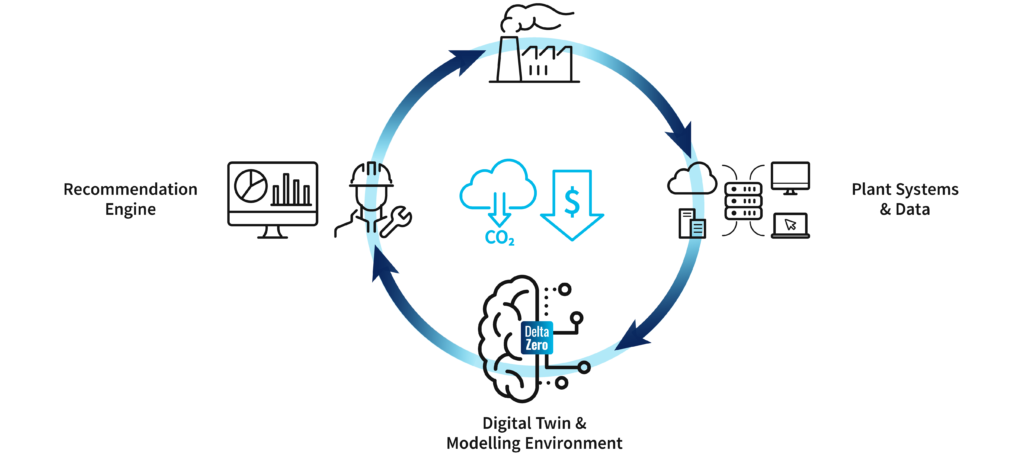
We leverage the huge amount of data produced by industrial sensors and IoT to build a digital twin of the production process that reproduces the specific characteristics of a given plant, rather than being a generalised physics-based model. This digital twin then acts as a virtual training environment for artificial intelligence agents that learn through a method called reinforcement learning, a branch of AI particularly well-suited to complex environments whereby the AI learns by trial and error.
The results are AI agents that support operator decision-making, enabling dynamic adjustments of the production process to produce the desired amount of material, with the required quality at very efficient energy levels.
3. We are very proud to have Carbon Re as a member of ResponsibleSteel. What made you want to be part of the growing RS community?
The world is not moving fast enough to tackle climate change and most technological solutions are 10 years off impact and scale. We absolutely must take a multi-pronged collaborative approach to decarbonization and building a community like ResponsibleSteel is a vital part of that process. In fact, ResponsibleSteel has emerged as the leading global initiative to accelerate decarbonization in the steel industry and we are very proud to be part of it.
4. How do you think we can better support decarbonisation in the steel industry?
There are a number of challenges to decarbonization: technical, financial and regulatory. On the technical side, we need to encourage fast innovation and technology demonstration. Financially, we need the right incentives to encourage decarbonization—whether these take the form of carbon pricing or tax credits. Finally, on the regulatory side, we need active policies to support the steel industry to reduce its carbon intensity including, for example, responsive building codes that enable, rather than hinder, innovation in building materials.
5. Why do you think it is so important to have a global steel standard?
We think it is important to create a level playing field across the industry by ensuring consistency and transparency across measurement and reporting mechanisms. This not only substantiates claims and provides benchmarks for progress but also empowers steel buyers to make the right decisions to fulfil their own decarbonization objectives.
6. We are currently revising our ResponsibleSteel Standard to include enhanced GHG emissions and sourcing criteria. What do you foresee as the greatest challenges in tackling emissions in the steel sector?
The biggest challenge is almost certainly the substantial costs associated with most decarbonization solutions and dealing with legacy infrastructure. But there are low-cost solutions that can help tackle carbon emissions in the short to medium term.
7. What steps should steelmakers be taking to decarbonise? What innovations should they be adopting?
First, we have to acknowledge two realities.
The first is that the widespread use of steel is essential to modern societies and that there is no real replacement for it—not just because of its versatility but because iron is one of the most abundant elements in the world. The world produces close to two billion tons of steel every year, second only to cement as the most produced material in the world.
The second reality is that producing steel produces a lot of CO2 emissions, both due to the types of fuel used—such as coal—and the process CO2 emissions in blast furnace steelmaking. Today, these are very hard to decarbonize. There are technological solutions such as CCUS and green hydrogen, but they face many challenges for widespread adoption, including costs, energy requirements and storage/reuse requirements (for CCUS).
These technologies will evolve and become more affordable with time, but we simply can’t wait to start decarbonizing. I think we need to think of decarbonization in the steel industry in terms of three phases:
- Optimizing the use of existing assets
- Improving existing assets, for example by retrofitting CCUS
- Building a new generation of low-carbon assets
At Carbon Re, our focus today is optimizing the use of existing assets by delivering technology that provides near immediate financial and decarbonization benefits to steelmakers and that can be scaled rapidly.
8. How important do you think artificial intelligence is in the fight against climate change?
AI is a foundational technology—it can enable new applications in almost every industry, but it doesn’t work alone. When combined with industry-specific expertise and with other scientific fields such as chemistry and material sciences, it can accelerate the development of new solutions and new discoveries.
As such, AI has a very important role in the fight against climate change—from measuring emissions to modelling climate change to improving industrial processes and designing new low-carbon materials.
At Carbon Re, we are building a world-class multidisciplinary team, not just to bring the latest AI techniques to steelmaking, but to push the state-of-the-art of what’s possible to make the decarbonization of the industry a reality.
Buffy Price is co-founder & COO of Carbon Re. She was formerly AI for Climate Partnerships Manager at Element AI and Senior Advisor at Amnesty International. Buffy has extensive experience in change management, organizational processes and project management.
Sherif Elsayed-Ali is co-founder & CEO. A construction engineer by training, he has extensive experience in technology innovation and leadership. Before Carbon Re, Sherif led the AI for climate practice at Element AI and co-founded Amnesty Tech. He has a BSc from the Americana University in Cairo and an MPA from Harvard Kennedy School.

IndustriALL discusses the importance of building a safe and responsible steel sector
To mark World Day for Safety and Health at Work, we spoke with Matthias Hartwich, Director for Mechanical Engineering and Base Metals at ResponsibleSteel member IndustriALL, about the importance of a safe and healthy workplace, labour rights, and how we can work to build a more responsible steel industry.
Why is World Safety Day important?
The members of our affiliated unions, the men and women, all workers, are the ones who make the steel. They are the ones who either live or die, who return in either good or bad health from their workplaces in the steel industry. If anything goes wrong, they pay with their health, or even with their lives. That is why we support every effort to improve working conditions and occupational health and safety measures.
It’s so important having you as a member of ResponsibleSteel – what do you think the main benefits are in being part of our community?
For IndustriALL, it is important to represent our affiliates in a growing organization aimed at producing steel in a responsible way. Within ResponsibleSteel, we, as a global trade union can give the men and women working in the industry a voice in the discussions on ResponsibleSteel’s standards and on what producing steel in a responsible manner means for workers and their unions around the world. Having this multi-stakeholder approach is crucial.
You do extraordinary work on labour relations and trade union advocacy worldwide – how do you think ResponsibleSteel can better contribute to our shared agenda?
We will invite ResponsibleSteel’s CEO to our next sectorial steering committee meeting as a guest speaker. I hope this will give us a better understanding of where we can cooperate and where we cannot. I am sure there is a lot of common ground to cover, but responsibility is also on our end. IndustriALL needs to provide input so that ResponsibleSteel can see where the organization can and wants to contribute.
What do you think the top three priorities should be for the steel sector right now in relation to social justice/human rights/labour rights?
Most importantly, I think that a general understanding and respect for ILO Core Labour Standards & Fundamental Principles and Rights at Work are crucial in every steel and mining operation that seeks to be certified by ResponsibleSteel.
Today, on International Workers’ Memorial Day, we are remembering our dead or disabled colleagues in the steel sector. Hence, a core question is to make sure that the ILO conventions referring to health and safety are respected and reviewed during certification procedures. The conventions are:
- Promotional Framework for Occupational Safety and Health Convention no. 187
- Occupational Safety and Health Convention no. 155
- Occupational Health Services Convention no. 161
It is also crucial to adopt a general approach of Just Transition in the steel industry. This goes beyond ResponsibleSteel’s remit, but we think that a changing steel industry needs the workers’ perspective when it comes to piloting through the upcoming changes in our important industry.
Why is it so important to have a global standard for the steel industry? How does this help to protect workers’ rights?
Workers’ and unions’ rights must become indispensable when certifying steel. ResponsibleSteel can be of great support to achieve this. The standard can deliver and support this – especially if we train our certification bodies accordingly.
What does responsibility mean to you in relation to the steel industry and workers’ rights?
Steel producers along the value chain must accept responsibility for fair treatment of their employees, including sub-contractors. The ILO conventions above are key. If every steel producer in the world applies these standards, we will make huge progress, both for the workers, but also for the industry as a whole.
As ResponsibleSteel has started to engage the global steel industry in its certification programme, what do you foresee being the greatest challenges to this process and how might we overcome them?
So far, some steel producers do not include workers’ rights in their responsibilities. This may be partly due to a lack of knowledge and partly due to disrespect. Auditors and certification bodies must keep an eye on this during the certification process. In addition, our affiliated unions need to keep an eye on ongoing certifications and must sound the alarm if things are not progressing according to our standards. All elements of ResponsibleSteel’s Standard must be respected in order to become certified.
Where would you like to see the steel industry by 2030 in terms of labour relations? What do you think we should be hoping to achieve?
I’d love to see a steel world where ILO Core Conventions and Health and Safety conventions are respected in every steel operation worldwide. This should happen for the direct employees, but also for the indirect, or subcontracted workers, as well as for the workers along the supply chain. I hope that we achieve to cover a critical size of the annual tonnage with our standard and with respective certifications.
What does climate justice mean to your members/IndustriALL?
This is easy and hard to achieve. We demand what we call Just Transition. This simply means that no worker – regardless of blue or white collar, regardless of directly employed or subcontracted – is left behind in the transition process that the steel industry will go through.
In other words: we want to see a climate-neutral steel industry that still offers clean, healthy and good workplaces, where men and women in the industry are proud to contribute to responsibly produced, climate-neutral steel. This is what sustainability is all about.
IndustriALL Global Union represents 50 million workers in 140 countries in the mining, energy and manufacturing sectors and is a force in global solidarity taking up the fight for better working conditions and trade union rights around the world.
IndustriALL challenges the power of multinational companies and negotiates with them on a global level. IndustriALL fights for another model of globalization and a new economic and social model that puts people first, based on democracy and social justice.

With Great Power Comes Great Responsibility: LRQA Takes Us Inside the ResponsibleSteel Audit Process
As the world’s largest materials industry, steel holds the power to impact the planet like few others. Aware of the responsibility this entails, stakeholders of the steel industry around the world joined forces to create the global non-profit organization ResponsibleSteel.
To maximize steel’s contribution to a sustainable future, ResponsibleSteel developed the industry’s first global multi-stakeholder standard and certification initiative. Far more than a mere badge of honor, a ResponsibleSteel certification can provide steel manufacturers and others in the industry with a clear competitive advantage. Thus, major organizations start to expressly reward their contractors for sourcing from ResponsibleSteel-certified suppliers.
For LRQA, the decision to become accredited as a ResponsibleSteel certification body was a no-brainer. After all, LRQA’s ties to the steel industry date back to the early days of steel shipbuilding, for which LRQA-precursor Lloyd’s Register provided the first standards in 1888. This background and our corporate strategy with its strong focus on sustainability make LRQA ideally suited for the new standard – and the accreditation the logical next step for the company. In 2021, LRQA completed the first ResponsibleSteel audit for a client who is now one of the very first steel manufacturers worldwide to receive a ResponsibleSteel certification for their site.
The auditing process for the ResponsibleSteel certification reflects the organization’s multi-perspective approach. Audits are conducted in two steps, the first being a thorough self-assessment conducted by the applying company for their respective site, the second, the actual audit carried out by the auditing company.
Unlike other standards, ResponsibleSteel audits also involve external stakeholders. Auditors interview not only employees but also representatives from communities, NGOs, environmental agencies, and others. To create the atmosphere of trust and openness needed for these discussions, auditors need considerable social skills. Communication is key, not only during the interviews but also as a basic ResponsibleSteel requirement. Steel companies have to be able to demonstrate that they are willing to cooperate with stakeholders, including NGOs and the general public – and that also means that they need to communicate openly and proactively.
Another distinguishing characteristic of the ResponsibleSteel Standard is its sheer scope. Auditors need to be fluent in a broad bandwidth of topics, from ethical governance, health and safety, human rights, and the collaboration with interest groups to greenhouse gas and noise emissions, water management, biodiversity, and decommissioning procedures. Here, too, LRQA benefits from our auditors’ extensive sustainability and certification expertise.
First introduced in late 2019, the ResponsibleSteel Standard comprises 12 principles covering governance, social and environmental factors, a total of 49 criteria, and 200 requirements. “ResponsibleSteel Certified Site”, the first official certification issued by ResponsibleSteel, is awarded to steel company sites that comply with all 12 ResponsibleSteel principles. As an international standard developed by multiple organizations and stakeholders, ResponsibleSteel is recognized globally. Reaching beyond standards like ISO 9001, 14001, and 45001, ResponsibleSteel demands that applicants commit fully and actively to human rights and climate protection and support this commitment through dedicated initiatives and throughout their entire supply chain.
By Sabine Bradac, a ResponsibleSteel auditor, LRQA

Sabine Bradac is an auditor for LRQA, a ResponsibleSteel approved certification body. A trained technical chemist and process engineer, she joined LRQA in 2016, bringing 17 years of experience in the metal casting industry. In addition to ResponsibleSteel, she conducts audits for ISO 9001/14001/45001 and 50001.
About LRQA
LRQA is a leading global assurance provider, bringing together decades of expertise in brand assurance, certification, cybersecurity, inspection and training, to help its clients negotiate a rapidly changing risk landscape.
Operating in more than 160 countries and recognized by over 30 accreditation bodies worldwide, LRQA covers almost every sector, and helps clients to manage risk across the entire supply chain, drive operational improvements and build credibility with stakeholders.

ArcelorMittal Bremen’s Hobby Beekeepers
In celebration of World Bee Day, we caught up with two hobby beekeepers from one of our ResponsibleSteel certified sites, ArcelorMittal Bremen. The bee colonies were set up as part of the site’s Sports and Interest Group back in 2017 and quickly became a hit. Peter Wesling and Oliver Rahe discuss how they got into beekeeping and how the project has brought workers at ArcelorMittal Bremen closer together.
The idea of keeping bee colonies on the premises of a steel factory is a unique one – how did this project get started?
The impetus for this project came in 2017 from Maike Schäfer, then leader of the Bündnis 90/Die Grünen parliamentary group and today’s Senator for climate protection, the environment, mobility, urban development and housing construction. During an exchange with our management, the protection of bees was one of the topics discussed. As a result, the Sports and Interest Group (SIG) was asked whether they could set up a division for hobby beekeepers. A group of employees quickly found themselves, as well as a colleague who also works privately as a beekeeper, and the project was launched.
Der Anstoß für dieses Projekt kam 2017 von Maike Schäfer, damals Fraktionsvorsitzende Bündnis 90/Die Grünen und heutige Senatorin für Klimaschutz, Umwelt, Mobilität, Stadtentwicklung und Wohnungsbau. Bei einem Austausch mit unserem Management wurde unter anderem der Schutz der Bienen thematisiert. Daraufhin wurde die Sport- und Interessensgemeinschaft SIG gefragt, ob sie eine Sparte der Hobbyimker gründen könnten. Schnell hat sich eine Gruppe von Mitarbeiter*innen gefunden, sowie ein Kollege der auch privat als Imker tätig ist und das Projekt wurde ins Leben gerufen.
Why did you personally want to get involved in beekeeping?
Peter Wesling: I took care of the organization of the new division and originally didn’t want to become a hobby beekeeper. However, the topic fascinated me so much that I joined the group at short notice. Experiencing the life cycle of a bee and dealing with the effects and interactions of nature inspired me. I was able to expand my knowledge about insects incredibly.
Oliver Rahe: I’ve often considered having my own bee colony, but it also comes with a lot of obligations. A lot of time and high costs have to be invested in the equipment. These are also living beings that need to be taken care of. Here at the Steelshop, it was a welcome opportunity to get into the topic and see if it was an option for me personally. It showed me that I really enjoy it. In the future I will probably buy two of my own bee colonies, I have already completed the beekeeping course.
Peter Wesling: Ich habe mich um die Organisation der neuen Sparte gekümmert und wollte ursprünglich kein Hobbyimker werden. Die Thematik hat mich jedoch so fasziniert, dass ich mich kurzfristig der Gruppe angeschlossen hatte. Den Lebenszyklus einer Biene mitzuerleben und sich mit den Einwirkungen und Wechselwirkungen der Natur zu beschäftigen hat mich begeistert. Ich konnte mein Wissen über Insekten unglaublich erweitern.
Oliver Rahe: Ich habe oft überlegt, ein eigenes Bienenvolk zu haben, aber es gehen auch viele Verpflichtungen damit einher. Es muss viel Zeit und hohe Kosten für die Ausstattung investiert werden. Das sind auch Lebewesen, um die man sich kümmern muss. Hier auf der Hütte war es eine willkommene Gelegenheit in die Thematik reinzukommen und zu schauen, ob das für mich persönlich in Frage kommt. Es hat mir gezeigt, dass es mir enorm viel Spaß macht. In Zukunft werde ich mir voraussichtlich zwei eigene Bienenvölker anschaffen, den Imkerkurs habe ich bereits gemacht.
The project is part of the Sports and Interest Group – how has beekeeping contributed to the social aspect of working at ArcelorMittal Bremen? Has it brought people together?
The project has of course helped to bring people closer together. Many have noticed that there are bee colonies and hobby beekeepers. Many colleagues approached us and asked questions, for example, what to look out for in your garden to protect the bees. Many want to contribute. In addition, colleagues who had discovered a swarm of bees in a tree called us. Because of their attention we were able to save the bees.
Das Projekt hat natürlich dazu beigetragen Menschen einander näher zu bringen. Es haben viele mitbekommen, dass es die Bienenvölker und Hobbyimker gibt. Viele Kolleginnen sind auf uns zugekommen und haben Fragen gestellt z. B. worauf sie in ihrem Garten achten müssen, um die Bienen zu schützen. Viele wollen einen Beitrag leisten. Außerdem haben sich Kolleginnen gemeldet, die einen Bienenschwarm im Baum entdeckt hatten. Dank ihrer Aufmerksamkeit konnten wir die Bienen retten.
What were the aims of the group? How has beekeeping at ArcelorMittal Bremen grown since starting in 2017?
Unfortunately, we had a very changeable winter, which was not good for our bees. We lost a few colonies. But out of the mistakes we made in winter, we will grow for the future. In the period from 2017 to today, we also had to relocate the bees once. This involves a lot of effort since a new, suitable location had to be found that is at least 4 kilometers away from the old one. If this is not taken into account, the bees would no longer find their way and would fly to their old place.
We have also been able to harvest our own honey and give it out at events. However, the goal was never to harvest honey for sale, but to understand nature and make a small contribution against bee deaths.
Leider hatten wir einen sehr wechselhaften Winter, der unseren Bienen nicht gutgetan hat. Wir haben ein paar Völker verloren. Aus den Fehlern, die wir im Winter gemacht haben, wachsen wir aber für die Zukunft. In der Zeit von 2017 bis heute mussten wir die Bienen zudem einmal umsiedeln. Da ist mit besonderem Aufwand verbunden, da ein neuer geeigneter Standort gefunden werde muss, der mindestens 4 Kilometer vom alten entfernt liegt. Berücksichtigt man das nicht, würden sich die Bienen nicht mehr zurechtfinden und zu ihrem alten Platz fliegen.
Wir konnten zudem schon unseren eigenen Honig ernten und bei Veranstaltungen ausgeben. Es war aber nie das Ziel, Honig zum Verkauf zu ernten, sondern die Natur zu verstehen und einen kleinen Beitrag gegen das Bienensterben zu leisten.
How has ArcelorMittal had to adapt the premises to suit the needs of the bees and ensure they are well cared for?
We have a lot of green and partly flowering areas on our factory premises and therefore plenty of food for the bees. In 2021, we also expanded these areas and sowed flowering meadow seeds on around 2 hectares.
Wir haben auf unserem Werksgelände sehr viel grüne und zum Teil blühende Fläche und damit auch reichlich Futter für die Bienen. In 2021 haben wir diese Flächen auch noch erweitert und auf rund 2 Hektar Blühwiesensaat ausgesät.
Both ArcelorMittal Bremen and Bottrop have been involved in planting projects and have hosted clean-up days to ensure the surrounding environment is cared for, why is this so important?
Anyone who actively supports and helps to shape something respects their surroundings differently and ensures that the surroundings continue to be well cared for. In these areas, joint actions are designed that are important for the sense of togetherness.
Wer sich aktiv für etwas einsetzt und mitgestaltet, achtet seine Umgebung anders und sorgt dafür, dass die Umgebung auch weiterhin gut gepflegt wird. In den Bereichen werden gemeinsam Aktionen gestaltet, die wichtig für das Wir-Gefühl und das Miteinander sind.
ArcelorMittal Bremen was certified last year by ResponsibleSteel. What does it mean to you to be part of a certified site? What does responsibility look like to you?
We are very proud to be part of ResponsibleSteel. This is very important to us. We must all do something to reduce the use of resources and thus contribute to the sustainable protection of the environment.
Wir sind sehr stolz darauf, ein Teil von ResponsibleSteel zu sein. Das hat für uns einen sehr hohen Stellenwert. Wir müssen alle etwas dafür tun, um den Einsatz von Ressourcen und somit zur nachhaltigen Schonung der Umwelt beizutragen.
Peter Wesling is the Chairman of ArcelorMittal Bremen’s SIG. He trained as a mechanical engineering technician and later as a welding specialist. He has worked at the Bremen site for over thirty years. Since 2007, he has worked as the site’s service maintenance line manager.
Oliver Rahe started out as an industrial mechanic apprentice and has worked at the Bremen site for over twenty years. Over the last ten years, he has worked in the field of FDD3/VDD3 mechanics, personnel disposition in the area of VDV/PDV, and work preparation and processing at PDR.

June 2022 Newsletter
Please view our June 2022 newsletter by clicking the link below:

SteelZero: Driving the Collective Change for Net Zero Emissions
This is a crucial time for the steel sector and wider efforts to decarbonise heavy industry. With the G7 summit taking place in June, it’s vital that business leaders and policy decision-makers are equipped with the right information to drive the change needed.
So it’s timely and welcome that a new policy paper released by SteelZero – a global initiative led by international non-profit Climate Group in partnership with ResponsibleSteel – has set out steps governments must take to support the steel industry in its drive to achieve net zero emissions.
The policy position highlights six key principles to accelerate the net zero transition of the steel industry. If widely implemented, this will mobilise the systemic change that’s needed and support businesses in meeting their net zero steel targets by 2050. The paper calls on government decision-makers to:
- Promote a global standard and definition on what low emission and net zero steel is
- Support the public sector in using low emission and net zero steel in current and future projects
- Get businesses to measure and report on the carbon emissions associated with the steel they use
- Encourage better use of steel in the first place while ensuring that steel can be easily recycled
- Set expectations on what’s needed from steelmakers to drastically cut carbon emissions
- Create a level playing field for net zero steel in global markets
To read the full report, click here.
Meanwhile, further discussions at SteelZero’s Summit on May 31st will bring together leaders from across the global steel industry – and for the first time ever, centers on the demand side of the conversation.
ResponsibleSteel’s policy experts will be speaking at the event and calling for “steelmakers, downstream customers, and other organisations to join SteelZero and become part of this dynamic community for change.”
More on SteelZero:
SteelZero members make a public commitment to procure 100% net zero steel by 2050, with an interim commitment of using 50% responsibly produced steel by 2030.
By harnessing the collective purchasing power and influence of its members, SteelZero is shifting global markets and policies towards the responsible production and sourcing of steel.
For more details on SteelZero and becoming a member, click here.

ArcelorMittal Méditerranée becomes the group’s first French entity to be certified
ArcelorMittal has obtained ResponsibleSteel certification for its sites in Fos-sur-Mer (Bouches du Rhône) and Saint Chély d’Apcher (Lozère).
This result indicates that production has met strict standards on a wide range of #ESG indicators. ArcelorMittal Méditerranée engaged the international firm AFNOR Group, which specializes in assessment and certification services, to undertake the audit.
The Fos-sur-Mer site has committed to developing a steel circularity project that will increase the amount of recycled steel fivefold by 2025 and a plan to replace a blast furnace with an electric arc furnace by 2027. In Saint-Chély d’Apcher, the site is already part of a #circulareconomy initiative: the heat generated by production is injected into the town’s heating network and covers the energy needs corresponding to the consumption of around 1,150 homes. An electrolyser project developed by GENVIA is also underway to produce carbon-free hydrogen.
Bruno Ribo, CEO of ArcelorMittal Méditerranée, said: “This certification recognizes the work of our teams for biodiversity, safety at work, but also the environment, decarbonization, equal opportunities…It is not only a recognition, it is also a long-term commitment to pursue substantive actions that are positive for people as well as for the planet and to develop our relationships with all stakeholders, our employees and partners, as well as the people living near our plants.”
Ali Lucas, Acting CEO of ResponsibleSteel, added: “ArcelorMittal Méditerranée’s certification is to be congratulated. Achieving certification is a major step – it requires compliance with a wide range of criteria across the ESG spectrum. It represents a site’s commitment to working towards a more sustainable and responsible future for workers, stakeholders and the environment. Following the certification of several sites in Europe in 2021 and in Brazil earlier this year, this demonstrates ArcelorMittal’s continued dedication and ability to drive change within the steel industry.”
To view the full press release, click here.

ArcelorMittal España Awarded ResponsibleSteel Certification for Asturias Cluster
The ArcelorMittal Asturias Cluster in Spain is the latest to receive a ResponsibleSteel certification, the world’s first global multi-stakeholder standard and certification initiative for the steel sector.
It is the fifth ArcelorMittal cluster to receive certification, following sites in Belgium, Germany and Luxembourg last year and France earlier this month. The cluster, comprising sites in Asturias, Etxebarri, Lesaka, and Sagunto, achieved certification following a rigorous, independent audit conducted by DNV GL. The process successfully verified that each site’s activities met ResponsibleSteel’s 12 Principles, covering a range of ESG criteria, including:
· Climate Change and Greenhouse Gas Emissions
· Water Stewardship and Biodiversity
· Human Rights and Labour Rights
· Community Relations and Business Integrity
Commenting on the certification, Phlippe Meyran, CEO of ArcelorMittal’s Asturias Cluster, said: “Obtaining ResponsibleSteel certification reflects our commitment to our people, the Community and the environment in which we operate. Society’s expectations are growing and require us to be part of the solution to ensure we leave a more sustainable planet for future generations. Steel is the most widely used material in the world and those using it in sectors such as transport, automotive, infrastructure, packaging, construction, energy and household appliances increasingly require the assurance that the materials they use have been obtained through sourcing and production processes based on responsible practice. The goal of ResponsibleSteel is to satisfy such requirements.”
He continued, “This certification distinguishes us from our competitors and endorses the path we have undertaken to decarbonise our business and make it sustainable for future generations. This is what responsible management is about, management that combines economic development, social inclusion, environmental sustainability and transparent governance, in order to contribute to the creation of a more sustainable future for people and the planet.”
Acting CEO of ResponsibleSteel, Ali Lucas, stated: “We are very proud to award ArcelorMittal Asturias Cluster with the first ResponsibleSteel certificate issued in Spain. This cluster of sites has worked very hard to fulfil the 12 Principles of the ResponsibleSteel Standard. It is no easy task – we believe building a responsible steel sector requires a comprehensive approach encompassing a range of criteria across the ESG spectrum. It isn’t enough to only focus on reduced carbon emissions. Certified sites must also ensure that they are fully aligned with our other sustainability objectives, for example, ensuring good water stewardship, creating a healthy and safe workplace, safeguarding labour rights, and engaging with local communities and other stakeholders. We heartily congratulate ArcelorMittal Asturias on this momentous achievement.”
To view the full press release, click here.

May 2022 Newsletter
Please view our May 2022 newsletter by clicking the link below:

ResponsibleSteel Appoints New CEO to Lead Growth Agenda
The Board of ResponsibleSteel today announces that it has appointed leading steel industry sustainability expert, Annie Heaton, as its new Chief Executive Officer, effective June 13, 2022.
Following an international search and selection process, led by a combined RS civil society and business selection panel, Annie was chosen as the preferred CEO, from a strong field of candidates.
Annie has spent the last eight years shaping ArcelorMittal’s sustainability agenda. Prior to this, she worked with the global renewable energy company RES and several non-profit organisations, including ActionAid and Save the Children.
ResponsibleSteel Chairman, Gerry Tidd, said; “This vital role attracted talented executives from around the world, demonstrating how important sustainability is in the global steel sector. Annie Heaton was chosen for her expertise and experience and her clear vision and strategy for taking ResponsibleSteel to the next phase of growth and development.”
“Annie joins us from a senior sustainability role with major international steelmaker, and founding RS member, ArcelorMittal. Her appointment comes at a critical and exciting time for ResponsibleSteel; our membership is growing, steelmaking sites are being audited and certified, and the world’s first standard for certification of steel products is nearing completion and being prepared for launch,” Mr Tidd said.
Based in London, Annie Heaton will lead the RS Secretariat to drive sustainability through the steel industry, with a keen focus on expansion in Asia and North America.
Of her selection as CEO, Ms Heaton said, “I am proud and delighted to be joining ResponsibleSteel to lead it into a new phase of growth and significance. The world understands that consistent credible sustainability standards are needed to support the steel sector’s progress to a sustainable, decarbonised industry. ResponsibleSteel is ready to meet this need.”
She continued, “2022 is an exciting year for ResponsibleSteel, its Members, and the decarbonisation of the steel industry. I am delighted to be taking the helm at such an important time and look forward to starting in June.”
Contacts:
Ali Lucas, Acting CEO:
alucas@responsiblesteel.org
+44 7786 546724
Savannah Hayes, Communications Manager:
shayes@responsiblesteel.org
+44 7588 785909
Denise Meredith, Communications and Media Consultant:
denisemeredith1857@gmail.com

April 2022 Newsletter
Please view our April 2022 newsletter by clicking the link below:
