

Strengthening climate transition planning: Revising the ResponsibleSteel Production Standard
Last year marked a decade since the signing of the Paris Agreement and six years since the launch of the ResponsibleSteel Production Standard. In that time, expectations on climate action have shifted dramatically. Global emissions continue to rise, and the 1.5°C warming threshold is now projected to be breached by 2034. To remain on a 1.5°C pathway, the Intergovernmental Panel on Climate Change (IPCC) indicates that global CO₂ emissions must fall by 45% by 2030 and reach net zero by 2050. Yet progress in the steel sector is lagging. According to the Mission Possible Partnership’s Global Project Tracker, only 9% of the required operational or committed near-zero steelmaking capacity was in place by the end of 2024.
Against a backdrop of rising global emissions and growing awareness of the consequences of inaction, ResponsibleSteel is undertaking a timely and necessary revision of its climate-related requirements, specifically criteria 10.1 (corporate commitment to the Paris Agreement), 10.2 (corporate climate-related financial disclosure), 10.5 (site-level emissions targets and planning), and 10.7.1 (GHG disclosure and reporting).
A collaborative revision process
From October to January, ResponsibleSteel convened five Working Group (WG) and Technical Advisory Group (TAG) meetings, bringing together 23 representatives from 15 member organisations across certification bodies, civil society, steelmakers, and the wider steel value chain.
As a participant from SteelWatch noted during the process, “Having a diverse group of members involved in the revision process of the standard helps to achieve a balance between what steelmakers deem feasible and where the standard needs to set the bar to trigger ambitious action. ResponsibleSteel has done well navigating and drawing on different perspectives, turning them into concrete proposals that can be submitted for the next steps of the revision process.”
Three guiding principles framed these discussions:
- Ambition: ensuring alignment with global climate goals and science-based pathways
- Feasibility: recognising real-world constraints, particularly in the near term
- Simplicity: avoiding unnecessary complexity while improving clarity and accountability
A key theme that emerged was the foundational importance of credible transition plans that move beyond aspiration and, at the same time, are grounded in realistic assumptions about technology readiness, capital investment cycles, and enabling conditions. As noted by SteelWatch, “Aligning corporate- and site-level requirements is essential in ensuring that top-level corporate ambition and targets translate into actual investment decisions today, and subsequent material transformation and emissions reductions on the ground.”
Moving beyond outdated decarbonisation roadmaps
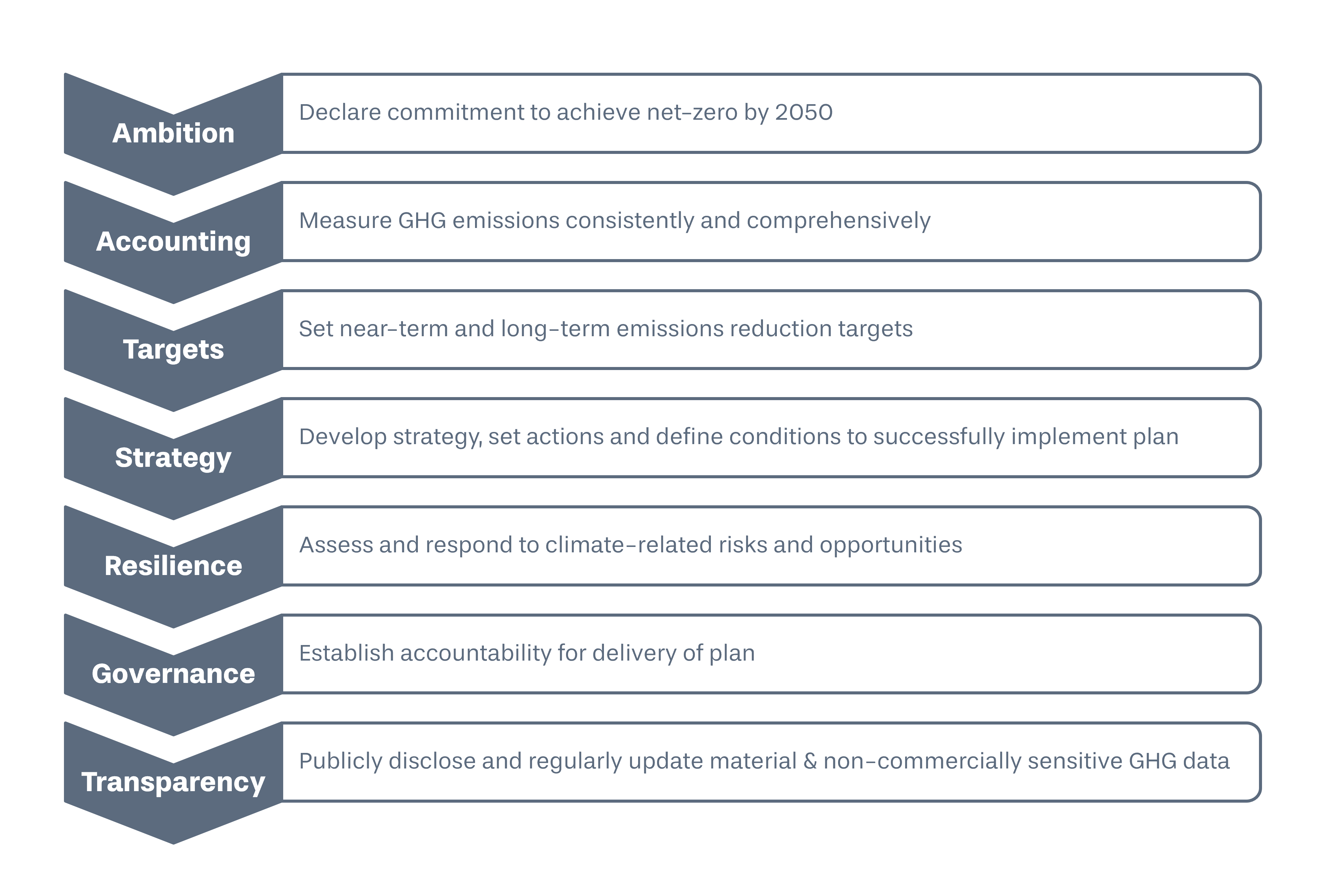
Under the current Production Standard, certified sites must demonstrate that they have a decarbonisation roadmap aligned with an existing model. However, the WG and TAG agreed that many of these models have not been updated in recent years and no longer reflect technological, economic, or policy realities. As a result, they risk undermining rather than strengthening transition planning. The revised approach moves away from a prescriptive reliance on external models and instead proposes to introduce an explicit requirement for a climate transition plan at the corporate and site level.
A participant from EMSTEEL, a ResponsibleSteel member and certified site, commented, “Revising the ResponsibleSteel Standard is an important step in strengthening the steel sector’s collective transition journey. The process provides members with a valuable opportunity to contribute practical insights, share operational experience, and help shape a standard that is both ambitious and implementable. ResponsibleSteel has done an excellent job in creating an inclusive and transparent revision process, encouraging constructive dialogue among members and ensuring diverse industry perspectives are reflected in the development of a stronger and more credible framework.”

What’s proposed to change in the Production Standard?
The proposed revisions strengthen and connect key elements of Principle 10, with a clearer and more coherent architecture across corporate and site levels.
Key improvements include:
- Quantitative, time-bound emissions reduction targets, covering Scope 1 and 2 emissions and material Scope 3 emissions
- Stronger links between corporate- and site-level planning, ensuring that corporate ambition translates into real investment decisions and on-the-ground transformation
- Improved intensity-based disclosures to support comparability, directly aligned with ResponsibleSteel’s broader harmonisation work
- Alignment with leading frameworks, such as IFRS S2 (International Financial Reporting Standards), while retaining flexibility for different regional and operating contexts
- Clearer guardrails for credibility, moving beyond temperature labels alone
There was strong agreement across the WG that clearer wording and guidance are essential to support consistent interpretation and implementation by sites and auditors alike.
Connecting the dots between the Production Standard’s criteria
One of the most important outcomes of the revision process so far has been a clearer set of connections between criteria that, while related, have not previously been well integrated.
In the current Production Standard:
- Corporate transition planning (10.1) is weakly connected to climate-related financial disclosures (10.2)
- Site-level transition planning (10.5) is not sufficiently aligned with corporate-level strategies
- Public GHG emissions disclosure requirements (10.7.1) are limited, focusing mainly on a site’s medium-term reduction target
The proposed changes aim to address these gaps by:
- Requiring climate transition plans to include climate-related financial risks and opportunities, including dependencies that may impose structural barriers, planned changes to business models and strategy;
- Aligning corporate- and site-level planning approaches to reduce carbon leakage risks and ensure consistency across operating boundaries; and
- Strengthening public disclosure requirements to better support accountability, comparability, and progress tracking over time.
Flexibility, credibility, and the reality of steelmaking
The WG and TAG discussions also surfaced a shared understanding of the structural barriers currently slowing decarbonisation in the steel industry. These include:
- Limited technology maturity at scale
- Supply chain and infrastructure constraints
- Energy availability and cost
- Inconsistent or insufficient policy support
- Weak demand signals for low-emission steel
- Trade and competitiveness pressures
Given the long investment timelines and asset lifetimes involved, feasibility in the near term is particularly critical. As such, there was strong support for a flexible, disclosure-driven approach that pairs quantitative targets with qualitative indicators of progress, allowing ResponsibleSteel to uphold high ambition and transparency while recognising that steelmakers cannot address systemic barriers alone.
As ResponsibleSteel’s Decarbonisation Analyst, Melav Salih observed, “A robust climate transition plan must embed decarbonisation within broader strategic and financial planning. It needs to recognise that steelmakers’ transition pathways are shaped by long-lived assets, billion-dollar investment decisions, and dependencies on an ecosystem of change that includes energy systems, infrastructure, policy, and markets.”
Looking ahead
As the Paris Agreement enters its second decade, and as legal, financial, and societal expectations on climate accountability intensify, ResponsibleSteel’s role as a credible, independent standard for the steel industry has never been more important.
By strengthening climate transition planning across corporate strategy, site-level action, financial disclosure, and public reporting, revisions to the Production Standard aim to support steelmakers in navigating this transition transparently and at pace.
Together with parallel work on harmonisation and disclosure alignment, the revisions to climate transition planning requirements represent a critical step toward turning climate commitments into credible, comparable, and feasible transition pathways for the global steel industry.
Learn more about the revision of ResponsibleSteel’s International Production Standard here.

Reflections from China: ResponsibleSteel's CEO Annie Heaton discusses building interoperability across global standards
Interoperability: Building a bridge between global standards
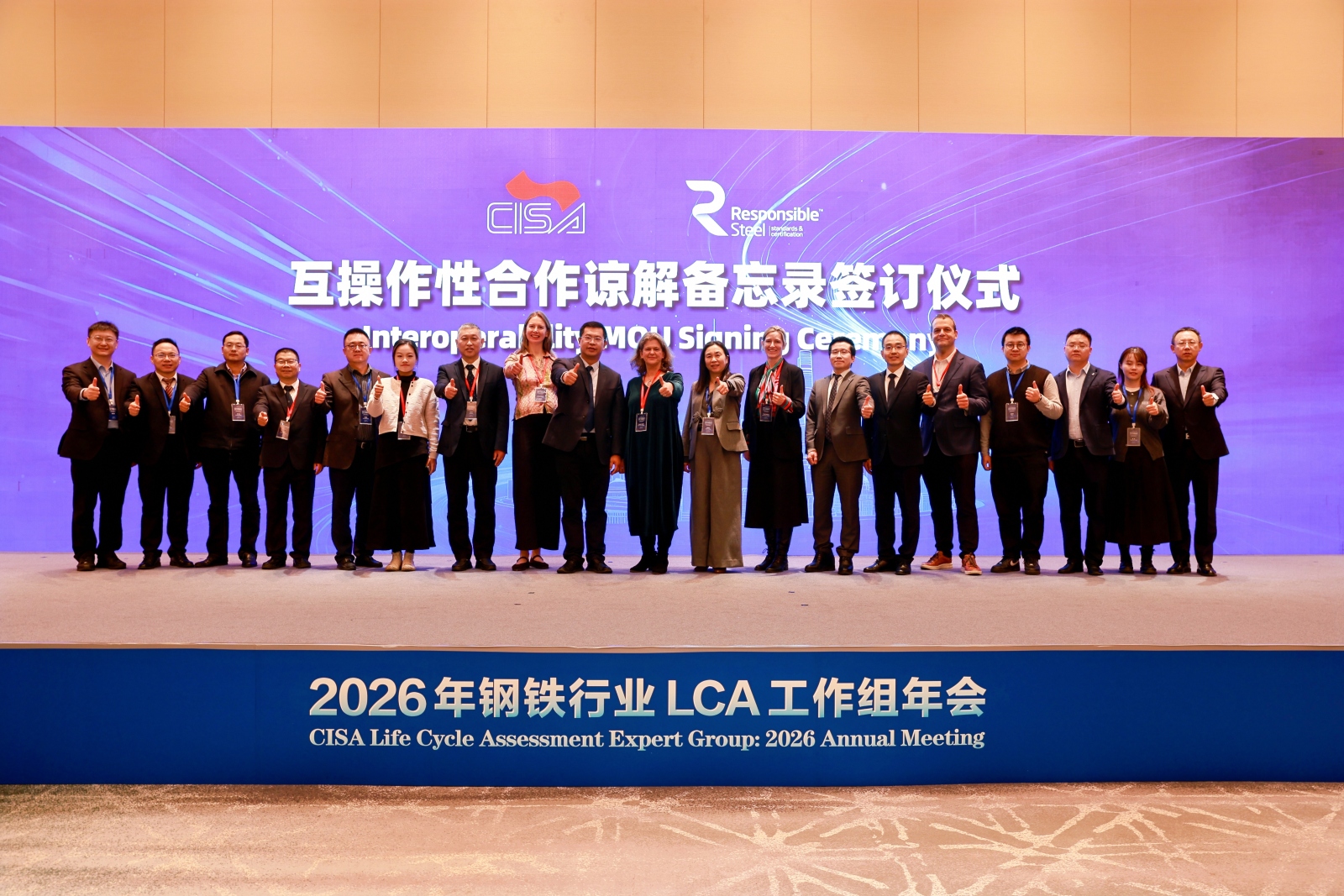
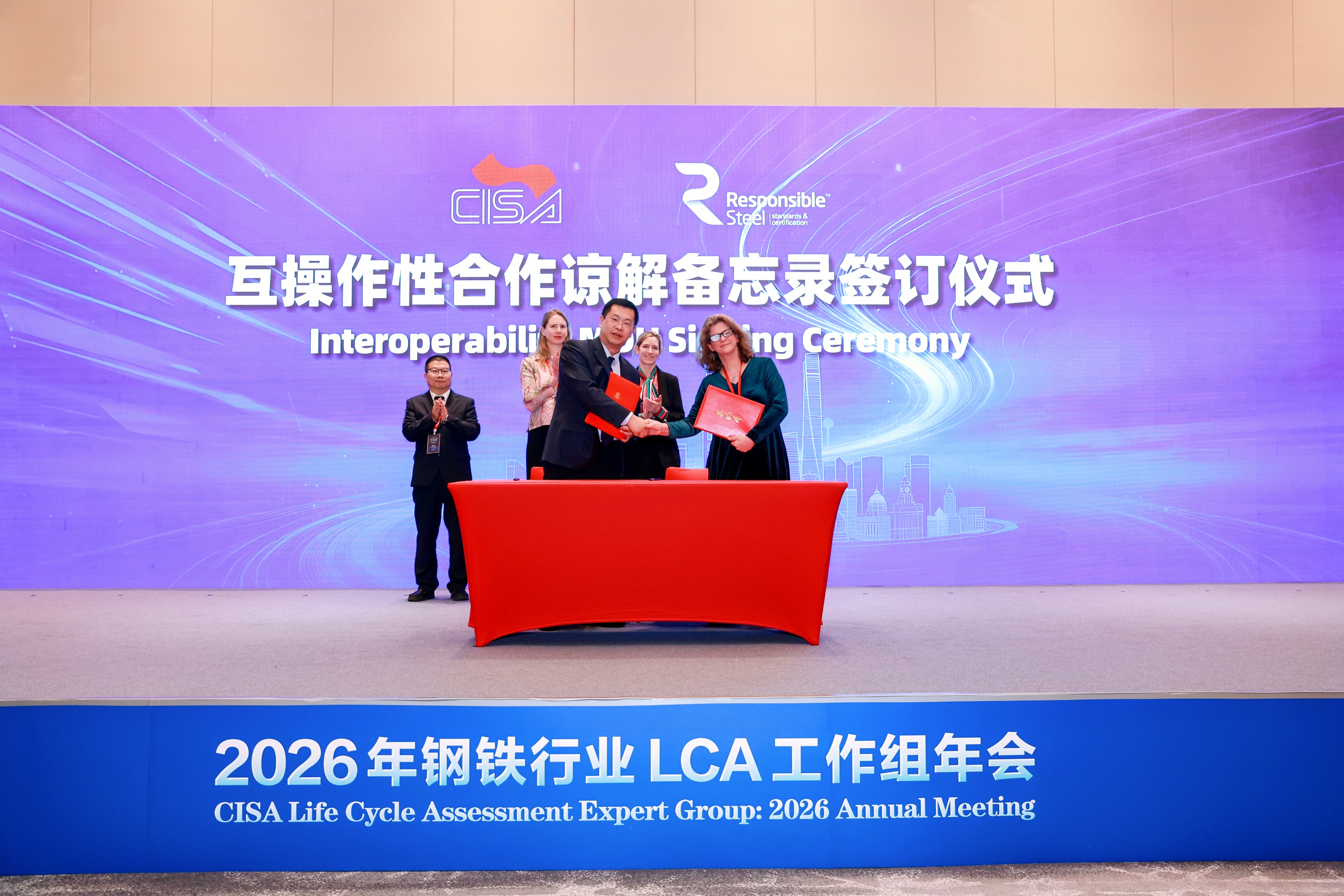
ResponsibleSteel's quest for a coherent market for decarbonised steel in 2026 got off to a constructive start this month. Following the announcement of our landmark agreements with the Chinese Iron and Steel Association (CISA) and the Low Emission Steel Standard (LESS) at COP30, ResponsibleSteel was in China in January to kick off our work on interoperability with CISA. This work in China complements our parallel project with Brussels-based LESS.
The goal? To build trusted data and claims on decarbonisation.
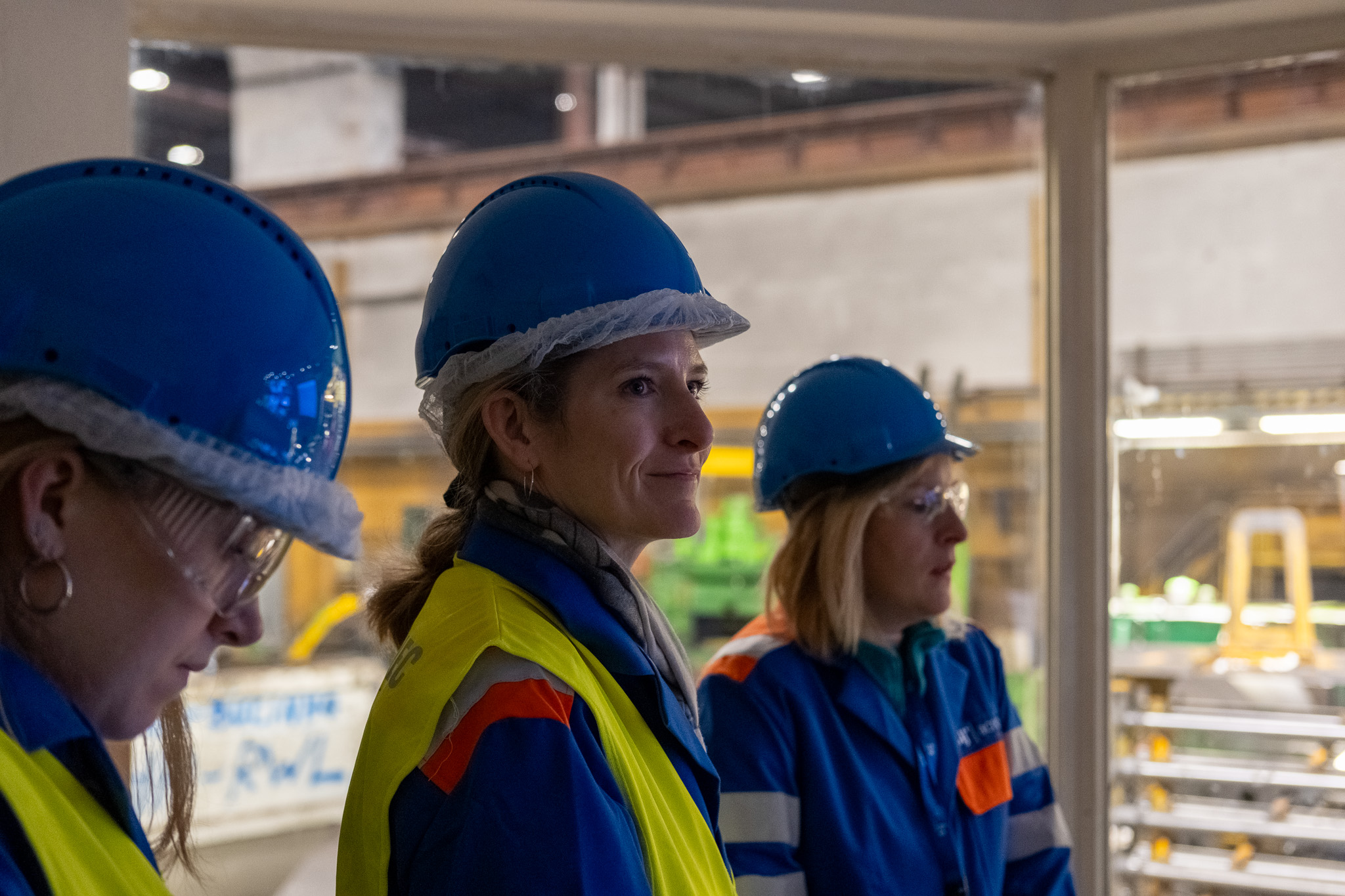
During our trip, our Director of Programmes, Amy Jackson, our Decarbonisation Lead, Alli Devlin, and myself had the opportunity to:
- Present to the Chinese steel value chain our C2F (China's low-carbon emission steel standard) interoperability MoU at CISA's annual LCA conference.
- Connect with our Chinese members, including SKF, World Resources Institute (WRI), Climate Group, VAMA (Valin ArcelorMittal Automotive JV), Penglai Dajin, and some of our certification bodies working in China, including Afnor and China Quality Certification Centre (CQC).
- Get to work on our C2F-ResponsibleSteel Interoperability Project, structuring the discussions around our Framework for Credible Interoperability.
- Visit the 15mtpa Zhanjiang steel plant, where a new DRI-EAF line was launched in Dec 2025. This has involved the production to date of iron reduced with hydrogen in a 1mtpa DRI plant. Whilst this is currently produced from refined coke oven gas, the project is a hugely significant demonstration of the potential to produce hydrogen-based DRI at an industrial scale.
.jpg)
What do ResponsibleSteel's interoperability projects look like in practice?
In short, interoperability means measuring emissions using rules that are as aligned as possible, and recognising the differences, to enable comparison on a like-for-like basis. Imagine the benefit this would bring for anyone wanting to distinguish what good looks like, for example, procurement teams, investors, and policymakers.
But making interoperability work in practice requires a lot more if we want a reliable, credible and sustainable system that generates high-quality, comparable data.
We've outlined the key components of this in our Framework for Credible Interoperability, which will inform both our work with LESS and CISA:
- Aligned GHG accounting rules
- A reliable calculation tool
- A robust assurance mechanism
- Credible claims protocols
- Good governance, oversight and resourcing
- Appropriate data management
- Strong operations management systems
This is how markets are built: first with innovation, then with the necessary rules and systems that enable good information to flow – so that steel buyers can understand, investors can evaluate, and steelmakers can compete, based on emissions performance that everyone can trust.


March 2024 Newsletter
Please view the March 2024 newsletter by clicking the link below:


What’s coming up for ResponsibleSteel?
We have some exciting developments on the horizon which we’re keen to share with our members and stakeholders. Here are a few key moments to look out for in the next six months.
Standards Development
Public Consultations
Two important public consultations started in mid-March – one on Principle 3 (responsible sourcing) of the International Standard, and one on a new draft Downstream Chain of Custody Standard. Learn more about the consultations here or visit our Standards Development page to submit your feedback.
Members and wider stakeholders can also join a webinar on 26 March to find out more about the consultations. Register here.
International Standard V2.1
We’re busy working to produce Version 2.1 of the ResponsibleSteel International Standard by mid-May. This will provide the green light for steelmakers in the race to achieve the first ResponsibleSteel Certified Steel – and for downstream businesses to line up to procure Certified Steel products.
Upcoming Publications
Progress Report
ResponsibleSteel and its members have come a long way since its inception. In Q2, we will publish our first annual Progress Report using data on the scale and the impacts of certification to show progress towards our mission.
Certification Pathway to Net Zero by 2050
Later in Q2 we’re aiming to publish our analysis on the extent of transition progress required over time for the steel sector to fulfil its Paris Agreement obligations. Not another trajectory, but a demonstration of net zero pathways through a new lens – that of the four ResponsibleSteel Progress Levels.
Upcoming Events
ResponsibleSteel will be participating in the SteelZero events in Washington D.C. on 24 April, Seoul on 21 May, and Brussels on 19 June, and we are looking at how to maximise value for our members during these events – more details to come shortly.
The ResponsibleSteel AGM will be held online on 22 May.
We will be participating in and running many more events during the year, and will publicise these as soon as more details are confirmed. In particular, we will also be engaging with stakeholders in India, Japan and Korea throughout the year to deepen our presence within these important markets.
Webinar Series
We will be offering members a set of ‘Meet the Expert’ webinars covering topics such as just transition, biodiversity, targets, downstream demand and much more. If you have a suggestion for a topic that you would like us to cover, please contact our new Head of Membership and Communications, Joe Woodruff.
ResponsibleSteel Groups
Members can also get involved with one of our groups:
Steelmakers Reference Group
The Steelmakers Reference Group is an opportunity for member steelmakers to engage in technical discussions around the Standards and Assurance Programme. Contact Rodrigo de Prospero, our Head of Standards and Assurance, for more information.
Civil Society Reference Group
The Civil Society Reference Group provides a forum to share ResponsibleSteel’s latest plans with civil society members and to seek their engagement, input and feedback. Contact Shiv Kumar, our Development and Innovation Director, for more information.
Finance Working Group
An opportunity for the finance sector and steel industry to come together to discuss how to effectively use the ResponsibleSteel Standard as a verification tool to raise capital to accelerate steel decarbonisation. Contact Shiv Kumar, our Development and Innovation Director, for more information.
Find out more
If you have any questions about the above, or suggestions for events, publications or webinars, please do get in contact with our new Head of Membership and Communications, Joe Woodruff.

ResponsibleSteel Launches Public Consultations on New Downstream Chain of Custody Standard and Revised Responsible Sourcing Requirements
Today, ResponsibleSteel has launched two public consultations as part of our ongoing standards development work. We are inviting feedback on a draft of a new downstream chain of custody standard, as well as revisions to the ResponsibleSteel International Standard’s Principle 3: Responsible Sourcing of Input Materials.
Downstream Chain of Custody Standard
Developing a downstream chain of custody standard is crucial to building demand for ResponsibleSteel certified steel. This initial draft has been developed following extensive discussions with our downstream claims and chain of custody member working group between December 2022 and July 2023. The working group concluded with two recommendations:
- ResponsibleSteel should provide a downstream chain of custody standard based on physical traceability with full segregation (i.e. all ResponsibleSteel-certified steel products would be made with 100% certified steel).
- The downstream chain of custody standard would be accompanied by a complementary ‘Book & Claim’ system that would create value for ResponsibleSteel certified steelmakers and downstream steel users, based on claims that do not require the physical tracking of ResponsibleSteel certified steel through the supply chain. This will be developed in future following additional research and consultation with members and stakeholders.
Acting on the first of these recommendations, ResponsibleSteel has drafted a downstream chain of custody standard based on physical traceability with full segregation which we are now inviting stakeholders to share their feedback on. This 60-day public consultation is open from March 15th to May 14th. A second public consultation will be held later this year.
Get involved: If you would like to give feedback on the first draft of ResponsibleSteel’s Downstream Chain of Custody Standard, please visit our Standards Development page. Submissions will be open until May 14th, 2024, 23:59 GMT.
Additionally, ResponsibleSteel will be pilot-testing the downstream chain of custody standard to test its in-practice applicability. If your organisation is interested in carrying out a pilot test at one or more of your sites, please contact us at standards@responsiblesteel.org.
Principle 3: Responsible Sourcing of Input Materials
In September 2022, we launched the ResponsibleSteel International Standard V2.0. In addition to the core requirements steelmaking sites can be audited against, Version 2.0 introduced additional progress-level requirements for the responsible sourcing of input materials (Principle 3) and climate change and greenhouse gas emissions (Principle 10).
During the 12-month test phase of Version 2.0, ResponsibleSteel received requests for revisions to Principle 3. Some of these requests would involve significant changes to the requirements and throughout January and February 2024, a member working group was convened to understand the issues, provide ideas, and test and improve proposals for revision. The working group brought together civil society, steelmaking and mining companies as well as traders and other member organisations. The presentations and discussion notes of these working group meetings can be found here.
The proposed revisions to Principle 3 are open for public consultation for 30 days and include the introduction of an on-ramp transitional period into the specification of the materials sourcing Progress Level 1 in criteria 3.2 and 3.4, as well as some proposed corresponding changes to guidance and annexes to the requirements.
Following the consultation, ResponsibleSteel will review any feedback before seeking approval for an urgent revision to Principle 3 from the ResponsibleSteel Board following the Urgent Revision Mechanisms specified in our International Standards Development Procedures. Final revisions will be incorporated in Version 2.1 of the ResponsibleSteel International Standard later this year.
Get involved: If you would like to give feedback on the revisions to the ResponsibleSteel International Standard’s Principle 3: Responsible Sourcing of Input Materials, please visit our Standards Development page. Submissions will be open until April 14th 2024 23:59 GMT.
Find Out More
Join us on Tuesday 26 March, 12:00-14:00 (GMT) for a member and stakeholder webinar to find out more about the consultations. Register here.
If you have any questions regarding either of these public consultations, please contact the ResponsibleSteel Secretariat at standards@responsiblesteel.org.


Tata Steel Earns Two New ResponsibleSteel Certifications
Following the certification of the Jamshedpur site in 2022, Tata Steel has achieved certification of its Kalinganagar and Meramandali sites, marking a significant next step in Tata’s sustainability journey.
Over 90% of Tata’s steel production in India is now covered by ResponsibleSteel site certification. Meramandali produces 5.6 mt annually while Kalinganagar produces around 3.3 mt. Collectively the sites employ over 46,000 workers and contractors.
Annie Heaton, CEO of ResponsibleSteel commented, “With the audit process for these two new site certifications, Tata Steel has demonstrated its commitment to openly progress its social and environmental responsibilities. During the audits, both sites’ GHG emissions reduction strategies and water stewardship programmes were highlighted for their robustness. The ResponsibleSteel Standard goes further, beyond managing a site’s environmental impacts, and aims to support sites to ensure the wellbeing of the site’s workers and local communities.”
Annie continued, “Tata Kalinganagar has demonstrated continued determination to work with the community following a history of protests and the relocation of local people, working to provide quality housing and improved health and education through the Tata Steel Medica Hospital and the Loyola School. Likewise, interviews with a range of external stakeholders at the Meramandali site pointed to the commitment of the site to the community and workers reported improved health and safety procedures following Tata’s acquisition of the site. Steelmaking is a complex and often hazardous process, and the site and the company’s commitment to continuously bettering health and safety to mitigate future risk is well noted. Overall, the auditors were encouraged by the continued progress both sites are committed to making through the ResponsibleSteel certification programme.”
Both sites set up steering committees to drive the implementation of the ResponsibleSteel Standard and up robust internal and external stakeholder mechanisms to address grievances.
T. V. Narendran, CEO & MD of Tata Steel, said, “The ResponsibleSteel Certification for our sites is a testament to Tata Steel’s unwavering commitment to sustainability. It reflects our proactive approach towards addressing the evolving challenges of the steel industry and shaping a better tomorrow. I sincerely appreciate the ResponsibleSteel team, the auditors, the assurance panel, and the team at Tata Steel for their efforts in achieving this milestone. We are progressing well towards our target of certifying all our existing steelmaking sites in India by 2025.”
View the public audit summaries here.

ArcelorMittal Dofasco Achieves ResponsibleSteel Certification
Following a successful audit completed by SRI Quality System Registrar (USA) ArcelorMittal Dofasco has become the first ArcelorMittal site in North America to achieve ResponsibleSteel certification against V1.1 of our Standard.
ArcelorMittal Dofasco employs over 5000 workers and contractors and actively engages with the local community through its Community Liaison Committee. The site has implemented strong management systems in line with the ResponsibleSteel Standard, particularly in the areas of health and safety, biodiversity and water management.
Annie Heaton, CEO of ResponsibleSteel commented, “Becoming the first steel site in Canada and the second in North America to achieve certification against the ResponsibleSteel International Standard is an enormous milestone. Having been founded over a century ago, this site has a long history within the community. This certification is a real testament to the dedication of the site’s workers and leadership, and their willingness to invest in a responsible future. Today, ArcelorMittal Dofasco produces over 100 different grades and around 4.5 million tons of steel and has taken the initial steps to become the first site in North America to transition from coal to DRI by 2028, reducing emissions by around 3 million tonnes. Alongside this, the site has used the ResponsibleSteel Standard to strengthen its management systems and environmental action plans. We look forward to working with Dofasco as it progresses on all fronts in the years to come.”
In 1954, Dofasco became the first site in North America to start using a basic oxygen furnace. Now, the site is working towards becoming the first integrated site in North America and one of the first globally to transition from coal. The removal of coal by 2028 will result in around a 60% decrease in emissions, keeping the site on track for net-zero by 2050.
Commenting on the certification, Ron Bedard, ArcelorMittal Dofasco President and CEO said: “Earning this ResponsibleSteel certification is a commitment to all our stakeholders. Increasingly, our customers have expectations that the materials they work with are produced by sites that respect the highest social and environmental standards. Similarly, our employees, suppliers, governments, non-governmental organizations (NGOs), community partners and members have the same expectations around responsibility, transparency and accountability. Our certification is a big first step and from here we will look to drive continuous improvement.”
ArcelorMittal continues to drive responsible practices through certification. Dofasco joins over 40 ArcelorMittal certified sites across Europe and South America.
Read the public summary here.

January 2024 Newsletter
Please view the January 2024 newsletter by clicking the link below:

Industeel Achieves ResponsibleSteel Certification
Following a 12-month audit process conducted by AFNOR, Industeel has achieved certification against the ResponsibleSteel International Standard. Part of ArcelorMittal, the cluster of sites manufactures stainless, carbon and low alloy specialty steel heavy plates.
Industeel operates three EAFs with production capacity spread across Industeel Belgium, Industeel Creusot and Industeel Loire. The sites, all three covered by ResponsibleSteel certification, employ over 2000 workers and over 500 contractors and supply customers in over 40 countries.
Commenting on the certification, Alex Nick, CEO of Industeel, said: “ResponsibleSteel is critical to our goal of striving for leadership in environmental excellence. We have one of the smallest carbon footprints in the industry and strive to adopt best practices in terms of ethics, governance, community engagement and corporate citizenship. This certification reinforces our commitment to sustainability since it is part of our mission to offer the market steel solutions produced in a responsible manner.”
Following several technical visits and extensive discussions with external stakeholders including officials, neighbours, associations, subcontractors, employees and unions, the cluster of sites implemented the necessary adjustments before earning certification. Industeel has committed to reducing CO2 emissions by 35% by 2030 against a 2018 baseline.
Annie Heaton, CEO of ResponsibleSteel, commented, “We’re delighted that ArcelorMittal’s Industeel business division, comprising Industeel Belgium, Industeel Creusot and Industeel Loire, has achieved site certification against the ResponsibleSteel International Standard. This achievement underlines ArcelorMittal’s continued dedication to show leadership in sustainable steel production in every region in which they operate. The certification of these sites fills another gap in the value chain, paving the way for a responsible supply chain from the furnace to the end customer.”
Read the public audit summary here.

December 2023 CEO Letter
Please view the December 2023 CEO Letter by clicking the link below:

Closer cooperation on international standards hailed at COP28 as foundational to the steel transition
Much of the coverage of COP28 focused on whether the negotiations would agree on a form of phase out of fossil fuels but for those on the ground, also attracting attention were measures to drive the decarbonisation of heavy industry, some of the most challenging aspects of the net zero transition ahead. Across all the industry discussions at COP28, from steel to cement to aluminium, the foundational role of harmonised international standards has been a key feature.
Our CEO, Annie Heaton, and Development and Innovation Director, Shivakumar Kuppuswamy, were both on the ground in Dubai last week for some pivotal announcements that demonstrate how progress at COP is driven not only through negotiations on the agreement but between state and non-state actors in the months leading up to the COP.
The Steel Standards Principles were the first to be launched. To prevent the fragmentation of global trade and to enable effective markets in low emissions steel, we need common definitions of decarbonisation progress based on common measurement standards. The Principles mark a major milestone on this road. At the official launch as part of the World Climate Action Summit on December 1st, Annie spoke alongside World Trade Organization Director-General Ngozi Okonjo-Iweala on the need for harmonised or at least interoperable standards to create a level playing field among the diverse players within the steel industry, to underpin new markets not only for near zero steel but also for the progress steelmakers achieve on the road to near zero. By the time of Industry Day on December 5th over 40 standard-setting bodies, international organisations, steel producers and industry associations, from the US to the Gulf, from India to China. At a celebration event hosted by WTO, Shiv spoke alongside representatives of other organisations pivotal to this initiative, including Worldsteel, UNIDO, the IEA, and the Breakthrough Agenda.

Also featuring on Industry Day was the official launch of the Climate Club, an intergovernmental forum designed to tackle industry decarbonisation with a focus on developing and emerging economies. Launched by ministers from the Chilean and German governments, Annie spoke as part of a distinguished panel of representatives from Climate Club members, ministers from Germany, Chile, Indonesia and Norway. The Climate Club aims to foster the necessary global collaboration between governments on the technology, financial and standards instruments and includes a Matchmaking Platform for priority needs. Already, 35 nations and the EU have signed on to support the Club.
While ambition levels may not differ between developed and developing countries among private sector players, Annie pointed out both the greatest opportunity for developing economies – the new map of resources needed for green ironmaking – and the greatest challenge, which lies in the prohibitive cost of the transition. Changing the economics of steelmaking can come in the form of carbon pricing mechanisms, lead markets, tax incentives or funding support, together with a strong and aligned demand signal. While the lion’s share of the funding will come from the private sector, two actions from the public sector can pave the way by reducing the risks: multilateral lending, and green public procurement. To underpin both of these, we need globally aligned definitions.
Financial investors echoed this need. Establishing a minimum standard and then raising the bar over time was a workable approach to steel decarbonisation highlighted at an event on Engaging the Korean Capital Market for Net Zero Alignment organised by SFOC.
India’s growth and transition in particular featured in multiple events at the COP. Hydrogen demonstration projects are already underway in India, but steelmakers are acutely aware of the very real challenges that exist – the rapid growth of steel demand, the new infrastructure required for new technologies, the constraints on land, and the slow commercialisation of the market for green steel. Speaking alongside steel industry and civil society representatives at an event hosted by The Energy and Resources Institute (TERI), Mission Possible Partnership and Climate Catalyst, Shiv reiterated that India’s steel industry is poised at a critical moment needing policy, technology, and finance to drive near-zero steel production, and all these need to be founded on a common language to measure, report and verify progress.
The signs of rising demand for responsible products demonstrating decarbonisation progress are emerging. The Climate Group’s Steel Zero initiative said that 10 million tonnes of steel demand was poised among its members to drive the transition, many vocal about their readiness to pay a green premium. Meanwhile, the First Movers Coalition’s Near Zero 2030 Challenge is underway to help matchmake demand and supply side signals for transformative change. And on public procurement, Industrial Deep Decarbonisation Initiative members Canada, Germany, the United Kingdom and the United States announced their green procurement pledge, whilst the governments of Austria, Japan, and the United Arab Emirates have made a Statement of Intent to work towards key aspects of the Pledge.
A host of other new initiatives featured at the Steel Breakthrough roundtable on Industry Day: a ‘hydrogen hub’ agreed between the UK and Brazil, and a technical and financial cooperation between Sweden and India under LeadIT. Real headway has been made since COP27. But the Global Stocktake has highlighted the need for far more. We need to pick up the pace. Today there are just 5 near-zero projects committing to final investment decisions. The COP28 commitment to triple renewable energy by 2030 will make more projects possible. But there are many more pieces of the jigsaw to be matured.
The promise of more momentum across the heavy industry sectors came in the form of the Industry Transition Accelerator (ITA). Launched by COP28 President Dr Al Jaber, the ITA aims to speed up progress across sectors by identifying common instruments to drive policy, finance and technology to trigger new investments. Amid these very real signs of promise on driving transformative change to deliver near-zero steel, ResponsibleSteel reminds stakeholders of two observations we have made: firstly, that while 1.5C pathways require a significant take up of near-zero steel by 2030, the entire industry needs to make considerable progress by 2030, whether they operate with blast furnace or electric arc furnace assets. The step-by-step change that steelmakers can make today through investments in existing technology is also vital. The market must drive this by requiring steelmakers to achieve minimum levels of progress against internationally consistent and credible bands of performance, as well as by rewarding near-zero steel.

Secondly, because scrap is neither universally available nor sufficient in supply to cater for global steel demand, definitions of what is ‘green’ are precarious. It is vital we measure for purpose. Product carbon footprints that measure emissions alone will not drive the global decarbonisation of the industry. Annie highlighted this at an evening with CDP CEO Sherry Madera hosted by BCG. Unless we take a scrap-variable approach to defining progress to net zero, we will not drive real net reductions in global emissions. As the Climate Group puts it, “While we recognise that for some at COP there may be a temptation to push for a recycling-led approach, the reality is that we simply can’t afford to ignore the link between development, steel demand, and decarbonisation.” That means we need both product footprints and scrap variable levels of Progress.
Driving the transition away from unabated fossil fuels will require unprecedented effort from all sides: corporate leadership, government buy-in and public and private financing. We need stronger efforts to align demand signals, bold policy to change the economics of steelmaking and key interventions to mobilise the investments we need. And we need greater collaboration between countries to drive this globally, at scale, streamlined for maximum impact. At COP28, there were many signs that these elements are starting to materialise. Whether they will be enough, soon enough, is something we can all influence.

Public consultation launched on Principle 10 of the ResponsibleSteel International Standard, relating to Climate Change and Greenhouse Gas Emissions
ResponsibleSteel is committed to driving progress towards net zero. Today we have launched a public consultation on provisional interpretations of the ResponsibleSteel International Standard V2.0 and proposed revisions to Principle 10 relating to Climate Change and Greenhouse Gas Emissions.
ResponsibleSteel’s Progress Levels developed in consultation with our members and stakeholders, have been designed to reward advancement on the path to net zero, driving progress on a global scale. The suggested changes to Principle 10 represent an update to the threshold for Decarbonisation Progress Level 1 and also have implications for Levels 2 and 3.
Our approach to developing Progress Level 1 remains unchanged. It aims to:
- Represent a distribution of existing steel sites where approximately 50% sit ‘below’ the threshold, and
- Provide a slightly shallower gradient in order to incentivize the use of scrap globally to a greater extent, since today not all end-of-life scrap created is recovered.
Progress Level 4 is designed to align with the near-zero threshold of the International Energy Agency (2021) with Levels 2 and 3 providing regular points of progress on the journey from Level 1 to Level 4.
As part of the 12-month test phase, ResponsibleSteel conducted a detailed 9-month review of these Progress Levels using data provided by a working group of steelmakers and with the oversight of a multistakeholder Technical Advisory Group of independent experts in order to better meet our goals.
We are now seeking views from any organisation that considers itself a stakeholder in the way decarbonisation progress towards net zero steel is defined at site level, whether or not they are members of ResponsibleSteel.
Once complete, the secretariat will review feedback and seek approval from the ResponsibleSteel Board to make an Urgent Revision to Principle 10 of the Standard. Feedback to provisional interpretations shall also be reviewed and approved by the ResponsibleSteel Standards, Assurance and Claims Committee. We aim to publish our final revisions in Q1 2024.
Please note that we will also be reviewing the test phase results on Principle 3: Responsible Sourcing of Input Materials in 2024. ResponsibleSteel shall convene a series of member multistakeholder workshops commencing in December 2023 to further investigate the challenges and produce recommendations on whether revisions should be made to Principle 3 of the Standard. Please get in touch with us if you would like to participate.
Submissions for feedback on provisional interpretations and revisions to Principle 10 will be open until Monday, January 22nd 23:59 GMT. For more information and to submit feedback, please visit our Standard Development page.

Steel Standards Principles Launch at COP28
Today, ResponsibleSteel’s CEO, Annie Heaton spoke at a Business and Philanthropy Climate Forum roundtable on the first day of the COP28 UN Climate Change Conference in Dubai to launch the Steel Standards Principles.
The event, Sustainable Steel: Pioneering Low-Carbon Solutions, was hosted by WTO Director-General Ngozi Okonjo-Iweala who welcomed the endorsement by standard setting bodies, international organisations, steel producers and industry associations of a set of principles aimed at aligning how greenhouse gas emissions are measured in the steel sector.
The Steel Standards Principles recognise that the iron and steel sector accounts for approximately 8% of annual global greenhouse gas emissions and that these emissions will need to be reduced by at least 90% for the sector to play a credible role in achieving climate targets.
The Principles call for establishing common methodologies for measuring greenhouse gas emissions within the iron and steel sector in order to accelerate the near-zero transition.
Improving the transparency, interoperability, and mutual recognition of such methodologies can promote investment in, and adoption of, innovative near-zero emission technologies and products while easing trade frictions that arise from divergent and incompatible measurement standards.
At the roundtable, the Director-General expressed the WTO’s support, stating, “Fragmented and uncoordinated trade policies make it harder for the steel industry to decarbonize. They add uncertainty for producers, hamper cross-border movement of green technologies and inputs, and slow investments in clean technology.”
Furthermore, the Steel Standards Principles recognise that collaborative and constructive dialogue is needed across developed and developing countries as well as among governments, producers, industry associations and policymakers to refine the existing emissions standards landscape for steel.
Annie Heaton commented, “The diversity of standards for measuring steel carbon emissions makes assessing how one ton of steel compares to another extremely challenging. It obstructs the clarity we urgently need to drive clear market signals for decarbonization. The Steel Standards Principles establish the key foundations of a common framework that is needed for all climate-related steel standards, for example, transparent governance, multistakeholder participation, and effectiveness in driving the decarbonization of the industry globally. ResponsibleSteel has its foundations in such principles and we are delighted so many organizations have chosen to endorse the Principles that have been discussed further today.”
36 key steel producers, industry associations, standard setting bodies, international organizations and initiatives have endorsed the Steel Standards Principles which will be launched formally at COP28 on December 5th – Industry Day.
To view the full set of Principles, click here.
For more information please contact:
Savannah Hayes
Communications Manager
shayes@responsiblesteel.org
