

Strengthening climate transition planning: Revising the ResponsibleSteel Production Standard
Last year marked a decade since the signing of the Paris Agreement and six years since the launch of the ResponsibleSteel Production Standard. In that time, expectations on climate action have shifted dramatically. Global emissions continue to rise, and the 1.5°C warming threshold is now projected to be breached by 2034. To remain on a 1.5°C pathway, the Intergovernmental Panel on Climate Change (IPCC) indicates that global CO₂ emissions must fall by 45% by 2030 and reach net zero by 2050. Yet progress in the steel sector is lagging. According to the Mission Possible Partnership’s Global Project Tracker, only 9% of the required operational or committed near-zero steelmaking capacity was in place by the end of 2024.
Against a backdrop of rising global emissions and growing awareness of the consequences of inaction, ResponsibleSteel is undertaking a timely and necessary revision of its climate-related requirements, specifically criteria 10.1 (corporate commitment to the Paris Agreement), 10.2 (corporate climate-related financial disclosure), 10.5 (site-level emissions targets and planning), and 10.7.1 (GHG disclosure and reporting).
A collaborative revision process
From October to January, ResponsibleSteel convened five Working Group (WG) and Technical Advisory Group (TAG) meetings, bringing together 23 representatives from 15 member organisations across certification bodies, civil society, steelmakers, and the wider steel value chain.
As a participant from SteelWatch noted during the process, “Having a diverse group of members involved in the revision process of the standard helps to achieve a balance between what steelmakers deem feasible and where the standard needs to set the bar to trigger ambitious action. ResponsibleSteel has done well navigating and drawing on different perspectives, turning them into concrete proposals that can be submitted for the next steps of the revision process.”
Three guiding principles framed these discussions:
- Ambition: ensuring alignment with global climate goals and science-based pathways
- Feasibility: recognising real-world constraints, particularly in the near term
- Simplicity: avoiding unnecessary complexity while improving clarity and accountability
A key theme that emerged was the foundational importance of credible transition plans that move beyond aspiration and, at the same time, are grounded in realistic assumptions about technology readiness, capital investment cycles, and enabling conditions. As noted by SteelWatch, “Aligning corporate- and site-level requirements is essential in ensuring that top-level corporate ambition and targets translate into actual investment decisions today, and subsequent material transformation and emissions reductions on the ground.”
Moving beyond outdated decarbonisation roadmaps
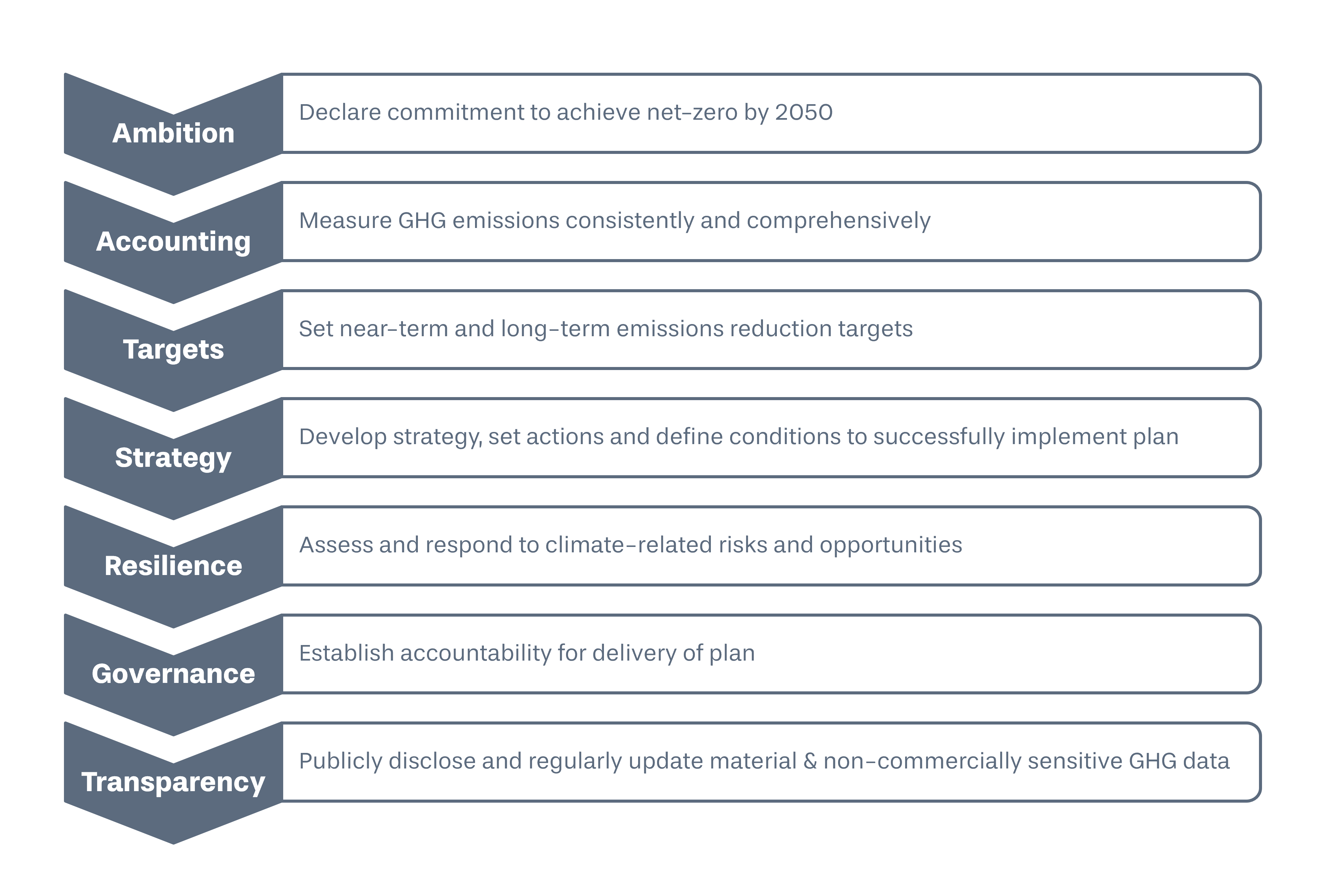
Under the current Production Standard, certified sites must demonstrate that they have a decarbonisation roadmap aligned with an existing model. However, the WG and TAG agreed that many of these models have not been updated in recent years and no longer reflect technological, economic, or policy realities. As a result, they risk undermining rather than strengthening transition planning. The revised approach moves away from a prescriptive reliance on external models and instead proposes to introduce an explicit requirement for a climate transition plan at the corporate and site level.
A participant from EMSTEEL, a ResponsibleSteel member and certified site, commented, “Revising the ResponsibleSteel Standard is an important step in strengthening the steel sector’s collective transition journey. The process provides members with a valuable opportunity to contribute practical insights, share operational experience, and help shape a standard that is both ambitious and implementable. ResponsibleSteel has done an excellent job in creating an inclusive and transparent revision process, encouraging constructive dialogue among members and ensuring diverse industry perspectives are reflected in the development of a stronger and more credible framework.”

What’s proposed to change in the Production Standard?
The proposed revisions strengthen and connect key elements of Principle 10, with a clearer and more coherent architecture across corporate and site levels.
Key improvements include:
- Quantitative, time-bound emissions reduction targets, covering Scope 1 and 2 emissions and material Scope 3 emissions
- Stronger links between corporate- and site-level planning, ensuring that corporate ambition translates into real investment decisions and on-the-ground transformation
- Improved intensity-based disclosures to support comparability, directly aligned with ResponsibleSteel’s broader harmonisation work
- Alignment with leading frameworks, such as IFRS S2 (International Financial Reporting Standards), while retaining flexibility for different regional and operating contexts
- Clearer guardrails for credibility, moving beyond temperature labels alone
There was strong agreement across the WG that clearer wording and guidance are essential to support consistent interpretation and implementation by sites and auditors alike.
Connecting the dots between the Production Standard’s criteria
One of the most important outcomes of the revision process so far has been a clearer set of connections between criteria that, while related, have not previously been well integrated.
In the current Production Standard:
- Corporate transition planning (10.1) is weakly connected to climate-related financial disclosures (10.2)
- Site-level transition planning (10.5) is not sufficiently aligned with corporate-level strategies
- Public GHG emissions disclosure requirements (10.7.1) are limited, focusing mainly on a site’s medium-term reduction target
The proposed changes aim to address these gaps by:
- Requiring climate transition plans to include climate-related financial risks and opportunities, including dependencies that may impose structural barriers, planned changes to business models and strategy;
- Aligning corporate- and site-level planning approaches to reduce carbon leakage risks and ensure consistency across operating boundaries; and
- Strengthening public disclosure requirements to better support accountability, comparability, and progress tracking over time.
Flexibility, credibility, and the reality of steelmaking
The WG and TAG discussions also surfaced a shared understanding of the structural barriers currently slowing decarbonisation in the steel industry. These include:
- Limited technology maturity at scale
- Supply chain and infrastructure constraints
- Energy availability and cost
- Inconsistent or insufficient policy support
- Weak demand signals for low-emission steel
- Trade and competitiveness pressures
Given the long investment timelines and asset lifetimes involved, feasibility in the near term is particularly critical. As such, there was strong support for a flexible, disclosure-driven approach that pairs quantitative targets with qualitative indicators of progress, allowing ResponsibleSteel to uphold high ambition and transparency while recognising that steelmakers cannot address systemic barriers alone.
As ResponsibleSteel’s Decarbonisation Analyst, Melav Salih observed, “A robust climate transition plan must embed decarbonisation within broader strategic and financial planning. It needs to recognise that steelmakers’ transition pathways are shaped by long-lived assets, billion-dollar investment decisions, and dependencies on an ecosystem of change that includes energy systems, infrastructure, policy, and markets.”
Looking ahead
As the Paris Agreement enters its second decade, and as legal, financial, and societal expectations on climate accountability intensify, ResponsibleSteel’s role as a credible, independent standard for the steel industry has never been more important.
By strengthening climate transition planning across corporate strategy, site-level action, financial disclosure, and public reporting, revisions to the Production Standard aim to support steelmakers in navigating this transition transparently and at pace.
Together with parallel work on harmonisation and disclosure alignment, the revisions to climate transition planning requirements represent a critical step toward turning climate commitments into credible, comparable, and feasible transition pathways for the global steel industry.
Learn more about the revision of ResponsibleSteel’s International Production Standard here.

Reflections from China: ResponsibleSteel's CEO Annie Heaton discusses building interoperability across global standards
Interoperability: Building a bridge between global standards
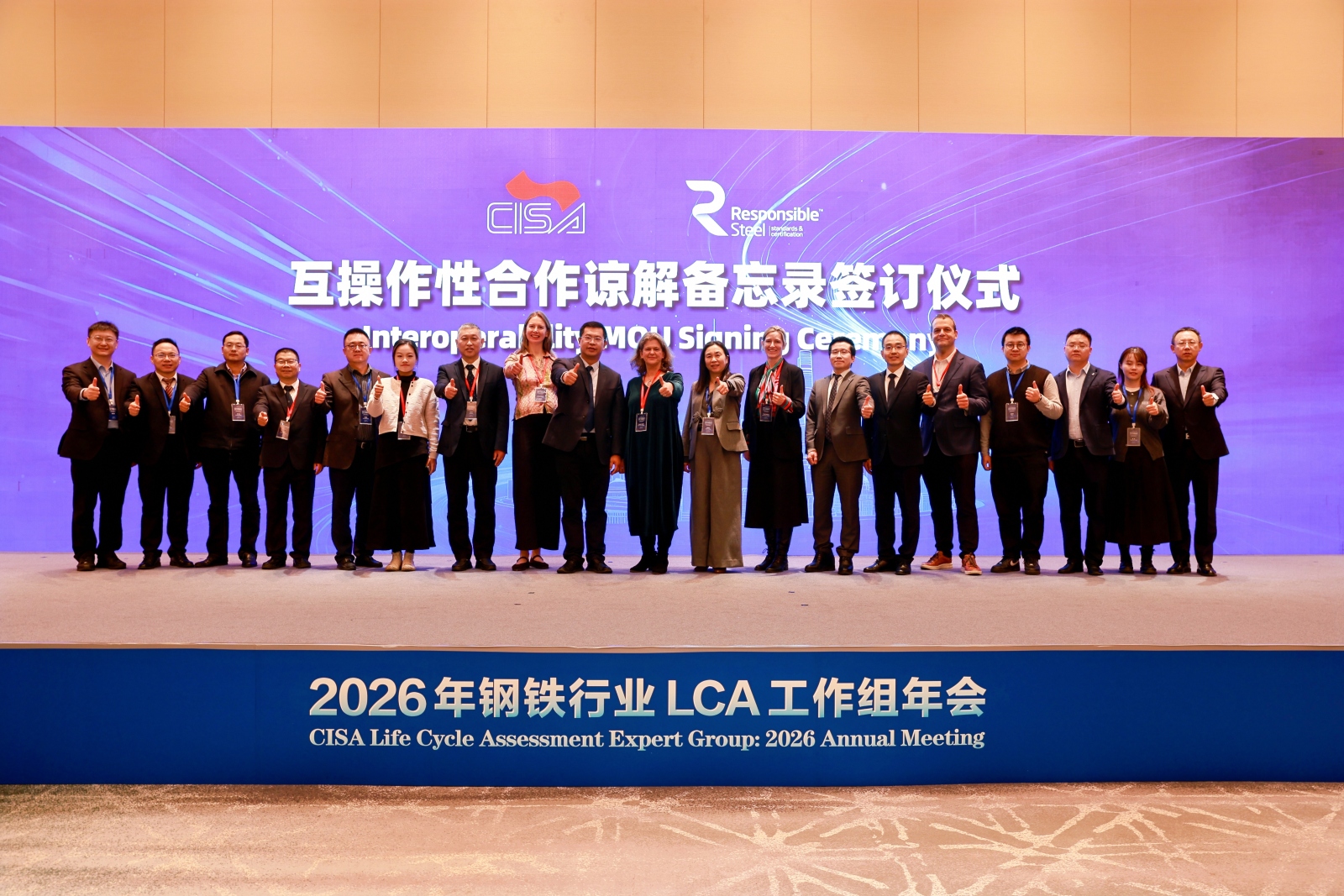
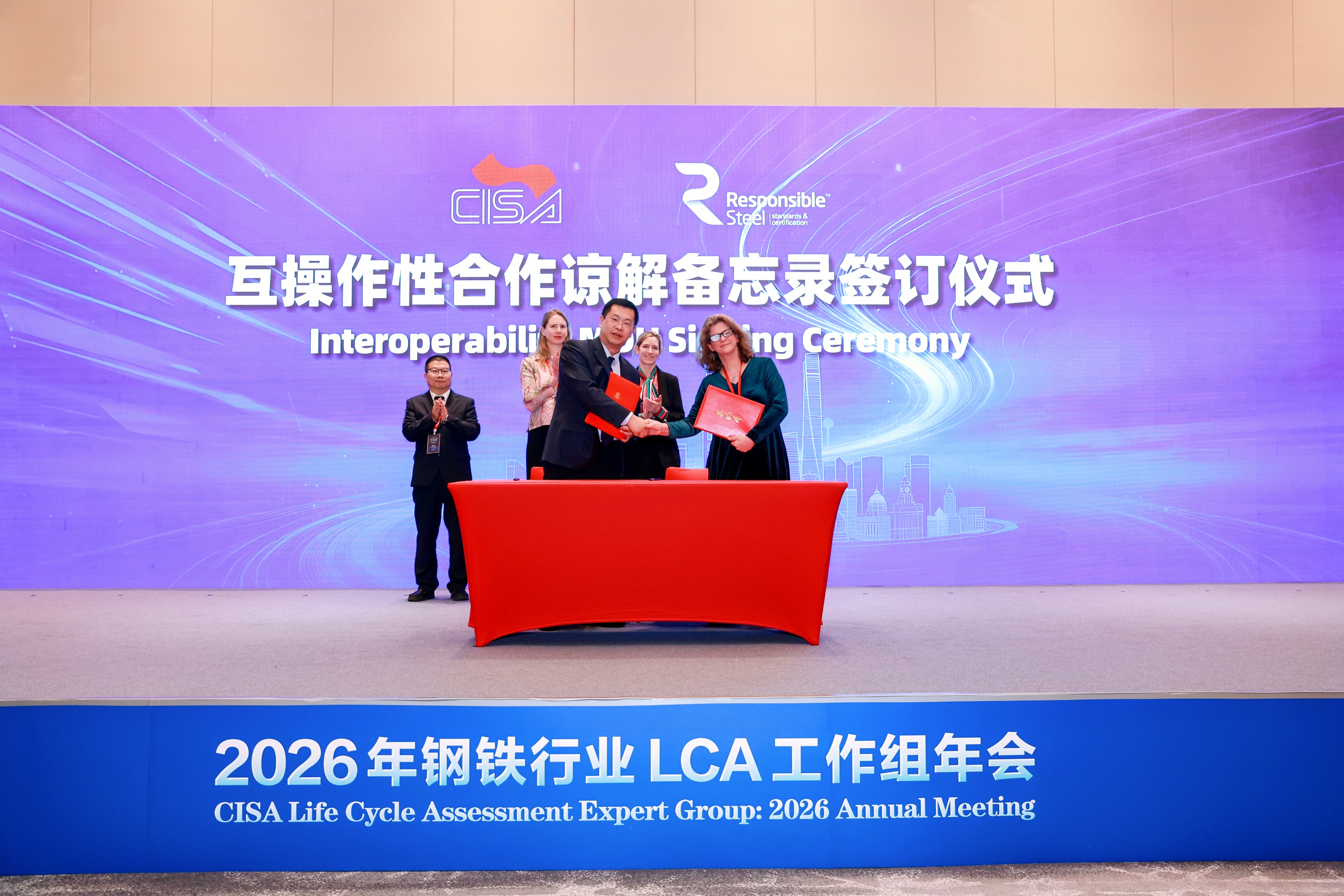
ResponsibleSteel's quest for a coherent market for decarbonised steel in 2026 got off to a constructive start this month. Following the announcement of our landmark agreements with the Chinese Iron and Steel Association (CISA) and the Low Emission Steel Standard (LESS) at COP30, ResponsibleSteel was in China in January to kick off our work on interoperability with CISA. This work in China complements our parallel project with Brussels-based LESS.
The goal? To build trusted data and claims on decarbonisation.
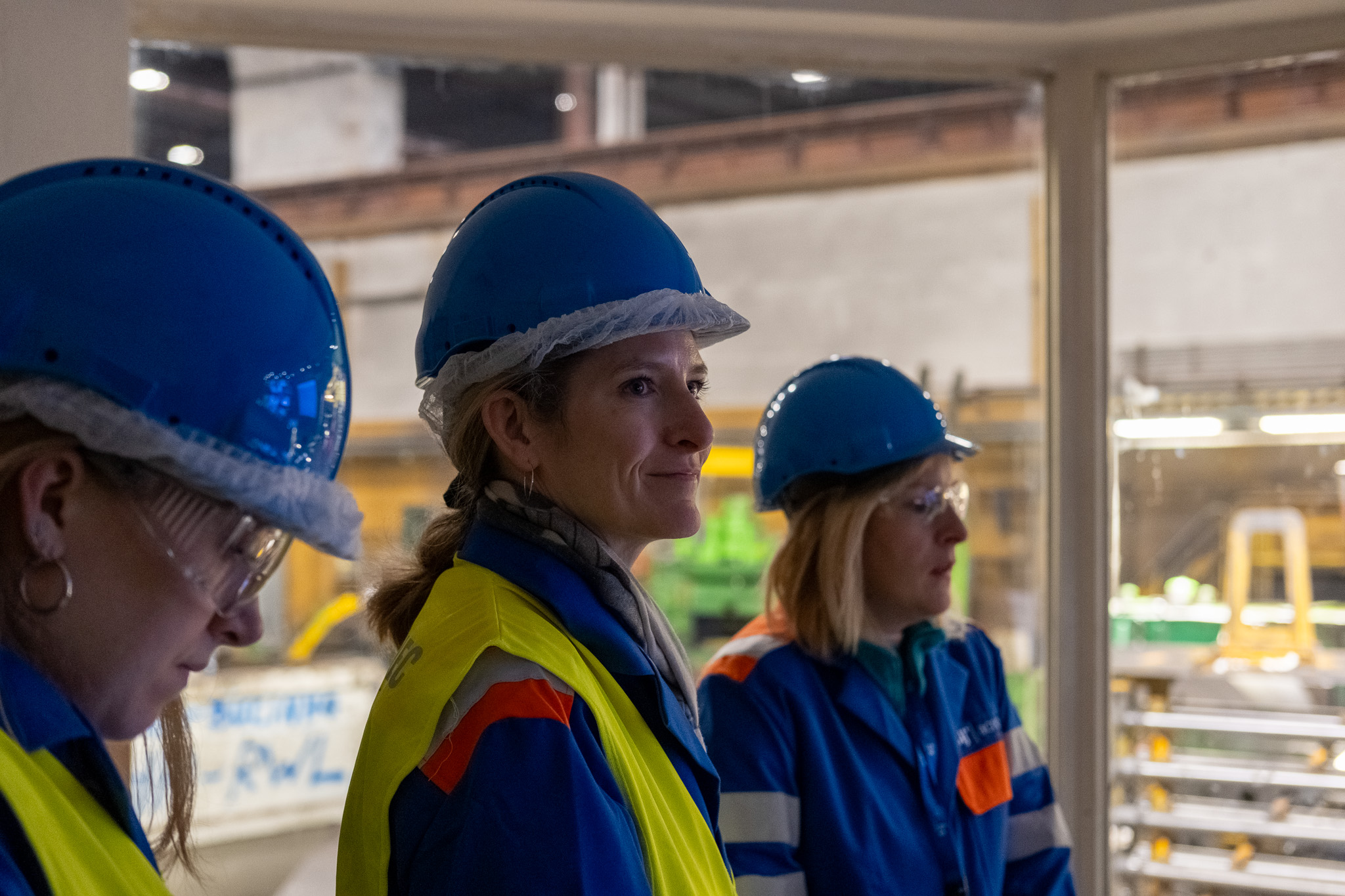
During our trip, our Director of Programmes, Amy Jackson, our Decarbonisation Lead, Alli Devlin, and myself had the opportunity to:
- Present to the Chinese steel value chain our C2F (China's low-carbon emission steel standard) interoperability MoU at CISA's annual LCA conference.
- Connect with our Chinese members, including SKF, World Resources Institute (WRI), Climate Group, VAMA (Valin ArcelorMittal Automotive JV), Penglai Dajin, and some of our certification bodies working in China, including Afnor and China Quality Certification Centre (CQC).
- Get to work on our C2F-ResponsibleSteel Interoperability Project, structuring the discussions around our Framework for Credible Interoperability.
- Visit the 15mtpa Zhanjiang steel plant, where a new DRI-EAF line was launched in Dec 2025. This has involved the production to date of iron reduced with hydrogen in a 1mtpa DRI plant. Whilst this is currently produced from refined coke oven gas, the project is a hugely significant demonstration of the potential to produce hydrogen-based DRI at an industrial scale.
.jpg)
What do ResponsibleSteel's interoperability projects look like in practice?
In short, interoperability means measuring emissions using rules that are as aligned as possible, and recognising the differences, to enable comparison on a like-for-like basis. Imagine the benefit this would bring for anyone wanting to distinguish what good looks like, for example, procurement teams, investors, and policymakers.
But making interoperability work in practice requires a lot more if we want a reliable, credible and sustainable system that generates high-quality, comparable data.
We've outlined the key components of this in our Framework for Credible Interoperability, which will inform both our work with LESS and CISA:
- Aligned GHG accounting rules
- A reliable calculation tool
- A robust assurance mechanism
- Credible claims protocols
- Good governance, oversight and resourcing
- Appropriate data management
- Strong operations management systems
This is how markets are built: first with innovation, then with the necessary rules and systems that enable good information to flow – so that steel buyers can understand, investors can evaluate, and steelmakers can compete, based on emissions performance that everyone can trust.


April 2021 Newsletter
ResponsibleSteel consultation on GHG and Input Materials Standards
We are pleased to announce the 2nd public stakeholder consultation on the revised draft requirements for the ResponsibleSteel ‘Steel Certification’. The consultation will be open for 30 days, closing on 19th May 2021.
The draft requirements address the responsible sourcing of input materials and define GHG emissions performance thresholds for steelmaking. They are designed to supplement the existing requirements of the ResponsibleSteel Standard (v1-0). ResponsibleSteel certified sites that meet the additional requirements would be able to market and sell ResponsibleSteel certified steel, co-products and by-products.
These are challenging issues, and it is important that we get the requirements right since they will be key for achieving our vision of “maximising steel’s contribution to a sustainable society”. We are keen to receive your feedback on the draft proposals, as well as any suggestions on other options that are better placed to achieve our goals.
You can find the draft requirements, background information and consultation questions in separate documents on the responsible sourcing of input materials, and on GHG emissions, here.
Please provide your feedback by 19 May 2021 on the forms through these links:
For feedback on the draft requirements for the responsible sourcing of input material:
https://forms.gle/NYZa91ktrSWQY4Wx9
For feedback on the draft requirements for GHG emissions:
https://forms.gle/WmAsPwGfKaik8htF9
The US Steel Corporation joins ResponsibleSteel
ResponsibleSteel welcomes US Steel as the first North American Steel Maker to its membership. The United States Steel Corporation announced today its membership in ResponsibleSteel, with the following statement.
“ResponsibleSteel is an important part of U. S. Steel’s ESG commitments and the 2050 carbon neutrality goal that we just announced,” said U. S. Steel President and Chief Executive Officer David B. Burritt. “By joining ResponsibleSteel we are demonstrating our intent to take our efforts beyond goals and actually deliver profitable solutions for our stakeholders and the planet.”
GHG Emissions Intensity Performance Thresholds for Crude Steel
The new draft requirements for the ResponsibleSteel certification of steel were published for consultation this week – see elsewhere in this month’s newsletter.
One critically important aspect of the new draft requirements is the proposed threshold level of performance for greenhouse gas (GHG) emissions for crude steel production. Steelmakers would need to have GHG emissions below this threshold in order to sell their steel (and potentially other co-products and by-products) as ‘ResponsibleSteel certified’.
The proposed threshold developed by ResponsibleSteel considers all significant GHG emissions for the production of crude steel ‘from mine to metal’, including the emissions associated with the mining of raw materials, and also takes account of the proportion of scrap and iron ore used as an input material. By doing so it creates a level playing field for comparing GHG emissions for all steelmaking irrespective of production technology and site configuration, and provides a basis for steel users and specifiers in both the public and private sectors to source steel responsibly, without shifting emissions from one country, project or steelmaker to another.
ResponsibleSteel worked with the consultancy CRU to test and quantify the proposed approach using CRU’s international site-level GHG emissions modelling and analysis. In March, our Policy & Standards Director, Matthew Wenban-Smith, together with Paul Butterworth, Head of Steel Analysis at CRU, presented the results of the work and the thinking behind the ResponsibleSteel model. A recording of the webinar and accompanying slides are available from the ResponsibleSteel website.
ResponsibleSteel is hiring an Operations Coordinator
Are you looking for an opportunity to join a small team working to help achieve net zero carbon emissions for the steel sector by 2050? We are looking for a part-time Operations Coordinator (remote working) to support the ResonsibleSteel CEO and team in the implementation of the ResponsibleSteel programme. This could lead to a full-time role in 2022.
For more info please see the resources page.
BSI ANZ Pty Ltd joins ResponsibleSteel as an approved auditor
BSI has become a ResponsibleSteel approved auditor to provide credible third-party verification of the standard. BSI provide the highest of level credibility and integrity to ensure the implementation of the ResponsibleSteel standard.
worldsteel has announced their “champions” for 2020
ResponsibleSteel would like to congratulate all 9 companies who have been announced as worldsteel 2020 Champions. All of these organisations have met the criteria set out by worldsteel on demonstrating their commitment to continuing sustainable development.


ResponsibleSteel & CRU Webinar (March 2021)
GHG Emissions Intensity Performance Thresholds for Crude Steel
The webinar recording is split into two sections: in the first Matthew Wenban-Smith (Policy & Standards Director at ResponsibleSteel) presents the ResponsibleSteel GHG emissions performance threshold from the CRU data. In the second Paul Butterworth, Head of Steel Analysis, presents the technical data behind the proposed approach. An edited version of the webinar slides is available for download from the link.

‘Green Steel’
Steel production, and by extent the whole steel value chain, is facing intense scrutiny from policy makers and the public alike as protecting the environment and climate change rise on the global political agenda. Mainstream media is awash with articles showcasing new low carbon steel technology or so-called “green” steel. But there is no agreement about what the concept of “green steel” refers to. With this emerging new ‘label’ comes the risk of a backlash against unconsidered ‘green’ claims.
We have analysed this fast-moving space and the implications for the steel sector as well as the work of ResponsibleSteel itself. There are some key points that we believe should be considered:
Words matter. We think it is critically important that the term “green steel” should not address GHG emissions alone. We cannot be silent on the wide range of social, safety and environmental issues which are important to steel companies’ investors, customers and other stakeholders. Safety comes high on the list of concerns, as does the impact of mining where issues such as tailings dams, relations with Indigenous Peoples and local communities, human rights concerns and impacts on water and Protected Areas also come to mind. We would strongly advocate that any entity offering “green steel” would have to show how it addresses the range of social and environmental concerns and not only GHG emissions.
This means there is a clear choice – either not to use the term ‘green’, and to use instead a term specific to GHG emissions. Or, to address the other key issues that justify the use of the broader term. There are arguments for either of these options. For ResponsibleSteel, our decision is clear. Our mission is to maximise steel’s contribution to a sustainable society, and we believe that the range of issues must be addressed together, through an integrated approach. Steelmakers that want to demonstrate social and environmental responsibility need to show how they are responding to the challenges of climate change, but also to show how they are addressing other key social and environmental challenges facing the industry.
We do not believe this broader approach stands in the way of successfully responding to climate change. In fact, quite the opposite. The reduction of GHG emissions and the challenges of addressing other ESG impacts are not susceptible to quick fixes. Steelmakers, steel users and their suppliers need the long-term support of a broad range of stakeholders – including civil society organisations, investors and governments – on this journey. The support will be that much stronger for companies that address the range of issues, and weaker for those that focus on just one issue at the expense of others.
ResponsibleSteel strongly supports organisations in taking a broad approach to the issue of ‘green steel’ – embracing the need not only to address climate change, but also to address other issues including biodiveristy and worker’s rights. Three years ago there would have been an argument that the need to develop standards that address the steel sector’s GHG emissions is too complex, and too urgent, to be delayed by consideration of other ‘green’ issues. Today, however, this is not the case. The ResponsibleSteel Standard already exists and is applicable to steelmaking sites, with further requirements to allow for the certification of steel products nearing completion. ResponsibleSteel’s membership includes steelmakers producing 170 million tonnes of steel per year such as Tata Steel, ArcelorMittal, voestalpine and Hyundai, major mining companies such as Anglo American, BHP and Teck, downstream users such as BMW, Daimler and Lendlease, as well as social and environmental organisations such as CDP, The Climate Group, the Clean Air Task Force, IndustriALL, IUCN, and Mighty Earth. It is challenging to develop a standard for ‘green steel’ that commands multi-stakeholder support – we encourage organisations working on sustainability issues and steel not to duplicate this work, but rather to seek ways to build on the work that has already been done.
In relation to standards for ‘green steel’, we urge all organisations, businesses and governments, in the first instance, to consider how existing standards and methodologies, such as those of ResponsibleSteel, could be used in the context of steel procurement targets and specifications, including public procurement specifications, rather than through the development of new standards, definitions and methodologies: we believe this approach would be a faster as well as a more effective approach to create demand and to support the transition to net zero.
We welcome any feedback on this article and propose holding a webinar for ResponsibleSteel members and interested stakeholders to further discuss these issues later this year.

ArcelorMittal Eisenhüttenstadt audit
The ArcelorMittal site in Eisenhüttenstadt, Germany, is currently undergoing an audit to achieve ResponsibleSteel certification. The site develops and produces hot metal, semi-finished products, hot and cold rolled strips and coated coils and sheets.
Stakeholders may announce their interest in being interviewed by the auditors on the ESG performance of the site via this page, where they can also find further information on the ResponsibleSteel audit process.
Due to the Corona virus pandemic, the on-site visit to the site including interviews with site workers will take place at a later stage.

Auditor training dates announced
The next ResponsibleSteel auditor training will take place from 03 to 06 May 2021. It will take place online from 09:00 CET to 13:00 CET each day.
Participation in a training is one of the prerequisites for becoming a ResponsibleSteel-approved auditor. Only auditors that are affiliated with a certification body who is an Associate Member of ResponsibleSteel and has been approved by ResponsibleSteel may carry out audits against the ResponsibleSteel Standard.
Auditors who want to register for this online training should:
- Review the auditor approval and qualification requirements in the ResponsibleSteel Assurance Manual to see if they meet our requirements (1.5 and Annex 3)
- Complete the auditor application form in the Annex of the Assurance Manual (Annex 2)
- Send the completed application form, a full and up to date CV and all the mentioned documentation to mbammert (at) responsiblesteel.org by 15 April
Prior to the training, participants must have studied the ResponsibleSteel Standard and Assurance Manual.
The training participation fee is 300 USD per auditor. All the documentation listed above can be accessed here.
Note that our trainings are also open to employees of steel companies who are ResponsibleSteel members. Steel company participation is covered by their ResponsibleSteel membership fee. No documentation is needed, but steel company representatives have to confirm their participation to ResponsibleSteel by email.

CSR Europe Joins ResponsibleSteel
CSR Europe, on the behalf of Drive Sustainability, has joined ResponsibleSteel as Associate Member.
CSR Europe is the leading European business network for Corporate Sustainability and Responsibility and facilitator of Drive Sustainability, the partnership of 11 leading automotive companies. Together, they have the vision to lead the shift towards a more circular and sustainable automotive value chain by leveraging a common voice and engage with suppliers, stakeholders, and other sectors. As steel is one of the most relevant materials for the products in the automotive sector, joining forces with Responsible Steel represents a milestone in Drive Sustainability’s approach.
“Drive Sustainability, representing some of the major global car producers with a collaborative agenda towards a circular and sustainable automotive supply chain will be a great asset in helping ResponsibleSteel and our members to develop applicable approaches and tools” said Ali Lucas, Executive Director of ResponsibleSteel. “We are delighted to welcome CSR Europe as an Associate member and benefiting from their insight and experience”, continued Ali Lucas.
Stefan Crets, Executive Director at CSR Europe, said: “Steel plays a very important role when it comes to reducing carbon emissions in the supply chain or striving towards circular production and sustainable business models. ResponsibleSteel, as a standard and certification initiative has an important role to play within this context. A sustainable steel supply chain is crucial for the companies involved in Drive Sustainability, as it contributes to reach the strategic ambitions of the partnership from a social and environmental perspective. CSR Europe is looking forward working with ResponsibleSteel to help the ecosystem of the steel supply chain, especially producers and their upstream supply network, to move towards more responsibly sourced and produced steel.”
ABOUT CSR EUROPE
CSR Europe is the leading European business network for Corporate Sustainability and Responsibility. With our corporate members, National Partner Organisations (NPOs), and Associated Partners, we unite, inspire & support over 10,000 enterprises at local, European, and global level. We support businesses & industry sectors in their transformation and collaboration towards practical solutions and sustainable growth. We are for systemic change. Following the SDGs, we want to co-build with the European leaders and stakeholders an overarching strategy for a Sustainable Europe 2030.

PeoplePlanetProfit become an Associate member of ResponsibleSteel
PeoplePlanetProfit (PPP) is a small company from Germany providing consulting services and software solutions to clients worldwide. PPP has specialized in all areas of sustainability. The principles of sustainability are the foundations of what this concept represents. Therefore, sustainability is made up of three pillars: economy, society, and the environment. These principles are also informally used as profit, people and planet, hence the name of the company.
PPP offers services in the areas of environment, energy, CSR, CCF, LCA, but also compliance. All services are supplemented by innovative cloud systems, which PPP develops exclusively itself. For example, PPP offers a BI system for all CSR key figures. IT security comes first, which is also important for the customers.
PPP has now carried out several projects in the Aluminum sector related to Aluminium Stewardship Initiative (ASI) and employs two people who are Registered Specialists since 2017.
A holistic approach (environment, social and governance) is important to PPP, but PPP has a keen eye on details, too. A long-term and successful cooperation with our customers has top priority.
Patrick Wortner, CEO of PeoplePlanetProfit said: “At PPP, we believe that progress is always possible and in people who pursue it in a responsible way. We support changemakers – people and companies that ignite, lead and advocate for a sustainable change in the world. We are therefore looking forward to a successful cooperation as a member of ResponsibleSteel.”
“ResponsibleSteel warmly welcomes PeoplePlanetProfit as an Associate member.” Said Ali Lucas, Executive Director – ResponsibleSteel. “The whole digital arena for the industry is one of critical importance, and it is hugely exciting to have an organisation as part of our membership who has such a wealth of relevant knowledge and expertise in this area.”

SRI Quality System Registrar joins ResponsibleSteel™ as a new Associate Member
SRI Quality System Registrar, an international assessment body headquartered in Pittsburgh, PA, with services accredited by ANAB, RvA, IATF, AA1000, GBCI and IWBI, assesses and assists in conformance to quality, environmental, health and safety, social responsibility, information security, green building rating systems, and other international standards.
SRI was founded in 1991 as Steel Related Industries Quality System Registrar, a part of the Steel Industry Supplier Audit Program (SISAP). SRI quickly became an industry leader and one of the world’s largest registrars to metals and materials companies. Over the last 30 years, SRI participated in writing standards and introduced the value of third-party assurance to many industries. SRI’s roots remain in quality and sustainability within the steel industry.
Steel companies are major suppliers to, and customers of, other leading industrial sectors. As a committed member of the global supply chain, SRI offers metal and materials clients the assessment services they need to improve, compete, and succeed responsibly in the marketplace today. This includes a dedicated sustainability practice focusing on CSR/ESG performance.
“Part of SRI’s own evolution has been to update its sustainability goals to better reflect the business market of today and the future. Working to achieve goals such as Net-Zero by 2030 and joining ResponsibleSteel, allows SRI to learn, share, and help advance sustainability in the steel industry and beyond,” remarks SRI President, Christopher Lake. “We hope to contribute by lending three decades of sustainability and assessment expertise in our collaboration with ResponsibleSteel and stakeholders from every part of the steel supply chain, as we all work towards advancing steel’s contribution to a sustainable society.”
“ResponsibleSteel is excited to welcome SRI as an Associate member.” said Ali Lucas, Executive Director – ResponsibleSteel. “SRI’s deep knowledge and expertise in the field of international standards will be a powerful addition to many of the projects and programmes that ResponsibleSteel is currently developing and working on, and we are really looking forward to sharing ideas, knowledge and experience over the coming months and years.”

Bioregional has joined ResponsibleSteel as its newest Civil Society Member
Bioregional has been a leader in driving the transition towards more sustainable homes and communities, businesses and lifestyles for over 25 years. This is put into practice through the One Planet Living framework, which was created from experiences of planning and working with partners to develop the multi-award-winning BedZED, the UK’s first large-scale eco-village in South London.
High sustainability standards in materials has been embedded in Bioregional’s wide portfolio of projects. BedZED’s construction made use of a range of locally sourced and recycled materials. Bioregional also co-wrote the sustainability strategy for the London 2012 Olympics, which saw ambitious targets met for recycling and re-use of demolition materials, and extensive repurposing of steel structures.
As a long-time partner of Kingfisher, Europe’s largest home improvement retailer, Bioregional has provided consultancy and action plans to help Kingfisher improve the sustainability of its range of products and materials. This has been through setting standards across the product range, as part of Kingfisher’s Sustainable Home Products guidelines, as well as more concentrated efforts in areas such as cement and compost. In 2020, Bioregional was appointed by the UN Environment Program to develop a supplement on sustainable building materials, as part of its Eco-Innovation toolkit for SMEs. Bioregional aims to draw on these experiences of assessing impacts of building materials, helping to develop alternatives, and engaging the supply chain as a Civil Society member of Responsible Steel.
Stewart Muir, Sustainable Products Project Manager said: “We are delighted to have the opportunity to contribute to the efforts of Responsible Steel in setting improved sustainability standards for steel. We see this as a valuable platform for encouraging real action by our partners and clients to drive forward decarbonisation of steel and help address a range of sustainability challenges, as well as tackling the climate emergency.”
“We are absolutely delighted to welcome Bioregional as a civil society member. “ said Ali Lucas, Executive Director, ResponsibleSteel. “ Bioregional has a long and impressive track record in working across many projects, issues and sectors in the sustainability field, and I know that ResponsibleSteel, and our other members will benefit greatly from their deep knowledge and expertise.”
ResponsibleSteel in 2020
2020 marks a year of growth for ResponsibleSteel
At the end of 2020 ResponsibleSteel Members came together virtually to celebrate the immense growth and progress the organisation has made in the last year.
Despite an uncertain year our membership has grown by 30%. Since June we have welcomed 13 new members: Tata Steel, Cobalt Institute, Hyundai Steel, Bilecik demir çelik, Bio Regional, ERM, Grimshaw Global, Hatch UK, People Planet Profit UG, Russian Green Building Council, SRI Quality Systems, The Australian Supply Chain Sustainability School and The Energy and Resources Institute (TERI).
Excitingly, membership continues to strengthen globally – with new members from Asia, Australia, the Americas, and Europe.
Since June, ResponsibleSteel’s small team has been committed to delivering our core business of Standards, Assurance and Oversight for our Certification Programme. In 2020 we held our first audits against the ResponsibleSteel Standard and we have approved four certification bodies. Alongside this we have approved 20 auditors and held training for a similar number.
During our Members Meeting, we were delighted to be joined by Mr T.V. Narendran, Managing Director of Tata Steel. In a keynote speech, Mr Narendran gave an excellent and passionate overview of how steel industry and Tata Steel are engaging in the sustainable steel debate.
Mr Narendran commented, “I think it’s increasingly important for this industry to keep engaging with stakeholders, not only in the value chain but also outside of the value chain.”
He went on to say, “We, as an industry, need to reach out to many stakeholders. Which is where a multi-stakeholder platform like ResponsibleSteel plays a role and I expect for this reason we will be able to have a more objective discussion. Tata Steel felt like ResponsibleSteel is a good platform for us to be part of as we are constantly looking to improve the way we work and to be more responsible.”
Watch Mr Narendran’s speech here
After his remarks Gerry Tidd, Responsible Steel’s co-chair for business unofficially awarded Mr Narendran quote of the day: “If complexity excites you, this is the industry to be in.”
An even bigger year on the horizon
In 2021, ResponsibleSteel will build on these great foundations as we scale up operations. In March we will welcome our first CEO Anne-Claire Howard to help us drive the organisation forward into our next stage of growth.
Alongside this we will scale up our proactive membership drive focusing on steelmakers, producers and civil society. We will be deliberate about raising our profile via external communications and stakeholder engagement.
New projects
Internally, our team are focused on the delivery of new projects to expand our offering. One of the most exciting projects on the horizon is SteelZero; launched in early December in partnership with The Climate Group, SteelZero is a global initiative to bring together leading organisations to speed up the transition to a net zero steel industry.
Companies who join SteelZero make a public commitment to transition to 100% Net Zero Steel by 2050 at the latest. Collectively members show a demand signal to steel makers and producers in the move towards producing responsible zero carbon steel.
Watch the SteelZero video here
Next year we will be working with the Climate Group to grow the membership of SteelZero and build working groups from multiple sectors to demonstrate the wide market demand. We would love as many RsponsibleSteel members to join us as possible.
The Secretariat team and the Board at ResponsibleSteel thank our members for their commitment, engagement and support during a challenging year. We are now gearing up for another exciting year of growth and collaboration and look forward to working with members new and old.
From everyone here at ResponsibleSteel, have a great holiday period and we look forward to seeing you all next year!

DNV GL becomes an approved ResponsibleSteel certification body
We are delighted to announce that our fourth audit firm DNV GL has recently joined AFNOR Certification, ERM CVS and GUTcert as an approved certification body.
“We are delighted to be recognised as a key partner in the journey towards a more responsible steel industry by becoming approved by ResponsibleSteel™ to certify steel makers globally. As a purpose driven organisation, deeply committed to SDG 13 climate action, we are proud to contribute to reducing the climate impacts of one of the world’s most fundamental industries,” says Paul McNellis, Head of Assessment and Advisory in DNV GL-Business Assurance.
While Alison Lucas, Executive Director of ResponsibleSteel says “DNV GL was one of the first organisations to join ResponsibleSteel™ as an associate member and has provided much needed technical support to ResponsibleSteel™ during our early set-up phase. We are very pleased that they remain committed to our Vision and Mission and have now become approved as a ResponsibleSteel™ certification body”.
With our first audits due to be completed within the next 6 months and an uptick in membership in 2020, there will be a need for organisations such as DNV GL to help ResponsibleSteel meet its goals. To find out more about their ResponsibleSteel business offerings please click here.
Only auditors that are affiliated with a certification body who is an Associate Member of ResponsibleSteel and has been approved by ResponsibleSteel may carry out audits against the ResponsibleSteel Standard.
If you would like to know more about how your organisation can join our four current certification bodies please get in contact with us.

Hyundai Steel joins ResponsibleSteel
Steel producer Hyundai Steel has joined ResponsibleSteel as its newest Business Member, based in South Korea Hyundai Steel is a major player in the steel industry.
“ResponsibleSteel is delighted to welcome Hyundai Steel into membership. Having such a major international business join us from the steel making sector is a huge step forward towards us strengthening our depth and global reach within our membership. We very much look forward to working with Hyundai Steel as they work towards their aim to become a ‘sustainable steel company’ said Ali Lucas, Executive Director – ResponsibleSteel.
“Hyundai Steel is the first Korean company to join ResponsibleSteel and actively respond to ESG issues by establishing a network with global advanced companies,” a company spokesman said.
Hyundai Steel is expected to establish a leading position in terms of strengthening its own ESG management while securing confidence in the ESG field from the market and society through joining. The spokesman added, “As ESG plays an important role in the business environment, it is time to internalize ESG’s requirements through a mid- to long-term sustainable management strategy.”
